
GITNUXSOFTWARE ADVICE
Equipment Rental LeasingTop 10 Best Heavy Equipment Management Software of 2026
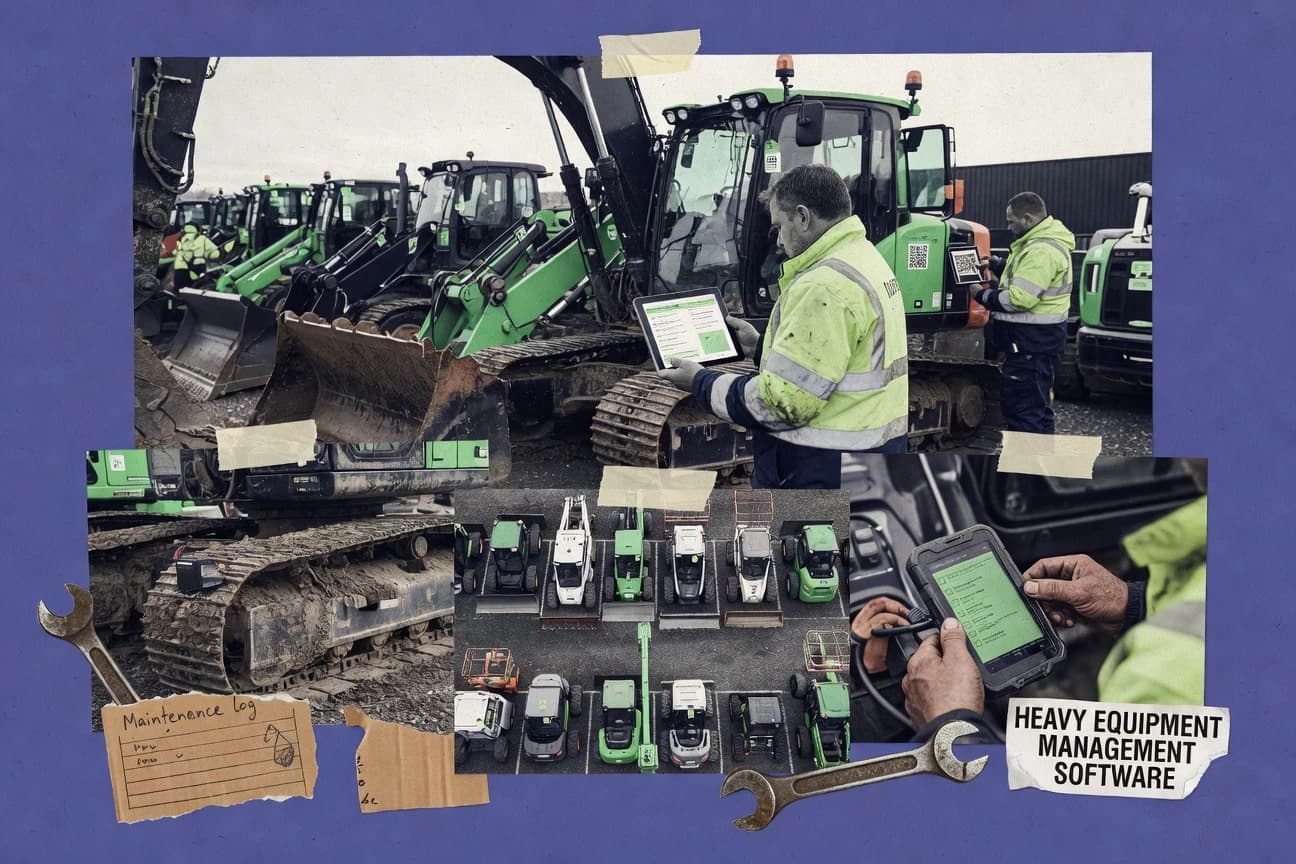
Top 10 heavy equipment management software ranked by fleet tracking, maintenance, and reporting features for contractors, with tools like Geotab and Tenna.

How we ranked these tools
Core product claims cross-referenced against official documentation, changelogs, and independent technical reviews.
Analyzed video reviews and hundreds of written evaluations to capture real-world user experiences with each tool.
AI persona simulations modeled how different user types would experience each tool across common use cases and workflows.
Final rankings reviewed and approved by our editorial team with authority to override AI-generated scores based on domain expertise.
Score: Features 40% · Ease 30% · Value 30%
Gitnux may earn a commission through links on this page — this does not influence rankings. Editorial policy
Geotab is the best pick when fleets need GPS tracking tied to automation via API to route work orders, while Tenna fits construction teams that want map-linked assets and inspection-to-work order flow, and RTA Fleet Management works as a low-engineering option for engine-hour PM.
Editor’s top 3 picks
Three quick recommendations before you dive into the full comparison below — each one leads on a different dimension.
Geotab
Go beyond dashboards with a developer API that supports telemetry-driven automation into external dispatch and maintenance systems.
Built for fits when fleets need GPS tracking plus automation via API to route work orders..
EquipmentShare
Editor pickEngine-hour driven preventive maintenance triggers that route work orders to shop and field execution.
Built for fits when operations teams want governed PM and shop routing driven by usage signals..
Tenna
Editor pickVisual asset mapping tied to inspection capture and routed work orders for field-to-shop execution.
Built for fits when construction teams need map-linked assets, inspections, and work order automation..
Comparison Table
Geotab
enterpriseFleet management and telematics solution.
Go beyond dashboards with a developer API that supports telemetry-driven automation into external dispatch and maintenance systems.
Geotab’s core fit for heavy equipment comes from its workflow around asset setup, continuous position updates, and event history that supports utilization reporting and equipment downtime investigations. Report generation can be operationalized through scheduled outputs and custom views for field and operations teams. Extensibility is driven by integration options and an API intended to move telemetry into external systems without manual re-keying.
A tradeoff appears in governance overhead. Large mixed-fleet rollouts require deliberate asset mapping, driver or operator assignment rules, and consistent identifier practices across departments. Geotab works best when operations needs both daily utilization visibility and maintenance signal collection that must feed downstream work order routing.
- +Telematics event history supports utilization and downtime investigations
- +Integration and API options support custom workflows across fleet systems
- +Asset grouping supports reporting across yards, regions, and fleets
- +Engine and sensor parameter ingestion supports operations-focused analytics
- –Heavy mixed-fleet deployments require careful asset mapping discipline
- –Custom reporting often needs analyst support for consistent results
- –Some equipment data points depend on connector availability
- –High data-volume setups can increase administration workload
Fleet operations teams
Investigate downtime and productivity dips
Reduced unplanned downtime
Maintenance managers
Track engine hours for PM compliance
Fewer missed maintenance actions
Show 2 more scenarios
System integration teams
Sync equipment status to work management
Lower manual status updates
Use API-based integration to push telemetry status into dispatch and work order workflows.
Yard and branch leads
Manage mixed-fleet assignments
Clearer equipment allocation
Use structured asset hierarchy and reporting groups to track utilization by site and fleet.
Best for: Fits when fleets need GPS tracking plus automation via API to route work orders.
EquipmentShare
enterpriseEquipment rental and fleet management platform.
Engine-hour driven preventive maintenance triggers that route work orders to shop and field execution.
EquipmentShare fits organizations that need more than asset records and want work orders and maintenance schedules linked to real usage signals like engine hours. The workflow emphasis shows up in shop routing, mechanic execution, and inspections that can capture defects against a specific asset. Integration depth is strongest when telematics and OEM data feeds align with the asset and meter events the system expects, rather than when data arrives in loosely structured CSV batches.
A key tradeoff is that deeper automation depends on accurate asset setup and meter mapping, because maintenance triggers and utilization reporting rely on consistent events. EquipmentShare works best when teams already run a recurring maintenance process with clear job handoff steps, or when they are consolidating dispatch, maintenance, and shop execution into one governed workflow.
- +Work order and maintenance execution linked to asset events
- +Engine hour based maintenance triggers reduce missed PM tasks
- +Inspection and defect capture tied to specific equipment
- +Operational role controls support technician and manager governance
- –Maintenance automation depends on clean meter and asset configuration
- –Complex mixed fleets require careful mapping of asset identifiers
- –Telematics data quality issues propagate into utilization metrics
- –Some integrations may require additional setup for OEM feeds
Rental and fleet operations teams
Schedule PM during active rental cycles
Fewer overdue maintenance events
Maintenance managers
Route defects from inspections to mechanics
Faster repair cycle times
Show 2 more scenarios
Field dispatch teams
Track utilization and downtime across assets
Better equipment availability planning
Utilization reporting reflects usage signals so dispatch decisions can account for maintenance impact.
Shop supervisors
Plan recurring work across multiple locations
More predictable workload
Shop work order routing supports repeatable execution of PM compliance workflows.
Best for: Fits when operations teams want governed PM and shop routing driven by usage signals.
Tenna
vertical specialistConstruction equipment management platform.
Visual asset mapping tied to inspection capture and routed work orders for field-to-shop execution.
Tenna’s core strength is connecting site context to operational execution through map-based asset visibility and linked work order processes. Equipment records can be associated with field activities, inspections, and maintenance tasks so updates propagate through the operational workflow instead of staying in separate logs. Admin controls focus on configuring these workflows and controlling who can edit asset records, submit inspections, or manage work order states.
A practical tradeoff is that Tenna’s value depends on disciplined field updates, since meter and inspection completeness affects utilization and maintenance reporting. Tenna fits best when teams run recurring maintenance and need consistent defect capture and routing from mobile use to shop work and field resolution.
- +Map-based asset context reduces dispatch handoffs
- +Work order workflows connect inspections to maintenance execution
- +Field input can drive downtime and utilization reporting inputs
- +Automation rules keep status updates consistent across teams
- –Meter completeness depends on consistent operator capture
- –Complex governance needs careful workflow configuration
- –Advanced custom reporting can require data exports and transformation
- –Deep integrations may require setup by system owners
Field operations teams
Route repairs from mapped equipment
Faster repair initiation
Maintenance planners
Run recurring maintenance with confirmations
Fewer missed PMs
Show 2 more scenarios
Equipment managers
Track downtime causes and histories
Improved reliability tracking
Downtime entries linked to maintenance outcomes support repeat-issue investigation.
Project controls teams
Validate utilization inputs per site
More consistent utilization reporting
Meter and inspection data associated to equipment records supports site-level utilization reporting.
Best for: Fits when construction teams need map-linked assets, inspections, and work order automation.
Fleetio
SMBFleet maintenance and management software.
PM compliance dashboard that recalculates status from tracked meters and scheduled maintenance definitions.
Fleetio centralizes heavy equipment records and maintenance workflows with asset assignment, meter capture, and work order tracking. It is distinct in how it combines utilization reporting with PM compliance views tied to engine hours and other tracked meters.
Automation focuses on turning meter events and scheduled PM rules into actionable work orders for shop and field teams. Integration coverage is strongest through telematics-style data ingestion and connector-style handoffs that keep asset lists, meters, and tasks aligned.
- +Work order automation tied to scheduled PM rules reduces manual dispatching work
- +Meter-driven utilization reporting links usage patterns to maintenance timing
- +Asset assignment hierarchy supports multi-level ownership and responsibility mapping
- +Inspection and defect capture workflows fit recurring field checks
- –Mixed-fleet configurations take time when meters and maintenance intervals vary by OEM
- –Advanced governance requires careful role setup to prevent cross-site data exposure
- –Telematics ingestion coverage can depend on connector availability for specific sources
- –Bulk data import workflows can be rigid when mapping custom fields
Best for: Fits when equipment-heavy teams need PM compliance and work order automation driven by engine-hour meters.
Motive
enterpriseMotive combines GPS tracking, equipment telematics, maintenance, utilization data, and fleet workflows.
Maintenance scheduling that triggers off tracked engine hours and inspection outcomes inside one equipment record.
Motive manages fleet operations for heavy equipment using telematics-driven asset tracking and utilization reporting tied to engine hours. It supports preventive maintenance scheduling and work order automation, so maintenance planning can follow meter readings and equipment activity.
Administrators can govern field workflows with configured inspection and defect capture, then route shop work through a shared equipment record. Data ingestion also covers meter reading uploads for fleets that need an operator-friendly fallback when telemetry coverage is inconsistent.
- +Engine hour tracking connects directly to maintenance planning and compliance views
- +Work order automation ties failures and inspections to scheduled shop routing
- +Fleet dispatch and utilization reporting reduce gaps between activity and maintenance needs
- +Mechanic-facing field workflows support defect capture without switching systems
- –Mixed-fleet setup can become admin-heavy when OEM data formats differ
- –Advanced geofence enforcement depends on careful configuration of asset assignments
- –Deep utilization rate benchmarking requires consistent meter ingestion and cleanup
- –Inspection and defect capture workflows still need disciplined form design
Best for: Fits when fleets need GPS-driven utilization and meter-based preventive maintenance with automated work orders.
RTA Fleet Management
vertical specialistRTA Fleet Management handles preventive maintenance, work orders, parts, fuel, and asset costs.
Maintenance work orders can be generated from utilization signals with tight linkage to each asset’s meter history.
RTA Fleet Management is a heavy equipment management system built around tracking assets, meters, and maintenance workflows tied to field usage. It supports utilization reporting with engine-hour tracking, preventive maintenance scheduling, and work order execution so shop and field tasks stay connected.
RTA Fleet Management also focuses on data ingestion for meter readings and inspection-style capture to keep compliance records aligned with operational history. Governance is handled through user access and operational configuration that controls how assets, schedules, and tasks flow through the system.
- +Engine hour tracking and utilization reporting support equipment-based planning
- +Preventive maintenance scheduling drives consistent PM compliance work orders
- +Meter reading ingestion keeps shop tasks tied to real usage signals
- +Maintenance workflow routing reduces handoff gaps between field and shop
- –Configuration depth increases setup effort for large mixed fleets
- –Integration options are limited compared with vendors offering OEM-level connectivity
- –Downtime tracking depends on consistent operational event capture discipline
- –Advanced analytics require more manual reporting preparation than in higher tiers
Best for: Fits when operations need engine-hour based PM workflows and meter-driven shop routing without deep custom engineering.
Fleet Complete
enterpriseFleet Complete tracks vehicles and equipment with GPS, utilization metrics, maintenance alerts, and sensors.
Maintenance work order creation triggered from telematics utilization signals, routed into shop and technician task lists with role-based assignment.
Fleet Complete ties telematics-driven vehicle data to field workflows for mixed fleets that include construction equipment. GPS asset tracking feeds engine hour and utilization reporting, then drives preventive maintenance scheduling and work order automation.
Admin controls focus on provisioning assets and managing technician workflows through roles tied to shop and field use cases. Fleet Complete also supports integrations via APIs and OEM data formats so meter readings and fault signals can be ingested into operational reporting.
- +Engine hour tracking and utilization reporting tie directly to PM scheduling
- +Work order automation links asset events to shop and field actions
- +API and connector options support meter and fault data ingestion
- +Mechanic and mobile workflows reduce time spent rekeying field notes
- –Initial asset hierarchy setup and mapping can take longer than expected
- –Some reporting needs extra configuration to match specific maintenance policies
- –Mixed-fleet coverage can require multiple data source types to normalize
- –Integration execution depends on upstream data quality and formatting
Best for: Fits when mid-size contractors need telematics to run PM compliance with work order automation across mixed equipment types.
Verizon Connect
enterpriseVerizon Connect provides GPS asset tracking, geofencing, maintenance alerts, and fleet reporting.
Geofence enforcement tied to operational workflows for asset presence validation and exception handling.
Verizon Connect combines GPS asset tracking with field operations workflows for organizations managing heavy equipment fleets. It supports engine hour and meter-style activity collection alongside utilization reporting used for work planning and downtime review.
The system also provides preventive maintenance scheduling, work order execution visibility, and shop coordination through dispatch and field task flows. Admin teams get governance controls for devices, users, and operational actions across connected assets.
- +Engine hour and utilization reporting supports maintenance and planning cycles
- +Work order automation links field tasks to shop or supervisor follow-up
- +Mechanic and shop coordination workflows reduce status chasing
- +Geofence enforcement helps validate yard and site compliance
- –J1939-style fault or parameter parsing requires add-on integration work
- –PM compliance dashboard coverage can lag for complex, multi-stage inspections
- –CSV meter uploads are limited for ongoing, high-frequency ingestion patterns
- –Setup and permissions tuning are required to prevent inconsistent field data entry
Best for: Fits when equipment fleets need telematics-driven reporting plus end-to-end work order workflows.
Point of Rental
vertical specialistPoint of Rental supports equipment rental reservations, dispatch, inventory, maintenance, and billing.
Inspection and maintenance execution flows are tied tightly to rental asset records and scheduling windows.
Point of Rental manages rental fleet records from asset setup through utilization and maintenance workflows. Core capabilities include equipment cataloging, work order creation, and inspection tracking tied to specific units and time windows.
The system supports operational reporting that helps teams monitor downtime drivers and meter usage trends. Admin controls focus on managing user permissions across day-to-day rental operations and maintenance execution.
- +Rental-focused equipment records link inspections to specific assets and dates
- +Work order flows support shop and field task assignment per unit
- +Utilization and maintenance reporting supports ongoing operational reviews
- +Permission controls reduce accidental changes during ongoing rentals
- –Integration depth for telematics and GPS tracking appears limited versus top competitors
- –Automation options for work order creation from event triggers are narrow
- –API surface and extensibility details are not as transparent as higher-ranked tools
- –Mixed-fleet standards for meter ingestion and OEM formats are less flexible than leaders
Best for: Fits when rental businesses need asset-level maintenance and inspection workflows without heavy telematics reliance.
Whip Around
SMBWhip Around digitizes inspections, defect reporting, maintenance tasks, and asset records.
Request-to-work-order workflow with field capture that keeps equipment assignment and maintenance tasks linked through closeout.
Whip Around is geared toward tracking and coordinating heavy equipment activities across job sites, with an emphasis on field-ready workflows instead of back-office reporting alone. It covers core operations like equipment requests, work orders, and dispatch-style assignment so teams can move assets without manual spreadsheets.
The system also supports maintenance planning with work-order generation tied to asset usage and compliance checks. Overall, Whip Around fits organizations that need mobile-friendly intake and structured operational tracking from request through closeout.
- +End-to-end request and work order workflow reduces ad hoc assignment
- +Field-oriented handling supports day-of-job data capture and updates
- +Maintenance work orders connect operational activity to upkeep tasks
- +Asset assignment flow supports multi-site coordination without extra tools
- –Geofence enforcement and idle time analysis are not core capabilities
- –External integrations depend on connector availability for telematics feeds
- –Mixed-fleet support can require manual mapping for nonstandard meters
- –Deep customization of inspection and defect capture workflows takes effort
Best for: Fits when field teams need equipment requests, assignment tracking, and maintenance work orders with mobile capture.
Conclusion
After evaluating 10 equipment rental leasing, Geotab stands out as our overall top pick — it scored highest across our combined criteria of features, ease of use, and value, which is why it sits at #1 in the rankings above.
Use the comparison table and detailed reviews above to validate the fit against your own requirements before committing to a tool.
How to Choose the Right heavy equipment management software
This buyer’s guide covers Geotab, EquipmentShare, Tenna, Fleetio, Motive, RTA Fleet Management, Fleet Complete, Verizon Connect, Point of Rental, and Whip Around for heavy equipment management software. Each option is evaluated for how fleets connect GPS asset tracking, meter-driven maintenance triggers, and work order automation into daily dispatch and shop execution.
The focus stays on integration depth and automation surfaces, with attention to governance controls when multiple sites and technician workflows share the same equipment records. The coverage also distinguishes tools built around telematics-first event histories from tools centered on inspections, rental asset records, or field request workflows.
Heavy equipment management software that ties telematics, meters, and work orders to execution
Heavy equipment management software maintains equipment identity and schedules preventive maintenance using tracked usage signals such as engine hours, then turns those schedules into shop and field work orders. It also records operational events from telematics and field capture so utilization reporting and downtime investigations can connect to compliance and maintenance timing.
Geotab is positioned for telemetry-driven automation with a developer API that supports routing work and maintenance actions into external fleet systems. EquipmentShare is positioned around engine-hour driven preventive maintenance triggers that route work orders to shop and field execution with maintenance execution linked back to asset events.
Key capabilities for heavy equipment management software
Heavy equipment management software has to connect GPS asset tracking and meter-driven maintenance triggers to work order automation so the field does not run on spreadsheets.
The tools in this set differ most in how they bind telematics events, engine hour history, and inspection outcomes to maintenance compliance and execution workflows.
Telematics event history to drive automation and investigations
Geotab connects a developer API to telemetry-driven automation for routing work orders and maintenance actions into external systems. Verizon Connect also links engine hour and utilization reporting to maintenance and work order workflows, but Geotab’s emphasis is on telemetry-first event history for downtime investigations.
Engine-hour preventive maintenance triggers with routed work orders
EquipmentShare uses engine-hour driven preventive maintenance triggers that route work orders to shop and field execution. Fleetio focuses on a PM compliance dashboard that recalculates status from tracked meters and scheduled PM definitions, then automates work orders from those PM rules.
Inspection capture tied to mapping and field-to-shop routing
Tenna links visual asset mapping to inspection capture and routed work orders for field-to-shop execution. Point of Rental ties inspection and maintenance execution flows to rental asset records and scheduling windows, which can reduce friction for asset-date workflows even when telematics is limited.
Governed PM compliance that recalculates from tracked meters
Fleetio’s PM compliance dashboard recalculates status from tracked meters and scheduled maintenance definitions. RTA Fleet Management generates maintenance work orders from utilization signals with tight linkage to each asset’s meter history, but Fleetio’s compliance view is more explicit for teams tracking PM status.
Work order automation tied to utilization with asset hierarchy support
Fleet Complete creates maintenance work orders from telematics utilization signals and routes them into shop and technician task lists with role-based assignment. Whip Around keeps request-to-work-order workflows linked through closeout so equipment requests and maintenance tasks stay connected at the mobile capture layer.
Geofence enforcement integrated with operational workflows
Verizon Connect provides geofence enforcement tied to operational workflows for asset presence validation and exception handling. Geotab can support automation and investigations through telematics integration, while Verizon Connect’s differentiation is the operational geofence enforcement workflow.
How to choose based on integration depth and workflow control
The best fit depends on whether the organization treats telematics as the source of truth or relies on inspections, rental records, or field requests to start the maintenance process.
A second axis is how much automation logic needs to be governed across sites and technician roles without creating cross-site visibility risk or inconsistent meter and identifier mapping.
Decide the system that starts maintenance automation
If maintenance triggers must originate from telemetry and be routed through external dispatch and maintenance tools, Geotab’s developer API is the category differentiator. If maintenance must start from engine hour and route into shop and field execution, EquipmentShare and Fleetio center that workflow around usage-driven PM rules.
Choose how inspections and field capture feed work orders
If asset context on a map must sit beside inspection capture and trigger routed work orders, Tenna fits because inspections connect to mapping and workflow routing. If inspection execution must stay tightly bound to rental asset records and scheduling windows, Point of Rental is built around rental asset workflow linkage rather than telematics depth.
Test governance requirements for mixed fleets and mixed maintenance policies
If the fleet includes mixed-fleet deployments and the organization cannot sustain consistent asset mapping, EquipmentShare warns that complex mixed fleets require careful mapping of asset identifiers. Fleetio flags that mixed-fleet configurations take time when meters and maintenance intervals vary by OEM, so governance planning has to include maintenance policy definitions.
Match work order workflow depth to shop and technician execution
If role-based technician task lists and shop routing must be handled from utilization signals, Fleet Complete emphasizes telematics utilization to PM scheduling with role-based assignment. If maintenance execution is driven through request-to-work-order workflows with mobile field capture, Whip Around is the workflow-first option.
Validate compliance reporting that recalculates from meters
If the organization needs a PM compliance dashboard that recalculates status from tracked meters and scheduled PM definitions, Fleetio is designed around that view. If the organization needs meter-driven planning and consistent PM compliance work orders but can accept less explicit compliance recalculation framing, RTA Fleet Management focuses on work order generation from utilization signals.
Assess geofence enforcement and fault parsing dependencies
If operational workflows require geofence enforcement for presence validation and exception handling, Verizon Connect is the fit because geofence enforcement is a standout workflow. If engine hour tracking and PM automation matter more than geofence enforcement, Motive and Fleetio keep the scheduling logic inside the equipment record with engine-hour and inspection outcomes.
Who heavy equipment management software fits best
Heavy equipment management software fits organizations that must translate usage signals into preventive maintenance execution without manual dispatching gaps.
The tools in this set also fit different operational shapes, including GPS-centric fleets, construction field teams needing map-linked inspections, rental businesses tied to rental windows, and multi-site contractors with technician task routing.
Telematics-first fleets that must integrate maintenance actions into external systems
Geotab supports telemetry-driven automation through a developer API for routing work orders and maintenance actions into external dispatch and maintenance systems. It is built for teams that need telemetry event history to power utilization and downtime investigations across fleet systems.
Operations teams running engine-hour governed PM with shop and field execution
EquipmentShare uses engine-hour driven preventive maintenance triggers that route work orders to shop and field execution with execution linked to asset events. Fleetio adds a PM compliance dashboard that recalculates status from tracked meters and scheduled PM definitions to reduce missed PM tasks.
Construction teams that need map-linked assets, inspections, and routed work orders
Tenna ties visual asset mapping to inspection capture and routes work orders for field-to-shop execution. The mapping context reduces dispatch handoffs when inspections and maintenance must reference the same asset location.
Rental operators that prioritize asset-level maintenance and inspection tied to rental windows
Point of Rental keeps inspection and maintenance execution flows tied tightly to rental asset records and scheduling windows. The rental asset linkage supports shop and field task assignment per unit even when telematics integration is limited.
Contractors that need role-based technician task lists driven by utilization signals
Fleet Complete creates maintenance work order creation triggered from telematics utilization signals and routes them into shop and technician task lists with role-based assignment. This supports multi-role execution with less reliance on ad hoc assignment.
Common buyer pitfalls for heavy equipment management software
Many failures come from treating meter and identifier setup as a one-time migration instead of an ongoing governance process for mixed fleets.
Other failures come from choosing a workflow starter that does not match how defects, inspections, and maintenance requests are captured in the field.
Buying telemetry automation without planning asset mapping for mixed fleets
EquipmentShare flags that complex mixed fleets require careful asset identifier mapping, because maintenance automation depends on clean meter and asset configuration. Geotab also requires careful asset mapping discipline for heavy mixed-fleet deployments, or telemetry-to-asset automation will drift.
Assuming compliance reporting will match maintenance policy reality across OEM intervals
Fleetio warns that mixed-fleet configurations take time when meters and maintenance intervals vary by OEM. This means PM compliance dashboards can diverge from the organization’s intended policy if scheduled PM definitions are not normalized.
Choosing an inspection workflow tool without validating meter completeness from operators
Tenna notes that meter completeness depends on consistent operator capture, because meters feed automation and routing. If operator capture is inconsistent, engine-hour triggers in EquipmentShare and Motive can also produce missed or mistimed PM work orders.
Ignoring integration dependencies for fault parsing and telematics extensions
Verizon Connect calls out that J1939-style fault or parameter parsing requires add-on integration work. If fault parsing is a requirement, the integration plan has to include the add-on path before workflow launch.
Expecting geofence enforcement and idle time analysis from tools that are workflow-first
Whip Around states that geofence enforcement and idle time analysis are not core capabilities. Fleet Complete and Verizon Connect handle geofence enforcement more directly through telematics workflows, so geofence-driven requirements should not be treated as optional add-ons.
How We Selected and Ranked These Tools
We evaluated Geotab, EquipmentShare, Tenna, Fleetio, Motive, RTA Fleet Management, Fleet Complete, Verizon Connect, Point of Rental, and Whip Around on automation and integration depth for GPS asset tracking, engine hour maintenance triggers, and work order execution. Features received 40% weight because the strongest differentiators are tied to telemetry event history, PM compliance recalculation, inspection mapping workflows, and engine-hour driven work order routing.
Ease/value received 30% weight because governance overhead shows up as analyst support for reporting consistency in Geotab, configuration depth in RTA Fleet Management, and setup time for mixed OEM intervals in Fleetio. Geotab ranked highest because its developer API supports telemetry-driven automation into external dispatch and maintenance systems while still supporting investigations using telematics event history.
Frequently Asked Questions About heavy equipment management software
How do heavy equipment management platforms connect telematics data to maintenance workflows?
What integration options matter most for GPS tracking, engine data ingestion, and meter capture?
How is authentication and user access control handled across equipment records and shop workflows?
Which tools support data migration from existing maintenance logs and meter histories?
How do administrators configure equipment hierarchies and asset assignment to keep work orders linked to the right unit?
When does preventive maintenance status update based on engine hours or meter events?
What breaks if telematics coverage is inconsistent or GPS devices fail on a worksite?
Which systems support field inspection capture and route outcomes into work order automation?
How does geofencing or physical presence validation work in equipment tracking workflows?
Tools reviewed
Primary sources checked during evaluation.
Referenced in the comparison table and product reviews above.
- Equipment Rental LeasingTop 10 Best Heavy Equipment Rental Software of 2026
- Equipment Rental LeasingTop 10 Best Computer Hardware Asset Management Software of 2026
- Construction InfrastructureTop 10 Best Heavy Equipment Inventory Software of 2026
- Equipment Rental LeasingTop 10 Best Self-Storage Software of 2026
- Business FinanceTop 10 Best Heavy Equipment Diagnostic Software of 2026
Keep exploring
Comparing two specific tools?
Software Alternatives
See head-to-head software comparisons with feature breakdowns, pricing, and our recommendation for each use case.
Explore software alternatives→In this category
Equipment Rental Leasing alternatives
See side-by-side comparisons of equipment rental leasing tools and pick the right one for your stack.
Compare equipment rental leasing tools→