
GITNUXSOFTWARE ADVICE
Construction InfrastructureTop 10 Best Deck Plan Software of 2026
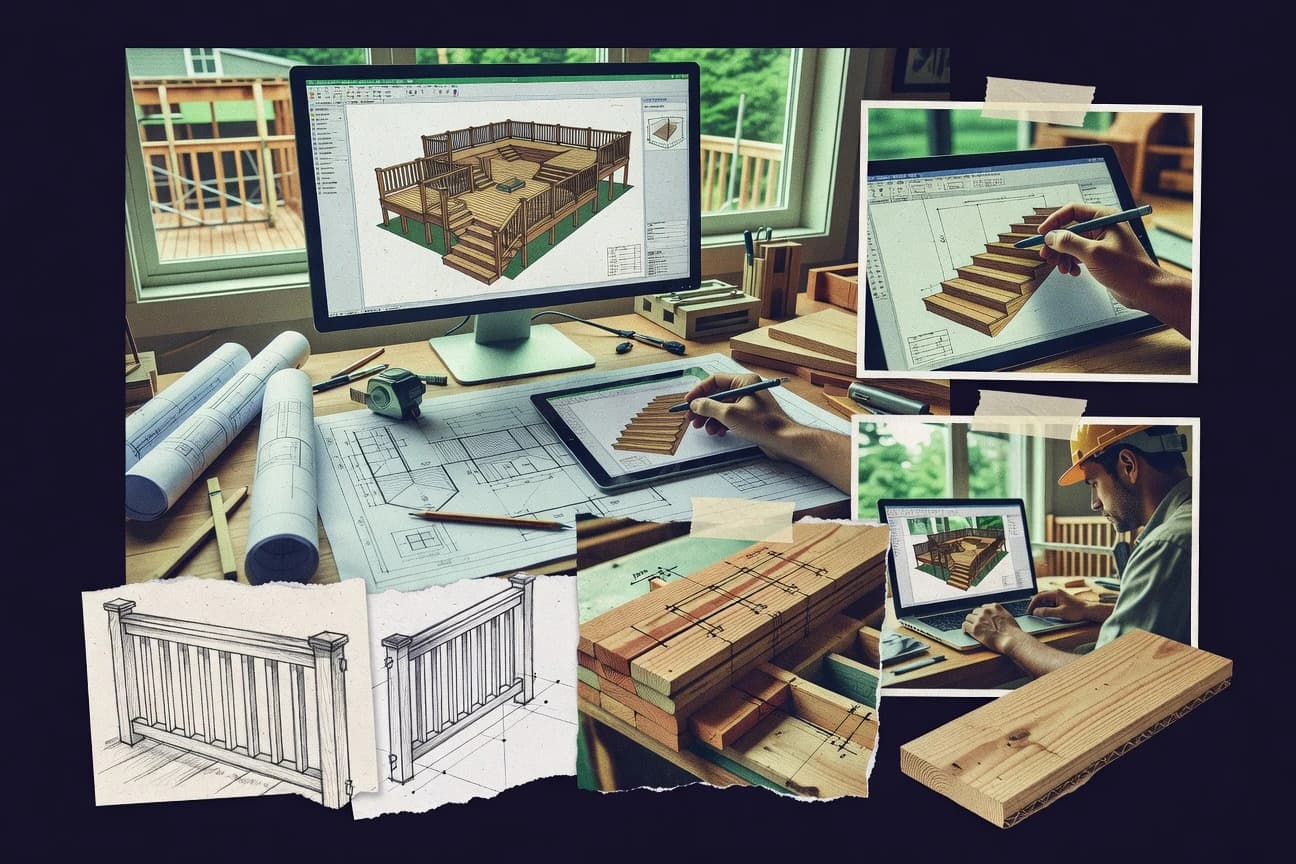
Top 10 deck plan software ranked for professional designs, with technical notes on Chief Architect, SmartDraw, RoomSketcher, and more.

How we ranked these tools
Core product claims cross-referenced against official documentation, changelogs, and independent technical reviews.
Analyzed video reviews and hundreds of written evaluations to capture real-world user experiences with each tool.
AI persona simulations modeled how different user types would experience each tool across common use cases and workflows.
Final rankings reviewed and approved by our editorial team with authority to override AI-generated scores based on domain expertise.
Score: Features 40% · Ease 30% · Value 30%
Gitnux may earn a commission through links on this page — this does not influence rankings. Editorial policy
Chief Architect is the right pick when you need professional, fast multi-level deck revisions with CAD-friendly outputs, whereas SmartDraw fits teams that want consistent deck plan drafting and detailed documentation without structural engineering calculations.
Editor’s top 3 picks
Three quick recommendations before you dive into the full comparison below — each one leads on a different dimension.
Chief Architect
Bidirectional linkage between deck geometry and generated plan, section, and 3D views reduces re-detailing time.
Built for fits when professional deck designers need fast multi-level revisions with CAD-friendly outputs..
SmartDraw
Editor pickDiagram-style drawing constraints automate alignment and spacing for plan visuals and detail annotations.
Built for fits when teams need consistent deck plan drafting and detail documentation without structural engineering calculations..
RoomSketcher
Editor pickDeck geometry changes immediately reflect in the 3D walkthrough, keeping client visualization aligned with the plan.
Built for fits when residential teams need fast, client-friendly deck layouts with CAD export for drafting handoff..
Comparison Table
Chief Architect
professional CADResidential design software that supports deck framing, layout, and construction planning.
Bidirectional linkage between deck geometry and generated plan, section, and 3D views reduces re-detailing time.
Deck design work in Chief Architect is built around plan-view drawing, 3D visualization, and section detail generation from the same model. The tool targets structural-style layout work like railing and framing configuration so that revisions propagate through associated drawings and views.
A key tradeoff is that deep structural checks and code compliance depend on how the project is modeled and which add-on workflows are used for engineering inputs. It fits a usage situation where deck geometry needs to be iterated quickly across multiple views, then exported for drafting handoff to builders or structural reviewers.
- +Multi-view deck modeling keeps plan, section, and 3D geometry aligned
- +Deck-specific detailing supports framing and railing layout within one workflow
- +DXF and DWG export help draft handoff to CAD-centric teams
- +PDF output supports direct plan sheet printing with controlled scaling
- –Structural engineering verification workflows are not the core focus of the deck toolset
- –Complex terrain edits can require repeated manual adjustments to maintain fit
Architectural drafting firms
Iterate deck plans across revisions
Fewer redraws across deliverables
Deck design consultants
Hand off to builder CAD
Cleaner downstream plan editing
Show 1 more scenario
Residential remodelers
Plan multi-level additions
Clearer customer review visuals
Use 2D and 3D modeling to coordinate deck stairs, railings, and connections for remodel constraints.
Best for: Fits when professional deck designers need fast multi-level revisions with CAD-friendly outputs.
SmartDraw
SMBDiagramming and home design software that includes deck planning templates and tools.
Diagram-style drawing constraints automate alignment and spacing for plan visuals and detail annotations.
SmartDraw is a good fit when deck deliverables focus on consistent plan visuals, dimensioning, and detail callouts instead of structural load rating or wind uplift calculations. The editor supports templates and style reuse for recurring elements like stair layouts and railing post spacing graphics, which reduces manual rework across versions. Multi-page document organization helps when the same deck design needs a plan sheet plus separate detail sheets. CAD and PDF export supports sharing with reviewers who need fixed-format outputs.
A key tradeoff is that SmartDraw does not act like a dedicated deck design engineering tool with footing placement grids or a cut list generator tied to joist spacing math. It is best used when teams already have structural calculations elsewhere and need drafting accuracy, consistent symbology, and repeatable cross-section detail export. Another tradeoff is that complex deck geometry often requires careful use of grouping and snap controls to keep polygon-like forms clean across revisions.
- +Template-driven plan layouts keep deck sheet formatting consistent
- +Layer and style controls support repeatable detail callouts
- +CAD and PDF export supports review workflows and handoff
- +Drawing tools handle dimensions and alignment with fewer manual steps
- –Not designed for structural load rating or wind uplift calculations
- –Deck-specific engineering outputs like cut lists require external tooling
- –Highly irregular geometry needs extra grouping and snap control
- –Advanced governance features for large organizations are limited
Architectural drafting teams
Produce standardized deck plan sheets
Fewer formatting changes
Residential remodel designers
Generate detail callout drawings
Clearer install handoff
Show 2 more scenarios
Engineering document coordinators
Publish CAD-ready deck drawings
Faster review cycles
Export to fixed and CAD formats supports downstream markup and plan approval workflows.
Small design firms
Maintain plan consistency across projects
Lower drafting rework
Multi-page documents and reusable assets support consistent deck sheet sets across multiple clients.
Best for: Fits when teams need consistent deck plan drafting and detail documentation without structural engineering calculations.
RoomSketcher
consumer designHome design and floor plan software that supports outdoor layout and deck visualization.
Deck geometry changes immediately reflect in the 3D walkthrough, keeping client visualization aligned with the plan.
RoomSketcher’s deck planning workflow emphasizes polygon-based layout adjustments, then carries changes into a 3D walkthrough that matches the drawn geometry. The output set supports client-ready plan sheets using PDF print scaling, and it also supports geometry handoff with CAD-oriented exports and model interchange options. The best fit shows up in projects where quick iteration matters, because deck layouts can be revised visually before finalizing documentation.
A key tradeoff is that structural engineering depth is limited compared with specialist deck design tools that compute detailed framing loads and footing grids. RoomSketcher fits situations where teams need consistent deck layouts, clear cross-section views for client communication, and export-ready documentation for downstream drafting.
Integration depth is also constrained for governance-heavy workflows, since administrative features focus on project access and sharing rather than deep API-driven provisioning. RoomSketcher works best when design staff own the model and collaboration stays within shared links and project permissions.
- +2D deck edits propagate into 3D walkthrough views quickly
- +Polygon deck editor workflow speeds irregular footprint layouts
- +PDF print scaling supports client-ready plan exports
- +CAD and model export options support downstream drafting
- –Structural load rating and detailed footing placement are not its core strength
- –Automation and integration depth beyond sharing is limited
- –Stair stringer generator coverage is narrower than framing-first tools
- –Advanced deck schedule output needs manual checking for construction use
Residential design firms
Iterate deck layouts with 3D previews
Fewer revision cycles with clients
Drafting coordinators
Produce scaled plan sheets
Cleaner client review documents
Show 2 more scenarios
CAD operators
Hand off geometry to CAD
Less re-tracing of footprints
Teams export deck geometry to support downstream CAD and model-based detailing.
Design project managers
Coordinate shared deck models
Tighter collaboration loops
Collaboration happens through project access and shared review links for cross-team feedback.
Best for: Fits when residential teams need fast, client-friendly deck layouts with CAD export for drafting handoff.
Cedreo
SMB3D home design software used to create floor plans, exterior layouts, and deck concepts.
Guided deck configuration that regenerates plan, sections, and quantities from layout inputs to keep iterations consistent.
Cedreo is a deck plan software used for residential and light commercial design workflows that combine interactive 2D views with automatic framing and material outputs. The tool focuses on a guided modeling flow where layout choices drive downstream outputs like dimensioned drawings, cut list style quantities, and presentation-ready visuals.
Cedreo also supports project file portability through common geometry and drawing exports, which helps teams hand off work to permitting and construction partners. Across typical deck scenarios, it prioritizes repeatable template-driven production over fully manual drafting.
- +Guided deck modeling reduces design steps for common residential layouts
- +Drawing outputs update from model changes without re-drafting
- +Export options support handoff to downstream drawing workflows
- +Project iterations stay consistent when using repeatable design parameters
- –Structural detail coverage is lighter than dedicated structural engineering tools
- –Advanced custom geometry needs workflow discipline to avoid manual cleanup
- –Some deck-specific detailing options require careful configuration to match standards
- –Complex multi-level layouts can take longer to validate visually
Best for: Fits when design teams need repeatable deck drawings and materials outputs with minimal drafting overhead.
Decks.com Deck Designer
vertical specialistWeb-based deck design tool focused on creating deck layouts and material plans.
Built-in DXF and DWG export paired with a component-aware layout workflow that preserves deck geometry across paper and CAD outputs.
Decks.com Deck Designer generates deck plans from a guided deck layout workflow that focuses on geometry, components, and material lists. The tool outputs printable plans and cut lists, and it supports common CAD-style exports like DXF and DWG for downstream detailing.
Deck design coverage includes multi-level layouts plus deck board pattern and railing planning workflows that reduce manual recomposition. Decks.com also provides a 3D deck walkthrough for visual QA before exporting drawings.
- +Guided deck layout flow keeps geometry and component placement consistent
- +DXF and DWG exports support handoff to CAD-based detailing workflows
- +Deck board pattern and railing planning reduce repetitive manual layout work
- +3D walkthrough helps catch slope, clearance, and framing alignment issues early
- –Structural engineering outputs are limited compared with dedicated structural design tools
- –Advanced custom framing details can require outside drawing edits after export
- –Works best for standard deck component libraries rather than fully bespoke assemblies
- –Automation depends on staying inside the tool’s input constraints for geometry
Best for: Fits when teams need fast, repeatable deck plan and cut list generation with CAD export handoff.
Trex Deck Designer
vertical specialistManufacturer-backed deck planning tool for layout, materials, and product selection.
Trex-linked deck design workflow that pairs layout drawing with Trex product selection steps.
Trex Deck Designer focuses on deck plan creation tied to Trex product selection and project steps. It provides a guided workflow for drawing a deck layout, reviewing design details, and producing documentation for build conversations.
Core capabilities include a polygon deck editor, deck board pattern tool inputs, and project output centered on diagrams suitable for field planning. Depth in structural engineering calculations appears limited versus dedicated structural design software, so framing specifics require careful cross-checking.
- +Guided deck workflow reduces plan setup time for common layouts
- +Polygon deck editor supports irregular deck footprints better than grid-only tools
- +Deck board pattern tool inputs help align plank orientation with layout intent
- +Exported plan views are oriented toward contractor and client review
- –Structural load rating and wind uplift calculation coverage is not designed for engineering signoff
- –Stair and railing detail generation can be less configurable than CAD-first tools
- –DXF export and DWG compatibility are not the primary output path for deep CAD reuse
- –Advanced terrain slope adaptation and footing placement grid workflows are limited
Best for: Fits when Trex material planning and visual deck plans matter more than engineering-grade analysis.
Moasure Deck Design Tool
vertical specialistMeasurement-led planning software for deck layouts and material estimation.
Deck board pattern tool lets board runs and spacing update from layout changes without rebuilding the model.
Moasure Deck Design Tool focuses on deck plan drafting plus construction documentation workflows, with outputs aimed at translating a design into build-ready sheets. The editor supports polygon deck layouts and multi-level deck builder inputs, so irregular footprints and transitions can be modeled in one project.
It generates deck framing deliverables and cut lists, then exports files for sharing and downstream drafting. DXF and DWG compatibility helps teams move geometry into CAD for detailing when the deck plan needs stricter drafting control.
- +Polygon deck editor handles irregular footprints without manual segment stitching
- +Cut list generator ties layout decisions to material quantities
- +Cross-section detail export supports framing and railing viewing workflows
- +DXF and DWG export enables CAD handoff for stricter detailing
- –Limited automation depth for structural checks compared with dedicated structural tools
- –Terrain slope adaptation coverage can require manual refinement for complex sites
Best for: Fits when residential deck teams need drafting plus cut lists and CAD export for detailing.
Land F/X
vertical specialistLandscape design plugin for AutoCAD and SketchUp with detailed deck and patio detailing tools.
Integrated multi-level deck builder workflow that maintains framing geometry consistency across elevations.
Land F/X is a deck plan software package aimed at deck design workflows that start with measured site context and move into printable construction outputs. It focuses on producing deck drawings and schedules with framing-oriented detail, including geometry tools for multi-level layouts and standard reporting outputs.
Land F/X is most useful when projects require repeatable deck framing templates and consistent export-to-print deliverables. Its core strength is keeping deck geometry, framing layout, and documentation aligned across the same design session.
- +Deck framing templates support faster repeatable layouts across similar plans
- +Multi-level deck builder workflow keeps elevations and framing in one place
- +DXF export and PDF print outputs reduce handoff friction for contractors
- +Cut list style outputs help standardize material ordering from the model
- –Stair and railing layout automation can require manual cleanup for complex geometry
- –Advanced structural load calculations depend on staying within supported design patterns
- –Terrain slope adaptation work is slower when many footings change per design iteration
- –Integration breadth is narrower than general-purpose CAD tools and add-on ecosystems
Best for: Fits when residential deck teams need fast framing templates and consistent drawing exports.
Punch! Home Design Studio
SMBConsumer and prosumer home design software with outdoor deck planning modules.
Polygon deck editor that maintains connected deck geometry for irregular footprints during iterative layout changes.
Punch! Home Design Studio creates deck plans with a dedicated deck design workflow that generates framing and layout geometry from interactive inputs. The software focuses on deck-specific detailing, including multi-level deck builder support and deck cut list style outputs tied to the drawn structure.
Users can produce visual documentation and export deliverables for review in standard formats used in residential projects. The tool is geared toward end-to-end drafting for decks rather than general diagramming.
- +Deck-focused workflow keeps layout, framing, and edits in one place
- +Polygon deck editor supports irregular deck shapes without manual segment work
- +DXF export supports downstream CAD workflows for deck detailing
- +Multi-level deck builder helps manage stacked deck footprints
- –Structural analysis depth is limited compared with dedicated structural design tools
- –Cantilever span checks and load rating reporting are not workflow-native
- –Railing post layout requires careful manual spacing adjustments for edge cases
- –Terrain slope adaptation is less automatic when grades change abruptly
Best for: Fits when residential remodel teams need fast deck drafting, DXF export, and multi-level layout edits.
Lumion
enterpriseReal-time 3D rendering software for architectural visualization including exterior decks and patios.
Real-time deck walkthrough rendering that turns imported geometry into review-ready visuals faster than plan-first toolchains.
Lumion focuses on fast 3D deck visualization workflows, with drag-and-place scene building and real-time rendering tuned for walkthrough output. Deck designers can model decks elsewhere and bring geometry into Lumion for context, materials, lighting, and client-ready stills.
The tooling is stronger for visual presentation than for code-governed framing calculations or detailed construction document automation. For deck plan deliverables, export and interoperability depend heavily on what other modeling software produced the deck geometry.
- +Real-time rendering supports rapid deck presentation iterations
- +Scene assets and materials speed up consistent deck look development
- +3D walkthrough output helps clients review deck massing and context
- +Import-ready workflow fits teams already using external deck modeling tools
- –Framing calculations and code checks for deck structural elements are not the core workflow
- –Construction document exports like cut lists need external deck planning tools
- –DXF or DWG-style plan extraction is not a primary deck planning output
- –Automation hinges on the quality of geometry produced outside Lumion
Best for: Fits when teams need client-ready 3D deck walkthroughs from models built in CAD.
Conclusion
After evaluating 10 construction infrastructure, Chief Architect stands out as our overall top pick — it scored highest across our combined criteria of features, ease of use, and value, which is why it sits at #1 in the rankings above.
Use the comparison table and detailed reviews above to validate the fit against your own requirements before committing to a tool.
How to Choose the Right deck plan software
Deck plan software turns a deck designer’s geometry inputs into repeatable drawings like plans and sections, with export paths into CAD and presentation workflows. This guide covers Chief Architect, SmartDraw, RoomSketcher, Cedreo, Decks.com Deck Designer, Trex Deck Designer, Moasure Deck Design Tool, Land F/X, Punch! Home Design Studio, and Lumion.
The most consistent differentiators show up in how changes propagate between plan views and 3D views, how much deck-specific detailing is workflow-native, and how much structural engineering verification stays inside the tool. Chief Architect is highlighted for bidirectional linkage between deck geometry and generated plan, section, and 3D views, while RoomSketcher is highlighted for immediate reflection of 2D edits in the 3D walkthrough.
Deck plan software for generating multi-view deck drawings, detailing, and exports
Deck plan software models deck geometry and outputs drafting artifacts like plans, sections, and deck walkthrough views, then links those outputs back to edits so teams re-detail less. A tool such as Chief Architect keeps plan, section, and 3D geometry aligned through bidirectional linkage, which reduces time spent re-detailing after layout revisions.
Deck plan software can also generate materials and documentation outputs, and the depth of engineering coverage varies by tool. SmartDraw emphasizes diagram-style drawing constraints for consistent plan visuals and detail annotations, while RoomSketcher focuses on client-friendly 2D-to-3D propagation and a polygon deck editor workflow for irregular footprints.
Deck-plan change propagation, deck-detail depth, and export handoff
Professional deck-plan work depends on whether edits in one representation update the rest of the documentation instead of forcing manual rework. Chief Architect and RoomSketcher both center that workflow with geometry edits that propagate into downstream views and walkthroughs.
Deck plan software also varies sharply in how much deck-specific detailing is generated inside the tool versus delegated to CAD or external structural steps. SmartDraw and Lumion prioritize drafting consistency and presentation output, while Chief Architect and Cedreo focus more on deck-native documentation cycles and component-level layouts.
Bidirectional plan-to-section-to-3D linkage
Chief Architect links deck geometry to generated plan, section, and 3D views so teams re-detail less after revisions. RoomSketcher delivers fast 2D-to-3D reflection so the 3D walkthrough stays aligned during layout iteration.
Deck drawing workflow with deck-native regeneration
Cedreo uses guided deck configuration to regenerate plan, sections, and quantities from layout inputs to keep iterations consistent. Chief Architect keeps framing and railing layout aligned inside the same deck workflow via its deck-specific detailing.
CAD handoff outputs that preserve geometry
Decks.com Deck Designer includes built-in DXF and DWG export tied to a component-aware layout workflow that preserves deck geometry across outputs. Lumion supports client-ready deck walkthrough visuals faster by turning imported geometry into review-ready rendering, but it does not provide engineering-grade construction document outputs like cut lists.
Deck-specific detailing depth versus engineering signoff coverage
SmartDraw supports diagram-style drawing constraints for consistent plan visuals and repeatable annotations, but it is not designed for structural load rating or wind uplift calculations. Chief Architect provides deck-specific detailing aligned across multiple views while structural engineering verification workflows are not the core focus of the deck toolset.
Irregular footprints and polygon-based editing
RoomSketcher uses a polygon deck editor workflow that speeds irregular footprint layouts and keeps 3D walkthrough updates tied to edits. Punch! Home Design Studio uses a polygon deck editor that maintains connected deck geometry for irregular shapes during iterative layout changes.
Choose by workflow engine: regenerative deck drawing, diagram constraint drafting, or visualization-first handoff
The right deck plan software matches the team’s main loop: model once and regenerate outputs, draft with constrained diagrams for consistency, or move fast to client walkthroughs using imported geometry. Chief Architect is the strongest match when the loop needs bidirectional linkage between deck geometry and generated plan, section, and 3D views.
The selection also depends on where engineering checks live in the workflow. SmartDraw and Lumion keep deck documentation and presentation moving without native structural engineering calculations, while Chief Architect and Cedreo focus on deck-native documentation cycles with lighter structural verification inside the deck tool itself.
Map revisions to the same loop that produces drawings
If deck layout edits must automatically update plan and sections, select Chief Architect for bidirectional linkage between deck geometry and generated plan, section, and 3D views. If the priority is keeping client visualization synced during iterative 2D edits, select RoomSketcher because 2D deck edits reflect immediately in its 3D walkthrough.
Pick a generator style that matches how the team works
If the team runs on repeatable configurations and wants plan and quantities to regenerate from guided layout inputs, choose Cedreo for guided deck configuration that updates drawing outputs from model changes. If the team needs CAD export with a deck-aware component layout workflow, choose Decks.com Deck Designer for built-in DXF and DWG export.
Decide whether the tool must carry deck engineering logic or only drafting
If structural load rating and wind uplift calculation must stay inside the tool, treat SmartDraw and Lumion as drafting and presentation tools rather than engineering check engines. If the workflow can accommodate structural engineering steps outside the deck plan tool while the deck detailing and multi-view documentation stay native, Chief Architect can fit because structural verification workflows are not its deck-tool core focus.
Select for irregular geometry tolerance and editing stability
If decks frequently use irregular footprints, prioritize polygon workflows like RoomSketcher’s polygon deck editor or Punch! Home Design Studio’s polygon deck editor with connected deck geometry. If the team works with irregular shapes but wants material quantity output tied to layout decisions, prioritize Moasure Deck Design Tool because its deck board pattern tool and cut list generator tie layout changes to material quantities.
Align material planning needs with the tool’s deck design scope
If the workflow centers on a specific decking catalog and plan generation tied to product selection, pick Trex Deck Designer for its Trex-linked deck design workflow and its polygon deck editor support. If the workflow needs broader drafting plus quantity deliverables without a single-brand product tie-in, consider Moasure Deck Design Tool for board pattern-driven spacing updates and cut list generation.
Use terrain complexity handling as a decision gate
If sites involve complex terrain edits that must stay stable across updates, weigh Chief Architect’s note that complex terrain edits can require repeated manual adjustments to maintain fit. If the workflow avoids heavy terrain refinement and focuses on faster residential layouts, Land F/X may fit because its multi-level deck builder keeps framing geometry consistency across elevations, but stair and railing automation can need manual cleanup for complex geometry.
Who deck plan software is for
Deck plan software fits teams that convert deck geometry into consistent plan deliverables and then iterate without re-drawing every view. The best match depends on whether the team treats the tool as a deck-native generator engine or as a drafting constraint and export layer.
Chief Architect targets professionals who need synchronized plan, section, and 3D outputs with deck-specific detailing, while SmartDraw suits teams producing consistent deck plan visuals and annotation standards without structural calculations. Lumion targets teams that need fast review-ready deck walkthrough rendering from imported geometry.
Professional deck designers producing multi-view drawings for revisions
Chief Architect is built around multi-view deck modeling that keeps plan, section, and 3D geometry aligned, which reduces re-detailing after layout changes.
Residential teams prioritizing client visualization during layout iteration
RoomSketcher keeps 2D deck edits reflected immediately in its 3D walkthrough, which keeps client walkthrough discussions aligned with the plan.
Teams that need consistent drafting layouts and annotation rules
SmartDraw uses template-driven plan layouts with layer and style controls for repeatable detail callouts, even though it does not provide structural load rating or wind uplift calculations.
Design teams preparing CAD handoff files for detailing pipelines
Decks.com Deck Designer ships with built-in DXF and DWG export paired with a component-aware layout workflow so geometry and component placement stay consistent through handoff.
Teams emphasizing deck walkthrough rendering over deck engineering documentation
Lumion provides real-time deck walkthrough rendering from imported geometry for rapid presentation iterations, while it does not provide framing calculations and code checks for deck structural elements.
Common buying and workflow mistakes
Deck plan software often fails when teams expect structural engineering signoff from tools built primarily for drafting, regeneration, or visualization. The mismatch shows up as missing load rating and wind uplift calculation workflows or as required manual cleanups after exports.
Another frequent failure mode is choosing a tool for irregular decks without checking polygon stability and downstream export expectations, which leads to rework when footprints get complex or when terrain edits must remain consistent.
Assuming a diagram-drafting tool covers structural engineering checks
SmartDraw focuses on diagram-style drawing constraints for alignment and spacing and supports consistent plan visuals. It is not designed for structural load rating or wind uplift calculations, so structural checks must live outside the drafting workflow.
Treating visualization output as a construction-document source
Lumion produces real-time deck walkthrough rendering for presentation speed. It does not provide framing calculations and code checks for deck structural elements, and construction document exports like cut lists need external deck planning tools.
Selecting a tool for guided layouts but not matching its structural detail coverage
Cedreo regenerates plan, sections, and quantities from guided configuration, which reduces redrafting overhead. Structural detail coverage is lighter than dedicated structural engineering tools, so engineering-grade workflows may require external steps.
Ignoring terrain sensitivity in iterative updates
Chief Architect notes that complex terrain edits can require repeated manual adjustments to maintain fit. Teams with heavy grading and slope adaptation needs should validate terrain change stability during revisions before standardizing on the tool.
Underestimating irregular-footprint editing requirements
Polygon deck editor workflows are designed to keep irregular footprints connected during iterative layout changes. RoomSketcher and Punch! Home Design Studio both emphasize polygon deck editing, while teams that rely on grid-only drafting often face manual segment stitching.
How We Selected and Ranked These Tools
We evaluated Chief Architect, SmartDraw, RoomSketcher, Cedreo, Decks.com Deck Designer, Trex Deck Designer, Moasure Deck Design Tool, Land F/X, Punch! Home Design Studio, and Lumion using features that drive deck plan revision cycles, multi-view consistency, and export handoff fit. Features counted for 40% of the score, and ease counted for 30% with value at 30% to balance drafting speed and workflow friction.
Chief Architect ranked highest because its bidirectional linkage keeps deck geometry synchronized across generated plan, section, and 3D views, which reduces re-detailing after layout revisions. These scoring components also reflected category fit, since SmartDraw and Lumion rate lower when structural load rating and wind uplift calculation or deck construction-document outputs are not workflow-native.
Frequently Asked Questions About deck plan software
How does Chief Architect keep multi-level deck edits consistent between plan and 3D views?
When should a team choose SmartDraw over a CAD-oriented deck workflow?
How does RoomSketcher handle geometry changes so the 3D deck walkthrough matches the 2D plan?
What outputs can Cedreo regenerate automatically after guided deck configuration inputs?
Which tools provide DXF and DWG exports that preserve deck geometry for downstream CAD detailing?
What tradeoff appears when selecting Trex Deck Designer instead of structural-focused design software?
How does Moasure Deck Design Tool manage irregular footprints using polygon editing?
Where does Land F/X fall short compared with a CAD-centric deck modeller for construction-document workflows?
When does Punch! Home Design Studio’s polygon deck editor become the better option for remodel teams?
How does Lumion’s workflow affect the deck deliverables when the goal is plan-first construction documentation?
Tools reviewed
Primary sources checked during evaluation.
Referenced in the comparison table and product reviews above.
- Construction InfrastructureTop 10 Best Construction Plan Software of 2026
- Business FinanceTop 10 Best Board Deck Software of 2026
- Business FinanceTop 10 Best Project Plan Software of 2026
- Construction InfrastructureTop 10 Best Design Construction Software of 2026
- Business FinanceTop 10 Best Pitch Deck Software of 2026
Keep exploring
Comparing two specific tools?
Software Alternatives
See head-to-head software comparisons with feature breakdowns, pricing, and our recommendation for each use case.
Explore software alternatives→In this category
Construction Infrastructure alternatives
See side-by-side comparisons of construction infrastructure tools and pick the right one for your stack.
Compare construction infrastructure tools→