
GITNUXSOFTWARE ADVICE
Construction InfrastructureTop 10 Best Roof Measurement Software of 2026
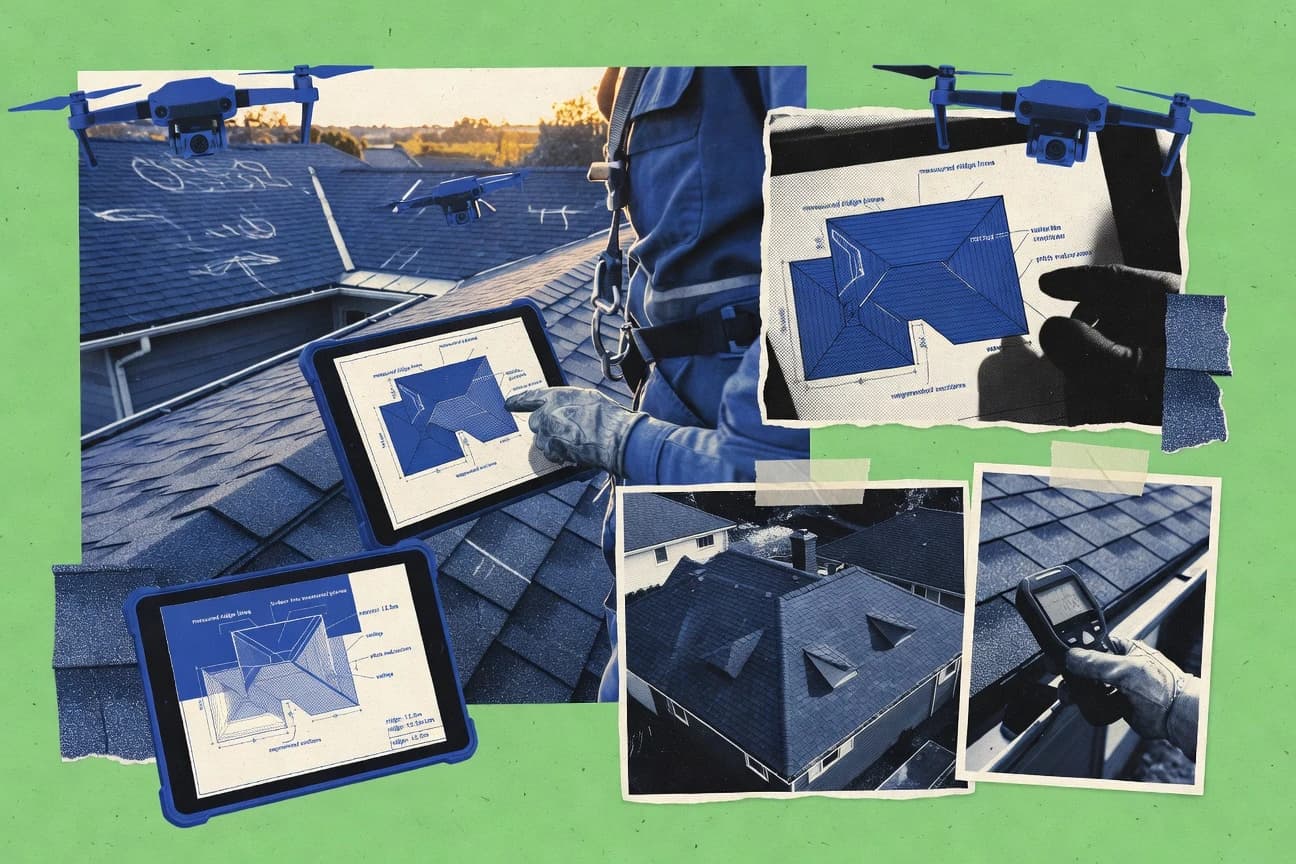
Top 10 roof measurement software ranked for roofing pros, comparing features and accuracy across tools like EagleView, iRoofing, and GAF QuickMeasure.

How we ranked these tools
Core product claims cross-referenced against official documentation, changelogs, and independent technical reviews.
Analyzed video reviews and hundreds of written evaluations to capture real-world user experiences with each tool.
AI persona simulations modeled how different user types would experience each tool across common use cases and workflows.
Final rankings reviewed and approved by our editorial team with authority to override AI-generated scores based on domain expertise.
Score: Features 40% · Ease 30% · Value 30%
Gitnux may earn a commission through links on this page — this does not influence rankings. Editorial policy
iRoofing is the best fit for roofing contractors who want one mobile workflow for aerial measurements, inspection notes, and client-ready proposals, whereas EagleView is the right alternative when you need remotely sourced roof data at operational scale.
Editor’s top 3 picks
Three quick recommendations before you dive into the full comparison below — each one leads on a different dimension.
iRoofing
Integrated roof measurement and manufacturer product visualization connect property data with customer-ready roofing presentations.
Built for fits when roofing contractors need field measurement, estimating, inspection notes, and product presentations in one mobile workflow..
GAF QuickMeasure
Editor pickAnnotated roof diagram output is generated from a guided measurement flow and packaged for estimating report delivery.
Built for fits when roofing teams standardize measurement reports for property-by-property estimating under GAF workflows..
EagleView
Editor pickPictometry oblique imagery paired with automated roof geometry extraction supports detailed remote assessments.
Built for fits when insurers, contractors, or property managers need remotely sourced roof measurements at operational scale..
Comparison Table
iRoofing
vertical specialistRoofing sales and measurement app offering aerial measurements, proposals, and material ordering.
Integrated roof measurement and manufacturer product visualization connect property data with customer-ready roofing presentations.
iRoofing provides roof outlines, roof planes, pitch readings, photos, notes, and annotated diagrams for replacement estimates. Its product catalog and visualization features help contractors connect measured areas with manufacturer-specific roofing materials during customer consultations.
The workflow depends on available imagery and manual adjustments for complex structures, so users must review every measurement before quoting. iRoofing fits field teams that measure properties onsite, prepare estimates, and present product options from tablets or phones.
- +Combines roof measurement, inspections, estimating, and product presentation in one app
- +Supports satellite imagery with manual roof tracing and pitch capture
- +Includes manufacturer product catalogs for customer-facing material presentations
- +Captures photos, notes, and annotations during property visits
- –Measurement quality depends on imagery coverage and manual review
- –Complex roof geometry may require substantial tracing corrections
- –Advanced enterprise administration and API capabilities receive less emphasis
- –Mobile-first workflows may feel less convenient for office-only estimating
Roof replacement contractors
Measure properties before quoting
Faster quote preparation
Roofing sales teams
Present product options onsite
Clearer customer decisions
Show 1 more scenario
Roof inspection crews
Document storm and damage findings
More complete inspection records
Field users attach photos, annotations, and inspection notes to property records from mobile devices.
Best for: Fits when roofing contractors need field measurement, estimating, inspection notes, and product presentations in one mobile workflow.
GAF QuickMeasure
vertical specialistGAF QuickMeasure delivers digital roof measurement reports for roofing projects.
Annotated roof diagram output is generated from a guided measurement flow and packaged for estimating report delivery.
GAF QuickMeasure guides users through creating an annotated roof diagram with measured roof facets, then prepares a measurement report for downstream estimating. It supports both visual output and data export, including PDF export and CSV export, so measurements can be reviewed and reused outside the tool. The process is structured for faster turnaround on single-property measurement with consistent naming and package outputs.
A tradeoff is that QuickMeasure’s workflow is optimized around the GAF estimation context, so teams seeking a vendor-neutral measurement data model may find the exports less directly reusable. It fits best when a contractor or sales ops team needs standardized measurement packages for property-by-property roof replacement estimates.
- +Guided roof outlining produces consistent measurement packages
- +PDF export and CSV export support both review and reuse
- +Facet-based results map cleanly to estimating report workflows
- +Fast turnaround for single-property measurement reviews
- –GAF-centric workflow limits vendor-neutral integration depth
- –Advanced custom workflows require process workarounds
- –API integration is not the primary path for core measurement setup
- –Complex multi-roof portfolios need careful naming discipline
Roofing sales teams
Prepare measurement PDFs for prospects
Faster proposal package assembly
Estimating coordinators
Reuse exported measurement data
Reduced manual data entry
Show 2 more scenarios
Branch operations teams
Standardize single-property measurement
More uniform quote inputs
Apply a repeatable roof measurement workflow across multiple projects within the same process.
Partner channel managers
Deliver measurement packages to partners
Fewer handoff issues
Provide consistent report outputs that partners can use to continue estimating work.
Best for: Fits when roofing teams standardize measurement reports for property-by-property estimating under GAF workflows.
EagleView
enterpriseEagleView provides aerial imagery, roof reports, and measurement data for roofing operations.
Pictometry oblique imagery paired with automated roof geometry extraction supports detailed remote assessments.
EagleView combines Pictometry oblique imagery with automated aerial roof measurement to give contractors, insurers, and property managers a remote view of roof structure. Reports include annotated diagrams, dimensions, pitch information, imagery, and material quantity estimates. API access supports integration with estimating workflows and internal property data systems.
The main tradeoff is dependence on available imagery, which cannot show concealed damage or conditions that changed after capture. A roofing contractor can use EagleView before a site visit to prepare an initial replacement estimate and identify properties requiring closer inspection. Larger organizations can order assessments across multiple properties instead of handling each address manually.
- +High-resolution oblique imagery adds context beyond straight-down aerial views.
- +Reports include dimensions, pitch, diagrams, imagery, and material waste calculations.
- +API access supports integration with estimating and claims systems.
- +Portfolio workflows support repeated property assessments for larger operations.
- –Imagery availability and capture age vary by property and geography.
- –Advanced integrations may require implementation work from internal technical teams.
- –Remote imagery cannot show concealed damage or current site conditions.
- –Output depth differs across report types and selected service configurations.
Insurance claims adjusters
Storm claim property triage
Faster initial claim triage
Roofing contractors
Remote replacement estimates
Earlier estimate preparation
Show 1 more scenario
Property portfolio managers
Multi-site roof screening
Prioritized inspection queues
Teams compare standardized property reports across locations and prioritize assets needing physical inspection.
Best for: Fits when insurers, contractors, or property managers need remotely sourced roof measurements at operational scale.
Aerial Measurements by OneClickCode
vertical specialistAerial roof measurement reporting platform delivering reports with perimeter, area, and pitch data.
Annotated roof diagram generation from aerial inputs with captured roof facets geared for estimating-system handoff.
Aerial Measurements by OneClickCode turns aerial roof measurement projects into estimate-ready outputs with an imagery-to-diagram workflow and measurable roof geometry. It supports georeferenced inputs and produces annotated roof diagrams plus dimensional sketches used for downstream roof replacement estimates. The solution focuses on single-property measurement and portfolio-style reuse of measurement outputs across jobs.
- +Georeferenced imagery workflow ties roof outline to measurement outputs
- +Annotated roof diagrams and dimensional sketches support estimating handoff
- +Project reuse helps teams standardize roof facet capture
- +Multi-property operation supports portfolio measurement runs
- –Limited documentation depth on API and automation surface
- –Export coverage centers on diagram and sketch outputs rather than analytics formats
- –Less control over measurement confidence presentation than some tools
- –Setup requires consistent reference imagery alignment practices
Best for: Fits when crews need aerial roof measurement outputs that convert into consistent annotated diagrams for estimating workflows.
Measure My Roof
SMBOnline roof measurement tool providing area calculations and material estimates from aerial data.
Annotated roof diagram generation that stays tied to roof-plane measurements used for the measurement report.
Measure My Roof converts roof geometry inputs into measurement reports with an annotated roof diagram and dimensional sketch. The workflow targets single-property and multi-property projects by keeping measurements tied to roof planes, pitches, and key edges.
Output support includes PDF export and CSV export for downstream estimating-system integration. The product focuses on repeatable roof replacement estimate inputs driven by consistent measurements and clearly documented assumptions.
- +Creates annotated roof diagrams linked to roof planes and edges
- +Supports both PDF export and CSV export for handoff
- +Handles single-property and multi-property measurement workflows
- +Keeps measurement assumptions together with the measurement report
- –Limited imagery-to-outline automation for aerial and satellite inputs
- –API and extensibility details are not prominent in core documentation
- –Roof facet editing takes multiple steps for complex shapes
- –Less governance control than enterprise estimating teams expect
Best for: Fits when contractors need repeatable measurements and exportable sketches across a small portfolio.
Roof Lens
vertical specialistAI-assisted roof measurement platform generating reports from satellite and aerial imagery.
Image-to-annotated roof diagram generation that keeps facet-level measurements aligned with the rendered sketch.
Roof Lens targets roof measurement workflows that need imagery-based dimensional outputs tied to a property or portfolio. Core capabilities center on generating an annotated roof diagram, deriving roof facet and pitch-related measurements, and producing a measurement report suitable for handoff and estimation.
The workflow emphasizes repeatable single-property measurement with export options like PDF and CSV for downstream estimating-system integration. Built-in automation focuses on turning georeferenced inputs into consistent diagrams rather than requiring manual sketching for every revision.
- +Generates annotated roof diagrams for clear measurement handoff
- +Exports measurement data for CSV-driven downstream estimation
- +Supports multi-edit iterations on a single property measurement
- +Produces reporting outputs that reduce manual doc formatting
- –API integration coverage is not as extensive as measurement-first peers
- –Georeferenced imagery quality can cap measurement confidence
- –Complex portfolios need tighter workflow discipline to stay consistent
- –Advanced controls for measurement governance are limited
Best for: Fits when teams need consistent annotated measurements and report exports for property-level estimating.
HOVER
enterpriseHOVER creates measured 3D property models and roof data from property imagery.
Client-ready measurement reporting from annotated roof work with configurable export formats for estimating handoff.
HOVER focuses on browser-based roof measurement workflows that turn uploaded imagery into an annotated measurement output for client-ready reporting. It supports single-property measurements and repeatable multi-property usage, keeping outputs consistent across projects.
The workflow centers on roof geometry capture and measurement report generation with export options for downstream estimating-system integration. Admin and team controls support project governance for organizations running multiple measurements in parallel.
- +Browser workflow reduces friction between field capture and review
- +Repeatable project structure helps keep measurement outputs consistent
- +Exports support handoff to estimating-system integration workflows
- +Team-oriented project management fits multi-measurer operations
- –Automation surface is limited compared with tools that offer deep API coverage
- –Role and governance options are not granular enough for complex enterprises
- –Reporting templates need manual adjustment for unusual roof types
- –High-volume portfolios can hit throughput limits during rendering and exports
Best for: Fits when mid-size roof assessment teams need a browser workflow for consistent reporting across multiple properties.
RoofSnap
SMBRoofSnap provides roof measurements, aerial takeoffs, estimates, and proposals for contractors.
Annotated roof diagram output that links roof outline interpretation to roof facets and edge measurements for direct reporting.
RoofSnap targets roof measurements by turning aerial and sketch inputs into an annotated measurement workflow for estimating and reporting. It focuses on producing a dimensional sketch that maps roof outlines to roof facets and edges so teams can translate imagery into plan-view quantities. Measurement outputs center on exportable diagrams and reports for downstream estimating-system use, with per-property measurement sessions for clear handoff.
- +Creates annotated roof diagrams tied to roof facets and edges for clearer takeoffs
- +Generates measurement reports and dimensional sketches for estimating handoff
- +Keeps work organized around single-property measurement sessions
- +Exports outputs for reuse in measurement documentation workflows
- –Automation and API surface are limited for portfolio-scale ingestion
- –Advanced governance controls like fine-grained RBAC are not central to the workflow
- –Workflow throughput depends on manual review of annotated geometry
- –Complex multi-building projects can require extra coordination
Best for: Fits when teams need repeatable annotated roof diagrams and measurement reports per property.
RoofV
SMBAI-powered satellite roof measurement tool producing branded PDF reports with pitch-adjusted area and waste factor.
Annotated roof diagram generation tied to computed roof facets, planes, and pitch for a measurement-ready output set.
RoofV takes aerial roof measurements from imported imagery and generates an annotated roof diagram with measurable roof facets. It supports per-property roof outline capture, roof plane and pitch calculations, and exports measurement reports for downstream estimating workflows.
RoofV also targets multi-property usage with consistent measurement structure across projects. The workflow centers on turning georeferenced imagery into repeatable measurements with an audit-ready set of outputs for roof replacement estimating.
- +Generates a structured measurement diagram from imported aerial imagery
- +Computes roof planes and pitch from captured geometry for reporting
- +Supports multi-property consistency in measurement outputs
- +Provides exportable measurement reports for estimating-system integration
- –Annotation and geometry capture needs more manual interaction than automated pipelines
- –API integration coverage is unclear for high-throughput portfolio ingestion
- –Limited visible controls for measurement confidence handling in reports
- –Workflow requires consistent input imagery quality to avoid geometry drift
Best for: Fits when roof teams need repeatable measurements from aerial imagery and report exports for estimating workflows.
SquareCount
SMBSatellite roof measurement software with editable material lists, valley and ridge takeoffs, and a job cost estimator.
Annotated roof diagrams and dimensional sketch outputs are generated in the same review workflow for measurement context.
SquareCount is a roof measurement workflow tool used by property and roofing teams to turn aerial imagery into measurement-ready outputs for estimating. It focuses on producing annotated roof diagrams and dimensional sketches tied to a single property so measurements can be reviewed and reused.
Export options support downstream workflows like CSV-based data handling and document generation with measurement reports. Where accuracy depends on imagery context, SquareCount records imagery date context to keep reports traceable to the capture used.
- +Produces annotated roof diagrams with measurement-ready dimensional sketch outputs
- +Single-property workflow supports consistent review and revision cycles
- +Exports measurement data for estimating-system integration via CSV
- +Captures imagery date context for report traceability
- –Limited detail on API surface and automation endpoints for custom pipelines
- –Does not prioritize multi-property portfolio batch processing workflows
- –Governance controls like RBAC and audit log details are not clearly presented
- –Configuring measurement confidence thresholds lacks clear documented controls
Best for: Fits when teams need annotated roof diagrams and CSV exports from aerial capture for estimate preparation.
Conclusion
After evaluating 10 construction infrastructure, iRoofing stands out as our overall top pick — it scored highest across our combined criteria of features, ease of use, and value, which is why it sits at #1 in the rankings above.
Use the comparison table and detailed reviews above to validate the fit against your own requirements before committing to a tool.
How to Choose the Right roof measurement software
Roof measurement software turns aerial or field capture into annotated roof diagrams, dimensional sketches, and export-ready measurement reports for estimating teams. This buyer guide covers iRoofing, GAF QuickMeasure, EagleView, and the remaining top options based on how they handle guided outlining, geometry extraction, and reporting handoff.
iRoofing is evaluated for integrated roof measurement plus manufacturer product visualization, while GAF QuickMeasure is evaluated for guided roof outlining that outputs standardized measurement packages. EagleView is evaluated for Pictometry oblique imagery that supports automated roof geometry extraction, and the rest of the list is assessed on how repeatable outputs stay across single-property and multi-property workflows.
Roof measurement software for converting aerial and field capture into annotated takeoffs
Roof measurement software takes satellite roof measurement, drone roof measurement, or manual roof tracing inputs and produces a roof outline, roof facets, and roof-plane measurements that feed estimating. Output formats like PDF and CSV export drive downstream measurement report delivery and review cycles.
iRoofing connects measurement to customer-ready roofing presentations and supports satellite imagery with manual roof tracing and pitch capture. GAF QuickMeasure generates an annotated roof diagram from a guided measurement flow and packages it for estimating report delivery with PDF export and CSV export support.
Roof measurement outputs, export formats, and integration control points
Roof measurement software must turn imagery or field capture into a consistent roof outline, roof facets, and roof-plane measurements that estimating systems can consume. The most usable tools generate annotated roof diagrams plus dimensional sketch outputs that match the measurement structure crews use.
Category differences show up in how guided outlining stays consistent, how imagery-to-geometry extraction behaves, and how export packaging supports handoff. The review process also tracks how much automation and API integration depth exists beyond PDF export and CSV export for downstream pipelines.
Guided outlining that produces standardized annotated diagrams
GAF QuickMeasure generates an annotated roof diagram from a guided measurement flow and packages it for estimating report delivery. iRoofing also emphasizes mobile capture with manual roof tracing and pitch capture while keeping outputs tied to roof presentation workflows.
Oblique imagery and automated roof geometry extraction
EagleView pairs pictometry oblique imagery with automated roof geometry extraction to produce measurement-rich reports. By contrast, SquareCount and RoofV focus on structured annotated outputs after imported aerial imagery with more manual interaction than fully automated pipelines.
Facet-aligned measurement consistency between sketch and computed geometry
Roof Lens keeps facet-level measurements aligned with the rendered annotated sketch to preserve handoff fidelity. RoofSnap ties roof outline interpretation to roof facets and edge measurements so takeoffs stay consistent with the diagram.
Measurement-to-export packaging for estimating-system handoff
GAF QuickMeasure supports both PDF export and CSV export so teams can review diagrams and reuse measurement data in estimating systems. Measure My Roof and Roof Lens also provide CSV export alongside diagram outputs to keep the measurement report and the measurement dataset synchronized.
Imagery coverage and capture age impact on measurement confidence
EagleView performance depends on imagery availability and capture age, which can change measurement outcomes across geography. iRoofing similarly ties measurement quality to imagery coverage and manual review when tracing corrections are needed for complex roof geometry.
Automation and API surface for portfolio-scale throughput
EagleView supports remote operational scale workflows through its imagery-backed extraction and report packaging. Hover and RoofSnap show more limited automation surface for teams that need multi-property ingestion into downstream estimating systems.
How to choose roof measurement software by workflow fit and integration depth
Start with the workflow type, because guided field measurement tools and imagery-driven extraction tools produce different handoff artifacts and different levels of manual correction. Then confirm that export formats match the receiving process, because diagram-only exports create extra work for teams that need structured measurement datasets.
Finally, check automation and API integration depth against portfolio scale needs. Single-property review loops can work with browser workflows and CSV export, while portfolio ingestion needs documented API integration and extensibility for consistent provisioning and data routing.
Pick a capture philosophy: guided outlining or automated geometry extraction
Choose GAF QuickMeasure when a guided measurement flow should generate a repeatable annotated roof diagram package for estimating report delivery. Choose EagleView when pictometry oblique imagery should feed automated roof geometry extraction for detailed remote assessments with measurement context.
Match output structure to estimating consumption: diagrams-only versus diagram plus dataset
Choose Measure My Roof when annotated roof diagrams must stay linked to roof-plane measurements while exports include both PDF export and CSV export. Choose Roof Lens when facet-level measurement alignment between the annotated sketch and the underlying measurements is critical for consistent takeoffs.
Validate complexity handling for roofs with many facets and intersecting lines
Choose iRoofing when mobile workflows can combine manual roof tracing and pitch capture with integrated roof measurement plus manufacturer product visualization for customer-ready presentations. Choose RoofSnap when the workflow centers on annotated roof diagrams tied to roof facets and edge measurements that support direct reporting.
Confirm imagery dependence and correction effort for remote or aerial inputs
Choose EagleView when oblique imagery coverage is available for the property set, because measurement outcomes rely on imagery availability and capture age. Choose Aerial Measurements by OneClickCode when a georeferenced imagery workflow should tie roof outline to annotated diagram and dimensional sketch outputs for estimating handoff.
Check integration depth and automation surface for multi-property throughput
Choose iRoofing when the workflow also needs product visualization tied to the measurement record, because it combines measurement and customer-ready roofing presentations in one mobile app. Choose HOVER when a browser workflow is the priority, because it reduces friction for review and export consistency while keeping automation surface limited for complex enterprise governance.
Limit manual correction by verifying how much interaction the pipeline requires
Choose RoofV when imported aerial imagery should generate structured measurement diagrams with computed roof planes and pitch, but expect more manual interaction than fully automated pipelines. Choose SquareCount when a single-property workflow with annotated diagrams and dimensional sketch outputs fits consistent review and revision cycles.
Who roof measurement software is for
Roof measurement software fits teams that must convert aerial roof measurement, satellite roof measurement, drone roof measurement, or manual roof tracing into annotated roof diagrams and estimating-ready measurement reports. The best fit depends on whether the team values guided consistency, imagery-backed extraction detail, or repeatable single-property review loops.
Tools also differ in how they support downstream handoff and governance needs, so selection should reflect portfolio scale and the receiving system’s required export formats.
Residential or commercial roofing contractors doing field capture plus customer presentation
iRoofing connects roof measurement with manufacturer product visualization so measurement output can flow into customer-ready roofing presentations while field capture uses manual roof tracing and pitch capture.
Estimating teams standardizing report outputs across many properties under a vendor workflow
GAF QuickMeasure produces guided outlining results that package into estimating report delivery, and it supports both PDF export and CSV export for review and reuse.
Insurers, contractors, and property managers needing remote assessments at operational scale
EagleView uses pictometry oblique imagery plus automated roof geometry extraction to provide detailed reports with dimensions, pitch, diagrams, imagery, and material waste calculations.
Mid-size assessment teams using browser-based review and repeatable project structure
HOVER supports a browser workflow that reduces friction between field capture and review and helps keep measurement outputs consistent across properties.
Teams that need consistent single-property review cycles with structured exports
SquareCount and Measure My Roof focus on single-property workflows with annotated roof diagram outputs and CSV export paths that support consistent review and revision loops.
Common pitfalls when buying roof measurement software
Common failures come from treating diagram output as a complete estimating handoff. Estimating depends on measurement structure that aligns with how takeoffs are built, which means CSV export availability and geometry-to-sketch alignment matter.
Another failure mode is underestimating imagery coverage and correction effort when the workflow depends on capture availability or requires manual tracing corrections for complex roof geometry.
Assuming annotated roof diagrams automatically match the measurement dataset used for takeoffs
Choose tools that explicitly align facet-level measurements with the rendered annotated sketch, such as Roof Lens, or that tie roof outline interpretation to roof facets and edges, such as RoofSnap.
Underestimating the impact of imagery coverage and capture age on measurement outcomes
EagleView outcomes vary with imagery availability and capture age, so remote assessments should be tested on the target property set. iRoofing also notes measurement quality dependence on imagery coverage and manual review for tracing corrections.
Selecting a workflow that cannot produce both review-ready diagrams and reusable structured exports
Avoid tools that only emphasize diagram delivery when downstream systems require structured datasets. Prioritize GAF QuickMeasure with PDF export and CSV export or Measure My Roof with both diagram linkage and CSV export.
Choosing a single-property review tool for portfolio-scale ingestion without automation or API integration depth
Hover and RoofSnap keep automation surface limited compared with tools that support deeper integration work, so ingestion pipelines need a documented API integration plan. SquareCount also does not prioritize multi-property portfolio batch processing workflows.
How We Selected and Ranked These Tools
We evaluated iRoofing, GAF QuickMeasure, EagleView, and the other top tools by measuring how guided outlining and imagery extraction translate into consistent annotated roof diagrams plus export-ready measurement reports. Features received a weighted emphasis because measurement output packaging drives estimating handoff, and ease/value were weighted to reflect how quickly teams can reach reviewable diagrams and dimensional sketches.
We also used integration depth signals by focusing on automation surface and API integration clarity, since portfolio scale requires predictable throughput rather than manual rework. iRoofing ranked highest because it combines integrated roof measurement with manufacturer product visualization, which connects property measurement data to customer-ready roofing presentations while still supporting satellite imagery with manual roof tracing and pitch capture.
Frequently Asked Questions About roof measurement software
How do iRoofing and Roof Lens differ in turning imagery into an annotated roof diagram?
Which tools provide API access for integrating roof measurements into estimating or claims workflows?
What breaks if a roof measurement team mixes single-property workflows with multi-property portfolio processing?
How does CSV export support downstream estimating-system integration in Measure My Roof and Roof Lens?
How are roof planes, roof pitch, and roof facets represented in RoofV versus RoofSnap outputs?
When should teams choose EagleView over Aerial Measurements by OneClickCode for remote assessments?
What admin controls and project governance exist in HOVER for teams running multiple measurements in parallel?
How does RoofSnap keep the relationship between roof outline interpretation and facet-level measurement reporting?
How should data migration be handled when moving measurement outputs between SquareCount and Measure My Roof?
Tools reviewed
Primary sources checked during evaluation.
Referenced in the comparison table and product reviews above.
- Construction InfrastructureTop 10 Best Roofing Measurement Software of 2026
- Construction InfrastructureTop 10 Best Roof Measuring Software of 2026
- Construction InfrastructureTop 10 Best Drone Roof Inspection Software of 2026
- Construction InfrastructureTop 10 Best Commercial Roof Estimating Software of 2026
- Construction InfrastructureTop 10 Best Roof Takeoff Software of 2026
Keep exploring
Comparing two specific tools?
Software Alternatives
See head-to-head software comparisons with feature breakdowns, pricing, and our recommendation for each use case.
Explore software alternatives→In this category
Construction Infrastructure alternatives
See side-by-side comparisons of construction infrastructure tools and pick the right one for your stack.
Compare construction infrastructure tools→