
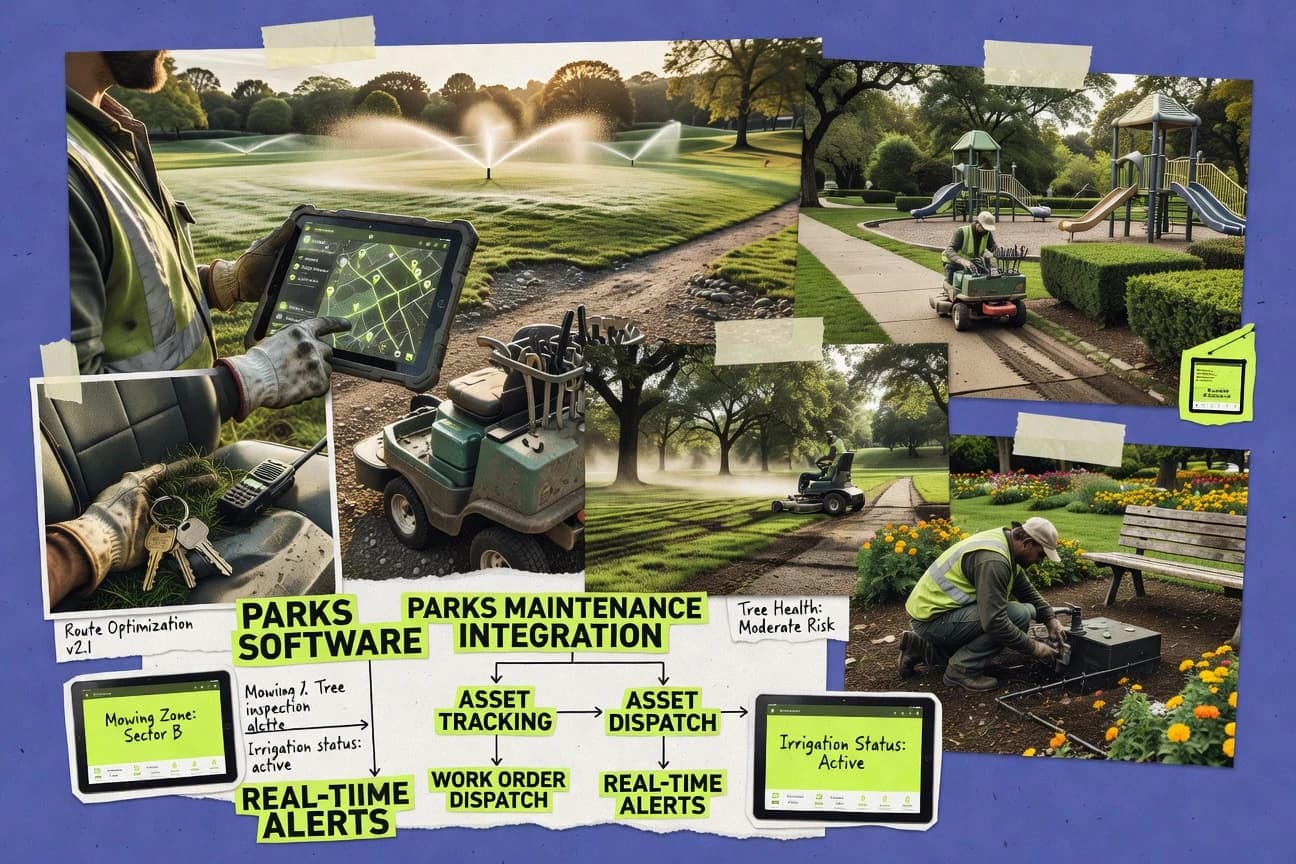
GITNUXSOFTWARE ADVICE
Business FinanceTop 10 Best Parks Maintenance Software of 2026
Top 10 parks maintenance software ranking for green-space operations, with side-by-side comparisons and tradeoffs for eMaint CMMS, Fiix, and OpenGov.

How we ranked these tools
Core product claims cross-referenced against official documentation, changelogs, and independent technical reviews.
Analyzed video reviews and hundreds of written evaluations to capture real-world user experiences with each tool.
AI persona simulations modeled how different user types would experience each tool across common use cases and workflows.
Final rankings reviewed and approved by our editorial team with authority to override AI-generated scores based on domain expertise.
Score: Features 40% · Ease 30% · Value 30%
Gitnux may earn a commission through links on this page — this does not influence rankings. Editorial policy
eMaint CMMS is the best pick if multi-site parks teams need configurable workflows and centralized maintenance records for compliance and follow-through, whereas Maxwell Asset Management fits when you want mobile, photo-backed inspections that tie work orders directly to an asset inventory.
Editor’s top 3 picks
Three quick recommendations before you dive into the full comparison below — each one leads on a different dimension.
eMaint CMMS
Configurable workflow and form controls adapt fields, approvals, and recurring tasks to different park departments.
Built for fits when multi-site parks departments need configurable workflows, field updates, and centralized maintenance records..
Fiix
Editor pickFiix REST API and Integration Hub connect assets, work orders, inventory, and labor data to external business systems.
Built for fits when multi-site parks teams need configurable maintenance workflows and system integrations..
OpenGov
Editor pickOpenGov Operations links map-based asset records with work history, inspections, and crew assignments.
Built for fits when municipalities need parks operations tied to broader finance and administrative records..
Comparison Table
eMaint CMMS
enterpriseEnterprise CMMS software manages preventive maintenance, assets, work orders, inventory, and compliance records.
Configurable workflow and form controls adapt fields, approvals, and recurring tasks to different park departments.
For parks departments, eMaint can model parks, buildings, vehicles, irrigation equipment, playgrounds, and other maintainable assets with location, meter, and maintenance history fields. Teams can assign recurring tasks, route corrective work, attach photos, and record labor, parts, and downtime from desktop or mobile interfaces. Configurable inspection forms and approval paths let administrators adapt records to local safety procedures.
The configuration depth creates administrative overhead for teams without a dedicated system administrator. GIS-based asset mapping and citizen request intake are less central than internal maintenance workflows. A multi-site parks department with dispersed crews can use centralized asset histories, mobile updates, and shared reporting to coordinate seasonal work across locations.
- +Configurable fields, screens, and workflows support varied park asset types.
- +REST API and integration options connect maintenance data with other systems.
- +Mobile access supports field updates and photo documentation.
- +Multi-site administration separates local processes while preserving central visibility.
- –Configuration depth demands dedicated administration and governance.
- –GIS functionality is not the product's primary field workflow.
- –Citizen request intake is less central than internal maintenance workflows.
- –Advanced condition monitoring depends on compatible hardware or connected data sources.
Parks operations managers
Multi-site asset coordination
Consistent cross-site records
Field maintenance supervisors
Crew dispatch and updates
Faster status visibility
Show 2 more scenarios
Facilities managers
Building upkeep tracking
Fewer missed tasks
Managers track building assets, service history, parts usage, and recurring tasks from shared records.
Reliability teams
Condition-monitoring follow-up
Earlier fault response
Teams combine connected equipment readings with asset histories to prioritize follow-up work.
Best for: Fits when multi-site parks departments need configurable workflows, field updates, and centralized maintenance records.
Fiix
enterpriseCMMS software manages assets, scheduled maintenance, work orders, parts, and maintenance analytics.
Fiix REST API and Integration Hub connect assets, work orders, inventory, and labor data to external business systems.
For a parks department, Fiix can represent parks, zones, buildings, vehicles, pumps, and other maintainable assets in structured hierarchies. Configurable checklists, attached photos, and completion records support park inspections across distributed locations. The REST API and Fiix Integration Hub extend data exchange into ERP, IoT, reporting, and other operational systems.
The main tradeoff is administrative depth because asset structures, permissions, statuses, and escalation rules require deliberate configuration. A multi-site department can use the mobile app to assign repairs, record labor and parts, attach field photos, and update tasks with intermittent connectivity. Fiix suits teams that need controlled maintenance records rather than a lightweight request list.
- +REST API and Integration Hub support external ERP, IoT, and reporting connections
- +Configurable workflows route approvals, statuses, assignments, and escalations
- +Mobile app records photos, labor, parts, notes, and completion updates
- +Dashboards segment maintenance KPIs by site, asset, and team
- –GIS map views are not a core native workspace
- –Citizen-facing intake requires more configuration than internal maintenance requests
- –Asset hierarchy and permission design demand dedicated administrator effort
- –Analytics quality depends on consistent failure, labor, and parts data
Municipal parks departments
Recurring pump and restroom service
Consistent service records
Parks field crews
Remote repair updates
Faster field reporting
Show 2 more scenarios
Parks asset managers
Multi-site asset accountability
Clearer maintenance history
Hierarchical locations connect equipment, facilities, and service history for site-level reporting.
Maintenance administrators
Cross-system data exchange
Fewer duplicate entries
The API and Integration Hub transfer records between Fiix and ERP, IoT, or reporting systems.
Best for: Fits when multi-site parks teams need configurable maintenance workflows and system integrations.
OpenGov
enterpriseGovernment platform with parks asset management, work orders, and mobile inspections.
OpenGov Operations links map-based asset records with work history, inspections, and crew assignments.
OpenGov Operations gives each facility, vehicle, route, or infrastructure item a record for assignments, condition notes, photos, and service history. GIS integration adds map context to dispatch and location-based reporting. Mobile crews can update statuses from phones and tablets.
Preventive maintenance scheduling supports recurring care across seasonal programs, but the broad administrative footprint can increase implementation effort for small parks teams. A city managing parks, streets, and public facilities can use shared operational records instead of maintaining separate departmental systems.
- +Cartegraph operations records connect asset condition, service history, and assigned work.
- +Map views give supervisors location context for dispatch and reporting.
- +Configurable forms support different park, facility, and infrastructure workflows.
- +Government-suite modules can connect maintenance data with budgeting and procurement processes.
- –Preventive maintenance scheduling needs careful rule configuration across seasonal programs.
- –The broad administrative footprint can increase implementation effort for small parks teams.
- –Public-facing request workflows may need department-specific configuration before launch.
- –Reporting quality depends on consistent field updates and controlled data definitions.
municipal parks departments
seasonal field maintenance
More consistent seasonal upkeep
public works departments
cross-department facilities
Centralized operational visibility
Show 1 more scenario
parks operations supervisors
storm response coordination
Faster post-storm coordination
Map-based records help prioritize affected locations and route assignments after severe weather.
Best for: Fits when municipalities need parks operations tied to broader finance and administrative records.
Maxwell Asset Management
vertical specialistAsset and maintenance management software tailored for parks and public works.
Offline mobile access with photo capture keeps park inspections and maintenance tasks usable during field dead zones.
Maxwell Asset Management brings asset-centric work order management to parks maintenance teams that need traceable execution from inspection through completion. Core workflows center on creating and assigning work orders for corrective and preventive maintenance, managing status to close out work, and keeping photos and field notes attached to records.
Maintenance planning and route-based inspections fit into a single operational trail so supervisors can audit what was inspected and what was repaired. The system is geared toward managing day-to-day crews and mobile field work with offline support for completing tasks in the field.
- +Asset-first records tie work orders to specific parks inventory items
- +Offline-capable mobile field work supports inspections and task completion
- +Photo documentation stays attached to maintenance records for review
- +Work order status tracking clarifies handoffs between crews
- –Setup requires careful mapping of assets to work types and locations
- –Inspection checklist templates need consistent maintenance across parks sites
- –Service request intake is less suited to high-volume citizen portals than dedicated intake tools
- –Advanced reporting depends on how teams structure work orders and fields
Best for: Fits when parks teams need mobile inspections and photo-backed work orders tied to an asset inventory.
UpKeep
SMBMobile-first maintenance software handles work orders, preventive maintenance, asset records, and inspections.
Inspection checklists can automatically generate work orders with mobile photo evidence attached for each asset.
UpKeep manages recurring work orders for parks maintenance through inspection-triggered tasks and preventive maintenance schedules. The system assigns work to crews, captures mobile photo evidence, and tracks work order status from intake to completion.
UpKeep also supports asset maintenance workflows that map directly to inspection checklists, including route-style inspections for field operations. Rules, templates, and automation reduce repeat entry across seasonal and corrective maintenance work.
- +Inspection-driven work orders connect checklists to field execution
- +Mobile forms capture photos and notes tied to each asset or visit
- +Recurring scheduling supports seasonal and preventive maintenance cycles
- +Task assignment tracks work order status through completion
- –Multi-location governance can require careful role and process setup
- –Complex cross-system reporting needs data export or integration work
- –GIS map views depend on integration approach rather than native depth
- –Offline field operation needs device and sync discipline
Best for: Fits when parks teams need inspection-to-work-order automation with mobile photo documentation.
Asset Panda
SMBConfigurable asset management software tracks equipment, inspections, maintenance requests, and field work.
Asset Panda’s asset mapping and work history keep every inspection linked to a specific park asset record.
Asset Panda supports parks maintenance teams with mobile-friendly work order management and asset-centric workflows tied to field inspection and service history. It emphasizes inspection checklist templates, photo documentation capture, and status tracking from job intake through closure.
The tool also covers labor and equipment tracking to connect maintenance actions to daily field work. Asset Panda is a fit for organizations that need repeatable maintenance processes across multiple parks with coordinated crews.
- +Asset-centric work order history ties inspections to maintenance outcomes
- +Photo documentation is captured directly on mobile inspection workflows
- +Inspection checklist templates standardize playground and facility checks
- +Status tracking supports clear work order closure and handoffs
- –Offline mobile access is limited compared with offline-first field tools
- –Complex routing and multi-crew scheduling needs more manual configuration
- –Extensive reporting often requires exporting data for deeper analysis
- –Advanced GIS integration depends on external systems and mapping setup
Best for: Fits when parks staff need mobile inspections that generate work orders with photos.
AssetWorks
enterpriseEnterprise asset management for fleet, facilities, and public infrastructure including parks.
Asset-first maintenance execution that ties preventive schedules and inspections directly to asset work orders.
AssetWorks is geared toward parks organizations that need asset-led work order management tied to scheduled maintenance, not just ticketing. The system supports preventive maintenance planning with inspection and documentation workflows, including photo capture and route-based field execution.
Work orders can track status, labor time, and equipment use for crews doing mobile field work. Integration depth is strongest when GIS, inventory imports, and maintenance schedules are standardized across parks and facilities.
- +Asset-to-work-order linking keeps maintenance history attached to each field asset
- +Preventive maintenance scheduling supports repeatable inspections and corrective follow-ups
- +Mobile field workflows can capture photos and update work order status in the field
- +Inventory and GIS-oriented setup supports consistent park and asset identifiers
- –Setup requires careful configuration of maintenance hierarchies and inspection templates
- –Citizen-style service intake and portal features are not the primary workflow focus
- –Reporting depth depends on disciplined data entry for labor, notes, and statuses
- –Offline mobile support can be limiting for low-connectivity crews without planning
Best for: Fits when parks teams need asset-centric maintenance scheduling with mobile execution and standardized inspections.
HiperWeb
SMBParks management module with asset tracking, safety audits, and preventive maintenance scheduling.
Checklist templates that generate work orders with attached photo evidence during park inspections.
HiperWeb is a parks maintenance software option focused on inspections, task execution, and field documentation tied to specific locations. Work orders and service requests can be created from defined checklists, and crews can attach photos to capture condition changes during park inspections.
The system supports mobile field work patterns with status tracking across the work order lifecycle and reporting for maintenance performance metrics. Governance features center on user roles and audit visibility for changes made during inspections and assignments.
- +Inspection-driven work order intake with checklist templates and photo evidence
- +Location-first assignments with clear work order status progression
- +Audit visibility for updates to inspection records and task assignments
- +Role-based access controls for separating planners and field staff
- –Limited offline mobile access can interrupt crews during low-connectivity days
- –Automation depth is narrower than vendors offering workflow builders for complex dependencies
- –External integrations depend on available API endpoints and mapping effort
- –Advanced GIS integration for GPS-enabled asset mapping is not a primary focus
Best for: Fits when park teams need checklist inspections with photo documentation and controlled work order routing.
FMX
SMBParks and recreation management software for municipalities with work orders and asset tracking.
Offline mobile work order completion with photo attachments maintained for later sync.
FMX manages parks work orders from intake through assignment, tracking, and completion with photo documentation attached to field activity.
Crews can run mobile tasks offline so inspections, corrective repairs, and seasonal maintenance actions continue without connectivity.
FMX also supports preventive maintenance scheduling so routine jobs generate planned work alongside reactive service requests.
For park leadership, FMX provides reporting on work order status and field execution so maintenance performance can be reviewed by park and asset context.
- +Offline-capable mobile work execution for parks crews
- +Work order status tracking from intake to completion
- +Photo documentation linked to field activity records
- +Preventive maintenance scheduling for planned routine jobs
- –Inspection checklist templates appear limited compared with checklist-heavy programs
- –Offline reconciliation can require consistent device-level workflows
- –Integration depth with GIS and asset systems is not a first-class focus
- –Automation depends on configuration rather than visible API-driven orchestration
Best for: Fits when crews need offline mobile work orders plus basic preventive planning.
Novotx Elements XS
vertical specialistAsset management and work order system built for parks and recreation operations.
Inspection route workflows link checklist results to specific field visits and keep them inside the work order lifecycle.
Novotx Elements XS is a parks maintenance work management tool designed for municipal and contractor field operations. It centers on creating and tracking work orders for ongoing corrective maintenance and scheduled preventive maintenance, then attaching photos and task updates for each job.
The workflow supports inspection route work by grouping checklist steps into visits and updating results in the same operational record. Elements XS also supports labor and equipment tracking tied to job execution, which helps translate field activity into maintenance performance reporting.
- +Work order status tracking keeps crews aligned across ongoing maintenance cycles
- +Photo documentation and job updates stay attached to the work record
- +Inspection route workflows reduce re-keying across recurring park visits
- +Labor and equipment tracking supports job-level maintenance reporting
- –Automation and integrations depend heavily on implementation choices and governance discipline
- –Offline mobile access support is not clear from available documentation
- –Citizen or public service intake workflows are limited compared with specialist tools
- –Advanced GIS integration depth is limited for teams needing deep park mapping
Best for: Fits when maintenance supervisors need work order execution and inspection route updates with job-level documentation.
Conclusion
After evaluating 10 business finance, eMaint CMMS stands out as our overall top pick — it scored highest across our combined criteria of features, ease of use, and value, which is why it sits at #1 in the rankings above.
Use the comparison table and detailed reviews above to validate the fit against your own requirements before committing to a tool.
How to Choose the Right parks maintenance software
Parks maintenance software manages work order management, inspection routes, and asset-linked execution across parks, athletic fields, and facilities using mobile capture and photo documentation. This guide covers eMaint CMMS, Fiix, OpenGov, Maxwell Asset Management, UpKeep, Asset Panda, AssetWorks, HiperWeb, FMX, and Novotx Elements XS.
The standout differences across these tools show up in automation surfaces and integration depth. eMaint CMMS uses configurable workflow and form controls that adapt fields, approvals, and recurring tasks for different park departments. Fiix focuses on a REST API and an Integration Hub that connects assets, work orders, inventory, and labor data to external systems.
Parks maintenance software for asset-linked work orders, inspection checklists, and field execution
Parks maintenance software ties park asset inventory to inspection checklists, work order status progression, and mobile field work with photo documentation. Tools like UpKeep and Asset Panda generate work orders from inspection checklists and attach mobile photo evidence to each asset record.
Teams use the platform to route approvals and assignments, capture job-level updates, and keep inspection history linked to the underlying asset so corrective follow-ups stay traceable. Integration depth varies, with Fiix positioning a REST API and Integration Hub for connecting maintenance data to external ERP, IoT, and reporting systems, while eMaint CMMS emphasizes configurable workflows and form controls for centralized maintenance records across varied departments.
Key parks maintenance capabilities to compare across work orders and field inspection
Parks maintenance teams need work order management that stays attached to specific park assets so inspection results, corrective fixes, and preventive follow-ups remain traceable. Tools in this list differ most in how they generate work orders, route approvals, and capture photo evidence during mobile field work.
Inspection-driven work order automation with photo evidence
UpKeep generates work orders from inspection checklists and attaches mobile photo evidence to each asset or visit. Asset Panda and HiperWeb also generate inspection-linked work order outcomes with photo documentation captured directly during mobile inspection workflows.
Configurable workflows and form controls for multi-department park programs
eMaint CMMS supports configurable workflow and form controls that adapt fields, approvals, and recurring tasks for different park departments. Fiix also routes approvals, statuses, assignments, and escalations through configurable workflows that align maintenance execution to external business systems.
API and integration surfaces for connecting maintenance execution to external systems
Fiix provides a Fiix REST API and an Integration Hub to connect assets, work orders, inventory, and labor data to external business systems. eMaint CMMS offers a REST API and integration options that connect maintenance data with other systems for downstream reporting and operations use.
Asset-first execution and preventive scheduling tied to work orders
AssetWorks ties preventive schedules and inspections directly to asset work orders so maintenance history stays attached to the same field assets. OpenGov ties map-based asset records to work history, inspections, and crew assignments for dispatch and reporting in broader municipal operations.
Offline mobile capture for field inspections and job completion in low-connectivity areas
Maxwell Asset Management provides offline mobile access with photo capture so inspections and work tasks remain usable during field dead zones. FMX and Maxwell both support offline-capable mobile execution with photo attachments, and Maxwell is the clearest match for inspection plus asset inventory capture.
How to choose parks maintenance software by workflow model, integration depth, and field execution constraints
Most parks maintenance platforms follow one of two workflow philosophies. Checklist-first products push inspectors to capture results that directly generate work orders with photo evidence, while asset-first products center the asset record and attach inspection and corrective actions into the same work history thread.
Pick a workflow philosophy: checklist-first automation or asset-first maintenance history
Choose UpKeep or HiperWeb when inspections must generate work orders from checklist templates with mobile photo evidence attached during the same field workflow. Choose Maxwell Asset Management, AssetWorks, or OpenGov when the asset record must anchor work order history, inspection outcomes, and crew assignments across repeated maintenance cycles.
Validate integration surface with the systems that feed reporting and operations
Select Fiix when a REST API plus an Integration Hub needs to connect maintenance data with ERP, IoT, and reporting systems. Select eMaint CMMS when integration needs center on REST API connectivity plus configurable workflow and centralized maintenance records across varied park departments.
Stress-test multi-site governance and workflow configuration complexity
Select eMaint CMMS when multi-site teams need configurable fields, screens, and workflows that adapt approvals and recurring tasks per department. Select Fiix when the priority is routing through configurable workflows, but recognize that GIS map views are not a core native workspace and may require separate mapping decisions.
Match offline field requirements to inspection depth and reconciliation effort
Choose Maxwell Asset Management when offline-first field work must include inspections plus photo capture tied to the asset inventory during connectivity loss. Choose FMX when offline mobile work order completion with photo attachments is the priority, but confirm that inspection checklist templates meet the inspection-heavy requirements.
Use GIS-linked dispatch only when it drives real maintenance scheduling outcomes
Choose OpenGov when map-based asset records must connect to work history, inspections, and crew assignments tied to broader finance and administrative records. Choose eMaint CMMS or Fiix when field execution and configurable workflow forms matter more than native GIS being the product’s primary workspace.
Who parks maintenance software is for and which teams it fits
Parks maintenance software is built for teams that run inspection routes, manage work order status progression, and keep photo-backed job documentation attached to the right park asset. It fits particularly well when the inspection-to-execution loop needs to be standardized across multiple sites, crews, and seasonal maintenance programs.
Multi-site parks departments with different asset types and approval paths
eMaint CMMS fits teams that need configurable workflow and form controls to adapt fields, approvals, and recurring tasks by park department while keeping centralized maintenance records.
Municipal operations groups that coordinate parks maintenance with finance and administration
OpenGov fits municipalities that require map-based operations that link asset records to work history, inspections, and crew assignments tied to broader administrative records.
Operations teams that must integrate maintenance execution data into ERP, IoT, and reporting
Fiix fits teams that need Fiix REST API connectivity plus an Integration Hub to connect assets, work orders, inventory, and labor data to external business systems.
Field crews that perform inspections and repairs where connectivity is intermittent
Maxwell Asset Management fits inspection and maintenance workflows that need offline mobile access with photo capture and asset-first records so field teams can keep moving during dead zones.
Teams focused on inspection-to-work-order conversion with standardized checklists
UpKeep fits teams that require inspection checklists to automatically generate work orders with mobile photo evidence for each asset or visit.
Common parks maintenance software mistakes that derail inspections and work order execution
Misconfigurations usually show up when inspection templates, asset mapping, or workflow controls are not standardized before field rollout. Another common failure is assuming map views or offline capability will cover the operational process that the team actually runs.
Starting with inspection templates that are not consistently mapped to the same assets and locations across parks sites
Maxwell Asset Management requires careful mapping of assets to work types and locations so offline inspections and photo evidence stay tied to the correct inventory items.
Overestimating native GIS as a substitute for workflow configuration and seasonal scheduling rules
OpenGov requires careful rule configuration for preventive maintenance scheduling across seasonal programs, and the broad administrative footprint increases implementation effort for smaller parks teams.
Under-scoping governance when using highly configurable fields, screens, and recurring task automation
eMaint CMMS configuration depth demands dedicated administration and governance discipline, because workflow rules can diverge across departments without clear control.
Assuming citizen-style intake is part of the maintenance workflow model
AssetWorks and eMaint CMMS focus on asset-first maintenance execution, and citizen-facing service intake and portal features are not the primary workflow focus in AssetWorks.
Expecting offline capability to cover checklist-heavy programs without reconciling template coverage and device workflows
FMX offers offline mobile work order completion with photo attachments, but inspection checklist templates appear limited compared with checklist-heavy programs and offline reconciliation depends on consistent device-level workflows.
How We Selected and Ranked These Tools
We evaluated each platform on how accurately it supports inspection-driven work order creation, photo-backed job documentation, and asset-linked execution across parks maintenance workflows. Features received 40 percent weight because teams depend on checklist templates, status progression, workflow routing, and mobile execution to keep work orders consistent.
Ease and value each received 30 percent weight because configurable governance and offline field capture directly affect rollout effort and daily throughput. eMaint CMMS separated by pairing configurable workflow and form controls with a REST API and integration options that support centralized maintenance records across varied park departments.
Frequently Asked Questions About parks maintenance software
How do eMaint CMMS and Fiix handle work order workflow configuration across multiple parks or departments?
Which parks maintenance tools provide APIs for integrating asset inventories, GIS data, and maintenance records?
What breaks if mobile field work must run with offline access during storms or seasonal events?
When should parks teams choose Maxwell Asset Management over Asset Panda for inspection-driven maintenance execution?
How do UpKeep and OpenGov turn inspections or service requests into operational work and dispatch?
Which tools provide audit visibility for inspection and work order changes tied to user roles?
How do AssetWorks and Novotx Elements XS manage inspection route grouping so checklist steps land in the right visit?
What data migration steps typically matter when moving from spreadsheets or legacy systems into eMaint CMMS or Fiix?
When does crew scheduling and labor tracking become a requirement, and how do Fiix and FMX differ in coverage?
Where does inspection-to-work-order automation fall short, and what tradeoff appears in HiperWeb versus UpKeep?
Tools reviewed
Primary sources checked during evaluation.
Referenced in the comparison table and product reviews above.
- Business FinanceTop 10 Best Maintenance Service Software of 2026
- Sports RecreationTop 10 Best Park Management Software of 2026
- Facilities Property ServicesTop 10 Best Planned Maintenance Software of 2026
- Agriculture FarmingTop 10 Best Farm Equipment Maintenance Software of 2026
- Construction InfrastructureTop 10 Best Lawn Maintenance Billing Software of 2026
Keep exploring
Comparing two specific tools?
Software Alternatives
See head-to-head software comparisons with feature breakdowns, pricing, and our recommendation for each use case.
Explore software alternatives→In this category
Business Finance alternatives
See side-by-side comparisons of business finance tools and pick the right one for your stack.
Compare business finance tools→