
GITNUXSOFTWARE ADVICE
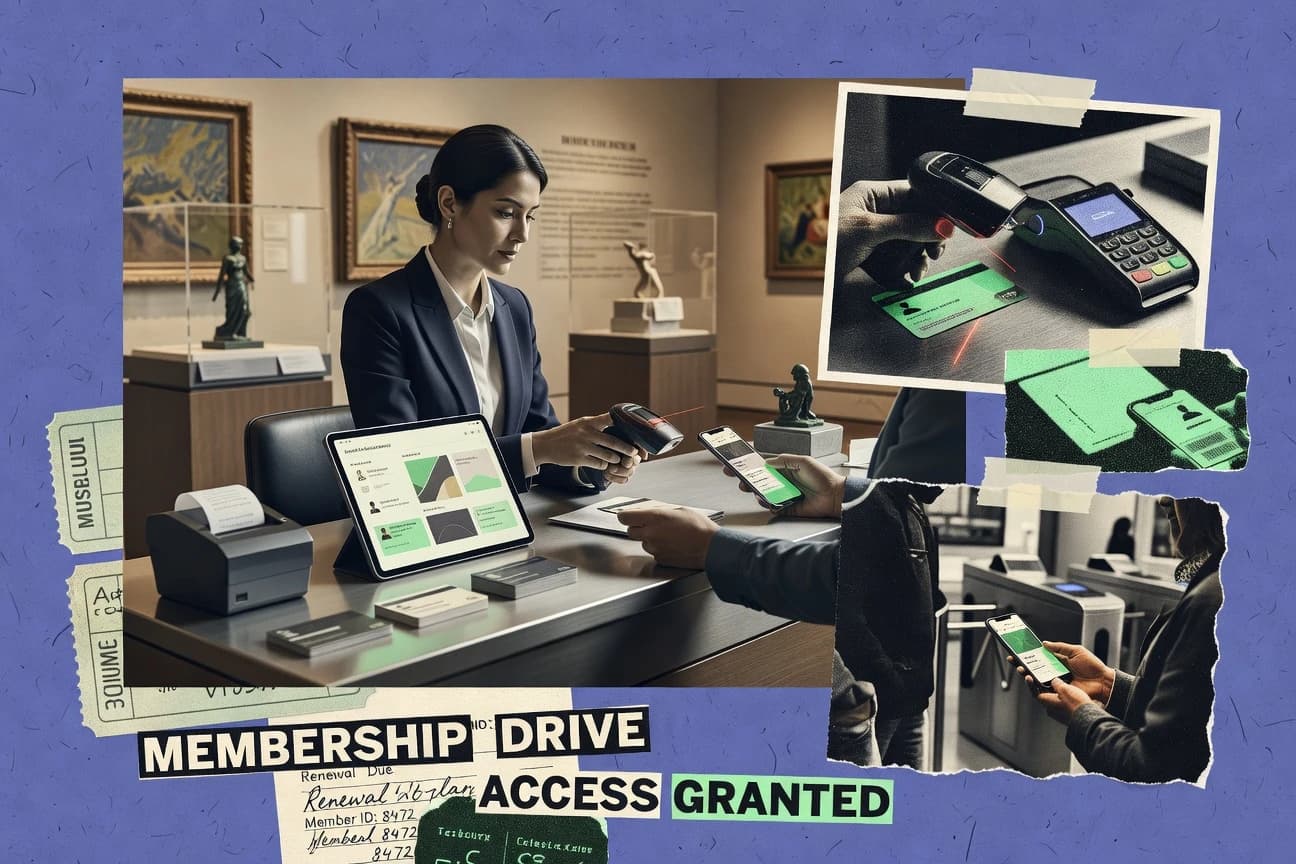
Business FinanceTop 10 Best Museum Membership Software of 2026
Ranked list of top museum membership software for museums, comparing Galaxy, Doubleknot, Personify, CiviCRM, and Tessitura by features and fit.

How we ranked these tools
Core product claims cross-referenced against official documentation, changelogs, and independent technical reviews.
Analyzed video reviews and hundreds of written evaluations to capture real-world user experiences with each tool.
AI persona simulations modeled how different user types would experience each tool across common use cases and workflows.
Final rankings reviewed and approved by our editorial team with authority to override AI-generated scores based on domain expertise.
Score: Features 40% · Ease 30% · Value 30%
Gitnux may earn a commission through links on this page — this does not influence rankings. Editorial policy
CiviCRM is the best fit for museums that need configurable membership lifecycles and deeper integrations beyond dues and renewals, while Galaxy by Gateway Ticketing Systems is the stronger choice when membership status must directly power gate validation and admissions workflows.
Editor’s top 3 picks
Three quick recommendations before you dive into the full comparison below — each one leads on a different dimension.
CiviCRM
Rule-based automation ties membership status changes to emails, tasks, and downstream event participation records.
Built for fits when museums need configurable membership lifecycles and integrations beyond dues and renewal..
Galaxy by Gateway Ticketing Systems
Editor pickOn-site barcode and QR validation that checks membership identity during admissions, not just in the membership database.
Built for fits when museums need membership status to drive gate validation and admissions workflows..
Tessitura
Editor pickA centralized membership rules engine coordinates eligibility, renewals, and staff workflows across institutional systems.
Built for fits when museums need membership governance that stays consistent across admissions and renewal operations..
Comparison Table
CiviCRM
SMBOpen-source constituent relationship management system with membership tracking capabilities.
Rule-based automation ties membership status changes to emails, tasks, and downstream event participation records.
CiviCRM fits museums that need one system for member profiles, membership status changes, and membership-linked events. Membership management covers membership types, status transitions, renewals, and grace period handling through configurable workflows rather than hard-coded schedules. The automation surface includes rules that trigger emails and follow-up tasks based on membership or contribution changes.
A tradeoff appears in implementation effort, because museums often must model membership structures with custom fields and carefully map member relationships. CiviCRM works best when requirements extend beyond dues and renewal, such as household-level eligibility or member-based eligibility for time-bound admission and programs.
- +Workflow-driven renewals and member status transitions
- +API-first extensibility for admissions and portal integrations
- +Granular roles and permissions for member data access
- +Event registration can connect visits to membership profiles
- –Membership modeling often requires configuration and custom fields
- –UI complexity increases when workflows and lists multiply
- –Data consistency depends on deduplication and import discipline
- –Staff training is usually needed for automation and governance
Membership operations teams
Automate renewals and lapse reactivation
Higher renewal follow-through
Membership and admissions engineering
Synchronize member eligibility with admissions
Consistent eligibility checks
Show 2 more scenarios
CRM administrators
Control access with role-based governance
Lower data-change risk
Permissions limit staff actions on membership and contact objects while preserving audit-style histories.
Programs coordinators
Gate events by membership status
Reduced manual eligibility review
Event registration can reference membership data to enforce member-only and reciprocal benefits.
Best for: Fits when museums need configurable membership lifecycles and integrations beyond dues and renewal.
Galaxy by Gateway Ticketing Systems
vertical specialistVisitor attraction software supporting memberships, ticketing, admissions, and access control.
On-site barcode and QR validation that checks membership identity during admissions, not just in the membership database.
Galaxy is designed for museums that run membership and admissions on connected workflows instead of treating membership as a separate database. Membership configuration supports multiple membership levels and rule-based renewal behavior, and it records visit and entitlement context tied to each member record. Operational use includes barcode or QR-code validation at admission points, which reduces manual staff lookups during peak entry windows.
A tradeoff is that Galaxy’s value depends on active operational integration with admissions and check-in workflows, not only membership CRUD and reports. Galaxy fits best when recurring dues and renewals must stay synchronized with entry eligibility, such as when timed visits and member benefits affect what staff should honor at the gate.
- +Barcode and QR validation links membership identity to on-site check-in
- +Renewal workflows support recurring membership lifecycle operations
- +Operational configuration aligns membership entitlements with admissions staff actions
- +Member record handling supports household structures for family memberships
- –Setup and rule configuration require discipline to avoid eligibility errors
- –Advanced automation depends on integration maturity with local ticketing processes
- –Reporting depth can feel less flexible than spreadsheet-style exports
- –Role separation needs careful configuration for large admin teams
Admissions operations teams
Member gate validation at peak hours
Faster throughput at admissions
Membership managers
Recurring renewals and grace handling
Fewer lapsed-member follow-ups
Show 2 more scenarios
CRM coordinators
Household membership entitlements
Cleaner eligibility for families
Household-linked membership records manage family entitlements under shared structure.
Ticketing systems administrators
Entitlement sync with admissions POS
Lower mismatch between systems
Membership entitlements tie into admissions operations so staff see consistent eligibility.
Best for: Fits when museums need membership status to drive gate validation and admissions workflows.
Tessitura
enterpriseArts and culture CRM software with memberships, ticketing, fundraising, and patron management.
A centralized membership rules engine coordinates eligibility, renewals, and staff workflows across institutional systems.
Tessitura supports individual and household membership structures, including membership levels and membership types with membership rules that drive renewals and exceptions. Staff workflows cover member lifecycle actions such as lapsed-member handling and reactivation, plus member data quality work like deduplication and record management. Membership operations can connect to event registration and attendance capture workflows so membership status can influence entry and eligibility decisions. API and integration tooling support downstream systems, including admissions and payment integrations that reduce manual reconciliation.
A tradeoff appears in the implementation depth because Tessitura configuration and workflow mapping typically require museum-specific planning rather than quick self-serve setup. It fits best when a museum needs consistent membership logic across renewals, staff review states, and admissions-facing processes. A museum with a mature operations team can use Tessitura’s governance controls to keep membership rule changes aligned with staff practices.
- +Membership rules support staff-reviewed renewals and exceptions across lifecycle states
- +Admissions and payment integrations reduce duplicate entry for dues and entry eligibility
- +Household structures help keep related members aligned for access decisions
- +Operational reporting supports membership performance and visit-linked analysis
- –Implementation requires workflow mapping to match museum processes
- –Porting existing membership data can be complex without strong data hygiene
Membership operations teams
Manage renewals with staff exceptions
Fewer manual reconciliation tasks
Admissions and guest services
Apply membership eligibility at entry
Higher entry throughput
Show 2 more scenarios
Development and CRM teams
Deduplicate member and constituent records
Cleaner relationship reporting
Maintain consistent member identities through record management workflows that reduce duplicate access and messaging.
Data and systems administrators
Automate integrations with external systems
Less spreadsheet-based coordination
Use API-based integrations to sync member status with ticketing, admissions, and payment workflows.
Best for: Fits when museums need membership governance that stays consistent across admissions and renewal operations.
Neon CRM
SMBNonprofit CRM software with membership management, fundraising, events, and communications.
Recurring gift and membership payment workflows link transaction outcomes to membership status updates for consistent renewal handling.
Neon CRM is a constituent relationship management system used to manage membership lifecycles for museums that need trackable member interactions across visits, renewals, and outreach. Its core strengths center on membership data capture, rule-based renewal handling, and recurring payment support that ties back to member status. Neon CRM also supports member portal workflows and audience segmentation so staff can coordinate outreach and membership communications using shared member records.
- +Membership lifecycle features map directly to renewal and status tracking.
- +Recurring payment workflows stay connected to constituent records and history.
- +Member portal capabilities reduce manual check-in and membership lookups.
- +Segmentation supports targeted outreach tied to membership attributes.
- –Timed-entry and admissions integrations require careful workflow planning.
- –Extensive configuration can slow initial governance for roles and permissions.
Best for: Fits when museums need CRM-driven membership lifecycle management with member portal and segmentation for member communications.
WildApricot
SMBMembership management software with websites, event registration, payments, and email tools.
Member lifecycle automation ties recurring payments to renewal statuses and downstream communications without manual intervention.
WildApricot processes membership lifecycle workflows end to end, including recurring payments, renewals, and grace-period handling. It provides event registration integration for museum programs while maintaining a membership database that can support individuals and households.
Administration centers on configurable membership levels and dues rules, plus segmented email campaigns tied to constituent records. API-driven data access supports automation and outbound integrations for operational consistency across admissions and member communications.
- +Automated renewal workflows handle grace periods and status changes
- +Recurring payments connect membership dues to member lifecycle records
- +Event registration can reuse member identities and membership permissions
- +API supports custom integrations for data syncing and automation
- –Advanced configuration needs governance to avoid duplicate records
- –Role permissions lack fine-grained control for every operational workflow
Best for: Fits when museums need recurring membership renewals plus API-driven integrations for admissions and member communications.
Doubleknot
vertical specialistTicketing, membership, and registration platform for zoos, aquariums, and museums.
Digital membership cards with barcode and QR-code validation tied to membership status at admissions points.
Doubleknot centers on museum membership data and the operational steps staff need to keep membership status accurate for entry and benefits.
The system supports individual and household membership structures, membership levels, and dues rules that drive renewal and lapsed-member reactivation behavior.
For on-site operations, Doubleknot’s digital card workflows connect member identity to entry validation and visit-linked records.
Integration paths for admissions and event registration help reduce manual data transfer between systems.
- +Member lifecycle workflows handle renewals, grace behavior, and reactivation states
- +Digital member card experience supports barcode and QR-code validation at entry
- +Household and membership-level configuration supports benefit logic per group
- +Integrations support admissions point-of-sale and downstream visit history alignment
- –Deep configuration needs governance to keep member data rules consistent across staff
- –Some advanced reporting requires careful setup of exports for analysis use cases
- –Event registration workflows can be constrained by how benefit rules map to tickets
- –Migration from an existing membership database can be time-intensive for deduplication
Best for: Fits when membership benefits, barcode validation, and renewal workflows must stay consistent across admissions and events.
MemberClicks
SMBMembership management platform serving associations and cultural organizations.
Lifecycle-driven membership actions that keep member status, renewal behavior, and communications aligned across the same member record.
MemberClicks is a museum membership system that focuses on constituent workflows tied to membership status and communications. It supports household and individual memberships, membership levels, and recurring payment routines used for renewals and reactivations.
Admin tools cover segmentation, member lifecycle actions, and data imports and exports for ongoing membership database maintenance. The integration surface is centered on connecting member records to admissions and event registration workflows where museums need visit continuity.
- +Household and individual membership structures support museum-specific membership policies
- +Renewal and reactivation workflows align membership status with downstream communications
- +Member portal and messaging tools support member self-service and targeted outreach
- +Data import and export options help maintain membership database accuracy over time
- –Automation requires careful configuration to prevent lifecycle rule conflicts
- –Deep admissions point-of-sale integration depends on connector availability and mapping work
Best for: Fits when museums need membership lifecycle automation with household support and repeatable renewal operations.
GrowthZone
SMBMembership management software for associations, chambers, and cultural institutions.
Lifecycle-driven renewal and membership status automation ties member record changes to downstream communications and reporting.
GrowthZone is a museum membership system built around constituent and membership workflows, with a focus on managing relationships across individuals, households, and organizations. Core capabilities include membership levels and membership types, dues rules, renewals, and member records that support downstream communications and reporting.
Admin tooling covers member lifecycle status changes, segmentation targets, and auditable activity trails tied to membership actions. Integration options center on linking member data to events, payments, and external admissions or visit workflows used by museum teams.
- +Strong membership workflow coverage for renewals, statuses, and dues handling
- +Constituent-centric records support deduplication and relationship management
- +Segmentation and templated communications map cleanly to membership attributes
- +Integration paths for events and payments connect membership activity to operations
- –Membership automation depends on careful configuration of lifecycle rules
- –Role and permission setup can be complex for large staff groups
- –Advanced reporting often requires manual shaping instead of guided dashboards
- –Some admissions-style workflows need external integrations to complete the loop
Best for: Fits when museum teams need detailed membership lifecycles and relationship-driven reporting with integrations.
iMIS
enterpriseAssociation and constituent relationship management platform used by cultural institutions.
Lifecycle-managed membership records that support householding and recurring dues rules within the same constituent data foundation.
iMIS is used to run museum membership and related constituent management workflows through a centralized membership database. The system supports membership levels, household and individual membership structures, recurring dues, and renewal-related processes tied to member records.
Museums can connect memberships to other systems via integration options and expose data for reporting and operational automation. Admin users also manage member lifecycles with configurable rules for status changes and communications.
- +Strong membership record depth for household and individual structures
- +Configurable dues and renewal workflows tied to member lifecycle stages
- +Extensive reporting coverage using membership and activity history fields
- +Integration options for operational systems around member accounts
- –UI workflows feel heavy during high-volume membership operations
- –Automation depends on configuration choices made by administrators
- –Data imports and deduplication require careful mapping discipline
- –Extensibility often needs developer involvement for custom needs
Best for: Fits when museums need deep membership record control and configurable renewal workflows across many membership types.
ACME Ticketing
vertical specialistCloud-based ticketing and membership platform built for museums and cultural venues.
Barcode and QR-code member validation workflows that align membership status with admissions-style checking.
ACME Ticketing supports museum membership operations by combining membership records with ticketing and attendance workflows in one system. Member lifecycle tasks like renewals, lapsed-member reactivation, and membership-level configuration are handled through governed settings rather than spreadsheets.
The solution centers on operational throughput for front desk and back office use, including document and barcode-driven member validation flows used during visits. Integration work focuses on connecting membership eligibility, reservations, and admissions scanning so staff can check benefits at the point of service.
- +Ties membership status to ticketing and visit workflows for faster staff verification
- +Configurable membership levels and dues rules reduce manual corrections between cycles
- +Supports barcode and QR-code validation for admission-style member checks
- +Built for operational throughput across both front desk and membership back office
- –Less documented constituent deduplication and householding controls than museum-specific peers
- –Automations for complex renewal edge cases can require careful rules configuration
- –API surface details for membership schema customization are limited in published documentation
- –Advanced analytics for membership cohorts are not as granular as dedicated CRM systems
Best for: Fits when museums need ticketing-linked membership management with fast on-site validation and streamlined renewals.
Conclusion
After evaluating 10 business finance, CiviCRM stands out as our overall top pick — it scored highest across our combined criteria of features, ease of use, and value, which is why it sits at #1 in the rankings above.
Use the comparison table and detailed reviews above to validate the fit against your own requirements before committing to a tool.
How to Choose the Right museum membership software
Museum membership software centralizes membership records, renewal workflows, and member eligibility so admissions and member communications can stay aligned across lifecycle changes. This buyer’s guide covers CiviCRM, Galaxy by Gateway Ticketing Systems, Tessitura, Neon CRM, WildApricot, Doubleknot, MemberClicks, GrowthZone, iMIS, and ACME Ticketing.
The evaluation focuses on integration depth, where barcode and QR validation connects to admissions check-in, and on automation surfaces that move members through status transitions. The guide also prioritizes governance controls that prevent rule conflicts when multiple staff workflows touch the same membership data.
Museum membership software for membership lifecycle, renewals, and admission validation
Museum membership software manages individual and household membership structures with membership levels, dues rules, and recurring renewal behavior tied to membership status. It also supports eligibility-driven operations such as admissions workflows that check membership identity at entry.
CiviCRM is built around rule-based automation that ties membership status changes to emails and tasks, and it exposes an API-first approach for admissions and portal integration. Galaxy by Gateway Ticketing Systems emphasizes on-site barcode and QR validation that checks membership identity during admissions rather than relying only on membership database state.
Museum membership software evaluation criteria that affect lifecycle control
Membership software needs to drive consistent member status changes across renewals, admissions eligibility, and staff tasks, not only store membership records. Tools that tie lifecycle actions to downstream workflows reduce mismatches between “member in good standing” and “member admitted.”
Validation and automation surface also decide how much operational work stays inside the membership system. When barcode or QR checks link to membership identity at admissions, staff avoid manual lookups and delayed eligibility decisions.
Rule-based lifecycle automation and status transitions
CiviCRM ties membership status changes to emails and tasks through rule-based automation, then extends that automation to downstream event participation records. Tessitura centralizes membership rules so renewals, eligibility, and staff workflows stay coordinated across institutional systems.
Admissions-ready barcode and QR-code membership validation
Galaxy by Gateway Ticketing Systems performs on-site barcode and QR validation during admissions so identity checks use membership status at the point of entry. Doubleknot and ACME Ticketing also provide digital member cards with barcode and QR validation tied to admissions-style checking.
Recurring payment workflow linkage to membership status
WildApricot connects recurring membership payments to renewal statuses and downstream communications without manual intervention. Neon CRM links recurring gift and membership payment workflows to membership status updates so renewal handling stays consistent across constituent records.
Membership rules governance across exceptions and renewals
Tessitura supports staff-reviewed renewals and exceptions across lifecycle states, which helps when museums handle grace behavior and nonstandard renewal cases. GrowthZone provides lifecycle automation that ties membership record changes to reporting and communications, but it still depends on careful lifecycle rule configuration.
Household and individual membership structure handling
MemberClicks supports household and individual membership structures so museum-specific membership policies map onto repeatable renewal operations. iMIS also provides householding and recurring dues rules within a constituent data foundation.
Constituent deduplication and relationship-centric records
CiviCRM emphasizes API-first extensibility for admissions and portal integrations while supporting configurable membership lifecycle operations around a governed member record. GrowthZone focuses on constituent-centric records for deduplication and relationship management so member relationships stay coherent for lifecycle reporting.
How to choose museum membership software by lifecycle workflows and integration depth
Start by mapping where membership status must be authoritative: inside staff renewals, inside admissions check-in, or inside both systems at the same time. Tools differ on how much of that authority is enforced through validation at the gate versus through lifecycle automation behind the scenes.
Next, decide how much automation logic needs to be configurable versus standardized. Some platforms prioritize centralized rules and governance for exceptions, while others emphasize operational check-in validation and workflow linkage to existing ticketing or local processes.
Choose the system that must “own” membership status
If staff renewals and exceptions require rule-driven status transitions, CiviCRM and Tessitura fit because both coordinate membership status changes with emails, tasks, and workflow states. If admissions check-in is the highest-risk moment for eligibility, Galaxy by Gateway Ticketing Systems supports on-site barcode and QR validation tied to membership identity.
Select the validation workflow that matches the admissions model
If admissions teams scan member identity at the gate and need immediate eligibility behavior, prioritize Galaxy, Doubleknot, or ACME Ticketing due to barcode and QR validation tied to membership status. If admissions can rely on downstream data sync and staff lookup, WildApricot and Neon CRM can fit when recurring payment and lifecycle transitions are the primary automation targets.
Decide how much lifecycle automation must be exception-ready
If the museum needs staff-reviewed renewals and lifecycle exceptions across multiple lifecycle states, Tessitura centralizes membership rules and workflows across institutional systems. If status transitions mostly follow standard renewal patterns, WildApricot and Neon CRM can cover lifecycle automation by linking recurring payments to renewal statuses and communications.
Pick a configuration philosophy that matches governance capacity
If strong governance discipline exists for rule configuration, CiviCRM can provide rule-driven membership status transitions while scaling API-first extensibility for portal and admissions integrations. If governance bandwidth is limited, Doubleknot and WildApricot still require configuration controls, but they may shift complexity into membership rule governance and export setup for advanced reporting use cases.
Match your membership structure requirements to the data foundation
If householding drives membership policy, MemberClicks supports household and individual membership structures and aligns renewals with household repeat operations. If membership record depth and household control across many membership types matters, iMIS supports householding and configurable renewal workflows inside the same constituent data foundation.
Verify integration surfaces for admissions and member communications
If the admissions and portal layers must connect to membership lifecycle operations through an extensibility surface, CiviCRM provides API-first integration for admissions and portal workflows. If admissions integration depends on local ticketing connector maturity, Galaxy and any ticketing-linked setup requires mapping discipline so eligibility rules do not diverge between systems.
Who museum membership software is built for and why
Museums use membership software when member status drives both access decisions and staff workflows across renewals. The right fit depends on whether the primary bottleneck is lifecycle governance, admissions validation, or payment-linked renewal automation.
Different products also align with different staff models. Some systems center rule configuration for lifecycle operations, while others center on gate validation and digital member card workflows tied to admissions check-in.
Museums that run membership lifecycle operations with many renewal edge cases
Tessitura centralizes membership rules and supports staff-reviewed renewals and exceptions across lifecycle states. CiviCRM also ties status transitions to emails and tasks through rule-based automation, which helps keep exceptions consistent across downstream workflows.
Museums that need identity verification at admissions using member cards
Galaxy by Gateway Ticketing Systems validates membership identity on-site through barcode and QR checks during admissions. Doubleknot provides digital membership cards and ties barcode and QR-code validation to membership status at entry points.
Museums that rely on recurring payments as the source of renewal truth
WildApricot automates renewals by tying recurring membership payments to renewal statuses and downstream communications. Neon CRM connects recurring gift and membership payment workflows directly to membership status updates so renewal handling stays connected to constituent history.
Museums with household membership policies
MemberClicks supports household and individual membership structures and aligns renewal and reactivation workflows across the same member record. iMIS supports householding and recurring dues rules within one constituent data foundation for deep membership record control.
Museums that want deduplication and relationship-centric member records
GrowthZone uses constituent-centric records to support deduplication and relationship management alongside membership lifecycles and reporting. CiviCRM supports API-first extensibility for integrating memberships with admissions and portal workflows while keeping membership operations rule-driven.
Common failure modes when implementing museum membership software
Many implementation failures come from lifecycle rules that are not enforced consistently across renewals, admissions, and member-facing communications. Other failures come from treating member card validation as a standalone feature rather than a workflow that must align with renewal status changes.
The safest deployments map workflows first, then configure rules so status transitions propagate to admissions check-in and communications without conflicting eligibility logic.
Treating admissions validation as “just scanning” instead of binding it to membership status transitions
Galaxy’s barcode and QR validation works as a workflow that checks membership identity during admissions, so admissions staff should not rely on a separate eligibility list. Doubleknot and ACME Ticketing also tie barcode and QR validation to membership status, so renewal behavior must be configured to match gate expectations.
Configuring lifecycle rules without governance capacity for exceptions and grace periods
CiviCRM and Tessitura can coordinate complex renewals and exceptions through rules engines, but membership modeling and workflow mapping require configuration discipline. WildApricot and Doubleknot also need governance controls so duplicates and eligibility errors do not accumulate during renewal edge cases.
Allowing householding rules to drift from individual membership rules
MemberClicks and iMIS both support household and individual membership structures, so renewal workflows must specify how household-level eligibility affects individual members. If household rules are left implicit, reactivation and renewal communications can target the wrong constituent records.
Assuming recurring payment workflows update membership status correctly without workflow mapping
WildApricot and Neon CRM connect recurring payments to renewal statuses, so the team must map statuses to communications and downstream event participation expectations. If the renewal workflow does not align with admissions and member communications, status transitions can land in a state that admissions teams do not recognize.
Underestimating the effort needed to port existing membership data into the membership lifecycle engine
Tessitura can reduce duplicate entry through admissions and payment integrations, but porting existing membership data requires strong data hygiene. CiviCRM also supports rule-driven lifecycle automation, but membership modeling can require configuration and custom fields when existing data does not match the target model.
How We Selected and Ranked These Tools
We evaluated museum membership software across lifecycle automation, admissions validation workflows, recurring payment linkage, and governance controls for rule conflicts. Features scored forty percent weight by checking whether membership status transitions trigger emails, tasks, renewal behavior, and admissions or event participation records in the same operational workflow.
Ease and value each scored thirty percent weight by measuring how consistently teams can configure those workflows without creating lifecycle rule conflicts or requiring manual reconciliation. CiviCRM received the top rank because its rule-based automation ties membership status changes to emails and tasks while also exposing an API-first surface for admissions and portal integration, which keeps lifecycle control consistent across internal operations and connected systems.
Frequently Asked Questions About museum membership software
How does membership lifecycle automation differ between CiviCRM and Tessitura?
Which tool handles on-site membership validation at admissions better, Galaxy or Doubleknot?
When a museum needs recurring payment and renewal handling across many membership types, how do WildApricot and iMIS compare?
What breaks if a museum skips data migration planning when moving from spreadsheets, using MemberClicks or GrowthZone?
How do APIs and extensibility differ between WildApricot and CiviCRM?
Which system provides the strongest admin controls through roles and permissions, and what operational risk remains?
How does SSO and access control typically get implemented across iMIS and Neon CRM?
What is the tradeoff between CRM-first workflows in Neon CRM and ticketing-first workflows in Doubleknot?
How do household structures and membership types get handled differently in MemberClicks versus Galaxy by Gateway Ticketing Systems?
Tools reviewed
Primary sources checked during evaluation.
Referenced in the comparison table and product reviews above.
- Business FinanceTop 10 Best Membership Software of 2026
- Digital Products And SoftwareTop 10 Best Museum Inventory Software of 2026
- Data Science AnalyticsTop 10 Best Museum Database Software of 2026
- Non Profit Public SectorTop 10 Best Membership Association Software of 2026
- Sports RecreationTop 10 Best Membership Club Software of 2026
Keep exploring
Comparing two specific tools?
Software Alternatives
See head-to-head software comparisons with feature breakdowns, pricing, and our recommendation for each use case.
Explore software alternatives→In this category
Business Finance alternatives
See side-by-side comparisons of business finance tools and pick the right one for your stack.
Compare business finance tools→