
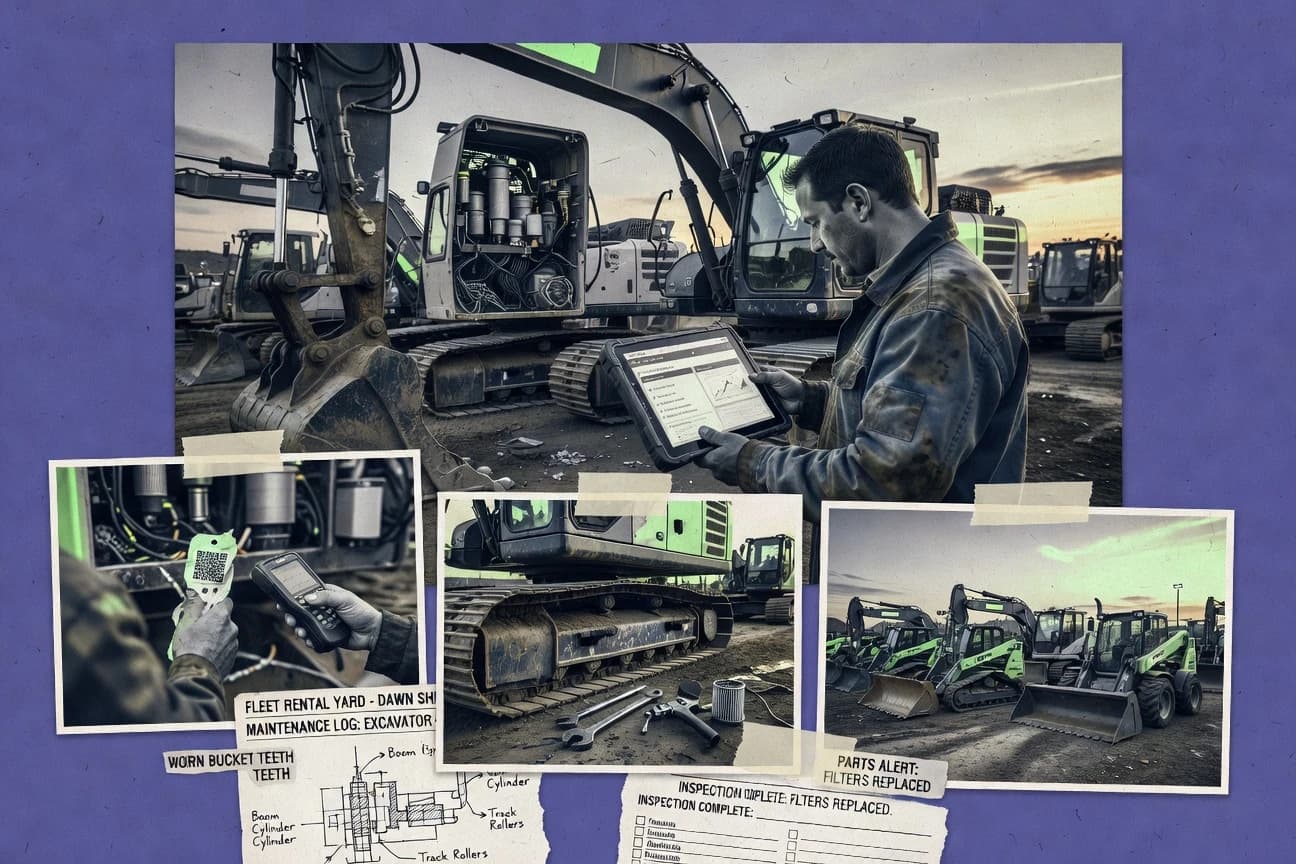
GITNUXSOFTWARE ADVICE
Equipment Rental LeasingTop 10 Best Heavy Equipment Maintenance Software of 2026
Ranked shortlist of heavy equipment maintenance software tools with criteria and tradeoffs for fleets, with Tenna, MPulse, and Hx GN EAM noted.

How we ranked these tools
Core product claims cross-referenced against official documentation, changelogs, and independent technical reviews.
Analyzed video reviews and hundreds of written evaluations to capture real-world user experiences with each tool.
AI persona simulations modeled how different user types would experience each tool across common use cases and workflows.
Final rankings reviewed and approved by our editorial team with authority to override AI-generated scores based on domain expertise.
Score: Features 40% · Ease 30% · Value 30%
Gitnux may earn a commission through links on this page — this does not influence rankings. Editorial policy
Tenna is the best fit for field teams that need visual maintenance documentation to flow back into standardized service records, while MPulse works best for maintenance managers in heavier, multi-work-order fleets who want stronger work-order control alongside mobile execution.
Editor’s top 3 picks
Three quick recommendations before you dive into the full comparison below — each one leads on a different dimension.
Tenna
Photo-first mobile workflows that attach visual evidence directly to configured inspection and work records.
Built for fits when field teams need visual maintenance documentation that feeds back into standardized service records..
MPulse
Editor pickMobile field capture that records maintenance execution details directly against work orders and their asset context.
Built for fits when maintenance managers need work order control plus mobile field capture for heavy fleets..
Hx GN EAM
Editor pickAsset-linked inspection and checklist execution flows into work order completion with consistent service history across fleets.
Built for fits when multi-site heavy equipment teams need governed work orders and inspection-driven maintenance history..
Comparison Table
Tenna
vertical specialistConstruction equipment management and fleet tracking platform.
Photo-first mobile workflows that attach visual evidence directly to configured inspection and work records.
Tenna’s core work centers on building maintenance workflows that start with mobile capture and end as auditable service records. Field users can attach photos, complete inspection prompts, and generate work order content without switching systems. Admins control what fields and checklists exist by configuring forms and templates, so teams reuse the same maintenance structure across similar assets. Tenna also provides an API surface that enables integration with other fleet systems for asset setup and maintenance record syncing.
A key tradeoff is that Tenna’s strongest outcomes come from standardizing asset naming, form templates, and mobile completion paths. Teams with highly variable paperwork per job site often need additional configuration effort before the visual workflows feel consistent. Tenna fits when field teams need fast documentation and maintenance backlogs shrink because records are captured at the point of work, not in a later data cleanup cycle.
- +Mobile photo capture converts field findings into structured maintenance records
- +Configurable inspection and checklist workflows reduce manual data entry
- +API supports automated syncing for assets and maintenance activities
- +Service history stays tied to each equipment asset
- –Configuration effort is high when equipment documentation varies widely by site
- –Advanced maintenance analytics rely on correct form discipline and consistent completion
- –Offline capture depends on mobile workflow design and operational readiness
- –Integrations require engineering work to map existing asset structures
Field maintenance technicians
Submit inspections from job sites
Faster record completion
Maintenance planners
Triage corrective issues from visuals
Lower unplanned downtime
Show 2 more scenarios
Fleet operations admins
Standardize equipment documentation
More complete service history
Admins enforce consistent forms and templates across assets to reduce backlog churn.
Software integration teams
Sync assets and work records
Less manual spreadsheet work
Integrations use the Tenna API to push asset context and pull maintenance events.
Best for: Fits when field teams need visual maintenance documentation that feeds back into standardized service records.
MPulse
mid-market to enterpriseCMMS and EAM software for equipment maintenance management.
Mobile field capture that records maintenance execution details directly against work orders and their asset context.
MPulse is a strong fit for organizations that run repeated planned work and need each job linked to a specific equipment asset, with service history that supports maintenance compliance and warranty conversations. Work orders provide the core execution object for planned maintenance tasks, follow-up corrective maintenance, and internal maintenance backlog visibility.
A common tradeoff is governance depth, because customization and integration capabilities tend to require deliberate configuration to keep asset hierarchies, meter inputs, and checklist templates consistent across technicians and sites. MPulse works best when maintenance managers control templates and processes centrally, then field staff complete jobs and inspections through mobile capture.
- +Work orders connect labor and parts usage to a specific asset
- +Preventive maintenance scheduling supports planned execution across fleets
- +Service history provides an audit trail across repeated maintenance events
- +Mobile job capture ties inspections and field notes back to work orders
- –Meter and asset setup requires careful template and hierarchy governance
- –Advanced condition-based and predictive workflows need extra process design
- –Reporting depth depends on how work order data is modeled up front
Fleet maintenance managers
Plan and execute repetitive maintenance tasks
Fewer missed planned jobs
Maintenance supervisors
Manage corrective maintenance workflow
Cleaner maintenance backlog tracking
Show 2 more scenarios
Field technicians
Complete jobs with mobile inspections
Faster closure with evidence
Record inspection findings and job execution notes on-site, tied back to the active work order.
Operations compliance owners
Maintain traceable maintenance records
Better traceability for audits
Use service history tied to equipment assets to support maintenance compliance reporting and warranty discussions.
Best for: Fits when maintenance managers need work order control plus mobile field capture for heavy fleets.
Hx GN EAM
enterpriseEnterprise asset performance management for heavy industrial equipment.
Asset-linked inspection and checklist execution flows into work order completion with consistent service history across fleets.
Hx GN EAM is built around an equipment-first workflow where assets carry maintenance history, checklists, and work order activity that technicians can complete through guided execution. The configuration supports preventive maintenance scheduling and corrective maintenance tracking within the same operational view, which helps reduce missed follow-ups after unplanned events. The main differentiation in this category is how Hexagon pairs maintenance execution with enterprise integration options that support downstream reporting and operational visibility.
A tradeoff appears in deployment and governance because equipment setup, maintenance rule configuration, and workflow tailoring must be kept consistent across sites. Hx GN EAM fits organizations that run recurring maintenance plans plus field inspections on active fleets and need centralized service history with controlled work order routing.
- +Work order management keeps execution and service history aligned per asset
- +Inspection and checklist workflows support consistent field documentation
- +Enterprise integration options support maintenance planning inputs from operational systems
- +Maintenance execution can be governed with standardized procedures per asset class
- –Requires disciplined equipment hierarchy setup to avoid mismatched history
- –Workflow customization can increase admin workload across multiple sites
- –Mobile and offline behavior depends on configuration and connected field tooling
- –More effective when maintenance processes are already standardized internally
Maintenance planners
Coordinate planned work across fleets
Less maintenance backlog
Field technicians
Complete checklist-driven inspections
Cleaner documentation
Show 2 more scenarios
Operations leadership
Review maintenance compliance and history
Better equipment uptime
Use centralized service history to measure equipment availability impacts and maintenance execution outcomes.
System integration teams
Sync maintenance triggers from operations
Fewer data entry errors
Integrate external operational signals into maintenance planning workflows to reduce manual updates.
Best for: Fits when multi-site heavy equipment teams need governed work orders and inspection-driven maintenance history.
Fleetio
SMB to mid-marketFleet maintenance platform covering heavy equipment, vehicles, and assets.
Meter-based maintenance that converts hour-meter readings into preventive work orders with consistent service-history linkage.
Fleetio centralizes fleet maintenance workflows around work orders, assets, and service history to keep field operations aligned with scheduled and reactive repairs. The system supports meter-based maintenance triggers using hour-meter tracking inputs so preventive maintenance can follow equipment usage rather than calendar time.
Fleetio also connects maintenance tasks to parts requests and service documents, which helps teams manage maintenance backlog across recurring machine classes. Administrators get configuration controls for teams and locations, and Fleetio adds integration and automation options through its API for syncing equipment, meters, and maintenance outcomes.
- +Meter-based preventive scheduling driven by hour-meter tracking inputs
- +Asset register with consistent service history across work orders
- +Parts requisitions tied to maintenance tasks for easier fulfillment
- +API integration supports sync of equipment, meters, and maintenance records
- –Complex multi-site setups need careful configuration of assets and locations
- –Offline mobile field workflows are limited compared with dedicated FMS tools
- –Predictive maintenance workflows require external data and custom logic
- –Advanced audit log depth may be insufficient for highly regulated governance
Best for: Fits when mid-market heavy equipment teams need meter-based scheduling plus work orders synced to field execution.
Fiix
mid-market to enterpriseMaintenance management software integrating heavy equipment assets.
Meter-based maintenance with hour-meter tracking drives preventive maintenance triggers from readings stored on each asset.
Fiix manages work order management end to end for heavy equipment, including preventive maintenance scheduling and corrective maintenance workflows. It ties service history to each asset through an equipment asset register and meter-based maintenance so maintenance triggers can follow hours or readings.
Fiix also supports inspection forms and maintenance checklists, with mobile field service use for dispatching and completing tasks in the field. Integrations and an API allow external systems like telematics, procurement, and ERP to push and pull maintenance-related data.
- +Work order workflows cover preventive and corrective maintenance in one process
- +Meter-based maintenance links hour readings to maintenance schedules
- +Maintenance checklists and inspection forms support consistent field documentation
- +API integration supports data exchange with external fleet and back office tools
- –Complex preventive maintenance setup can require disciplined template and schedule design
- –Parts inventory and kitting depth may be lighter than dedicated inventory suites
- –Advanced condition-based maintenance workflows depend on external data feeds
- –Multi-site governance needs careful role and process configuration to stay consistent
Best for: Fits when maintenance teams need meter-based scheduling, checklist-driven inspections, and work order automation for mixed fleets.
TAC Insights
vertical specialistAsset intelligence and maintenance management for heavy equipment fleets.
Maintenance compliance workflow states that enforce documented service completion tied to each asset’s work history.
TAC Insights targets heavy equipment maintenance teams that need structured work order management and traceable service history across fleets. It centers on maintenance planning workflows that connect inspections, corrective work, and planned tasks to equipment assets.
The system also supports field execution patterns for technicians and supervisors who need consistent checklists and status updates during maintenance work. TAC Insights distinguishes itself with governance around maintenance compliance and service documentation that stays tied to each equipment unit.
- +Work order records keep maintenance actions tied to specific equipment units
- +Inspection and checklist workflows support consistent data capture in the field
- +Maintenance history supports audit-style traceability across repairs and services
- +Compliance-oriented workflow states reduce missed planned maintenance tasks
- –Telematics and hour-meter driven scheduling depth depends on integration scope
- –Admin governance for roles and approvals needs careful configuration discipline
- –Advanced parts kitting workflows can feel constrained for complex BOM processes
- –Bulk updates for large fleets require more operational steps than lighter tools
Best for: Fits when field teams need checklist-driven maintenance records with strong compliance traceability across equipment units.
Motive
enterpriseFleet management software with vehicle and equipment tracking, inspections, maintenance, and diagnostic support.
Maintenance execution tied to live telematics and asset assignment reduces the handoff between device data and work order creation.
Motive combines fleet visibility and maintenance execution so maintenance teams can react to the same asset identifiers used by telematics.
Preventive maintenance scheduling and mobile inspection forms support structured data capture that feeds work order follow-through.
Service history provides continuity for corrective maintenance decisions without rebuilding context from offline records.
- +Telematics signals can route directly into maintenance work in the same system.
- +Mobile inspections and checklists capture field findings with asset context.
- +Service history links corrective work back to recurring maintenance decisions.
- +Work order lifecycle supports scheduling, completion, and follow-up visibility.
- –Complex setups require disciplined asset and meter mapping to avoid incorrect routing.
- –Parts inventory and kitting workflows stay secondary to maintenance execution.
- –Multi-location governance can become admin-heavy without tight role definitions.
- –Deep custom integrations can require engineering time for data normalization.
Best for: Fits when equipment fleets need meter or telematics-driven maintenance workflows with technician-friendly mobile tasking.
ToolSense
vertical specialistEquipment operations software combining asset tracking, maintenance workflows, inspections, and utilization data.
Checklist templates drive required inspection capture and map completion back to each work order record.
ToolSense targets heavy equipment maintenance with work order management tied to an equipment asset register and service history tracking. The system centers maintenance checklists and inspection forms, then records completion against scheduled tasks to support preventive maintenance scheduling and corrective maintenance workflows.
It also supports labor and parts data capture so maintenance backlog and execution can be traced from field activity to recorded outcomes. Integration capabilities focus on connecting equipment and operational inputs through an API and automation hooks that fit fleet maintenance processes.
- +Work order records stay connected to asset register and service history
- +Maintenance checklists and inspection forms reduce field-to-system data variance
- +Parts and labor capture supports end-to-end work execution visibility
- +API access enables integration with maintenance systems and operational tooling
- –Predictive maintenance and condition-based maintenance stay limited without external data feeds
- –Offline mobile access needs setup discipline to avoid field logging gaps
Best for: Fits when maintenance teams need checklist-driven work orders linked to assets, with API integration into existing operations.
eMaint
enterpriseEnterprise CMMS software for preventive maintenance, asset history, inventory, workflows, and reporting.
Task-driven maintenance planning that keeps every work order tied to equipment context, inspections, and meter history.
eMaint is heavy equipment maintenance software that centers on work order management tied to an equipment asset register. The system supports planned maintenance workflows with maintenance tasks, inspection forms, and documented service history for audits and backlog control.
Field execution can run through mobile-ready processes for recording labor, meter readings, and maintenance outcomes tied back to each asset. Admin controls focus on user roles, maintenance templates, and structured approvals so corrective maintenance can be routed without losing traceability.
- +Work order workflows stay linked to each equipment asset record
- +Planned maintenance templates reduce drift between similar units
- +Inspection forms and service history support maintenance compliance needs
- +Meter-based triggers support hour-tracking for maintenance intervals
- –Setup of equipment structures and maintenance templates requires disciplined admin work
- –Reporting depth depends on how tasks and fields are modeled
- –Complex approval routing can slow corrective maintenance throughput
- –Integrations are not uniform across all data sources without build effort
Best for: Fits when field teams need traceable work orders, meter-driven planning, and structured inspections for heavy equipment fleets.
MaintiMizer
SMBCMMS designed for maintenance management with work orders and preventive maintenance scheduling.
Checklist-driven maintenance execution that attaches checklist completion and notes to equipment service history.
MaintiMizer focuses on maintenance execution for heavy equipment by turning asset-specific work into scheduled, trackable tasks. It includes an equipment asset register, inspection and maintenance checklist workflows, and work order management tied to meter readings.
The system also supports service history capture and parts and labor tracking so field updates carry forward into back-office reporting. Integration and automation options exist, but deeper API-driven extensibility and multi-system governance controls lag behind higher-ranked tools in this category.
- +Asset register links equipment records to work orders and history
- +Maintenance checklist workflows reduce missed inspection steps
- +Meter-based scheduling ties tasks to hour readings for fleets
- +Service history supports repeat repairs and trend review
- –API and automation surface offers fewer integration patterns than higher ranks
- –Mobile field workflow depth feels limited for complex job capture
- –Parts and kitting workflows are less granular than specialized WMS tools
- –Reporting flexibility relies more on predefined views than custom data exports
Best for: Fits when mid-size fleets need meter-triggered work orders and checklists without deep system integrations.
Conclusion
After evaluating 10 equipment rental leasing, Tenna stands out as our overall top pick — it scored highest across our combined criteria of features, ease of use, and value, which is why it sits at #1 in the rankings above.
Use the comparison table and detailed reviews above to validate the fit against your own requirements before committing to a tool.
How to Choose the Right heavy equipment maintenance software
Heavy equipment maintenance software centralizes work order management, asset-linked service history, and field inspection capture so maintenance execution stays traceable to each equipment unit.
This guide covers Tenna, MPulse, Hx GN EAM, Fleetio, Fiix, TAC Insights, Motive, ToolSense, eMaint, and MaintiMizer based on how each system turns asset context into governed maintenance records and technician-ready tasks.
The coverage focuses on integration depth and automation surface, especially how photo-first or checklist-driven mobile workflows write back into the configured work order record.
Each tool’s admin and governance controls show up in equipment hierarchy setup, inspection and checklist discipline, and the way asset and meter mappings affect downstream scheduling outcomes.
Heavy Equipment Maintenance Software: work orders, meter or inspection workflows, and asset service history
Heavy equipment maintenance software runs preventive and corrective maintenance by linking maintenance triggers to each asset record, then recording execution details in work orders tied to consistent service history.
Tenna emphasizes photo-first mobile workflows that attach visual evidence directly to configured inspection and work records, which reduces field-to-system variance when sites differ in documentation habits.
MPulse focuses on mobile field capture connected to work orders and their asset context, and it drives planned execution across fleets through preventive maintenance scheduling.
Across these tools, the practical difference comes from how each system governs equipment hierarchy and template discipline, and from how work order completion carries inspection details back into the same asset-linked history used for future maintenance triggers.
Systems like Hx GN EAM extend the same idea with inspection and checklist execution flowing into governed work order completion to keep multi-site service history aligned per asset.
Workflows that write back to asset service history
Heavy equipment maintenance software succeeds when field-captured inspection or execution data becomes part of a governed work order record and then flows into consistent asset-linked service history for future triggers. These features decide whether maintenance teams produce traceable corrective maintenance and preventive maintenance schedules or whether data stays fragmented across mobile forms and maintenance back office records.
Photo-first mobile capture tied to configured inspection and work records
Tenna uses photo-first mobile workflows that attach visual evidence directly to configured inspection and work records. This design converts field findings into structured maintenance records that stay aligned to the same service history used later.
Meter and hour-based scheduling that drives work order completion
Fleetio and Fiix both center meter-based preventive maintenance driven by hour-meter tracking that creates work orders linked back to asset records. This keeps scheduling tied to recorded run time and reduces manual re-entry when technicians complete work.
Inspection and checklist execution that completes governed work orders
Hx GN EAM and eMaint emphasize inspection and checklist workflows that feed into work order completion while maintaining equipment context. This keeps service history consistent across fleets when multi-site execution produces different check completion styles.
Mobile execution connected to work orders and asset context
MPulse and Motive both connect mobile field capture to work orders tied to specific assets. MPulse ties labor and parts usage to the asset context, while Motive ties technician tasking to live telematics signals in the same system.
Maintenance compliance workflows with enforcement states
TAC Insights focuses on maintenance compliance workflow states that enforce documented service completion tied to each asset’s work history. This structure supports audit-grade traceability when field teams must complete required checklist steps.
Checklist templates that reduce field-to-system data variance
ToolSense and MaintiMizer use checklist templates or checklist-driven execution to map completion and notes back to work order records. These tools reduce variance by keeping the same inspection prompts connected to each asset service history entry.
Choose based on the trigger source and the governance model
Selecting heavy equipment maintenance software works best when the maintenance trigger source matches the workflow the field team can consistently complete. Tenna and MPulse prioritize field capture, while Fleetio and Fiix prioritize meter inputs that generate preventive work and then carry execution details back into asset history.
Match the maintenance trigger to your reality in the field
If technicians can capture visual evidence for inspections on site, Tenna’s photo-first workflows attach photos to configured inspection and work records so corrective maintenance documentation stays consistent. If maintenance completion is driven by hour-meter readings, Fleetio or Fiix converts hour-meter tracking into preventive work orders while preserving asset-linked service history linkage.
Pick the workflow model for how work orders get completed
If governed inspection-to-work order completion across multiple sites is the priority, Hx GN EAM emphasizes inspection and checklist execution that flows into governed work order completion with consistent service history. If compliance enforcement is the priority, TAC Insights uses maintenance compliance workflow states that enforce documented service completion tied to each asset’s work history.
Decide how much hierarchy discipline is acceptable
Multi-site teams that can invest in equipment hierarchy setup should evaluate Hx GN EAM because mismatched history happens when equipment hierarchy setup is not disciplined. If hierarchy governance is hard to standardize, MPulse and Fleetio still require careful setup but focus on work order control and meter inputs tied to asset context.
Separate telematics-to-maintenance routing needs from inventory depth needs
If live telematics signals should route into maintenance work inside the same system, Motive ties maintenance execution to live telematics and asset assignment. If parts inventory and kitting depth are required, Fiix and Tenna may need supplemental evaluation because their differentiation centers on meter triggers and photo-first inspection execution rather than inventory depth.
Validate the offline and field logging risk path
If offline mobile logging is required, Fleetio shows limited offline mobile field workflow depth compared with dedicated FMS tools, so field capture risks should be mapped to the planned process. If offline is not a requirement, ToolSense and MaintiMizer remain strong options for checklist-driven work orders linked to asset register and service history.
Confirm that automation depends on disciplined form completion
If analytics and future automation rely on consistent form discipline, Tenna flags that advanced analytics depend on correct form discipline and consistent completion. If predictive or condition-based workflows depend on extra process design, MPulse limits advanced condition-based and predictive workflows without added process structure.
Who benefits from the different maintenance workflow styles
Maintenance leaders should choose based on field capture capability, scheduling trigger source, and how strictly completion is governed. The tools in this guide split along two dominant patterns: inspection-first systems that write photos or checklist results into work records, and meter-first systems that convert hour-meter tracking into preventive work orders.
Multi-site heavy equipment operators with inconsistent inspection documentation
Tenna fits teams that need photo-first mobile workflows that attach visual evidence directly to configured inspection and work records. This approach reduces field-to-system variance and keeps service history consistent per configured checklist design.
Fleets that schedule maintenance by hour-meter tracking
Fleetio and Fiix fit teams that convert hour-meter tracking into preventive work orders while keeping consistent service-history linkage to asset registers. These tools prioritize meter-driven planning when work order triggers must stay measurable and repeatable.
Maintenance managers who need mobile work order control tied to asset context
MPulse supports mobile field capture connected to work orders and their asset context so labor and parts usage attaches to the right asset record. This matches environments where technicians complete work inside a work order that already defines asset scope.
Organizations with compliance requirements tied to completed service documentation
TAC Insights fits teams that need maintenance compliance workflow states that enforce documented service completion tied to each asset’s work history. This structure supports checklist-driven maintenance records with strong compliance traceability.
Operators using live telematics to reduce the handoff into maintenance tasks
Motive fits fleets where telematics signals should route directly into maintenance work within the same system. The system ties maintenance execution to live telematics and asset assignment to reduce manual translation between device data and work order creation.
Common purchase pitfalls when mapping workflows to asset history
Most failures come from mismatches between how triggers are generated and how technicians complete the required steps. The second major failure mode is governance weakness where equipment hierarchy or template discipline breaks the asset-linked history used for later scheduling and compliance reporting.
Buying a photo or checklist workflow without enforcing completion rules tied to the configured forms
Tenna flags that advanced maintenance analytics rely on correct form discipline and consistent completion, so photo capture only helps when required steps are consistently completed. TAC Insights enforces maintenance compliance workflow states, which reduces the risk of incomplete service documentation entering asset history.
Underestimating equipment hierarchy and template governance needed for consistent service history
Hx GN EAM calls out that disciplined equipment hierarchy setup is required to avoid mismatched history across multiple sites. MPulse and Fleetio also require careful template and hierarchy governance because meter and asset setup errors change downstream scheduling outcomes.
Assuming offline mobile capture is equivalent across tools
Fleetio notes that offline mobile field workflows are limited compared with dedicated FMS tools, which can create field logging gaps when connectivity drops. ToolSense and MaintiMizer focus more on checklist-driven execution linkage than on deep offline workflow depth, so offline needs should be mapped to the field logging plan.
Treating telematics routing as a default feature rather than a mapping and setup dependency
Motive warns that complex setups require disciplined asset and meter mapping to avoid incorrect routing from telematics signals into work tasks. Without that mapping discipline, telematics integration can push technicians to the wrong work order even when tasking is mobile-friendly.
How We Selected and Ranked These Tools
We evaluated Tenna, MPulse, Hx GN EAM, Fleetio, Fiix, TAC Insights, Motive, ToolSense, eMaint, and MaintiMizer across workflow fit, capture-to-record writeback behavior, and how governed service history supports future preventive and corrective maintenance. Features account for 40% of the weighting because inspection, checklist, work order management, and mobile execution determine whether field data actually updates maintenance history.
Ease and value each account for 30% because equipment hierarchy setup and form discipline control how quickly teams reach consistent throughput. Tenna separated from the group with photo-first mobile workflows that attach visual evidence directly to configured inspection and work records while converting field findings into structured maintenance records.
Frequently Asked Questions About heavy equipment maintenance software
How do Tenna and MPulse structure visual field capture into work order records?
When should a fleet choose meter-based preventive maintenance in Fleetio or Fiix instead of calendar scheduling?
Which tool handles inspection checklists with mobile completion tied to governed maintenance records best: TAC Insights or ToolSense?
How do Hx GN EAM and eMaint differ in multi-site work order governance and service history consistency?
What breaks if offline mobile access is missing when technicians need to capture inspections mid-job?
Which products support integration and API-based syncing for maintenance data exchange: Fiix or Fleetio?
How do Motive and Fiix connect telematics or device data to maintenance execution without manual translation?
When do admin controls like RBAC-style role management matter most in Motive versus eMaint?
How should teams migrate existing maintenance history into Fiix or eMaint without breaking the equipment asset register linkage?
What tradeoff appears when choosing MaintiMizer instead of Tenna or MPulse for integration depth and automation?
Tools reviewed
Primary sources checked during evaluation.
Referenced in the comparison table and product reviews above.
- Equipment Rental LeasingTop 10 Best Equipment Rental Management Software of 2026
- Automotive ServicesTop 10 Best Heavy Equipment Repair Software of 2026
- Agriculture FarmingTop 10 Best Farm Equipment Maintenance Software of 2026
- Real Estate PropertyTop 10 Best Rental Property Maintenance Software of 2026
- Transportation VehiclesTop 10 Best Vehicle And Equipment Maintenance Software of 2026
Keep exploring
Comparing two specific tools?
Software Alternatives
See head-to-head software comparisons with feature breakdowns, pricing, and our recommendation for each use case.
Explore software alternatives→In this category
Equipment Rental Leasing alternatives
See side-by-side comparisons of equipment rental leasing tools and pick the right one for your stack.
Compare equipment rental leasing tools→