
01 Industry overview
The smart panel industry at a glance
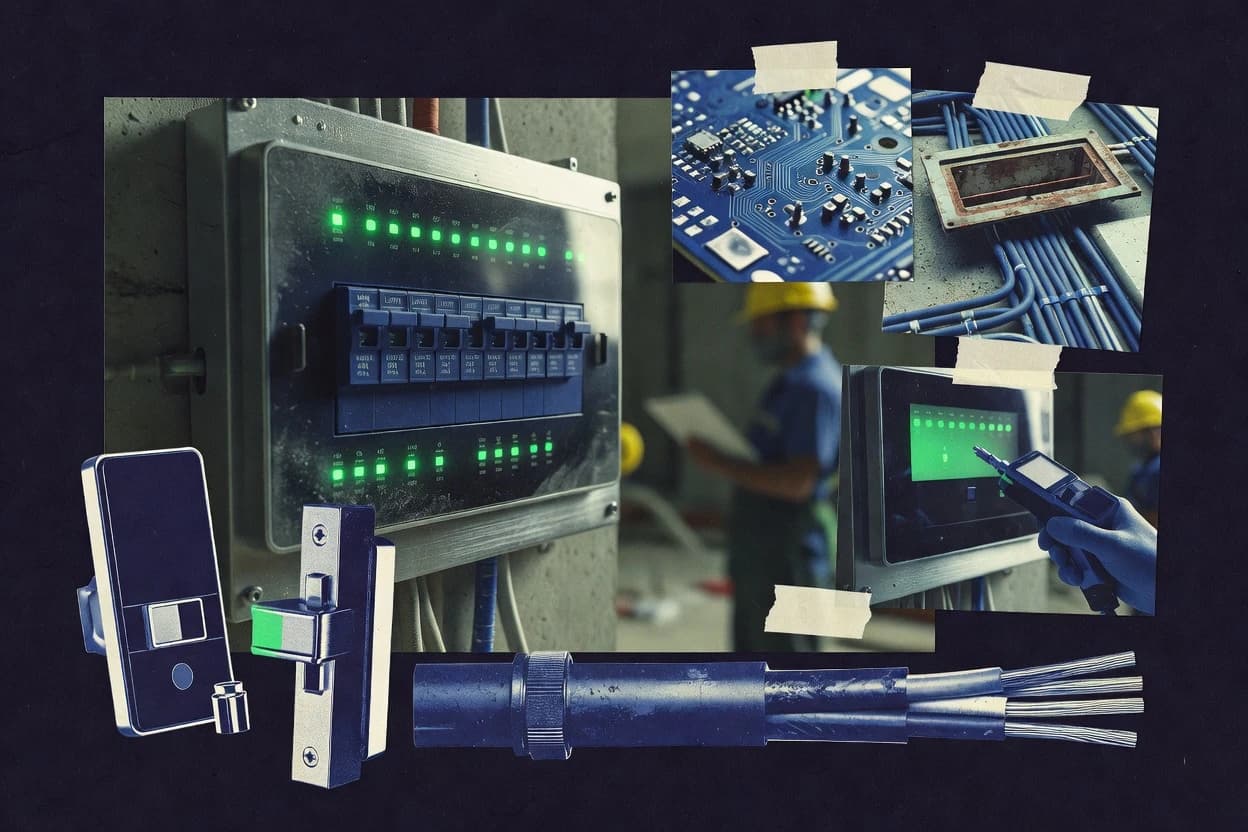
The global smart electrical panel market reached an estimated $13.4 billion in 2025 and is being driven by building electrification, EV charging, heat pumps, solar and battery integration.
- $13.4B[1]
- Global market size, 2025
- 7.3%[1]
- Forecast CAGR, 2026–2035
- 46.9%[1]
- Hardware share, 2025
- $2,550[10]
- SPAN starting price, 2026
- Market size
- The global smart electrical panel market was estimated at $13.4 billion in 2025. A separate 2025 estimate placed the market at $10.9 billion, illustrating the variation caused by different market definitions and methodologies.[1][2]
- Forecast & CAGR
- DataM Intelligence forecasts the market to reach $27.1 billion by 2035, implying a 7.3% CAGR from 2026 to 2035. Meticulous Research projects growth from $10.9 billion in 2025 to $20.1 billion in 2035 at a 6.4% CAGR.[1][2]
- Market share & regions
- North America was identified by Meticulous Research as the fastest-growing regional market over 2025–2035. The available market sources reviewed did not provide a consistent, directly comparable regional revenue-share table.[2]
- Segmentation
- Hardware accounted for 46.9% of the global market in 2025, reflecting demand for smart breakers, sensors, controllers and connected distribution equipment. The market is also segmented by product type, communication technology, rated current, electrical phase, application, distribution channel and installation type.[1]
- Key players & concentration
- Named market participants include Schneider Electric, SPAN, Leviton, Eaton, Siemens, ABB, Legrand, SolarEdge, EcoFlow, CHINT and Savant. For the broader utility distribution-panel market, Schneider Electric, Siemens, ABB, Eaton and General Electric together held more than 35% in 2024; a comparable concentration figure specifically for smart electrical panels was not available.[1][11]
- Pricing
- SPAN lists its smart panel from $2,550 before installation, taxes and shipping. A 2026 product comparison listed SPAN hardware at $2,550–$4,100 and Square D Energy Center model QOWC60M200PFY at a $3,499 list price, excluding most installation work.[10][12]
- Trends, drivers & challenges
- Demand is linked to EV chargers, heat pumps, electric cooking, solar generation and batteries competing for limited household service capacity. Lawrence Berkeley National Laboratory describes smart panels as a way to manage loads and participate in demand-response programs, but notes that hardware commonly costs $3,000 or more and may be unnecessary when only basic service-capacity relief is needed.[1][7]
- Consumer behavior & competition
- Residential buyers are primarily comparing whole-panel systems with modular smart breakers, subpanels and load-management devices for EV charging, backup power and electrification projects. SPAN offers 16–48 controllable circuits, while competing products from ABB, Schneider Electric, Leviton, EcoFlow and Savant target overlapping home-energy-management use cases.[10][13]
- Regulation
- Smart panels are generally regulated as electrical equipment rather than through a separate smart-panel code category. New York’s 2025 energy-code assessment stated that smart panels were not mandatory and, when voluntarily installed, must meet the same applicable requirements as traditional panels and NFPA 70; Minnesota’s 2025 statute defines a smart panel as an electrical panel electronically programmable to manage building electricity use.[14][15]
- Latest news
- ABB announced the ReliaHome Smart Panel with PanelGuard technology on February 24, 2025. The product uses load-management algorithms to help keep household demand within electrical-capacity limits as homes add electrified appliances and distributed energy resources.[13]
02 Ranking
Top 6 Companies in the Smart Panel Industry
The leading companies in the smart panel industry, ranked on market impact, performance, momentum, innovation and brand popularity.
Updated November 20, 2026 · Next review December 20, 2026
Schneider Electric stands out for smart electrical panel integration because it offers Square D Energy Center for solar, EV and backup power, while Eaton focuses on circuit-level monitoring and control since its Smart Panel includes SPAN Energy Intelligence.
Ranked by Overall score · How we score ↓
Editor's top 3 picks
Where to start, by need.
#1 Overall · Leader in smart electrical panels
Schneider Electric
FR
Ranked #1 · 9.3 · Smart electrical panels
Why we picked it: Connected electrical distribution and smart panels show up in its Square D Energy Center configuration for electrification projects.
#2 overall
Eaton
IE
Ranked #2 · 9.1 · Smart electrical panels
Why we picked it: It supports circuit-level visibility and control through SPAN Energy Intelligence in its smart load center offering.
#3 overall
Siemens
DE
Ranked #3 · 8.6 · Smart electrical panels
Why we picked it: Its portfolio targets intelligent electrical distribution and monitoring paired with building-automation systems.
Pick 1 is the #1 company overall. No other segment places in the top 5, so picks 2 and 3 follow rank.
Full ranking
| # | Company | Overall ↓ | Impact | Company snapshot |
|---|---|---|---|---|
| 1 | Schneider Electric Smart electrical panels · FR | 9.3 | 9.7 | |
Company snapshot · Schneider Electric · Data as of November 20, 2026 Offers Square D Energy Center, an all-in-one smart electrical panel for solar, EV and backup power.[16]
| ||||
| 2 | Eaton Smart electrical panels · IE | 9.1 | 9.2 | |
Company snapshot · Eaton · Data as of November 20, 2026 Offers Smart Panel with SPAN Energy Intelligence for circuit-level monitoring and control.[17]
| ||||
| 3 | Siemens Smart electrical panels · DE | 8.6 | 9.9 | |
Company snapshot · Siemens · Data as of November 20, 2026 Supplies intelligent electrical distribution, monitoring and building-automation systems used in smart-panel applications.[1]
| ||||
| 4 | Leviton Manufacturing Smart electrical panels · US | 8.6 | 7.9 | |
Company snapshot · Leviton Manufacturing · Data as of November 20, 2026 Its Smart Load Center supports smart breakers, circuit monitoring, alerts and remote breaker control.[18]
| ||||
| 5 | ABB Smart electrical panels · CH | 8.3 | 9.5 | |
Company snapshot · ABB · Data as of November 20, 2026 Offers ReliaHome Smart Panel for circuit-level monitoring, automation and residential load management.[19]
| ||||
| 6 | SPAN Whole-home smart electrical panels · US | 8.0 | 7.0 | |
Company snapshot · SPAN · Data as of November 20, 2026 Makes SPAN Panel, replacing conventional panels with circuit-level control, monitoring and load management.[10]
| ||||
How we score
- Impact (30%): scale and weight in the market (revenue, market share, employees, market position).
Popularity (brand search demand, 15%) counts toward Overall but is not published as a column. Overall leaves out what is not known.
Scale Scores are shown on a 7–10 scale with one decimal; bars start at 7.0.
Cadence Recalculated when new figures are published; next review December 20, 2026.
Independence. Rankings are editorially independent. Scores, ranks, picks and the verdict follow the method above; no company can pay to change them.
Cite this ranking
APA
Samuel Norberg. (2026, November 20). Top 6 companies in the smart panel industry. In Smart Panel Industry Statistics. Gitnux. https://gitnux.org/smart-panel-industry-statistics/#top-companies
Global smart electric panel market size
Global smart electric panel market size grew from $11.1B in 2022 to $12.5B in 2024.
03 Trends & forecasts
Top 10 Smart Panel Industry Trends & Forecasts 2027
What is changing in the smart panel industry, with the evidence behind each trend and a forecast for 2027.
Forecasts were generated by an AI model from the cited evidence. They are estimates, not guarantees.
01Electrification expands panel demand
High confidenceGlobal electric-car sales exceeded 20 million in 2025, up 20% year over year, while heat-pump sales in the United States were one-third higher than fossil-fuel heating-system sales in the first half of 2025. These technologies increase the number of high-power loads that homes and buildings must coordinate. [Source: IEA][20]
Forecast 2027: In 2027, electrification retrofits will remain the main demand catalyst, particularly where EV charging, heat pumps and electric cooking approach existing service limits. Smart panels should increasingly be specified as capacity-management equipment rather than as standalone home-automation products.
02EV charging drives load management
High confidenceElectric cars represented 25% of global new-car sales in 2025, and California had almost 1.5 million registered battery-electric vehicles in 2024, about one-third of the U.S. total. Home charging creates a strong use case for automated circuit scheduling and peak-load control. [Sources: IEA, EIA][20][21]
Forecast 2027: By 2027, EV-charger load management will be one of the most common entry points for smart-panel purchases. Products that dynamically reduce or pause charging without requiring a service upgrade should gain share over purely monitoring-focused systems.
03Heat pumps raise peak-load needs
High confidenceThe IEA reported that U.S. heat-pump sales were one-third higher than fossil-fuel system sales in the first half of 2025. A 2025 study using 42,089 smart-meter records found that heat pumps contributed about 1.2 kW to feeder peak demand per connection, on average. [Sources: IEA, ScienceDirect][20][22]
Forecast 2027: In 2027, heat-pump installations will increasingly be bundled with panel upgrades, smart breakers or managed-load controls. Demand will be strongest in older homes with 100-amp or otherwise constrained service connections.
04Solar and batteries require coordination
High confidenceThe IEA reported that behind-the-meter battery-storage installations rose by nearly 30% after March 2026, while battery storage accounted for one-third of U.S. battery deployment in 2025. Smart-panel systems increasingly coordinate solar, batteries, backup circuits and grid imports. [Sources: IEA, ABB][20][23]
Forecast 2027: By 2027, solar-plus-storage compatibility will be a baseline requirement for premium smart panels. Vendors will compete on backup optimization, outage operation and the number of inverter and battery platforms supported.
05Dynamic load control moves mainstream
High confidenceCalifornia’s 2025 building-energy action plan identified smart panels as building-energy-management systems that can schedule and balance loads. A California pilot found that load-balancing technologies enabled participants to add Level 2 EV charging, a heat-pump water heater and heat-pump dryers without upsizing service. [Sources: California Energy Commission, CalNEXT][24][25]
Forecast 2027: In 2027, utilities, builders and electrification contractors will treat dynamic load control as a practical alternative to some service upgrades. Adoption will extend beyond full smart-panel replacements to managed subpanels and networked breakers.
06Premium pricing limits mass adoption
High confidenceSPAN lists MSRP prices from $2,550 for its MLO 24 panel to $4,100 for its Main 40 panel, excluding installation, shipping and taxes. Lawrence Berkeley National Laboratory has noted that smart-panel hardware commonly costs $3,000 or more, creating a barrier when basic service-capacity relief would suffice. [Sources: SPAN, LBNL][26][27]
Forecast 2027: In 2027, list prices for full smart panels are likely to remain in the roughly $2,500-$4,000-plus range, while the market expands through financing, utility incentives and lower-cost modular alternatives. Price-sensitive buyers will continue to compare full-panel systems with smart breakers and dedicated load-management devices.
07Modular alternatives intensify competition
High confidenceThe market increasingly includes whole-panel systems, modular smart breakers, subpanels and dedicated load-management devices. ABB’s ReliaHome launch and SPAN’s 16-to-48-circuit product range illustrate competition between integrated replacement panels and broader energy-management platforms. [Sources: ABB, SPAN][28][10]
Forecast 2027: By 2027, modular solutions will capture projects where the existing panel is serviceable but one or two new loads create a capacity problem. Full-panel replacements will remain more attractive for new construction, major remodels and whole-home backup projects.
08Large electrical brands enter deeper
Medium confidenceABB launched ReliaHome Smart Panel with PanelGuard technology in February 2025, offering intelligent load management and circuit-level control. The broader competitive set includes established electrical-equipment companies such as ABB, Schneider Electric, Eaton, Leviton, Siemens and Legrand, alongside specialist vendors. [Sources: ABB, overview company set][28]
Forecast 2027: In 2027, competition should shift toward channel scale, installer support, warranty coverage and interoperability rather than basic connectivity alone. Established electrical brands are likely to use distributor and builder relationships to narrow specialists’ early lead.
09Manufacturing remains geographically concentrated
High confidenceThe IEA reported that China accounted for more than 80% of global battery-cell production in 2025 and held dominant shares across several electrification-technology supply chains. Smart-panel manufacturers therefore remain exposed to concentrated upstream supply for batteries, power electronics and connected components. [Source: IEA][20]
Forecast 2027: In 2027, panel makers will continue diversifying suppliers and increasing regional assembly, but upstream electronics and storage-related components will remain concentrated. Supply-chain resilience and inventory planning will stay important competitive factors.
10Grid flexibility becomes a product feature
Medium confidenceThe IEA reported that stationary battery storage continued to grow rapidly in 2026 and that smaller behind-the-meter projects increased by nearly 30% after March. Smart panels can coordinate household loads with battery charging, utility prices and grid constraints, making flexibility a commercial feature rather than only a technical capability. [Source: IEA][20]
Forecast 2027: By 2027, demand-response participation, time-of-use optimization and automated peak avoidance will be standard claims in premium product marketing. Actual revenue from grid services will remain uneven because utility programs and customer compensation differ substantially by market.
04 Statistics
Market Intelligence
Market intelligence centers on two 2025 estimates and the same 2026–2035 growth path: US$13.4B to US$27.1B at 7.3% CAGR, with an alternate methodology showing US$10.9B to US$20.1B.
Market size, volume and shipments in the smart panel industry
- US$13.4 billion was the global smart electrical panel market value in 2025; the category includes integrated, retrofit and modular panels, upgrade kits, hardware, software and services.[1]
- US$10.9 billion was the global smart electric panel market value in 2025; the category covers integrated, retrofit, solar-ready, battery-integrated, load-management panels, software and services.[2]
Forecast growth and shipments in the smart panel industry
- The global smart electrical panel market is projected to reach US$27.1 billion in 2035 from US$13.4 billion in 2025, implying 7.30% CAGR for 2026–2035.[1]
- The global smart electric panel market is forecast to reach US$20.1 billion in 2035 from US$10.9 billion in 2025, implying 6.4% CAGR for 2025–2035.[2]
- The global smart electric panel market is projected to grow from US$27.86 million in 2025 to US$57.07 million in 2032, implying 11.0% CAGR for 2026–2032.[3]
05 Statistics
Product & Standards
Product and standards show how eligibility and sizing tie back to panel ratings, including a recommended control setting at 80% of service or panel rating and UL 869A use for SPAN service equipment.
Standards, grades and specs for smart panel
- 100–200 amperes is the eligible panel-rating range for Silicon Valley Power’s smart-electric-panel rebate program, with automatic load management required not to exceed the panel rating.[4]
- 125 amperes is the minimum capacity for electrical-panel improvement projects under the cited municipal rebate guide, which includes smart electrical panels.[5]
- UL 869A is the cited certification standard for SPAN smart electrical panels used as service equipment in the United States.[6]
- 80% of the service or panel rating is the recommended smart-panel control setting for residential electrical sizing under the 2023 NEC treatment described by Lawrence Berkeley National Laboratory.[7]
06 Statistics
Customers & Channel
Customers and channel data emphasize residential demand, including 55–60% of Northern America residential panel value from retrofit and panel-upgrade in 2026, and a split of 44% residential versus 35% commercial and 21% industrial in 2025.
Demand by end use for smart panel
- 44% of global smart electrical panel market value came from residential applications in 2025; the category covers smart electrical panels used for monitoring, load balancing, solar integration and EV charging.[8]
- 21% of global smart electrical panel market value came from industrial applications in 2025, including manufacturing, data centers and utility infrastructure using power-quality monitoring and predictive maintenance.[8]
- 35% of global smart electrical panel market value came from commercial applications in 2025, including offices, retail centers and hospitality facilities using demand-response and building-management integration.[8]
- 55–60% of Northern America residential panel market value came from retrofit and panel-upgrade demand in 2026; new residential construction contributed 25–30%, and other uses contributed 10–15%.[9]
Key questions about the smart panel industry
What is the global smart electrical panel market size in 2025?
How fast is the market expected to grow after 2025?
Which companies lead the smart panel industry?
What technology shift is shaping smart panel design and adoption?
How is the market structured by product type and customer application?
What pricing reality affects buyer decisions for smart panels?
Cite This Report
This report is designed to be cited. We maintain stable URLs and versioned verification dates. Copy the format appropriate for your publication below.
Samuel Norberg. (2026, November 20). Smart Panel Industry Statistics. Gitnux. https://gitnux.org/smart-panel-industry-statistics
Samuel Norberg. "Smart Panel Industry Statistics." Gitnux, 20 Nov 2026, https://gitnux.org/smart-panel-industry-statistics.
Samuel Norberg. 2026. "Smart Panel Industry Statistics." Gitnux. https://gitnux.org/smart-panel-industry-statistics.
Sources & references
28 sources cited across this report
datamintelligence.com
meticulousresearch.com
marketresearchreports.com
siliconvalleypower.com
cdnsm5-hosted.civiclive.com
device.report
homes.lbl.gov
marketintelo.com
indexbox.io
span.io
gminsights.com
- watt-wallet.com
resources.news.e.abb.com
govt.westlaw.com
revisor.mn.gov
se.com
eaton.com
leviton.com
iea.org
eia.gov
sciencedirect.com
energy.ca.gov
calnext.com