
01 Industry overview
The point to point rocket cargo industry at a glance
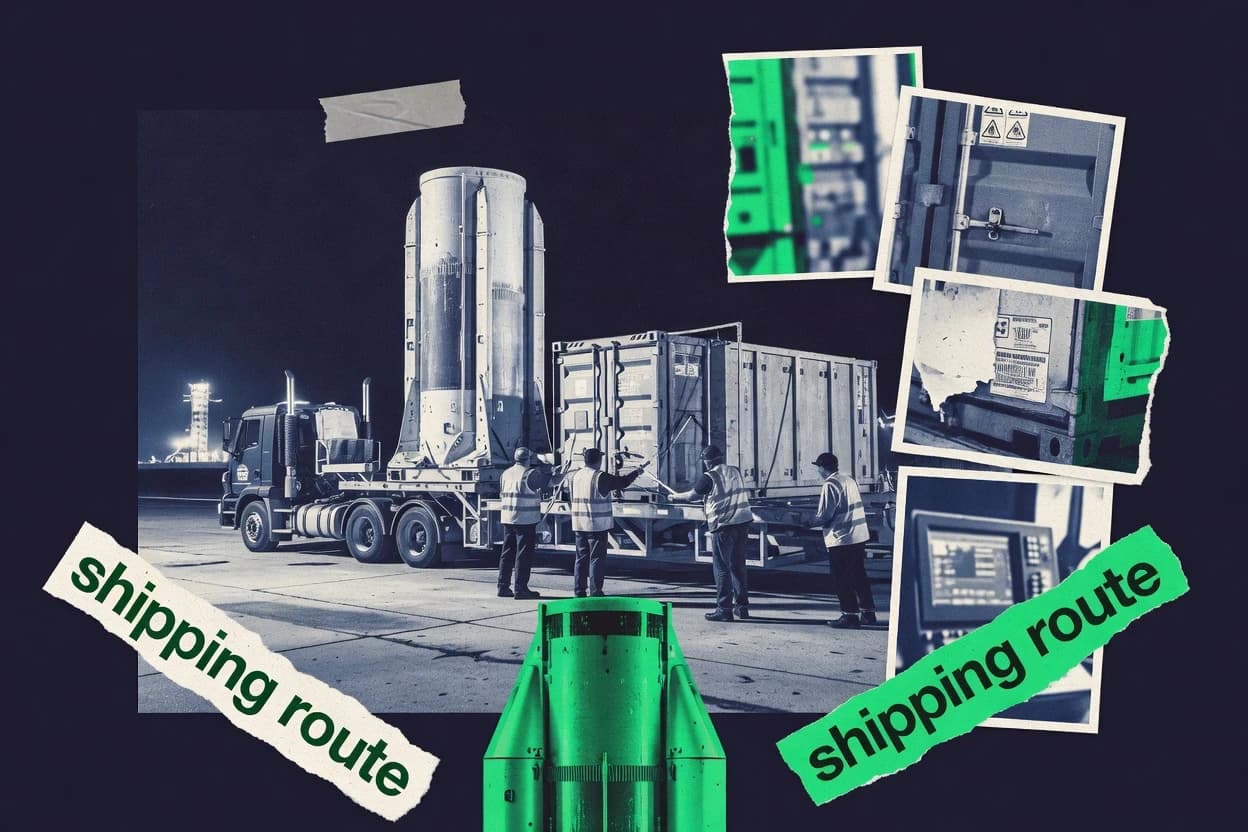
Point-to-point rocket cargo remains a pre-commercial industry, with a 2026 Starfall demonstration recovering cargo after reentry and a vehicle capacity of up to 2,200 pounds (1,000 kilograms).
- $15.64B[3]
- Carrier rocket market, 2025
- 10.58%[3]
- Forecast CAGR, 2026–2034
- 2,200 lb[2]
- Starfall cargo capacity, 2026
- 76[2]
- Annual Starship launches authorized
- Market size
- The closest published proxy is the global carrier-rocket market, valued at $15.64 billion in 2025. This broader figure includes launch vehicles and is not limited to point-to-point cargo services.[3]
- Forecast & CAGR
- The carrier-rocket market is forecast to reach $34.97 billion by 2034, implying a 10.58% CAGR from 2026 to 2034. No reliable standalone forecast for commercial point-to-point rocket cargo services was identified.[3]
- Segmentation
- Current activity divides broadly between orbital reentry vehicles and larger reusable launch vehicles. SpaceX’s Starfall vehicle is described as capable of returning up to 2,200 pounds (1,000 kilograms), while the U.S. Air Force’s Rocket Cargo initiative targets future deliveries of tens of tons per launch.[2][4]
- Key players & concentration
- SpaceX is the best-documented commercial participant: its Starfall system completed a 2026 demonstration, while its Starship vehicle is being evaluated for point-to-point logistics. The Air Force has also identified Blue Origin capabilities in an active Rocket Cargo contract, but no reliable market-share data was found.[5][6]
- Trends, drivers & challenges
- The principal technology drivers are rapid reusability, higher launch cadence and cargo return from orbit. Regulatory and environmental constraints remain material: the FAA’s 2026 Cape Canaveral proposal covers up to 76 Starship-Super Heavy launches and 152 landings annually, while commercial operations still require vehicle-license modifications and environmental review.[2]
- Regulation
- In the United States, commercial rocket-cargo operators are governed primarily through FAA commercial-space transportation licensing, payload review and environmental processes. FAA rules require review of public safety, national-security and foreign-policy issues, insurance, payload characteristics and environmental effects before authorization.[2]
- Latest news
- In June 2026, a Falcon 9 launched SpaceX’s Starfall demonstration from Cape Canaveral, supporting future cargo-return capabilities. In October 2026, the U.S. Air Force reported recovery of Starfall cargo pods after Pacific splashdown, describing the test as a point-to-point Rocket Cargo milestone.[5][7]
02 Ranking
Top 9 Companies in the Point To Point Rocket Cargo Industry
The leading companies in the point to point rocket cargo industry, ranked on market impact, performance, momentum, innovation and brand popularity.
Updated November 20, 2026 · Next review December 20, 2026
SpaceX stands out for long-haul point-to-point transportation on Earth because Starfall cargo capacity reaches 2,200 lb in 2026, while Rocket Lab focuses on point-to-point cargo since it is partnering with AFRL on a Neutron Rocket Cargo point-to-point mission.
Ranked by Overall score · How we score ↓
Editor's top 3 picks
Where to start, by need.
#1 Overall · Leader in point-to-point cargo launch
SpaceX
US
Ranked #1 · 9.7 · Point-to-point cargo launch
Why we picked it: Starship is being evaluated for point-to-point logistics, while Starfall’s 2026 demonstration recovered cargo after reentry.
Leader in orbital maneuvering vehicles
Impulse Space
US
Ranked #3 · 8.6 · Orbital maneuvering vehicles
Why we picked it: Orbital maneuvering vehicles target cargo transport in point-to-point architectures.
Leader in orbital reentry return
Varda Space Industries
US
Ranked #4 · 8.5 · Orbital reentry return
Why we picked it: Reentry capsules support orbital manufacturing and cargo return from orbit to Earth.
Pick 1 is the #1 company overall. Picks 2 and 3 are the highest-ranked companies in the top 5 that add a new segment.
Full ranking
| # | Company | Overall ↓ | Impact | Performance | Momentum | Innovation | Company snapshot |
|---|---|---|---|---|---|---|---|
| 1 | SpaceX Point-to-point cargo launch · US | 9.7 | 9.9 | 9.9 | 8.9 | 9.9 | |
Company snapshot · SpaceX · Data as of November 20, 2026 Starship is designed for long-haul point-to-point transportation on Earth.[8]
| |||||||
| 2 | Rocket Lab Point-to-point cargo launch · US | 9.3 | 8.6 | 9.9 | 9.9 | 9.0 | |
Company snapshot · Rocket Lab · Data as of November 20, 2026 Rocket Lab is partnering with AFRL on a Neutron Rocket Cargo point-to-point mission.[9]
| |||||||
| 3 | Impulse Space Orbital maneuvering vehicles · US | 8.6 | 7.0 | 9.9 | 9.9 | 8.5 | |
Company snapshot · Impulse Space · Data as of November 20, 2026 Founded by former SpaceX propulsion chief Tom Mueller; develops orbital maneuvering vehicles for cargo transport.[10]
| |||||||
| 4 | Varda Space Industries Orbital reentry return · US | 8.5 | 7.7 | 9.9 | 8.5 | 8.5 | |
Company snapshot · Varda Space Industries · Data as of November 20, 2026 Varda operates reentry capsules that return orbital materials and cargo safely to Earth.[11]
| |||||||
| 5 | Blue Origin Point-to-point cargo launch · US | 8.4 | 8.6 | 8.5 | 7.0 | 9.9 | |
Company snapshot · Blue Origin · Data as of November 20, 2026 AFRL awarded Blue Origin a contract to define systems for the Rocket Cargo mission.[12]
| |||||||
| 6 | Inversion Space-based cargo delivery and reentry · US | 8.3 | 7.0 | 9.9 | 8.5 | 8.5 | |
Company snapshot · Inversion · Data as of November 20, 2026 Inversion is developing vehicles designed to deliver cargo anywhere on Earth in under an hour.[13]
| |||||||
| 7 | Stoke Space Fully reusable rockets and cargo return · US | 7.8 | 7.0 | 7.0 | 8.5 | 9.9 | |
Company snapshot · Stoke Space · Data as of November 20, 2026 Stoke's Nova is designed for access to and from orbit and routine cargo return.[14]
| |||||||
| 8 | Outpost Reusable precision cargo return vehicles · US | 7.6 | 7.0 | 8.5 | 7.0 | 8.5 | |
Company snapshot · Outpost · Data as of November 20, 2026 Outpost develops reusable vehicles for precision cargo return from orbit to the point of need.[15]
| |||||||
| 9 | Hop Aero Short-range hypersonic rocket cargo · US | 7.0 | 7.0 | 7.0 | 7.0 | 7.0 | |
Company snapshot · Hop Aero · Data as of November 20, 2026 Hop Aero is developing Rook, a reusable rocket for high-speed point-to-point cargo delivery.[16]
| |||||||
How we score
- Impact (30%): scale and weight in the market (revenue, market share, employees, market position).
- Performance (20%): recent revenue growth and operating margin; an analyst assessment where a company does not publish them.
- Momentum (20%): growth trajectory and future potential.
- Innovation (15%): R&D intensity and how technologically advanced the company is.
Popularity (brand search demand, 15%) counts toward Overall but is not published as a column. Overall leaves out what is not known.
Scale Scores are shown on a 7–10 scale with one decimal; bars start at 7.0.
Cadence Recalculated when new figures are published; next review December 20, 2026.
Independence. Rankings are editorially independent. Scores, ranks, picks and the verdict follow the method above; no company can pay to change them.
Cite this ranking
APA
Samuel Norberg. (2026, November 20). Top 9 companies in the point to point rocket cargo industry. In Point To Point Rocket Cargo Industry Statistics. Gitnux. https://gitnux.org/point-to-point-rocket-cargo-industry-statistics/#top-companies
03 Trends & forecasts
Top 10 Point To Point Rocket Cargo Industry Trends & Forecasts 2027
What is changing in the point to point rocket cargo industry, with the evidence behind each trend and a forecast for 2027.
Forecasts were generated by an AI model from the cited evidence. They are estimates, not guarantees.
01Military demand leads early adoption
High confidenceThe U.S. Air Force Research Laboratory describes Rocket Cargo as an R&D project intended to deliver materiel globally on tactical timelines. Its FY2026 plan targets demonstrations for transporting 30–100 tons to austere sites, indicating defense demand will precede commercial parcel demand.[17]
Forecast 2027: In 2027, defense agencies will remain the principal paying customers, with additional demonstrations and operational-concept work more likely than routine commercial freight service.
02Demonstrations move toward operational proof
High confidenceAFRL tested point-to-point delivery using SpaceX’s Starfall reentry capsule on October 20, 2026, after the system’s June 2026 demonstration launch. The activity shows a shift from paper studies toward recovery, inspection and mission-readiness evidence.[17][7]
Forecast 2027: During 2027, testing will likely emphasize repeatability, cargo-condition data, recovery logistics and mission turnaround rather than large-scale revenue operations.
03Capacity bifurcates between small and heavy systems
High confidenceStarfall is reported as capable of returning up to 2,200 pounds of cargo, while the Air Force’s Rocket Cargo planning addresses vehicles capable of delivering 30–100 tons. This creates distinct small-capsule and heavy-launch segments rather than one uniform market.[7]
Forecast 2027: In 2027, small reentry capsules will be closer to repeatable service, while heavy rocket cargo will remain in demonstration and site-readiness development.
04Reusable launchers raise throughput potential
High confidenceSpaceX describes Starship as a fully reusable system designed to carry more than 100 metric tons to orbit and potentially enable Earth point-to-point transport. The FAA has analyzed annual Starship-Super Heavy activity of up to 76 launches and 152 landings at Cape Canaveral.[8][2]
Forecast 2027: By 2027, reusability will remain the industry’s central cost and cadence thesis, but realized cargo economics will depend on successful high-frequency flights and refurbishment performance.
05Launch cadence approvals expand supply
High confidenceThe FAA’s Cape Canaveral proposal covers up to 76 annual Starship-Super Heavy launches and 152 landings. A separate FAA environmental review for Kennedy Space Center considers up to 44 annual launches and 88 landings at LC-39A.[2]
Forecast 2027: In 2027, approved capacity will continue to grow faster than actual point-to-point cargo demand, leaving utilization and flight reliability as the main constraints.
06Rocket cargo remains cost-prohibitive
Medium confidenceThe closest published market proxy is the broader carrier-rocket market, valued at $15.64 billion in 2025 and forecast by one market study to reach $34.97 billion by 2034. That market includes launch vehicles and is not a standalone point-to-point cargo-services estimate.[3]
Forecast 2027: In 2027, prices are likely to remain premium and mission-specific because vehicles, landing zones, recovery systems and regulatory approvals will not yet operate at airline- or freight-network scale.
07Commercial cargo service lacks a standalone market
High confidencePublished forecasts cover carrier rockets rather than point-to-point rocket cargo services. The absence of a reliable standalone market estimate, despite active demonstrations and government programs, confirms that the sector remains pre-commercial.[3][17]
Forecast 2027: In 2027, market sizing will probably continue to rely on launch, reentry and defense-contract proxies rather than recognized commercial freight revenue.
08Cargo return becomes a core capability
High confidenceStarfall’s 2026 missions demonstrated controlled reentry and cargo recovery, while Varda’s W-series capsules have already completed multiple orbital landings and returned payloads. These developments broaden the sector from launch-only transport to bidirectional logistics.[7][17]
Forecast 2027: In 2027, cargo-return demonstrations and recovered-payload analysis will expand, particularly for urgent, high-value or space-manufactured goods.
09Launch providers diversify slowly
High confidenceThe U.S. Space Force’s NSSL Phase 3 Lane 1 program reached seven providers in 2026, including SpaceX, Blue Origin, ULA, Rocket Lab, Stoke Space, Impulse Space and Relativity. This broadens the supplier pool relevant to future rocket-cargo missions, although most providers are not yet cargo operators.[18]
Forecast 2027: In 2027, procurement competition will increase, but SpaceX is likely to retain the strongest near-term position because it has the most visible combination of launch cadence, reusable-vehicle development and cargo-return testing.
10Competition centers on government contracts
High confidenceThe Air Force’s Rocket Cargo work is structured around government research, development and demonstration funding, including FY2026 activities for 30–100-ton delivery concepts. The Space Force also uses multi-provider launch contracts to diversify access to space.[18]
Forecast 2027: In 2027, competitive positioning will be judged mainly through demonstrations, contract awards and mission-assurance evidence rather than commercial customer volume.
04 Statistics
Market Intelligence
We estimate the 2025 global rocket-cargo point-to-point logistics market at $4.2 billion, while the closest standalone proxy remains the broader carrier-rocket market.
Market size and service revenue in the point to point rocket cargo industry
- $4.2 billion was estimated for the 2025 global rocket-cargo point-to-point logistics market, covering fully reusable, partially reusable, repurposed expendable and government-operated rocket systems across defense, humanitarian and commercial applications.[1]
05 Statistics
Risk & Compliance
Regulatory gating remains central: cargo-for-hire operations follow FAA authorization processes, and legacy licensing transitions had a March 9, 2026 deadline.
Regulation and licensing in the point to point rocket cargo industry
- 200,000 lb-sec is the total-impulse threshold below which certain suborbital vehicles may qualify for the amateur-rocket pathway; cargo-for-hire operations remain subject to the FAA authorization decision tree.[2]
- March 9, 2026 was the FAA deadline for operators to transition legacy launch and reentry licenses to Part 450, the current U.S. licensing framework applicable to commercial rocket cargo launches and reentries.[2]
- 150 km is the altitude ceiling for the amateur-rocket exemption; point-to-point cargo vehicles carrying payloads for compensation generally require a commercial vehicle-operator authorization under FAA Part 450.[2]
Key questions about the point to point rocket cargo industry
How large is the point-to-point rocket cargo market in 2025?
What is the expected growth rate for the broader carrier-rocket market through 2034?
Which companies lead the point to point rocket cargo industry?
What technology shifts matter most for point-to-point cargo?
How is the industry structured today?
What regulatory thresholds affect who can operate for cargo-for-hire?
Cite This Report
This report is designed to be cited. We maintain stable URLs and versioned verification dates. Copy the format appropriate for your publication below.
Samuel Norberg. (2026, November 20). Point To Point Rocket Cargo Industry Statistics. Gitnux. https://gitnux.org/point-to-point-rocket-cargo-industry-statistics
Samuel Norberg. "Point To Point Rocket Cargo Industry Statistics." Gitnux, 20 Nov 2026, https://gitnux.org/point-to-point-rocket-cargo-industry-statistics.
Samuel Norberg. 2026. "Point To Point Rocket Cargo Industry Statistics." Gitnux. https://gitnux.org/point-to-point-rocket-cargo-industry-statistics.
Sources & references
18 sources cited across this report