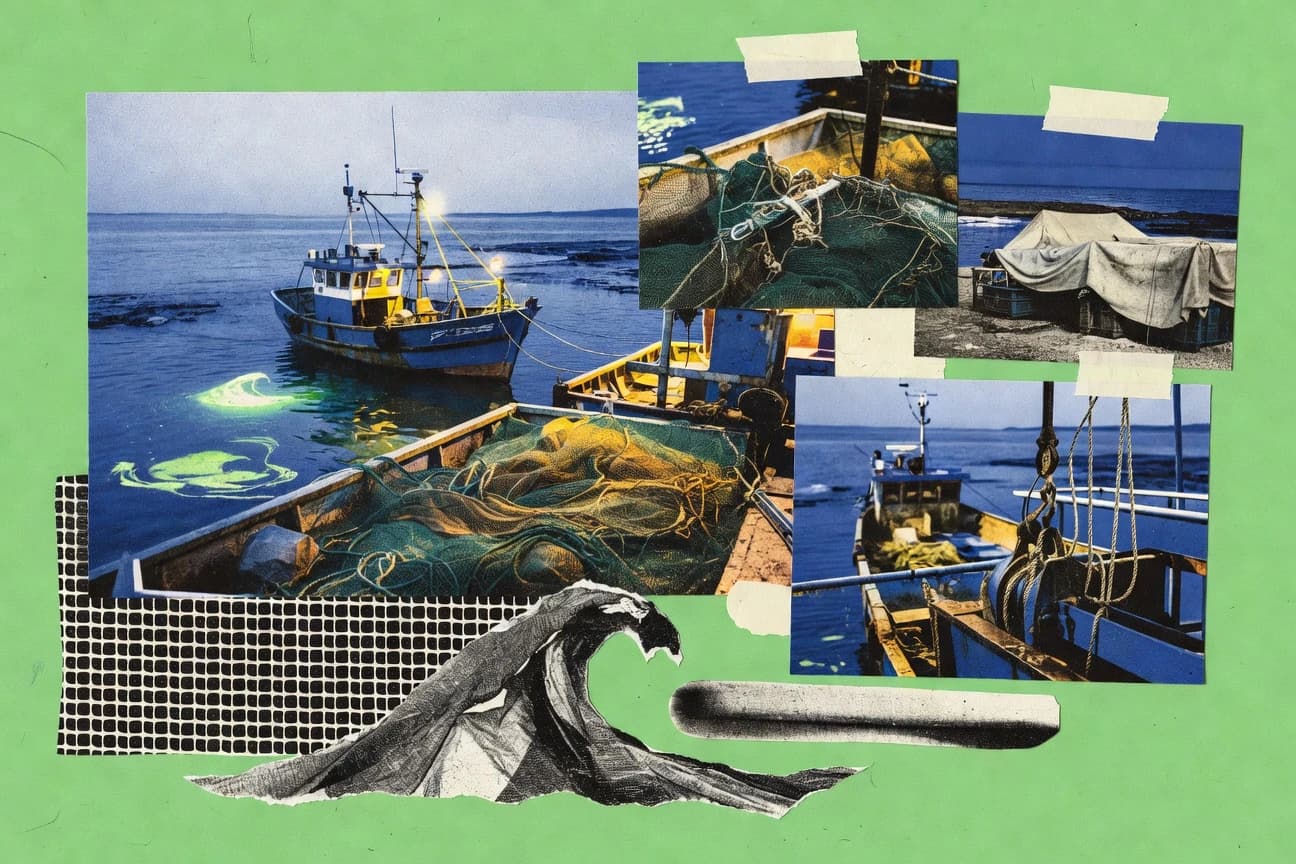

IUU fishing accounts for up to 26 percent of the global marine catch each year. This volume equals 11 to 26 million tonnes and removes 10 billion to 23 billion dollars from legitimate fishing industries. The statistics below detail the resulting losses across regions, enforcement efforts, and marine ecosystems.
Key Takeaways
- Globally, IUU fishing is estimated to cost legitimate fishing industries between $10 billion and $23 billion per year
- Over 500 vessels were identified engaging in IUU fishing in the Northwest Pacific in 2022 via vessel monitoring
- IUU activities contribute to the overexploitation of 33% of global fish stocks, accelerating biodiversity loss
- IUU fishing represents up to 26% of the global marine catch, equivalent to 11-26 million tonnes annually
- In the Indo-Pacific region, IUU fishing accounts for approximately 30% of total catch value, leading to $3.5 billion in annual losses
IUU fishing remains a major threat, undermining global fisheries and costing billions in lost revenue.
Related reading
01 · Category
Economic Impacts19 stats
01
Globally, IUU fishing is estimated to cost legitimate fishing industries between $10 billion and $23 billion per year
02
IUU fishing deprives governments of $4.2 billion in potential tax revenues annually worldwide
03
IUU fishing costs the European Union €6.8 billion annually in lost revenue
04
IUU fishing leads to $2.7 billion annual loss for Pacific Island nations
05
Global fisheries subsidies fueling IUU total $35 billion annually
06
IUU fishing undermines $50 billion in global aquaculture value chains
07
Annual economic loss from IUU in artisanal fisheries: $1.5 billion globally
08
IUU depletes $15 billion in consumer seafood value annually
09
$23.5 billion lost to foreign IUU fleets in developing countries
10
IUU costs Senegal $300 million in fisheries revenue annually
11
IUU fraud in US seafood imports: 20-30% mislabeled, $2 billion loss
12
$1 billion in illegal abalone trade from IUU in South Africa
13
Global insurance payouts for IUU damage: $500 million yearly
14
Lost revenue to India from IUU: $1.2 billion yearly
15
$8 billion IUU impact on tourism from reef damage
16
Philippines IUU losses: $500 million annually
17
$3 billion subsidies to DWFNs fueling IUU
18
Mexico Gulf IUU snapper: 25% illegal
19
Bangladesh hilsa IUU: 30% of export value
Interpretation
Economic Impacts Interpretation
The staggering, multi-billion dollar toll of illegal fishing reveals a global heist where the only things more plundered than the oceans are the legitimate economies and livelihoods that depend on them.
02 · Category
Enforcement and Mitigation19 stats
01
Over 500 vessels were identified engaging in IUU fishing in the Northwest Pacific in 2022 via vessel monitoring
02
95,000 fishing vessels operate illegally transshipping at sea, evading regulations
03
Port State Measures have blacklisted 1,200 vessels since 2017 under RFMOs
04
AI-driven monitoring by Global Fishing Watch flagged 8,000 IUU incidents in 2023
05
300 prosecutions for IUU fishing occurred in 2022 across 50 countries
06
Interpol's Operation Storm led to 1,000 arrests and $100 million seizures since 2014
07
150 RFMO blacklists contain 2,500 IUU vessels cumulatively
08
EU IUU Regulation denied entry to 850 consignments worth €220 million since 2010
09
4,000 vessels deactivated AIS for IUU in Indian Ocean 2022
10
200+ countries adopt PSMA, inspecting 50,000 vessels yearly
11
Satellite prosecutions: 50 cases in 2023 using VMS data
12
Catch documentation schemes cover 90% of trade, blocking 10,000 tonnes IUU
13
1,500 fines totaling €50 million issued by EU for IUU 2022
14
Blockchain traceability pilots block 5,000 tonnes IUU seafood
15
WCPFC blacklists 400 vessels, 20% de-flagged
16
100 eNGO patrols deter 2,000 IUU incursions yearly
17
VMS mandates cover 80% vessels, reducing IUU by 25%
18
500 tons IUU toothfish seized globally 2023
19
RFMO compliance audits flag 1,200 IUU cases yearly
Interpretation
Enforcement and Mitigation Interpretation
Despite the growing arsenal of global surveillance and legal measures, from AI watchdogs to blockchain ledgers, the sheer scale of illegal fishing—evidenced by thousands of flagged vessels, darkened transponders, and blacklisted catches—reveals an ocean-sized game of whack-a-mole where the moles keep multiplying.
03 · Category
Environmental Impacts19 stats
01
IUU activities contribute to the overexploitation of 33% of global fish stocks, accelerating biodiversity loss
02
IUU practices result in the annual discard of 10 million tonnes of bycatch, harming marine ecosystems
03
Coral reef degradation from IUU blast fishing affects 15% of reefs in the Coral Triangle
04
Overfishing via IUU depletes top predators, reducing populations by 60% since 1950
05
IUU dynamite fishing destroys 20,000 hectares of reef annually in Indonesia
06
Bycatch from IUU trawling kills 300,000 seabirds and 100,000 marine mammals yearly
07
IUU contributes to 50% collapse in shark populations in key fisheries
08
Ghost fishing from lost IUU gear kills 640,000 whales/seals yearly estimate
09
IUU cyanide fishing poisons 30% of live reef fish trade
10
IUU trawling reduces fish stocks by 35% in 50 years globally
11
Plastic pollution from IUU gear: 640,000 tonnes enter oceans yearly
12
Tuna stocks decline 50% due to IUU in Pacific
13
Sea turtle entanglement in IUU gear: 40,000 deaths yearly
14
Biodiversity hotspots lose 25% species due to IUU
15
Albatross populations halved by IUU longline bycatch
16
Mangrove destruction for IUU shrimp: 20,000 ha/year
17
Hammerhead shark fins from IUU: 90% of trade
18
Seagrass bed loss 15% from IUU anchoring
19
Dolphin deaths from IUU purse seine: 50,000/year
Interpretation
Environmental Impacts Interpretation
It’s a crime spree of staggering efficiency, as illegal fishing simultaneously bankrupts our oceans’ future, kills its innocent bystanders, and shreds the very life support systems it depends on.
More related reading
04 · Category
Global Scale and Prevalence19 stats
01
IUU fishing represents up to 26% of the global marine catch, equivalent to 11-26 million tonnes annually
02
Global IUU fishing volume peaked at 30% of catch in the 1990s, now stabilized at 11-20%
03
Satellite data shows 55,000 unique fishing vessels active globally, with 20% linked to IUU risks
04
IUU represents 20% of global seafood trade value, $44 billion yearly
05
Unreported catch from IUU estimated at 8-10 million tonnes globally per year
06
IUU fishing vessels number over 30,000 dark vessels hiding from AIS
07
Global IUU catch peaked at 23 million tonnes in 2009
08
26% of global catch from high-seas is potentially IUU
09
IUU accounts for 1.5 million tonnes of tuna catch globally yearly
10
Unregulated fishing in Arctic: 10% of emerging catch IUU
11
Global small-scale IUU: 40% of artisanal catch
12
High-seas IUU: 30% of fishing effort unregulated
13
IUU vessels spoofing AIS locations: 15,000 instances detected 2023
14
11 million tonnes unreported catch globally 2015 estimate
15
Dark fleet in South Atlantic: 500 vessels, 10% global IUU
16
Global IUU trade laundering: 500,000 tonnes yearly
17
40% high-seas catch IUU in tuna RFMOs
18
IUU in squid jiggers: 20% Northeast Pacific
19
Global vessel growth 70% since 2012, 25% IUU risk
Interpretation
Global Scale and Prevalence Interpretation
While the world's oceans are being stripped by a shadow armada of over thirty thousand dark vessels, this industrial-scale poaching now accounts for up to a quarter of the global catch, representing a forty-four billion dollar black market that systematically undermines every honest net cast upon the seas.
05 · Category
Regional Statistics19 stats
01
In the Indo-Pacific region, IUU fishing accounts for approximately 30% of total catch value, leading to $3.5 billion in annual losses
02
In Southeast Asia, IUU fishing constitutes 20-50% of total landings
03
In West Africa, IUU catches exceed legal catches by 3:1 ratio, totaling 2 million tonnes yearly
04
In the Mediterranean, IUU fishing accounts for 15% of bluefin tuna catch
05
In Eastern Central Atlantic, IUU catch is 37% of reported landings
06
South China Sea IUU fishing volume reaches 12% of regional catch, 2.5 million tonnes
07
In Guinea, IUU fishing represents 40% of total catch value
08
Northwest Atlantic IUU cod fishery: 25% unreported catch
09
Liberia flagged 800 IUU vessels in 2021 audit
10
Galapagos Marine Reserve loses 20% biomass to IUU Ecuador-China fleets
11
Bay of Bengal IUU: 25% of shrimp catch unreported
12
Gulf of Guinea: 60% of catch IUU, 1 million tonnes yearly
13
Southeast Asia: 3 million tonnes IUU catch annually
14
North Pacific: 18% IUU in sablefish fishery
15
Caribbean: 30% lobster catch IUU
16
Bering Sea IUU crab: 15% unreported
17
East Africa: 50% demersal catch IUU
18
Argentina EEZ IUU incursions: 1,200 vessel-days 2022
19
Black Sea anchovy IUU: 40%
Interpretation
Regional Statistics Interpretation
These statistics paint a starkly consistent global heist, where illegal fishing is not a rare crime but a brazen, industrialized competitor that steals up to half of what's in the ocean right from under our noses.
Reference
Cite This Report
This report is designed to be cited. We maintain stable URLs and versioned verification dates. Copy the format appropriate for your publication below.
APA
Daniel Varga. (2026, February 13). Iuu Fishing Statistics. Gitnux. https://gitnux.org/iuu-fishing-statistics
MLA
Daniel Varga. "Iuu Fishing Statistics." Gitnux, 13 Feb 2026, https://gitnux.org/iuu-fishing-statistics.
Chicago
Daniel Varga. 2026. "Iuu Fishing Statistics." Gitnux. https://gitnux.org/iuu-fishing-statistics.
Sources & references
55 datasets cited across this report