
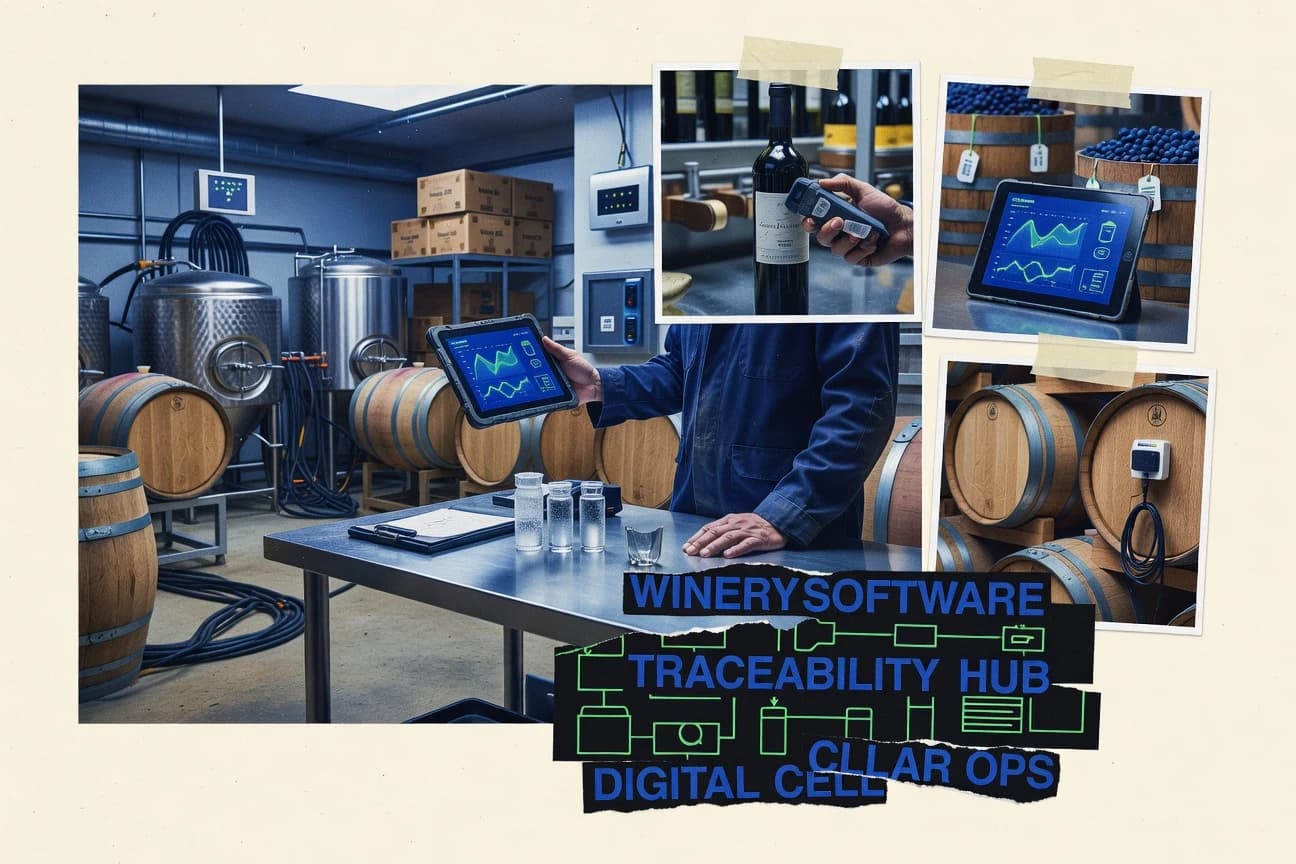
GITNUXSOFTWARE ADVICE
Food Service RestaurantsTop 10 Best Winery Software of 2026
Explore top 10 winery software to streamline operations.

How we ranked these tools
Core product claims cross-referenced against official documentation, changelogs, and independent technical reviews.
Analyzed video reviews and hundreds of written evaluations to capture real-world user experiences with each tool.
AI persona simulations modeled how different user types would experience each tool across common use cases and workflows.
Final rankings reviewed and approved by our editorial team with authority to override AI-generated scores based on domain expertise.
Score: Features 40% · Ease 30% · Value 30%
Gitnux may earn a commission through links on this page — this does not influence rankings. Editorial policy
Editor picks
Three quick recommendations before you dive into the full comparison below — each one leads on a different dimension.
Vintrace
Lot and ingredient traceability across production stages with audit-ready batch history.
Built for wineries needing strong traceability, batch control, and regulated recordkeeping..
Vinmetrica
Runner UpVinmetrica’s sensory and laboratory data analytics workflow for lot and trial comparisons
Built for wineries needing sensory-lab analytics and traceable batch comparisons for decisions.
SYSTÈMES DE GESTION WINE CELLAR by OpenApplied
Also GreatBatch and stock movement tracking across cellar statuses and locations
Built for wineries managing cellar inventory and traceability across batches and storage..
Comparison Table
Vintrace
enterprise ERPVintrace manages winery operations including vineyard, fermentation, cellar, inventory, compliance, and production traceability.
Lot and ingredient traceability across production stages with audit-ready batch history.
Vintrace stands out for its integrated vineyard-to-cellar workflow that ties compliance, batch records, and inventory into one system. It supports winemaking operations such as lot and batch tracking, document control for production records, and cellar inventory visibility.
The platform also emphasizes traceability for ingredients and finished wines so staff can follow movements from sourcing through release. Reporting covers production, stock, and regulatory-style audit trails for operational review and documentation needs.
- +End-to-end traceability from vineyard inputs to finished wine batch records
- +Cellar and inventory tracking with lot-level visibility for production teams
- +Document control supports consistent production records and audit-style history
- –Setup and data migration require disciplined mapping of lots and processes
- –Advanced workflows can feel complex without a defined internal process
- –Reporting flexibility depends on how thoroughly your data model is configured
Best for: Wineries needing strong traceability, batch control, and regulated recordkeeping.
Vinmetrica
winery suiteVinmetrica provides winery and vineyard management with production, labeling, inventory, and compliance workflows.
Vinmetrica’s sensory and laboratory data analytics workflow for lot and trial comparisons
Vinmetrica stands out with its analytics-first approach to winery operations and wine data modeling using a purpose-built workflow for decisions. The software centers on sensory and laboratory inputs, connecting them to reporting outputs for winemaking and quality teams.
It also supports structured data collection around lots, trials, and results so teams can compare batches over time. Strong traceability and measurement handling make it useful for performance management, not just documentation.
- +Analytics and reporting are built around winemaking decisions and data comparisons.
- +Structured lot and trial data capture supports consistent measurement over time.
- +Traceability ties sensory and lab inputs to outputs for quality workflows.
- –Setup and configuration require more winery-specific process modeling.
- –Advanced workflows can feel heavy for teams wanting simple recordkeeping.
- –Export and integration options may require more effort for bespoke systems.
Best for: Wineries needing sensory-lab analytics and traceable batch comparisons for decisions
SYSTÈMES DE GESTION WINE CELLAR by OpenApplied
cellar traceabilityOpenApplied delivers wine cellar and production traceability software for cellar processes and inventory control.
Batch and stock movement tracking across cellar statuses and locations
SYSTÈMES DE GESTION WINE CELLAR by OpenApplied focuses on cellar and winery inventory workflows, centering wine stock tracking and movement between statuses and locations. Core capabilities include lot or batch management, inventory adjustments, and operational records that support production and storage traceability.
The solution targets wineries that need audit-friendly history of changes rather than only sales-focused CRM features. Its fit is strongest for teams that want cellar control tied to practical day-to-day operations.
- +Cellar-first inventory tracking with batch and lot organization
- +Supports stock movement and status changes for storage traceability
- +Operational record history supports internal audits
- –Winery-specific setup takes time compared with general inventory tools
- –Limited evidence of deep sales and marketing workflows
- –Workflow configuration can feel complex for small wineries
Best for: Wineries managing cellar inventory and traceability across batches and storage.
BottlingLine
bottling operationsBottlingLine helps wineries run bottling and packaging operations with scheduling, batch control, and production visibility.
Bottling run workflow management for scheduling, execution, and production status
BottlingLine stands out with a winery-focused production workflow that ties orders, scheduling, and bottling tasks into one operating view. It supports planning for bottling runs, tracking production status, and coordinating steps that usually span multiple teams.
The tool is designed to reduce manual coordination during packaging and labeling processes. It is best used as an internal operations system rather than a customer-facing eCommerce platform.
- +Winery-specific bottling workflow reduces cross-team coordination
- +Production status tracking keeps bottling runs visible
- +Scheduling support helps plan and manage packaging steps
- –Setup can be heavy for wineries with complex custom processes
- –Reporting depth can feel limited for advanced analytics needs
- –Feature set is narrower than all-in-one winery ERP suites
Best for: Wineries needing bottling run planning and internal workflow tracking
WineDirect
DTC commerceWineDirect combines eCommerce, direct-to-consumer wine club management, inventory visibility, and fulfillment tooling.
Integrated direct-to-consumer order management with allocation and fulfillment coordination.
WineDirect stands out for handling winery operations end to end, from CRM and order management to fulfillment and accounting-focused reporting. It supports direct-to-consumer sales workflows, including customer records, order capture, and shipment coordination tied to winery inventory.
The platform also includes distributor and fulfillment tools that help centralize production, allocations, and sales execution in one system. WineDirect’s breadth makes it a strong fit for multi-channel wineries that need tighter data flow between marketing, selling, and shipping.
- +Strong direct-to-consumer workflows linking orders, inventory, and fulfillment steps.
- +Centralized customer and order records across DTC and distributor activity.
- +Production-ready reporting for allocations, shipments, and sales performance visibility.
- –Deep configuration increases onboarding effort and slows early time-to-value.
- –Workflow complexity can feel heavy for small wineries with simple selling models.
- –Day-to-day usability depends heavily on setup quality and training.
Best for: Multi-channel wineries needing DTC order fulfillment and inventory-linked operations
Customer Relationship Management for Wine with Wine CRM by VinoApp
winery CRMVinoApp provides wine-focused CRM workflows that manage winery customer engagement, segmentation, and sales operations.
Wine-specific customer relationship records designed for winery sales and follow-up tracking
Wine CRM by VinoApp focuses specifically on wine customer relationships, with winery-friendly customer and order context. It centralizes customer records and contact history so teams can track interactions tied to sales activity.
The system supports sales pipeline tracking and workflow stages to keep follow-ups consistent across distributors and direct customers. Reporting helps wineries monitor customer engagement and sales outcomes without building custom CRM fields from scratch.
- +Wine-focused data model ties customers to winery sales and communications
- +Sales pipeline stages keep distributor and direct follow-ups organized
- +Customer history reduces repetitive outreach and improves continuity
- –Wine-specific workflow can feel restrictive for non-wine operations
- –Limited advanced automation compared with broader CRM suites
- –Reporting customization is less flexible than general-purpose CRM tools
Best for: Winery teams managing direct and distributor customers with structured follow-ups
Cin7 Omni
inventory and ordersCin7 Omni centralizes inventory, orders, and multi-channel sales for wineries that need cross-channel fulfillment control.
Unified inventory and accounting integration for order-to-ledger traceability across channels
Cin7 Omni stands out for combining inventory, order, and integrated accounting in one winery-focused operations hub. It supports multi-channel selling, warehouse stock control, and purchase workflows tied to production and fulfillment needs.
The platform also emphasizes visibility across locations so teams can track stock movements and orders without juggling spreadsheets. For wineries, the main value is keeping cellar-to-fulfillment inventory aligned with sales channels and financial records.
- +Strong multi-channel order management with centralized inventory visibility
- +Inventory and accounting workflows stay connected to reduce reconciliation effort
- +Supports multi-warehouse stock tracking for distributed winery operations
- –Setup complexity can be high for wineries with customized item and pricing structures
- –Reporting and workflows can feel less winery-specific than general ERP options
- –Workflow depth may require training to use consistently across teams
Best for: Wineries needing multi-channel inventory control with accounting integration
Zoho Inventory
midmarket inventoryZoho Inventory tracks stock, manages orders, and connects to eCommerce and shipping systems for winery retail and DTC operations.
Advanced bin locations with warehouse picking and receiving workflows
Zoho Inventory stands out for strong warehouse and inventory control tightly integrated with Zoho’s ecosystem, which helps wineries manage SKUs, lots, and fulfillments in one place. It supports purchase orders, sales orders, bin locations, and stock adjustments so you can track stock movement from inbound receiving to shipment.
Wine-specific workflows are handled indirectly through configurable items, labels, and batch-style inventory practices rather than dedicated vineyard and barrel lifecycle modules. You also gain reporting for inventory aging, low-stock alerts, and order-level visibility to reduce stockouts and minimize overbuying.
- +Robust inventory controls with purchase orders, sales orders, and stock adjustments
- +Bin locations support structured warehouse picking and receiving for multiple zones
- +Reports for low stock and inventory visibility reduce stockout risk
- +Zoho integrations help connect inventory, sales, and accounting workflows
- –Wine lifecycle needs customization because barrel and lot governance is not winery-native
- –Setup for multi-warehouse and SKU complexity can take time
- –Labeling and compliance workflows require configuration instead of out-of-box vineyard features
Best for: Wineries needing inventory-first operations with Zoho-connected order and warehouse workflows
TradeGecko by QuickBooks Commerce
commerce operationsQuickBooks Commerce manages inventory, sales orders, and fulfillment workflows for businesses selling wine through multiple channels.
Wholesale pricing and discount rules tied to orders and partners
TradeGecko by QuickBooks Commerce focuses on wholesale-first inventory and order management for wineries selling through distributors, retail partners, and clubs. It centralizes product, stock, and pricing rules to support multi-location inventory visibility, purchase orders, and sales order fulfillment.
It also includes integrations with QuickBooks for accounting synchronization and supports partner-facing processes like invoicing and shipment workflows. Compared with winery-specific ERP suites, it is strong on trading operations but lighter on viticulture and cellar-tracking functionality.
- +Wholesale inventory and order management built for distributor and retailer workflows
- +Multi-location stock visibility supports wineries with multiple fulfillment sites
- +QuickBooks accounting sync reduces manual rekeying of sales and inventory movements
- +Pricing and discount controls support partner-specific commercial terms
- –Limited winery-specific controls for lot, vintage, and cellar tracking
- –Setup of item rules and pricing structures takes time for complex catalogs
- –Reporting depth can feel generic compared with specialized winery ERP tools
- –Advanced sales-channel needs may require additional integrations or configuration
Best for: Wineries needing wholesale order and inventory control with QuickBooks integration
NetSuite
ERP platformNetSuite ERP supports wine and beverage companies with inventory, order management, accounting, and traceability extensions.
Advanced lot and inventory transaction management within NetSuite ERP
NetSuite stands out for unifying finance, order management, inventory, and procurement in one system built for regulated, multi-entity operations. For wineries, it supports complex item structures like vineyards, lots, and SKUs through inventory and transaction management.
It also provides strong visibility across channels with ERP-native order processing, billing, and accounting integrations. Automation options cover workflows, approvals, and reporting across supply chain and financial controls.
- +Deep ERP coverage including accounting, procurement, and order management in one suite
- +Inventory and transaction controls support lot-aware winery operations
- +Multi-subsidiary accounting supports centralized reporting for grouped wineries
- –Implementation and configuration complexity can be heavy for winery-specific needs
- –User experience can feel rigid compared with purpose-built winery platforms
- –Advanced automation often depends on admin effort and system customization
Best for: Wineries needing enterprise ERP controls, lot-level inventory, and multi-entity reporting
Conclusion
After evaluating 10 food service restaurants, Vintrace stands out as our overall top pick — it scored highest across our combined criteria of features, ease of use, and value, which is why it sits at #1 in the rankings above.
Use the comparison table and detailed reviews above to validate the fit against your own requirements before committing to a tool.
How to Choose the Right Winery Software
This buyer's guide helps winery teams choose between Vintrace, Vinmetrica, SYSTÈMES DE GESTION WINE CELLAR by OpenApplied, BottlingLine, WineDirect, Wine CRM by VinoApp, Cin7 Omni, Zoho Inventory, TradeGecko by QuickBooks Commerce, and NetSuite. It translates production, cellar, inventory, sales, and fulfillment needs into concrete software capabilities. You will also get a decision framework for matching tool workflows to your batch control and operational reality.
What Is Winery Software?
Winery Software is software that runs structured winery operations across viticulture or inputs, fermentation and production records, cellar inventory and batch movement, and the downstream shipping and sales workflows tied to those batches. It solves problems like lot traceability across production stages, cellar stock visibility by location and status, and inventory alignment with orders and accounting. Teams like production managers, cellar managers, quality and compliance staff, and operations leaders use it to keep records consistent and audit-ready. Tools like Vintrace model vineyard-to-cellar traceability and batch history while BottlingLine runs bottling run scheduling, execution, and production status in a winery-specific workflow.
Key Features to Look For
These capabilities determine whether your winery can maintain traceability, run production operations day-to-day, and keep inventory aligned with orders without spreadsheet work.
Lot and ingredient traceability with audit-ready batch history
Vintrace ties vineyard inputs to finished wine batch records with lot and ingredient traceability across production stages and audit-ready history. This is the feature set to prioritize when regulated recordkeeping and end-to-end traceability are non-negotiable for your production team.
Sensory and laboratory analytics linked to lot and trial outcomes
Vinmetrica organizes sensory and laboratory inputs into structured lot and trial data so quality and winemaking teams can compare batches over time. This workflow supports decision-making and performance management by connecting measurements to reporting outputs.
Cellar inventory tracking with status and location movement
SYSTÈMES DE GESTION WINE CELLAR by OpenApplied tracks cellar inventory and batch movement between statuses and locations. This gives cellar teams an audit-friendly history of changes that matches day-to-day operations rather than only sales activity.
Bottling run workflow management and production status visibility
BottlingLine focuses on scheduling, batch control, and production visibility for bottling and packaging operations. It is built to coordinate bottling steps across teams and reduce manual coordination during labeling and packaging.
Direct-to-consumer order management with allocation and fulfillment coordination
WineDirect centralizes DTC customer records, order capture, and shipment coordination tied to winery inventory. It supports allocations and fulfillment workflows so multi-channel wineries can move from marketing and selling to shipping without breaking inventory accuracy.
Multi-channel inventory alignment with accounting and order-to-ledger traceability
Cin7 Omni connects inventory, orders, and accounting workflows to keep cellar-to-fulfillment inventory aligned with sales channels and financial records. TradeGecko by QuickBooks Commerce adds wholesale pricing and discount rules tied to orders and partners while NetSuite adds ERP-native inventory and transaction management with lot-aware controls.
How to Choose the Right Winery Software
Pick the tool that matches your bottleneck, then validate that its workflow model covers your traceability, inventory governance, and sales-to-fulfillment flow.
Start with your traceability depth requirement
If you need lot and ingredient traceability from vineyard inputs through finished wine batch records, choose Vintrace because it connects compliance, batch records, and inventory into one vineyard-to-cellar workflow. If your priority is cellar-level control with audit-friendly change history, choose SYSTÈMES DE GESTION WINE CELLAR by OpenApplied because it tracks batch and stock movement across cellar statuses and locations.
Match the system to your daily production workflow
If bottling is where your team spends the most coordination effort, choose BottlingLine because it manages bottling run scheduling, execution, and production status for packaging and labeling steps. If your operations are built around sensory and lab measurement decisions, choose Vinmetrica because it models sensory and laboratory inputs into lot and trial comparisons that drive reporting.
Decide what “sales execution” must include
If you run direct-to-consumer programs and need inventory-linked fulfillment, choose WineDirect because it supports DTC customer and order records, allocations, and shipment coordination. If your focus is structured follow-ups for direct and distributor customers, choose Wine CRM by VinoApp because it centralizes winery-friendly customer history tied to winery sales workflow stages.
Validate inventory governance and location handling
If you need warehouse-style bin locations and picking workflows tied to receiving and shipments, choose Zoho Inventory because it provides bin locations, purchase orders, sales orders, and stock adjustments with low-stock and inventory visibility. If you need unified inventory and accounting workflows across channels and locations, choose Cin7 Omni because it connects multi-channel stock movements to accounting flows.
Confirm ERP-grade controls versus winery-first usability
If you need enterprise ERP coverage with advanced lot and inventory transaction management across regulated, multi-entity operations, choose NetSuite because it unifies finance, procurement, and order management with lot-aware inventory transactions. If your goal is wholesale trading operations with partner-specific commercial terms and QuickBooks accounting synchronization, choose TradeGecko by QuickBooks Commerce because it supports wholesale pricing, discount rules, purchase orders, and multi-location stock visibility.
Who Needs Winery Software?
Different winery software tools target different operational bottlenecks across cellar control, production traceability, measurement analytics, bottling coordination, and multi-channel sales execution.
Wineries that must maintain end-to-end traceability from vineyard inputs to finished wine batch records
Vintrace fits wineries needing strong traceability, batch control, and regulated recordkeeping because it provides lot and ingredient traceability across production stages and audit-ready batch history. This segment benefits most from disciplined mapping of lots and processes because Vintrace ties records and inventory visibility to batch history.
Wineries that use sensory and laboratory data to make winemaking and quality decisions
Vinmetrica is built for analytics-first workflows where quality teams capture sensory and lab inputs and then compare lot and trial outcomes for reporting. It is a strong fit when your competitive advantage comes from consistent measurement handling and traceable comparisons over time.
Wineries running cellar inventory workflows across multiple storage statuses and physical locations
SYSTÈMES DE GESTION WINE CELLAR by OpenApplied is designed for cellar teams that need batch and stock movement tracking across statuses and locations. It supports audit-friendly operational record history that matches day-to-day cellar control.
Wineries that need multi-channel fulfillment and inventory alignment with accounting
Cin7 Omni supports multi-channel order management with inventory and integrated accounting so teams can keep stock movements aligned with financial records. TradeGecko by QuickBooks Commerce supports wholesale pricing and discount rules tied to partners and includes QuickBooks synchronization while NetSuite supports enterprise-grade lot-aware inventory and transaction controls for regulated operations.
Common Mistakes to Avoid
Winery teams often stumble when they select a tool that does not match their traceability workflow, their cellar governance needs, or their sales-to-fulfillment operating model.
Buying a bottling workflow tool when your core need is vineyard-to-batch traceability
If your priority is regulated recordkeeping and end-to-end traceability, BottlingLine focuses on bottling scheduling and production status rather than vineyard-to-cellar batch history. Vintrace is the better match for lot and ingredient traceability across production stages and audit-ready batch records.
Under-scoping cellar status and location governance
Zoho Inventory can provide bin locations and stock adjustments, but it does not give winery-native barrel and lot governance out of the box. SYSTÈMES DE GESTION WINE CELLAR by OpenApplied is purpose-built for batch and stock movement tracking across cellar statuses and locations.
Expecting a sales or CRM system to solve production and compliance recordkeeping
Wine CRM by VinoApp centers customer records and sales pipeline workflow stages, so it does not replace production traceability and cellar inventory governance. Vintrace and SYSTÈMES DE GESTION WINE CELLAR by OpenApplied cover production records and cellar traceability through batch controls and operational history.
Selecting an ERP or wholesale-first system without verifying wine-specific lot controls
NetSuite offers advanced lot and inventory transaction management but can require heavier implementation and customization for winery-specific needs. TradeGecko by QuickBooks Commerce is strong for wholesale order and inventory control with QuickBooks integration but it is lighter on viticulture and cellar tracking, so it can fall short when cellar governance is central.
How We Selected and Ranked These Tools
We evaluated winery software tools across overall capability coverage, feature depth for winery operations, ease of use for day-to-day workflows, and value for the work each system automates. We separated Vintrace from lower-ranked tools because it combines vineyard-to-cellar workflow coverage with lot and ingredient traceability across production stages plus document control for consistent production records and audit-style history. We also differentiated Vinmetrica by emphasizing its sensory and laboratory data analytics workflow that ties structured lot and trial comparisons to reporting outputs. Tools like NetSuite and Cin7 Omni scored higher on broad inventory and order-to-finance integration while purpose-built cellar and production tools scored higher where cellar status movement and bottling execution are the main operational focus.
Frequently Asked Questions About Winery Software
Which winery software is best for lot and ingredient traceability across production stages?
What software should a winery choose for cellar inventory movement by status and location?
Which option is strongest for sensory and laboratory data tied to quality decisions?
How do bottling operations get managed without manual coordination across labeling and packaging teams?
Which tools work best for direct-to-consumer orders linked to winery inventory and fulfillment?
What should a winery use if it needs customer relationship tracking across direct customers and distributors?
Which software is best for wholesale-first inventory and distributor operations with QuickBooks integration?
How can a winery manage warehouse stock and order fulfillment with strong bin and receiving workflows?
Which solution is most appropriate for an enterprise setup that needs finance controls and multi-entity reporting?
What is the most common implementation risk when switching systems, and how do these tools mitigate it?
Tools reviewed
Primary sources checked during evaluation.
Referenced in the comparison table and product reviews above.
- Beverages AlcoholTop 10 Best Winery Production Software of 2026
- Food Service RestaurantsTop 10 Best Restaurants Software of 2026
- Consumer RetailTop 10 Best Wine Shop Management Software of 2026
- Food Service RestaurantsTop 10 Best Brewery Production Software of 2026
- Food Service RestaurantsTop 10 Best Professional Brewing Software of 2026
Keep exploring
Comparing two specific tools?
Software Alternatives
See head-to-head software comparisons with feature breakdowns, pricing, and our recommendation for each use case.
Explore software alternatives→In this category
Food Service Restaurants alternatives
See side-by-side comparisons of food service restaurants tools and pick the right one for your stack.
Compare food service restaurants tools→