
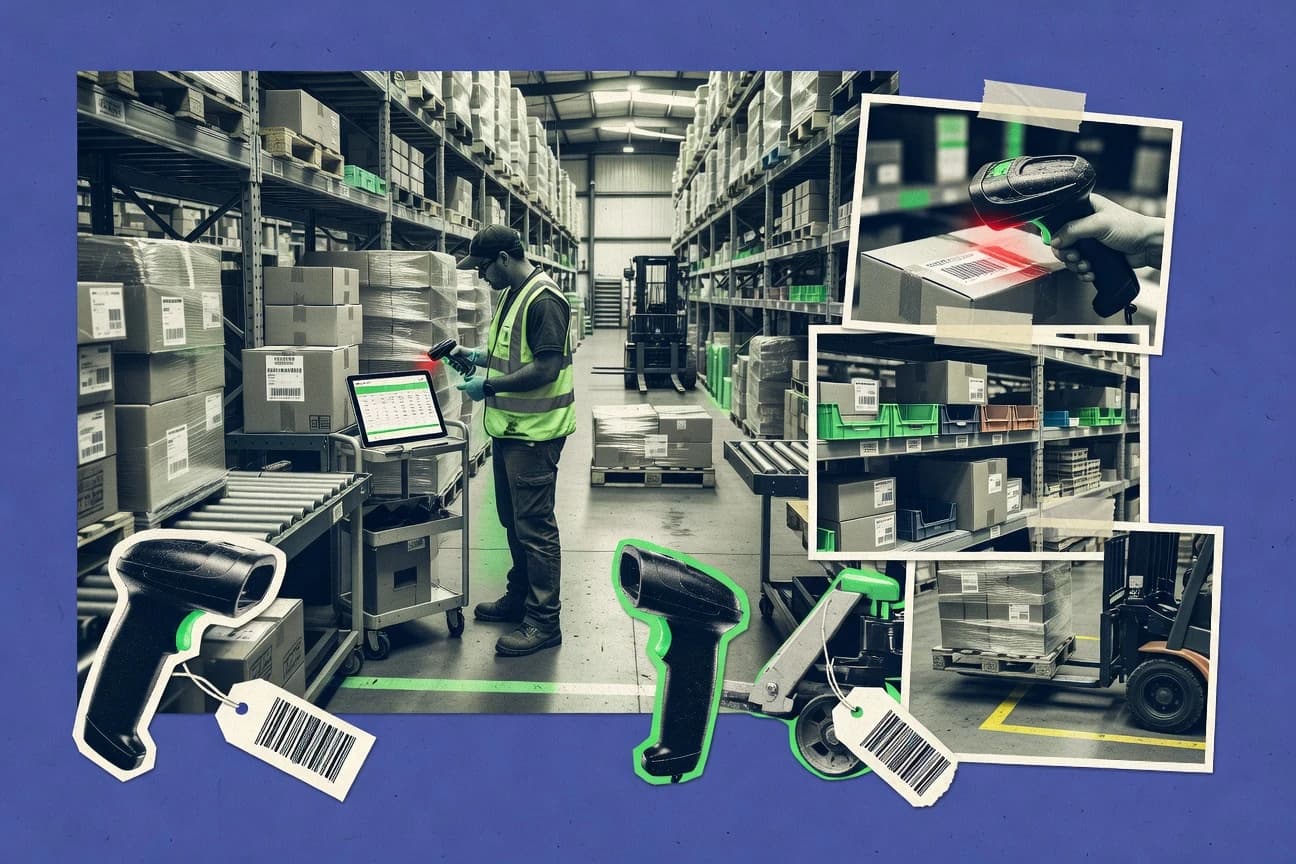
GITNUXSOFTWARE ADVICE
Transportation LogisticsTop 10 Best Warehouse Inventory Control Software of 2026
Top 10 ranking of warehouse inventory control software with feature tradeoffs for teams using Zoho Inventory, Odoo, or MRPeasy.

How we ranked these tools
Core product claims cross-referenced against official documentation, changelogs, and independent technical reviews.
Analyzed video reviews and hundreds of written evaluations to capture real-world user experiences with each tool.
AI persona simulations modeled how different user types would experience each tool across common use cases and workflows.
Final rankings reviewed and approved by our editorial team with authority to override AI-generated scores based on domain expertise.
Score: Features 40% · Ease 30% · Value 30%
Gitnux may earn a commission through links on this page — this does not influence rankings. Editorial policy
Zoho Inventory is the best fit if you’re a mid-market team wanting order-driven warehouse control with scan-friendly workflows and API integrations, whereas Fishbowl is the better alternative when manufacturing or distribution needs multi-location execution tied closely to inventory records.
Editor’s top 3 picks
Three quick recommendations before you dive into the full comparison below — each one leads on a different dimension.
Zoho Inventory
Serial and lot assignment tied to receiving and fulfillment records each item movement for traceability.
Built for fits when mid-market teams need order-driven inventory control with scan workflows and integration via API..
Odoo Inventory
Editor pickInventory valuation and stock move records stay synchronized with order-driven procurement and sales fulfillment workflows.
Built for fits when ERP-linked inventory control matters more than standalone WMS execution depth..
MRPeasy
Editor pickMaterial requirements planning connects component demand to purchase and warehouse stock movements.
Built for fits when warehouses need MRP-driven procurement and BOM-based inventory consumption tracking..
Comparison Table
Zoho Inventory
SMBInventory software with warehouse tracking, barcode support, and order management.
Serial and lot assignment tied to receiving and fulfillment records each item movement for traceability.
Zoho Inventory connects inventory receipts, pick and pack fulfillment, and stock movements to a single product catalog so balances update as orders change status. Multi-location handling is tied to operational workflows rather than being a standalone spreadsheet layer. Lot and serial tracking support traceability at the unit level when receiving and fulfillment are recorded with those identifiers. API access and integration tooling support syncing inventory updates between Zoho Inventory and external order channels.
A key tradeoff is that warehouse execution depth depends on how the warehouse process is modeled in Zoho Inventory, because advanced warehouse task sequencing like wave picking and bin-to-bin task interleaving are not the same focus as the inventory ledger. Zoho Inventory fits teams that need order-linked inventory control with scan-driven receiving and fulfillment, plus integrations to ecommerce and ERPs that already own transport planning.
- +Barcode-based receiving and fulfillment reduce manual count errors
- +Lot and serial tracking tie identification to inventory movements
- +Order-linked stock updates keep purchase and sales flows aligned
- +API and integration options support system-to-system inventory syncing
- –Advanced warehouse task orchestration is limited compared with dedicated WMS
- –Bin-to-bin operational workflows require careful configuration discipline
Ecommerce operations teams
Sync stock to multi-channel orders
Fewer oversells and stockouts
Retail and B2B buyers
Control identified inventory by serial
Clear audit trail per unit
Show 2 more scenarios
Procurement and warehouse coordinators
Manage inbound and outbound workflows
Lower mismatch during reconciliation
Record scans for receiving, packing, and shipping to keep inventory balances current.
Operations analytics teams
Reconcile inventory after counts
More accurate stock reporting
Run adjustments to align recorded balances with physical counts after cycle counts.
Best for: Fits when mid-market teams need order-driven inventory control with scan workflows and integration via API.
Odoo Inventory
SMBInventory application with warehouse routes, barcode operations, and replenishment rules.
Inventory valuation and stock move records stay synchronized with order-driven procurement and sales fulfillment workflows.
Odoo Inventory provides core warehouse inventory control with stock moves, valuation behavior, and traceable links to sales orders, purchase orders, and stock transfers. It can manage barcoded product flows through warehouse operations screens and can coordinate tasks across warehouses and locations under shared accounting rules. Admins gain governance through role-based access controls across Odoo models and auditability through stock movement records tied to who performed each move.
A key tradeoff is that Odoo Inventory does not provide deep WMS-specific execution features like guided bin logic and high-frequency warehouse task interleaving out of the box, so teams with complex warehouse operations often add modules or customizations. It fits best when inbound receiving and outbound shipping should stay synchronized with ERP order documents and accounting valuations, especially for businesses running multiple locations under one data model.
- +Stock moves stay linked to purchase and sales documents
- +Multi-location inventory supports transfers and location organization
- +Extensibility via add-ons enables custom warehouse workflows
- +RBAC limits access to stock operations by warehouse roles
- –Guided bin and advanced task interleaving need add-ons or customization
- –Warehouse execution depth can require governance for custom processes
- –Complex setups can increase configuration time for teams
ERP operations teams
Sync inventory with order documents
Fewer reconciliation issues
Multi-location warehouse teams
Manage transfers between sites
Clear site-level visibility
Show 1 more scenario
Systems integration teams
Automate stock events via API
Consistent cross-system updates
Inventory events map to Odoo models for integration and automation jobs.
Best for: Fits when ERP-linked inventory control matters more than standalone WMS execution depth.
MRPeasy
vertical specialistManufacturing resource planning software with inventory and warehouse management features.
Material requirements planning connects component demand to purchase and warehouse stock movements.
MRPeasy connects purchase planning, production planning, and warehouse stock changes through one operational flow that reduces re-entry between planning and inventory records. It supports multi-location inventory with bin location support and stock movement types such as receipts, shipments, transfers, and adjustments. The item setup and BOM structure act as the planning data model that inventory transactions consume during procurement and replenishment.
A key tradeoff is that MRPeasy fits best when planning inputs like BOMs and workflows are already available, because warehouse-only teams may find the MRP depth heavier than needed. It is a strong fit for operations that manage component-driven demand, where purchase orders and planned production consume inventory in a predictable sequence and require traceable stock impact.
- +MRP execution ties purchasing and stock movements to BOM planning
- +Bin location support improves controlled putaway and retrieval accuracy
- +Multi-warehouse inventory supports transfers and reconciled balances
- +Recurring planning inputs reduce manual spreadsheet upkeep
- –MRP setup effort increases when BOMs are incomplete or unstable
- –Complex warehouse workflows can require disciplined master-data governance
Manufacturing ops teams
Plan component demand for build batches
Fewer stockouts on components
Purchasing managers
Convert planned needs into receipts flow
More accurate inventory on hand
Show 2 more scenarios
Warehouse supervisors
Control stock across locations
Cleaner reconciliation during counts
Transfers and adjustments keep multi-warehouse balances consistent with operational moves.
Inventory analysts
Standardize reorder calculations
Lower manual reorder effort
Reorder point style replenishment uses current item availability and planning context.
Best for: Fits when warehouses need MRP-driven procurement and BOM-based inventory consumption tracking.
Cin7
SMBInventory management software with warehouse, purchasing, order, and marketplace integrations.
Centralized stock control across locations, with receiving and stock transfer workflows that keep inventory availability consistent during fulfillment.
Cin7 centers warehouse inventory control on multi-location stock management with order fulfillment workflows tied to real-time inventory availability. Core capabilities include purchase order receiving, stock transfers between locations, and inventory adjustments with audit trails for operational traceability. The system supports barcode-driven receiving and picking, plus integrations and an API surface for syncing orders, products, and inventory with connected sales channels and ERPs.
- +Supports multi-location inventory and inter-warehouse stock transfers in one workflow
- +Receiving and fulfillment processes reduce manual inventory reconciliation work
- +API and integrations support automated syncing of SKUs, stock, and orders
- +Barcode-driven flows help reduce counting and picking errors
- –Setup requires careful configuration of locations, items, and workflows
- –Advanced warehouse task orchestration is less granular than specialist WMS tools
Best for: Fits when mid-market teams need inventory control across multiple locations and want automation via API integrations.
Fishbowl
SMBInventory and warehouse management software for manufacturers and distributors.
Integrated manufacturing execution that posts inventory movements directly into warehouse balances.
Fishbowl runs warehouse inventory workflows with integrated manufacturing and order management, which changes the data flow versus standalone WMS tools. It supports bin location and multi-warehouse operations, along with receiving, transfers, shipping, and inventory adjustments tied to inventory movements.
Inventory control can track lots and serial numbers, which enables audit-ready traceability for returned and repaired units. Automation centers on work orders and transaction-driven ledgers rather than only periodic counting flows.
- +Transaction-driven inventory costing and ledgers for manufacturing and warehouse moves
- +Bin location and multi-warehouse controls support real warehouse layout execution
- +Lot and serial tracking connect traceability to receiving, transfers, and adjustments
- +APIs support automation for inventory events and integration with adjacent systems
- –Workflow configuration can require careful setup to match handoffs across locations
- –Advanced planning features depend on how manufacturing and purchasing workflows are modeled
Best for: Fits when mid-size warehouses need multi-location execution plus manufacturing-connected inventory control.
Microsoft Dynamics 365 Supply Chain Management
enterpriseSupply chain ERP software with advanced warehouse and inventory management.
Workflows and inventory control inside the Dynamics 365 data model keep stock availability aligned with procurement, sales, and production execution.
Microsoft Dynamics 365 Supply Chain Management centers on warehouse inventory control tied to broader ERP processes like procurement, sales orders, and production planning. It supports multi-warehouse and multi-location stock with bin location management, inventory status, and controlled inventory adjustments.
Teams use work templates and warehouse management workflows to drive receiving, picking, put-away, and stock transfers across sites. Extensibility through Dynamics 365 integration patterns and APIs supports custom scanning, task automation, and data synchronization with adjacent systems.
- +Bin location management with inventory status supports controlled warehouse movements
- +Warehouse task workflows cover receiving, put-away, picking, packing, and transfers
- +Strong ERP linkage keeps inventory commitments aligned with orders
- +API and integration extensibility supports custom scanning and workflow automation
- –Complex configuration and governance are needed to keep inventory statuses consistent
- –Advanced warehouse optimization features require careful process design and data readiness
- –User navigation can feel heavy for operators compared with purpose-built WMS tools
- –Edge-case handling for nonstandard inventory flows often needs customization work
Best for: Fits when ERP-driven inventory control is required across multiple warehouses and connected business processes.
Finale Inventory
SMBCloud inventory management software with warehouse and multichannel order controls.
Inventory reconciliation via inventory adjustments tied to operational transactions, so discrepancies can be traced back to receiving, transfers, and shipments.
Finale Inventory pairs inventory control with warehouse-facing workflows for receiving, picking, and shipping while keeping item records and stock movements in one operational flow. It supports multi-location inventory with bin-like organization, so stock can be kept consistent across facilities and warehouse zones.
The system maintains perpetual stock through transactions like receiving, sales shipping, stock transfers, and inventory adjustments, which reduces the gap between what operators see and what accounting reflects. Integration work centers on importing and exporting operational data and connecting Finale Inventory to upstream systems via its documented API surface.
- +Transaction-driven stock updates keep on-hand quantities current
- +Multi-location setup maps inventory across facilities and warehouse areas
- +API and data import tools support system-to-system integration
- +Workflow screens reduce errors during receive, pick, and ship
- –Advanced lot and serial tracking needs careful item configuration
- –RBAC controls are limited compared with enterprise warehouse control suites
- –Cycle counting workflows can be thin for complex counting schemes
- –Integration depth depends on how upstream data models match SKU structure
Best for: Fits when teams need perpetual inventory control with warehouse workflows and API-based integration.
inFlow Inventory
SMBInventory and warehouse software for distributors, wholesalers, and small manufacturers.
API-first inventory event handling with structured endpoints for syncing stock changes and master data programmatically.
InFlow Inventory is warehouse inventory control software built around item-level records, multi-location stock, and operational workflows like receiving, transfers, and picking. The system emphasizes inventory accuracy with configurable reorder logic, cycle counting, and inventory adjustments tied to specific locations.
Administration centers on roles and workflow permissions, with settings that support barcode-based operations and warehouse task execution. Integration depth is strongest through its API-first design for moving stock events and master data between InFlow and other systems.
- +API-based synchronization for inventory events and item masters
- +Location-aware stock movements with transfers and receiving tied to warehouses
- +Cycle counting workflows support repeatable physical-to-system reconciliation
- +Barcode scanning fields reduce typing during receiving and picking
- –Some advanced WMS workflows require more configuration than typical out-of-box flows
- –Reporting breadth for complex fulfillment scenarios can lag specialized WMS tools
- –Multi-step receiving processes can be slower for high-SKU throughput
- –Extensibility relies more on API integrations than built-in marketplace modules
Best for: Fits when mid-market teams need inventory control across multiple locations with API-driven integrations.
NetSuite WMS
enterpriseWarehouse management capabilities integrated with Oracle NetSuite ERP.
Warehouse task execution mapped directly into NetSuite inventory statuses to keep operational moves consistent with accounting records.
NetSuite WMS drives warehouse receiving, putaway, picking, packing, and shipping execution from a single system tied to NetSuite inventory records. It supports multi-location stock movement with bin level control and task-based workflows that translate warehouse actions into inventory status updates.
Automation centers on rules for warehouse tasks, scan validation, and exception handling during inbound and outbound flows. Extensibility through NetSuite integration tools and APIs supports syncing orders, inventory changes, and shipment events with external systems.
- +Tight execution-to-ledger links between warehouse tasks and NetSuite inventory records
- +Bin location control supports precise putaway, pick, and transfer execution
- +Task-based receiving and outbound workflows reduce manual status reconciliation
- +API integration supports syncing orders and inventory events with external systems
- –Workflow configuration requires governance to avoid mismatched inventory status updates
- –Advanced warehouse optimization like wave planning needs careful rules and data alignment
- –Dense configuration can slow onboarding for teams used to simpler WMS screens
- –Some fulfillment edge cases rely on customization to match exact carrier processes
Best for: Fits when NetSuite-based operations need WMS execution with bin level control and strong integration into inventory records.
SAP Extended Warehouse Management
enterpriseEnterprise warehouse management software for complex distribution and manufacturing networks.
Warehouse task orchestration that drives and sequences execution from inbound to outbound documents inside SAP.
SAP Extended Warehouse Management centers on controlling warehouse execution in SAP-centric enterprise environments, with inventory and movement processes modeled around business documents. It supports bin-based storage, warehouse task orchestration, and execution workflows for receiving, putaway, picking, packing, shipping, and stock transfers.
Its inventory control depth comes from tight coupling to SAP inventory and order processes, plus configuration for status, allocation, and reconciliation scenarios. Teams use it to run multi-warehouse operations where audit trails, role-based access, and integration with enterprise master data matter.
- +Warehouse task orchestration ties execution steps to SAP document flow.
- +Bin location management supports controlled stock placement and movement.
- +Inventory status control enables controlled releases and restricted handling.
- +Audit-ready execution history supports traceability across warehouse activities.
- –Configuration depth increases project effort for planners and warehouse IT.
- –Requires strong SAP integration discipline to keep master and inventory data aligned.
- –Non-SAP operations face heavier integration work for orders and inventory events.
- –Extending picker workflows often relies on ABAP developers and structured governance.
Best for: Fits when SAP-centered enterprises need high-control warehouse execution with auditable inventory movements across locations.
Conclusion
After evaluating 10 transportation logistics, Zoho Inventory stands out as our overall top pick — it scored highest across our combined criteria of features, ease of use, and value, which is why it sits at #1 in the rankings above.
Use the comparison table and detailed reviews above to validate the fit against your own requirements before committing to a tool.
How to Choose the Right warehouse inventory control software
Warehouse inventory control software coordinates on-hand quantities across locations using receiving, transfers, and fulfillment transactions tied to items, bins, and inventory statuses. This buyer’s guide covers Zoho Inventory, Odoo Inventory, MRPeasy, Cin7, Fishbowl, Microsoft Dynamics 365 Supply Chain Management, Finale Inventory, inFlow Inventory, NetSuite WMS, and SAP Extended Warehouse Management.
Each tool card below emphasizes how inventory records stay synchronized with warehouse execution and where integration depth and automation surface area affect day-to-day throughput. The tradeoffs are framed around traceability from receiving to shipment, multi-location execution depth, and how configuration and governance pressure changes when teams add more advanced workflows.
Warehouse inventory control software that ties inventory balances to warehouse execution
Warehouse inventory control software tracks perpetual inventory so on-hand balances update from operational events such as receiving, stock transfers, and shipment-driven pick and pack workflows. Zoho Inventory focuses on serial and lot assignment tied directly to receiving and fulfillment records so each item movement preserves traceability end to end.
Odoo Inventory keeps stock moves synchronized with order-driven procurement and sales fulfillment workflows so stock availability reflects the documents that created the movement. MRPeasy shifts emphasis toward material requirements planning so BOM-based component demand drives purchasing and warehouse stock movements as planned work is translated into execution.
Inventory control features that determine traceability and warehouse execution fit
Inventory control software becomes usable when inventory balances update from operational events that match how teams actually move items through the warehouse. This buyer’s guide targets tools that keep those updates aligned from receiving and transfers to picking, packing, and shipment records.
The differentiator is how each platform connects movement transactions to traceability identifiers, multi-location placement, and automation or integration surfaces. Zoho Inventory pairs scan workflows with serial and lot assignment tied to receiving and fulfillment records, while Odoo Inventory keeps stock moves synchronized with procurement and sales fulfillment documents.
Traceability that links receiving and fulfillment to serial and lot movements
Zoho Inventory ties serial and lot assignment directly to receiving and fulfillment records so each item movement preserves end-to-end traceability. Finale Inventory also supports transaction-driven stock updates for reconciliation by tying adjustments back to receiving, transfers, and shipments.
Order-driven stock move synchronization across procurement and sales
Odoo Inventory keeps inventory valuation and stock move records synchronized with purchase and sales fulfillment workflows. Cin7 keeps availability consistent during fulfillment by using centralized stock control across locations with receiving and stock transfer workflows.
MRP and BOM-to-stock consumption execution for planned procurement
MRPeasy connects material requirements planning execution to component demand and purchase and warehouse stock movements. Fishbowl extends this into manufacturing execution by posting inventory movements directly into warehouse balances.
Multi-location inventory control and transfer workflows that prevent availability drift
Cin7 supports multi-location inventory and inter-warehouse stock transfers in a single workflow that keeps availability consistent. Microsoft Dynamics 365 Supply Chain Management includes bin location management with inventory status controls and covers receiving, put-away, picking, packing, and transfers.
API and automation surfaces for syncing inventory events and item masters
inFlow Inventory uses API-first inventory event handling with structured endpoints for syncing inventory events and item masters. Zoho Inventory supports integration via API, and it emphasizes scan-based receiving and fulfillment tied to barcode operations.
Warehouse task execution mapped to system inventory records and statuses
NetSuite WMS maps warehouse task execution into NetSuite inventory statuses so operational moves remain consistent with inventory records. SAP Extended Warehouse Management drives and sequences execution from inbound to outbound documents inside SAP so warehouse tasks stay tied to SAP document flow.
How to choose warehouse inventory control software for execution, integrations, and governance
Selection should start with the source of truth for inventory movements. Some tools treat on-hand accuracy as a direct result of operational receiving, transfers, and fulfillment transactions, while others center inventory control around ERP documents or MRP planning work.
Next, the choice should reflect how much warehouse execution depth needs to be native and how much automation must be built around APIs. Zoho Inventory and inFlow Inventory both support API-centered integration, while Odoo Inventory and Microsoft Dynamics 365 Supply Chain Management align stock availability to their broader ERP workflow models.
Choose the movement driver that matches the warehouse workflow record of truth
Zoho Inventory is a strong fit when scan-based receiving and fulfillment are the primary movement records that must drive serial and lot traceability. Odoo Inventory is a strong fit when procurement and sales documents should drive stock moves and valuation updates.
Pick the inventory identity rules that must stay consistent end to end
Zoho Inventory maintains serial and lot assignment tied to receiving and fulfillment records so traceability stays attached to each movement transaction. Fishbowl and MRPeasy add more planning and manufacturing context, which raises the need for consistent BOM and manufacturing routing inputs.
Decide whether planned procurement comes from MRP or from operational receiving signals
MRPeasy supports MRP execution that connects component demand to purchasing and warehouse stock movement, which suits BOM-driven replenishment. Cin7 emphasizes centralized stock control with receiving and stock transfers that keeps availability consistent during fulfillment across locations.
Choose the warehouse execution depth model and expected governance load
SAP Extended Warehouse Management and Microsoft Dynamics 365 Supply Chain Management provide warehouse task workflows that sequence receiving through outbound execution steps inside their system models. Odoo Inventory and Zoho Inventory focus more on order-driven or scan-driven inventory control, which can require careful configuration when teams need advanced warehouse task interleaving.
Validate the integration surface for inventory events and master data sync
inFlow Inventory is oriented around API-first synchronization for inventory events and item masters, which fits custom integrations that must publish and consume inventory changes programmatically. Zoho Inventory also supports API integration, and it pairs that with barcode-based receiving and fulfillment to reduce manual entry errors.
Confirm task execution mapping to inventory statuses in the target system
NetSuite WMS maps warehouse task execution into NetSuite inventory statuses, which supports tighter execution-to-record consistency for teams already standardizing on NetSuite. SAP Extended Warehouse Management ties orchestration steps to SAP document flow so warehouse moves remain auditable inside SAP.
Who warehouse inventory control software selection fits best
Different warehouses need different alignment between inventory balances and the operational records that create them. Teams that operate from barcode receiving and fulfillment events tend to benefit from traceability features tied to those transactions, while ERP-linked teams benefit from stock move synchronization to purchase and sales workflows.
The right fit also depends on how many locations must be managed with transfer workflows and how much integration must be handled through API surfaces rather than manual processes. Cin7, inFlow Inventory, and Zoho Inventory all emphasize multi-location control and integration, while SAP Extended Warehouse Management and Microsoft Dynamics 365 Supply Chain Management align execution deeper into their enterprise system models.
Mid-market warehouses that run serial or lot tracking from receiving through shipment
Zoho Inventory supports serial and lot assignment tied directly to receiving and fulfillment records, which keeps traceability anchored to the movement transactions that created it. Finale Inventory also supports transaction-driven reconciliation tied to operational events such as receiving, transfers, and shipments.
ERP-centric teams that want inventory availability to follow procurement and sales documents
Odoo Inventory synchronizes inventory valuation and stock move records with purchase and sales fulfillment workflows. Microsoft Dynamics 365 Supply Chain Management keeps stock availability aligned with procurement, sales, and production execution inside its data model.
Warehouses with BOM-driven replenishment and component consumption planning
MRPeasy connects MRP execution to component demand and translates BOM planning into purchasing and warehouse stock movements. Fishbowl adds manufacturing-connected inventory costing and ledgers for manufacturing and warehouse moves.
Multi-location operations that need centralized transfer workflows and availability consistency
Cin7 provides centralized stock control across locations with receiving and stock transfer workflows that reduce availability drift. InFlow Inventory supports location-aware stock movements with transfers and receiving tied to warehouses.
Enterprises standardizing on an ERP and requiring task execution mapped to inventory statuses
NetSuite WMS maps warehouse task execution into NetSuite inventory statuses for consistent operational moves tied to inventory records. SAP Extended Warehouse Management sequences inbound to outbound warehouse execution from SAP document flow with bin location management.
Common pitfalls when buying warehouse inventory control software
Inventory mismatches usually come from choosing a tool that does not align the inventory record update path with the warehouse operational path. Misalignment shows up as traceability breaks, status drift across systems, or configuration overload when advanced warehouse workflows must be interleaved.
The other recurring failure mode is integration under-specification. Teams often select software for UI workflows but then underestimate how much automation and API sync is needed for item masters, inventory events, and warehouse task mapping.
Expecting advanced warehouse task orchestration depth without planning governance for bin and workflow configuration
Zoho Inventory limits advanced warehouse task orchestration compared with dedicated WMS tools, which can require careful configuration to support bin-to-bin operational workflows. Odoo Inventory can require add-ons or customization for guided bin and advanced task interleaving.
Treating master-data completeness as optional when MRP or manufacturing execution drives inventory consumption
MRPeasy increases setup effort when BOMs are incomplete or unstable, which leads to procurement and warehouse stock movements that do not match reality. Fishbowl depends on how manufacturing and purchasing workflows are modeled, which can require careful alignment to match handoffs across locations.
Overlooking how warehouse tasks update inventory statuses in the target ERP model
NetSuite WMS requires workflow configuration governance to avoid mismatched inventory status updates. SAP Extended Warehouse Management requires strong SAP integration discipline to keep master and inventory data aligned with warehouse execution sequencing.
Under-scoping the integration work needed for inventory events and item master synchronization
inFlow Inventory is API-first for inventory events and item masters, which means missing endpoints or incomplete mapping can leave inventory events unsynced. Zoho Inventory supports API integration but also relies on scan workflows for barcode-based receiving and fulfillment accuracy.
Choosing a reconciliation workflow without matching it to how discrepancies must be traced back to operational transactions
Finale Inventory emphasizes inventory reconciliation via inventory adjustments tied to operational transactions, so teams must model receiving, transfers, and shipments in a way that preserves traceability. Tools focused more on ERP synchronization or MRP planning can still reconcile, but discrepancy tracing depends on how movement transactions are represented.
How We Selected and Ranked These Tools
We evaluated warehouse inventory control tools by weighting warehouse execution traceability, multi-location inventory control, and how inventory balances stay synchronized with operational events such as receiving, stock transfers, and pick-pack shipment workflows. Features accounted for 40% of the score because Zoho Inventory earns a standout position by tying serial and lot assignment to receiving and fulfillment records so every item movement preserves traceability.
Ease and value each accounted for 30% of the score because Odoo Inventory and Cin7 balance order-driven stock moves and multi-location workflows with setup effort, while inFlow Inventory earns clarity for API-first inventory event handling. Zoho Inventory received the highest overall score because scan-based receiving and fulfillment reduce manual count errors while lot and serial tracking is attached to the exact movement records that create inventory changes.
Frequently Asked Questions About warehouse inventory control software
How do Zoho Inventory, Finale Inventory, and Odoo Inventory handle serial and lot traceability across receiving and shipping?
Which integration approach matters most when syncing inventory with sales channels and ERP systems?
How does RBAC and audit logging differ across Dynamics 365 Supply Chain Management and Odoo Inventory for inventory adjustments?
When should teams choose MRPeasy over a WMS-style workflow like Fishbowl for inventory control?
What breaks if bin location management and status control are not modeled correctly in Microsoft Dynamics 365 Supply Chain Management and SAP Extended Warehouse Management?
How do Zoho Inventory and InFlow Inventory support cycle counting and physical reconciliation workflows?
Which tool provides stronger control for warehouse task orchestration across inbound to outbound execution inside an enterprise ERP?
How do Fishbowl and Finale Inventory model the link between operational transactions and accounting-aligned inventory balances?
When getting started, what data migration step usually blocks integrations in Zoho Inventory and Cin7?
Tools reviewed
Primary sources checked during evaluation.
Referenced in the comparison table and product reviews above.
- Transportation LogisticsTop 10 Best Warehouse Stock Control Software of 2026
- Transportation LogisticsTop 10 Best Simple Warehouse Inventory Management Software of 2026
- Food Service RestaurantsTop 10 Best Restaurant Inventory Control Software of 2026
- Storage Moving RelocationTop 10 Best Warehouse Mgmt Software of 2026
- Transportation LogisticsTop 10 Best Cloud Based Warehouse Management Software of 2026
Keep exploring
Comparing two specific tools?
Software Alternatives
See head-to-head software comparisons with feature breakdowns, pricing, and our recommendation for each use case.
Explore software alternatives→In this category
Transportation Logistics alternatives
See side-by-side comparisons of transportation logistics tools and pick the right one for your stack.
Compare transportation logistics tools→