
GITNUXSOFTWARE ADVICE
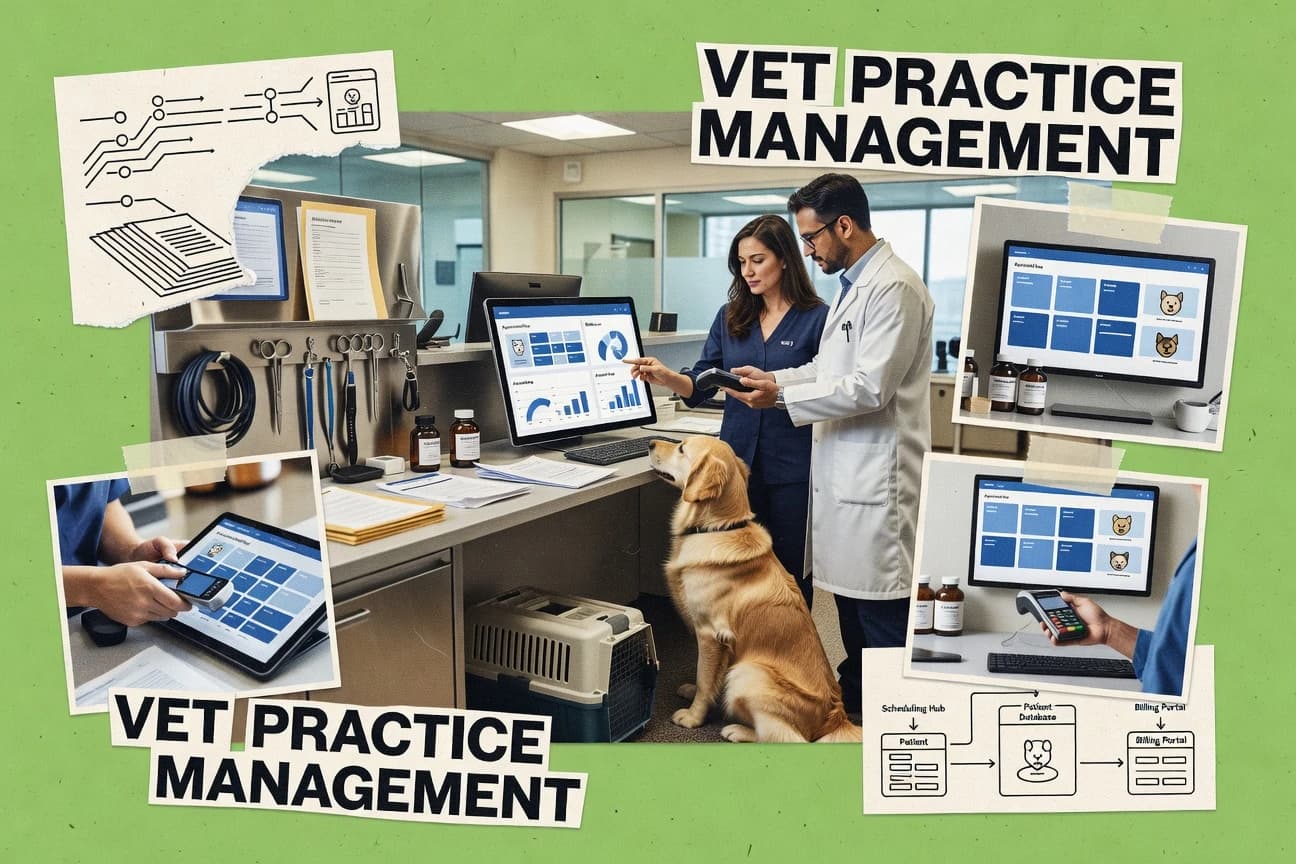
Pets Pet IndustryTop 10 Best Vet Practice Management Software of 2026
Top 10 ranking of vet practice management software for clinics, with practical comparisons of Covetrus Ascend, Shepherd, and ezyVet options.

How we ranked these tools
Core product claims cross-referenced against official documentation, changelogs, and independent technical reviews.
Analyzed video reviews and hundreds of written evaluations to capture real-world user experiences with each tool.
AI persona simulations modeled how different user types would experience each tool across common use cases and workflows.
Final rankings reviewed and approved by our editorial team with authority to override AI-generated scores based on domain expertise.
Score: Features 40% · Ease 30% · Value 30%
Gitnux may earn a commission through links on this page — this does not influence rankings. Editorial policy
Covetrus Ascend is the best fit for multi-location clinics that need governed workflows and integration-ready data exchange, whereas Shepherd is a strong alternative for multi-clinician veterinary teams that prioritize consistent visit documentation with API-driven integrations.
Editor’s top 3 picks
Three quick recommendations before you dive into the full comparison below — each one leads on a different dimension.
Covetrus Ascend
Role-based access control plus audit logs for record changes across appointments, charting, and prescribing.
Built for fits when multi-location clinics need governed workflows and integration-ready data exchange..
Shepherd
Editor pickAPI-first integrations that keep patient, visit, and administrative data synchronized across external systems.
Built for fits when multi-clinician teams need consistent visit documentation plus API-driven integrations..
ezyVet
Editor pickVisit documentation templates that drive consistent chart structure across appointments, tying notes, prescriptions, and client communications to the same patient timeline.
Built for fits when a multi-doctor practice needs tight scheduling-to-chart continuity and consistent visit documentation..
Comparison Table
Covetrus Ascend
enterpriseCloud veterinary practice management software for appointments, records, inventory, and billing.
Role-based access control plus audit logs for record changes across appointments, charting, and prescribing.
Covetrus Ascend supports appointment scheduling with appointment types and recall workflows that can be configured to match practice processes. Clinical documentation uses species-specific templates and structured SOAP-style note capture to keep entries consistent across exam rooms. Prescription management includes controlled workflows that help staff track medication status changes during dispensing and refills.
A key tradeoff is that advanced automation and integrations require deliberate configuration and endpoint mapping, especially when connecting multiple upstream or downstream systems. Ascend is a strong fit for multi-location teams that need standardized documentation and controlled medication workflows with tighter governance than lightweight PM tools.
- +Configurable clinical templates keep SOAP-style notes consistent across staff
- +Structured prescription workflows reduce medication status handling errors
- +API supports integrations with external systems and custom automation
- +RBAC and audit logs track operational and clinical record changes
- –Automation and integration mapping require upfront configuration discipline
- –Some workflows need tight training to avoid charting variation
Practice administrators
Govern access across multiple clinic roles
Reduced governance gaps
Veterinarians and technicians
Standardize SOAP-style documentation
More consistent charting
Show 2 more scenarios
Pharmacy and dispensing staff
Run controlled medication workflows
Fewer medication handling mistakes
Prescription workflows track medication status changes through dispensing and refill cycles.
IT and integration teams
Connect labs and external systems
Lower manual data reentry
API access enables mapping patient and order data to external systems for results and updates.
Best for: Fits when multi-location clinics need governed workflows and integration-ready data exchange.
Shepherd
vertical specialistCloud practice management software designed for veterinary hospitals and specialty workflows.
API-first integrations that keep patient, visit, and administrative data synchronized across external systems.
Shepherd connects front-desk scheduling to clinical documentation so clinicians can move from appointment context into the patient chart without re-entry. It supports SOAP notes, a structured patient record, and longitudinal medication and vaccination history that teams can audit across visits. Administrative controls focus on clinic governance for staff access to scheduling and record views, plus traceable activity via logs for operational accountability.
A tradeoff appears in customization workflows, because advanced changes usually depend on configured templates and integrations rather than ad hoc screen editing. Shepherd fits clinics that run high visit throughput and need consistent chart structure across multiple technicians and doctors, while also relying on data synchronization to other systems.
- +Appointment context feeds directly into the patient chart workflow
- +Consistent medication and vaccination history across visits
- +SOAP note documentation with structured reusable elements
- +API and integration surface supports clinic system synchronization
- –Template-led customization limits fast, one-off form changes
- –Multi-location operations require careful setup of staff and resources
- –Some reporting needs integration exports for deeper analytics
- –Controlled workflows can require tighter governance than expected
Multi-doctor clinic teams
Same-day visits with consistent charting
Fewer documentation gaps per shift
Practice operations managers
Recall and consent workflows tied to visits
Higher follow-through on outreach
Show 2 more scenarios
IT and integration owners
Sync EMR data with external tools
Reduced manual data transfer
API access supports provisioning and data exchange for lab and imaging or other internal systems.
Small to mid clinics
Medication management across time
More consistent prescribing
Medication history and prescription records remain accessible for longitudinal decision-making.
Best for: Fits when multi-clinician teams need consistent visit documentation plus API-driven integrations.
ezyVet
enterpriseCloud veterinary practice management software for clinical, financial, and operational workflows.
Visit documentation templates that drive consistent chart structure across appointments, tying notes, prescriptions, and client communications to the same patient timeline.
ezyVet is built around visit documentation that feeds the patient chart, then carries forward into prescriptions, vaccination history, and ongoing medical history. Appointment types and scheduling events tie into the same patient context used during the visit, which reduces rekeying between front desk and clinical teams. Tradeoff: deeper automation depends on well-defined appointment templates and note templates, so clinics that run many exception workflows may spend more time configuring those building blocks.
A common usage situation is a multi-doctor clinic that needs consistent visit documentation while also tracking medications, recall outreach, and client messaging from one chart view. Another usage situation is practices with recurring lab and diagnostic imaging intake, where results are attached to the relevant patient visit for later review. Limitation: operational governance is strongest when roles and permissions are intentionally mapped to clinical, support, and admin tasks, because clinicians typically need access to more chart surfaces than front desk users.
- +Appointment to chart linkage reduces rekeying during visits
- +SOAP-style note entry patterns improve documentation consistency
- +Structured medication and prescribing workflows track history in-chart
- +Lab and imaging attachments keep results tied to patient visits
- –Many templates require upfront configuration for consistent outcomes
- –Governance relies on deliberate role and permission mapping
- –Exception-heavy workflows can create more manual chart work
- –Automation coverage depends on clinic-specific appointment setup
Small animal clinics
Standardize visit notes across doctors
More consistent documentation
Clinic operations teams
Reduce front desk to clinical handoff errors
Fewer duplicate data entry
Show 2 more scenarios
Veterinary technicians
Track meds and treatments through visit records
Clear treatment timelines
Medication history and prescribing actions are recorded into the patient chart during care.
Support staff
Coordinate client messages with clinical records
Faster follow-ups
Client communication items stay connected to the relevant patient chart for follow-up.
Best for: Fits when a multi-doctor practice needs tight scheduling-to-chart continuity and consistent visit documentation.
DaySmart Vet
SMBVeterinary practice software for scheduling, client management, payments, and daily operations.
Two-way texting that stays linked to the patient and appointment context reduces manual status updates after visits.
DaySmart Vet combines practice management, a veterinary electronic medical record, and patient communications in one workflow for clinics that need front-desk scheduling and clinical charting connected. Its SOAP note authoring uses species-specific templates and a problem list so visit documentation stays consistent across clinicians and appointment types.
It also handles medication history with prescription workflows and supports controlled-substance logging patterns that many clinics need for compliance tracking. Appointment scheduling, reminders, and client messaging reduce handoffs between reception and the exam room while keeping visit context on the same record.
- +SOAP note templates keep documentation consistent across species and clinicians
- +Medication history and prescription workflows reduce chart-to-pharmacy rework
- +Client reminders and two-way texting keep follow-ups attached to appointments
- +Controlled-substance log supports ongoing compliance tracking in the record
- –Automation and governance require disciplined configuration of appointment types
- –Some integrations depend on external lab and imaging partners rather than native connectors
- –Reporting depth can require custom exports for niche operational KPIs
- –Role permissions can be coarse for clinics needing granular workflow controls
Best for: Fits when mid-size clinics want connected scheduling, charting templates, and client messaging in one workflow.
IDEXX Cornerstone
enterpriseVeterinary practice management software integrating medical records, scheduling, billing, and diagnostics.
Laboratory and diagnostics order-to-result workflows are designed to stay connected inside the patient record for faster clinical turnaround.
IDEXX Cornerstone runs veterinary practice workflows around appointment scheduling, patient charting, and daily case documentation in a single system. Cornerstone’s distinct angle is tight IDEXX ecosystem integration, especially for laboratory, diagnostics, and related in-hospital workflows that depend on consistent order and result handling.
The system supports SOAP-style clinical documentation, species-specific clinical templates, and longitudinal records for visits, medications, and immunizations. Cornerstone also includes client communications workflows and operational features needed for estimates, consents, and follow-up activities.
- +Documented lab result workflows reduce manual transcription during visit cycles
- +Species-specific clinical templates speed SOAP-style note completion
- +Medication and immunization history stay linked to the patient chart
- +Operational workflows cover estimates, consents, and discharge documentation
- –Specialized IDEXX integrations can increase dependency on the IDEXX stack
- –Workflow configuration takes more governance effort than typical practice tools
- –Advanced customization options may require deeper admin training
- –Some non-IDEXX diagnostic flows rely on external handoffs
Best for: Fits when an IDEXX-heavy clinic needs consistent orders, results, and chart documentation across daily workflows.
Hippo Manager
SMBVeterinary practice management software for patient records, appointments, reminders, and billing.
Visit workflow configuration that links scheduling context to documentation fields and downstream records.
Hippo Manager is a veterinary practice management system that centers patient chart workflows around visit documentation and day-to-day clinic operations. It supports core scheduling, client communication, and recordkeeping in a single workflow so staff can move from appointment to treatment notes without switching tools.
The system also includes prescription and medication history tracking, plus staff-facing templates for recurring documentation tasks. Automation is primarily driven through configurable workflows and clinic rules rather than custom code.
- +Appointment-to-chart flow keeps visit documentation tied to scheduled work
- +Medication history supports continuity across follow-ups
- +Configurable documentation templates reduce repeat typing for common visits
- +Client communication features connect scheduling outcomes to outreach
- –Complex multi-location setups can require careful standardization of templates
- –Integration depth depends on add-ons for lab, imaging, and reporting workflows
- –Advanced automation is limited compared with systems that expose full API building blocks
- –Permission models need deliberate governance for shared roles and overrides
Best for: Fits when clinics want a single-thread appointment and chart workflow with templated visit documentation and practical automation.
VetBlue
SMBCloud veterinary practice management software for appointments, patient records, communication, and payments.
Recall management that links appointment events to client outreach and subsequent visit tracking inside the same patient timeline.
VetBlue combines appointment scheduling, patient charting, and medication workflows in one interface for veterinary teams. The system centers on clinical note capture and history tracking so SOAP notes and longitudinal treatment context stay attached to each patient record.
Appointment workflows support recall-style follow ups and client communication tied to visits. Inventory and laboratory handoffs are handled inside the same operational flow as clinical documentation.
- +Clinical charting keeps SOAP notes and treatment history in one patient record
- +Appointment workflows tie visit details to follow ups and client messaging
- +Medication and prescription workflow reduces chart-to-order copying
- +Inventory and lot tracking support tighter medication and supply control
- –Species-specific templates require setup to match exam room documentation style
- –Laboratory workflow coverage is thinner for multi-vendor diagnostic pipelines
- –Controlled-substance log support depends on consistent staff documentation
- –Reporting depth lags for multi-location staffing and revenue reconciliation
Best for: Fits when growing practices need one workflow for charts, appointments, and medication documentation without heavy integration projects.
PetExec
SMBPet care business software with veterinary practice management capabilities for scheduling and client records.
Species-specific SOAP templates that standardize exam documentation without forcing one-size-fits-all chart layouts.
PetExec is a veterinary practice management system that focuses on scheduling, billing workflows, and a central patient chart for day-to-day clinic operations. Core charting supports clinical documentation such as SOAP notes, plus species-specific templates and structured problem tracking.
The system also covers medication records and prescription workflows tied to visit history. Administrative controls, automation options, and reporting are positioned around appointment throughput and consistent follow-up tasks.
- +Patient chart workflows keep notes, history, and visit context together
- +SOAP notes and templates reduce rework during exam documentation
- +Appointment scheduling supports multiple appointment types for varied visit flows
- +Medication history is trackable in a way that supports repeat visits
- –Automation depth depends on setup of clinic-specific processes
- –Controlled-substance workflows need extra attention for audit-ready logging
- –Integration options for labs and imaging are limited compared with higher-rank systems
- –Complex multi-location governance requires stricter internal process discipline
Best for: Fits when clinics need structured charting and scheduling workflows with consistent medication history.
VetPort
SMBVeterinary practice management software for patient records, appointments, billing, and inventory.
Recall workflows that trigger client outreach through two-way texting while staying linked to each patient’s chart history.
VetPort is a veterinary practice management and veterinary electronic medical record system built around daily clinic workflows, from appointment scheduling through clinical documentation. It supports structured patient charting with species-specific forms, vaccination history, and medication history so teams can reuse consistent templates during visits.
The system also manages clinical throughput with recall workflows and client communication tools such as two-way texting for updates and follow-ups. Reporting and operational records are organized to keep treatment history, prescriptions, and visit notes connected in the patient record.
- +Patient chart ties visit notes, problem history, and medication history in one place
- +Species-specific templates reduce rework during routine exams
- +Two-way texting supports appointment and recall follow-ups
- +Recall workflows track outbound outreach tied to patient status
- –Setup requires clinic-standardization of templates to avoid documentation drift
- –Appointment scheduling depth is lighter than systems with complex recurring schedules
- –Controlled-substance log workflows are not as prominent in daily screens
- –Some integrations depend on add-on configuration rather than native connections
Best for: Fits when a single or small multi-location clinic needs structured charting plus texting-driven follow-ups.
Digitail
vertical specialistCloud veterinary practice software covering medical records, scheduling, communication, and payments.
SOAP note documentation and visit chart updates share one streamlined workflow for each appointment entry.
Digitail targets veterinary practices that need appointment scheduling plus a complete patient record in one workflow. The system supports SOAP note documentation and chart history entry for ongoing case continuity.
It also covers core front-desk and clinical administration tasks like vaccination tracking, medication history capture, and prescription workflow handling. Built for clinic operations, it focuses on day-to-day charting, visits, and record retrieval rather than niche specialty automation.
- +SOAP note entry and patient chart history stay in a single visit flow
- +Vaccination record tracking supports longitudinal compliance across visits
- +Medication history and prescription workflow reduce chart rework
- +Appointment scheduling connects directly to patient visit documentation
- –Controlled-substance logging depth is unclear in common workflows
- –Diagnostic imaging integration options are limited without add-ons
- –Multi-location governance features may require extra process controls
- –Automation depth for custom workflows depends heavily on configuration
Best for: Fits when single-location clinics need strong day-to-day charting and scheduling.
Conclusion
After evaluating 10 pets pet industry, Covetrus Ascend stands out as our overall top pick — it scored highest across our combined criteria of features, ease of use, and value, which is why it sits at #1 in the rankings above.
Use the comparison table and detailed reviews above to validate the fit against your own requirements before committing to a tool.
How to Choose the Right vet practice management software
This buyer's guide covers vet practice management software tools with appointment scheduling, veterinary electronic medical record charting, medication workflows, and clinic operations tied to the same patient timeline. It walks through Covetrus Ascend, Shepherd, ezyVet, DaySmart Vet, IDEXX Cornerstone, Hippo Manager, VetBlue, PetExec, VetPort, and Digitail.
The guide focuses on integration depth, automation and API surface, and governance controls like RBAC and audit logging. It also maps concrete strengths and real setup tradeoffs to specific clinic scenarios across single-location, small multi-location, multi-clinician, and IDEXX-heavy environments.
Veterinary practice management systems that connect scheduling, charts, and prescribing into one controlled workflow
Vet practice management software coordinates appointment scheduling, patient chart documentation, prescription handling, and operational tasks like reminders and consent workflows inside one system. Veterinary electronic medical record workflows typically include SOAP-style note entry, species-specific templates, vaccination and medication history, and longitudinal visit timelines.
These systems reduce rekeying during visits by linking appointment context directly to the patient chart. For example, Shepherd is built around appointment-to-chart workflows with an API-driven synchronization surface, while DaySmart Vet keeps two-way texting attached to patient and appointment context after the visit.
Evaluation criteria that map vet workflows to integration, automation, and governance outcomes
The fastest path to fewer chart errors and smoother throughput is choosing software where appointment context, charting structure, and prescribing workflows stay connected. Covetrus Ascend, ezyVet, and DaySmart Vet each tie structured documentation to downstream records, so staff do not copy details across screens.
For practices that integrate labs, imaging, or other clinic systems, integration depth and an automation surface determine whether the tool stays maintainable. For governance-heavy environments, RBAC and audit logging matter because they show who changed prescribing records, appointment data, and chart content.
RBAC plus audit logging for record and prescribing changes
Covetrus Ascend provides role-based access control with audit logs that track changes across appointments, charting, and prescribing workflows. This is the most direct fit for multi-location teams that need accountability on who altered medication status and clinical notes.
Appointment-to-chart workflow linkage
ezyVet links visit scheduling directly into patient documentation so rekeying drops during exam cycles. Shepherd also feeds appointment context into the patient chart workflow to keep visit documentation consistent across clinicians.
API and integration synchronization between patient, visit, and admin data
Shepherd is built around API-first integrations that keep patient, visit, and administrative data synchronized across external systems. Covetrus Ascend also supports an API surface and structured data exchanges for connecting external labs and other clinic systems.
Visit and species-specific documentation templates with controlled structure
DaySmart Vet uses SOAP note templates with species-specific patterns plus a problem list to keep documentation consistent across clinicians and appointment types. ezyVet drives consistent chart structure through visit documentation templates that tie notes, prescriptions, and client communications to the same patient timeline.
Clinic communications that remain tied to patient and appointment context
DaySmart Vet’s standout capability is two-way texting that stays linked to the patient and appointment context to reduce manual status updates after visits. VetPort and VetBlue also use recall workflows tied to client outreach, with VetPort explicitly linking outreach through two-way texting while staying connected to chart history.
Diagnostics order-to-result workflow continuity
IDEXX Cornerstone is oriented around laboratory and diagnostics order-to-result workflows that remain connected inside the patient record. This design reduces manual transcription when labs and diagnostics drive daily case documentation.
A clinic workflow decision framework for vet practice management tool selection
The selection process starts with where errors originate in the clinic workflow. If charting drift happens after schedule changes, Shepherd or ezyVet reduces variation through appointment-to-chart linkage and structured visit templates.
The next decision is whether the clinic needs an integration and automation path that avoids manual exports. Covetrus Ascend and Shepherd provide stronger API-oriented surfaces, while other tools may require setup discipline or add-on lab and imaging coverage.
Choose based on where scheduling context must bind to the patient chart
If appointment details must land directly into the chart workflow with minimal retyping, select ezyVet or Shepherd. ezyVet connects scheduling to patient documentation, while Shepherd feeds appointment context into SOAP-style charting and visit history.
Select governance controls that match multi-location or shared-role risk
For practices that need auditability on prescribing, chart edits, and operational task changes, select Covetrus Ascend because it includes RBAC plus audit logs across appointments, charting, and prescribing. For shared roles across clinics, Shepherd also supports governed workflows but template-led customization can require careful setup discipline.
Pick an integration philosophy that matches lab and imaging dependency
IDEXX-heavy workflows should prioritize IDEXX Cornerstone because laboratory and diagnostics order-to-result handling stays connected inside the patient record. If the clinic needs broader external system connectivity, Covetrus Ascend and Shepherd emphasize API surfaces and structured data exchanges tied to patient and visit data.
Use template structure to standardize SOAP notes and prevent chart drift
DaySmart Vet is a strong fit when teams want species-specific SOAP templates plus a problem list to keep notes consistent across clinicians and appointment types. ezyVet is a fit when the clinic needs visit documentation templates that drive consistent chart structure and tie notes, prescriptions, and client communications to the same patient timeline.
Assess communications workflow coupling to appointments and recalls
If client messaging must stay attached to specific appointments, DaySmart Vet’s two-way texting is the clearest match because it reduces manual status updates after visits. For recall-driven outreach that still stays connected to chart history, VetBlue and VetPort both support appointment events that trigger client outreach.
Decide how much automation build-out is expected inside the tool
For clinics that expect deep workflow control without custom code, Hippo Manager relies on configurable workflows and clinic rules and ties visit workflow configuration to downstream documentation fields. If the organization expects heavier automation and integration mapping, Covetrus Ascend and Shepherd bring more explicit API and structured exchange patterns, but both require upfront configuration discipline.
Clinic profiles that match the actual strengths of each vet practice management tool
Different vet practices hit different failure points. Some clinics need medication and chart governance across shared roles, while others need diagnostics continuity or messaging tied to visit outcomes.
The segments below map directly to the named best-fit scenarios for Covetrus Ascend, Shepherd, ezyVet, DaySmart Vet, IDEXX Cornerstone, Hippo Manager, VetBlue, PetExec, VetPort, and Digitail.
Multi-location clinics that need governed workflows and traceable chart edits
Covetrus Ascend fits because it combines RBAC with audit logs for changes across appointments, charting, and prescribing. Shepherd can support API-driven multi-location integration work, but multi-location setups require careful setup of staff and resources to maintain consistency.
Multi-clinician teams that need consistent visit documentation with API-driven synchronization
Shepherd is built around appointment-to-chart workflows and API-first integrations that keep patient, visit, and administrative data synchronized. ezyVet also supports scheduling-to-chart continuity, but Shepherd more directly emphasizes synchronization across external systems.
Practices centered on lab and diagnostic turnaround workflows
IDEXX Cornerstone is designed for laboratory and diagnostics order-to-result workflows to stay connected inside the patient record. Clinics that depend on consistent order and result handling during daily cases usually get the most direct workflow alignment from Cornerstone.
Mid-size clinics that want front desk scheduling, chart templates, and appointment-tied client messaging
DaySmart Vet fits because it connects SOAP-style charting templates to scheduling and uses two-way texting tied to patient and appointment context. VetPort and VetBlue also support recall and texting-driven outreach, but DaySmart Vet keeps the full communications loop anchored to the appointment workflow.
Single-location clinics focused on day-to-day charting continuity and appointment workflow
Digitail fits when the clinic wants SOAP note documentation and visit chart updates in a streamlined flow for each appointment entry. PetExec also fits single or smaller teams that prioritize structured charting plus medication history continuity, but its integration options are more limited than the higher-ranked API-forward tools.
Setup and workflow mistakes that cause chart inconsistency or integration pain
Most vet practice management failures come from choosing a tool that does not match the clinic’s governance and workflow coupling needs. Template-heavy systems also demand disciplined configuration, because small mismatches create charting variation.
The mistakes below connect specific pitfalls found across Covetrus Ascend, Shepherd, ezyVet, DaySmart Vet, IDEXX Cornerstone, Hippo Manager, VetBlue, PetExec, VetPort, and Digitail to practical corrective actions.
Ignoring governance controls and expecting chart changes to be self-policing
Clinics that require traceability on record and prescribing changes should avoid relying on coarse permissions. Covetrus Ascend specifically includes RBAC plus audit logs across appointments, charting, and prescribing, which supports accountable workflows across shared roles.
Treating templates as optional when the clinic actually needs standardized chart structure
When staff need consistent SOAP-style entries across clinicians or species, skipping disciplined template configuration creates documentation drift. DaySmart Vet and ezyVet both depend on species and visit documentation templates to keep chart structure consistent, so governance should cover template configuration outcomes.
Choosing an integration path that assumes native coverage for labs and imaging
Clinics that depend on multi-vendor diagnostic pipelines can hit gaps when integrations rely on external lab and imaging partners or add-on configuration. IDEXX Cornerstone reduces this risk for IDEXX-heavy workflows by keeping order-to-result connected inside the patient record, while Covetrus Ascend and Shepherd emphasize API and structured data exchange patterns.
Overestimating reporting depth without planning exports for operational KPIs
Some tools provide reporting that is not deep enough for niche operational KPIs without exports. Shepherd notes that some reporting needs deeper analytics via integration exports, and DaySmart Vet can require custom exports for niche operational metrics.
Under-planning appointment type configuration that drives automation and downstream documentation
If appointment types are not standardized, automation and clinical documentation can become inconsistent even when chart templates exist. DaySmart Vet calls out disciplined configuration of appointment types for automation and governance, and Hippo Manager depends on configurable workflows and clinic rules linked to scheduling context.
How We Selected and Ranked These Vet Practice Management Tools
We evaluated Covetrus Ascend, Shepherd, ezyVet, DaySmart Vet, IDEXX Cornerstone, Hippo Manager, VetBlue, PetExec, VetPort, and Digitail using three scored areas: features, ease of use, and value. Overall ratings are reported as a weighted average where features carry the most weight, while ease of use and value each contribute equally. Scoring was criteria-based from the provided tool descriptions, standout features, pros, and cons, not from hands-on lab testing or private performance benchmarks.
Covetrus Ascend separated itself by pairing RBAC plus audit logs for record changes across appointments, charting, and prescribing with an API surface designed for structured data exchange. That combination lifted its features and governance strength, and it also maintained very high ease-of-use expectations relative to the other tools.
Frequently Asked Questions About vet practice management software
How do these systems connect appointment data to clinical notes during a visit workflow?
Which vet practice management platforms support API-driven integrations with external labs and clinic systems?
How do multi-location clinics handle governance and audit trails for record changes?
When does SSO and RBAC matter for clinical teams, and which tools are built around role controls?
What is the practical approach to data migration for patient charts, medication history, and vaccination records?
How do controlled-substance workflows and compliance logs show up in day-to-day operations?
What breaks if a practice needs consistent diagnostic order handling across lab and imaging workflows?
Which systems link client outreach to specific clinical events instead of separate reminder lists?
Where do species-specific templates and structured SOAP notes prevent documentation drift?
Tools reviewed
Primary sources checked during evaluation.
Referenced in the comparison table and product reviews above.
- Pets Pet IndustryTop 10 Best Vet Clinic Software of 2026
- Pets Pet IndustryTop 10 Best Cloud Based Veterinary Practice Management Software of 2026
- Veterinary Animal CareTop 10 Best Vet Practice Software of 2026
- Healthcare MedicineTop 10 Best Most Popular Dental Practice Management Software of 2026
- Wellness FitnessTop 10 Best Massage Therapy Practice Management Software of 2026
Keep exploring
Comparing two specific tools?
Software Alternatives
See head-to-head software comparisons with feature breakdowns, pricing, and our recommendation for each use case.
Explore software alternatives→In this category
Pets Pet Industry alternatives
See side-by-side comparisons of pets pet industry tools and pick the right one for your stack.
Compare pets pet industry tools→