
GITNUXSOFTWARE ADVICE
Education LearningTop 10 Best University Housing Management Software of 2026
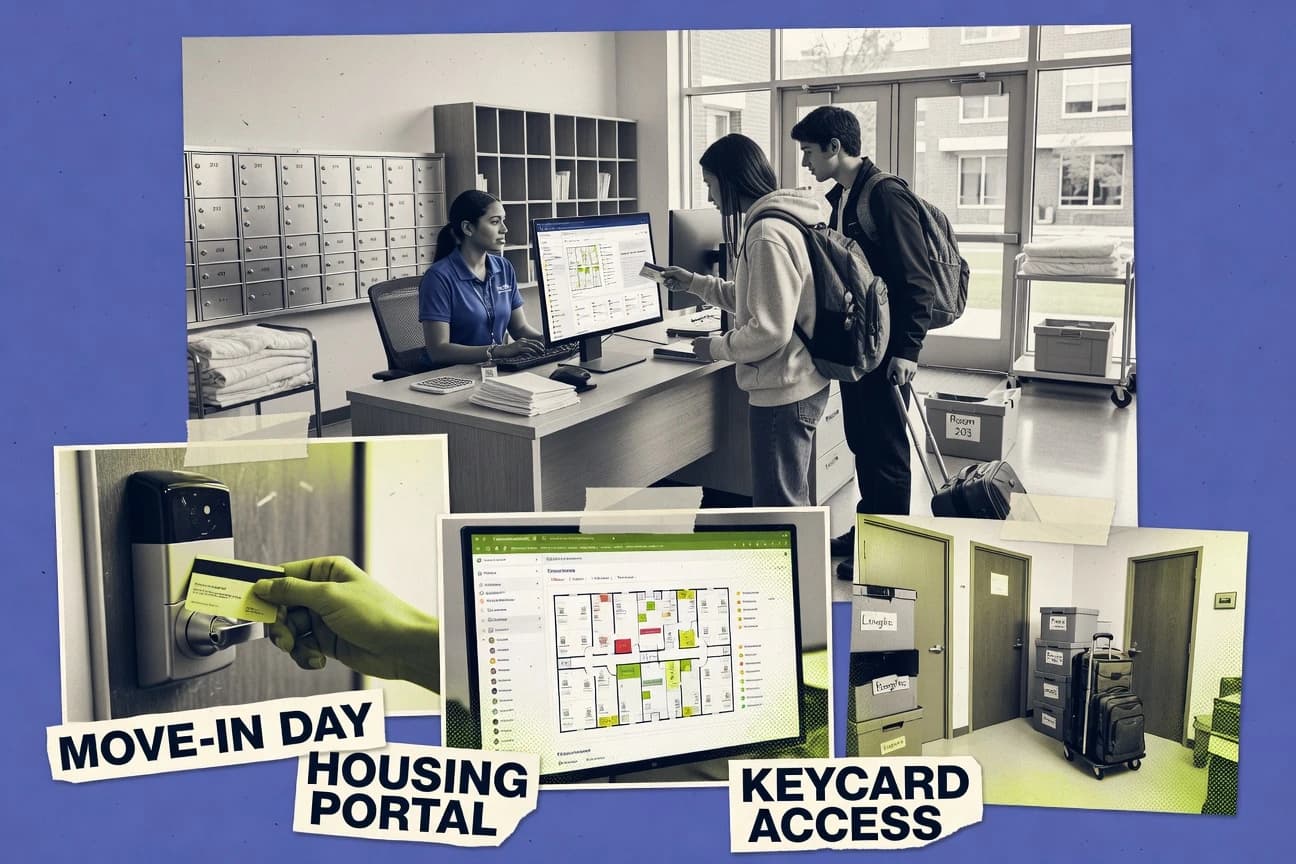
Top 10 ranking of university housing management software for universities, comparing KxWelcome, Hallmaster, and ResLife Portal by features and fit.

How we ranked these tools
Core product claims cross-referenced against official documentation, changelogs, and independent technical reviews.
Analyzed video reviews and hundreds of written evaluations to capture real-world user experiences with each tool.
AI persona simulations modeled how different user types would experience each tool across common use cases and workflows.
Final rankings reviewed and approved by our editorial team with authority to override AI-generated scores based on domain expertise.
Score: Features 40% · Ease 30% · Value 30%
Gitnux may earn a commission through links on this page — this does not influence rankings. Editorial policy
Kinetic Software KxWelcome is the best fit if you want standardized, term-aware arrival and occupancy workflows for student housing teams, whereas CBORD Housing and Residence Life is the stronger alternative when you need governed, contract-driven assignments, transfers, and campus operations under one roof.
Editor’s top 3 picks
Three quick recommendations before you dive into the full comparison below — each one leads on a different dimension.
Kinetic Software KxWelcome
Move-in readiness workflow that links applicant status to checklist completion and arrival routing for residence life staff.
Built for fits when housing teams need standardized arrival workflows with term-aware occupancy tracking..
Hallmaster
Editor pickHousing application to contract generation workflow that follows decisions into term-ready resident documentation.
Built for fits when a housing office needs end-to-end assignment workflows with operational tracking..
ResLife Portal
Editor pickResidence life incident and case workflows run alongside housing operations actions in the same staff experience.
Built for fits when residence life teams need end-to-end housing workflows across halls and terms..
Comparison Table
Kinetic Software KxWelcome
vertical specialistStudent housing, residence life, and events management platform with room allocation and check-in/check-out.
Move-in readiness workflow that links applicant status to checklist completion and arrival routing for residence life staff.
Kinetic Software KxWelcome is built around pre-arrival and arrival operations, so housing staff can track readiness items and move residents through standardized check-in tasks. Room selection and contract generation flows can be reflected in daily operations, with status changes tied to occupancy. The configuration surface supports event-based updates that reduce manual rework when terms begin or residents transfer.
A key tradeoff is that high-control governance depends on disciplined configuration of workflow steps and validation rules. KxWelcome fits situations where residence hall hierarchy and departmental roles need consistent arrival procedures, such as academic-year contract terms.
- +Pre-arrival checklists reduce move-in handoff errors
- +Configurable workflow steps support term-based arrival operations
- +Status updates keep occupancy and check-in aligned
- +Automation rules cut repetitive staff data entry
- –Governance requires careful workflow configuration
- –Some integrations depend on external system mappings
- –Transfer edge cases may require operational SOP alignment
- –Room change workflows can feel heavy for ad hoc moves
Residence life operations staff
Coordinate standardized check-in tasks
Fewer missed arrivals
Housing assignments teams
Coordinate room handoffs during terms
Lower operational rework
Show 2 more scenarios
Student services admins
Manage contract-driven occupancy changes
More consistent audit trails
Aligns contract updates with housing occupancy outcomes for audit-friendly operational visibility.
IT integration teams
Connect housing workflows to identity data
Fewer manual data pulls
Uses integration interfaces to sync resident identity and student record attributes into arrival operations.
Best for: Fits when housing teams need standardized arrival workflows with term-aware occupancy tracking.
Hallmaster
vertical specialistHallmaster manages university and college accommodation applications, room allocations, contracts, and payments.
Housing application to contract generation workflow that follows decisions into term-ready resident documentation.
Hallmaster fits housing offices that run term-based housing with academic-year contracts and need consistent occupancy updates across the term. Room selection workflows and room assignment processes are supported with inventory-aware handling, and contract generation can follow accepted housing decisions without manual document reshuffling. Residence hall hierarchy management helps admins control structure across buildings, sites, and year groups, while resident records stay linked to operational actions like check-in, check-out, and room transfer.
A key tradeoff is that operational depth depends on disciplined setup of building structures, room inventory states, and workflow rules, because inaccurate inventory configuration forces extra admin cleanup later. Hallmaster is most useful when the housing office needs tight governance over assignments and occupancy throughout the housing cycle, then wants maintenance work orders and resident incident tracking to stay in the same operational thread.
- +Inventory-driven room assignment workflows reduce manual rework during peak selection
- +Contract generation ties accepted decisions to documents used by the housing office
- +Check-in and check-out operations stay connected to occupancy records
- +Maintenance work orders and incident tracking reduce handoff gaps
- –Workflow outcomes rely on careful configuration of inventory states and rules
- –Complex room transfer scenarios can require admin intervention to correct mismatches
- –Multi-team processes can feel gated until governance roles are tuned
- –Reporting depth for forecasting can lag behind heavy analytics tools
Residence life operations staff
Run room selection and assignments
Fewer last-minute assignment changes
Housing office administrators
Maintain occupancy and term hierarchy
More accurate occupancy reporting
Show 2 more scenarios
Facilities coordination team
Route maintenance and incidents
Faster resolution routing
Log maintenance work orders and resident incidents tied to the affected housing assignment.
Student services governance leads
Control cancellations and transfers
Lower administrative variance
Process cancellations and room transfers while keeping resident records consistent for follow-on actions.
Best for: Fits when a housing office needs end-to-end assignment workflows with operational tracking.
ResLife Portal
vertical specialistResidence life management system connecting residents with staff for student housing operations.
Residence life incident and case workflows run alongside housing operations actions in the same staff experience.
ResLife Portal is built around day-to-day residence life work such as housing application intake, occupancy updates, and room assignment coordination for term-based housing. The workflow coverage spans from pre-arrival steps through check-in and check-out operations, which helps teams keep bed-space inventory current. Admin features emphasize governance of staff actions through role-separated permissions and operational logs for housing decisions and resident actions.
A key tradeoff is that deeper customization of workflow logic and data fields can require process design effort from the housing team rather than being fully self-serve. ResLife Portal fits best when a residence life office needs staff workflow continuity across multiple halls and terms, not just a transactional room-selection screen.
- +Term-based housing workflows reduce rework between academic cycles
- +Check-in and check-out tracking supports consistent occupancy updates
- +Residence life case handling keeps incidents within housing workflows
- +Role-separated staff actions support governance across housing and conduct
- –Advanced workflow customization takes operational planning and governance
- –Some reporting needs manual exports for cross-department rollups
- –Integration depth varies by campus system landscape
- –Room changes can require careful staff training to avoid errors
Residence life directors
Coordinate resident incidents with housing actions
Fewer handoffs and faster closures
Housing operations managers
Manage occupancy from application to move-in
Cleaner occupancy records
Show 2 more scenarios
Residence hall staff
Process room assignments and changes
Lower room-change errors
Perform room assignment updates with guided steps for staff and resident impact tracking.
IT integration teams
Connect identity and enrollment systems
Reduced duplicate data entry
Integrate identity and student enrollment sources to drive housing records and staff access.
Best for: Fits when residence life teams need end-to-end housing workflows across halls and terms.
StarRez
vertical specialistStarRez manages university housing assignments, room selection, billing, maintenance, and residence life operations.
Automated housing lifecycle transitions that keep occupancy, assignments, and downstream contract artifacts aligned during changes.
StarRez centralizes university housing operations around term-based housing with room selection and room assignment workflows. It supports end-to-end contract generation and lease management tied to occupancy, check-in and check-out, and room transfers.
The system’s automation focus shows up in event-driven resident lifecycle tasks such as cancellations, waitlist management, and maintenance work orders. StarRez also integrates with key higher-ed systems through an API surface and provisioning patterns for resident and housing data movement.
- +Resident lifecycle workflows connect from housing application to occupancy and transfers
- +Contract generation and lease management stay synchronized with bed-space inventory
- +Automation reduces manual chasing for room changes, cancellations, and waitlist movement
- +Integration and API support align housing data with upstream student systems
- –Admin configuration choices can be complex for residence hall hierarchy and assignment rules
- –Some operational views require training to interpret reservation status and occupancy states
- –Automation depends on correct workflow setup across multiple resident events
- –Multi-property change workflows take coordination for transfers and concurrent assignments
Best for: Fits when a university needs room assignment workflows plus contract-linked occupancy tracking across multiple terms.
eRezLife
vertical specialisteRezLife supports student housing assignments, residence life workflows, staff management, and conduct processes.
Residence hall hierarchy plus bed-space inventory handling that drives controlled assignment decisions across terms.
eRezLife manages university housing processes end-to-end from housing application intake through occupancy tracking and contract generation workflows. It supports residence hall hierarchy and term-based housing operations, including bed-space inventory visibility for assignment outcomes.
The admin experience centers on housing staff configuration and resident-facing status flows that connect applications to placement decisions. Integrations focus on student identity and systems linkages needed for day-to-day resident services execution.
- +Housing application to placement workflows cover key operational steps in one system
- +Residence hall hierarchy and term-based structures match common university housing models
- +Bed-space inventory visibility supports controlled room assignment and occupancy decisions
- +Contract generation workflows reduce manual document handling for housing agreements
- –Room selection and housing lottery workflows require careful policy configuration
- –Room transfer and cancellation workflows can feel fragmented without tight staff process alignment
- –Advanced automation depends on integration availability for upstream and downstream systems
- –Reporting depth for analytics varies by configuration rather than offering uniform dashboards
Best for: Fits when housing teams need term-based contract and occupancy workflows tied to configured placement policies.
CBORD Housing and Residence Life
enterpriseCBORD provides housing assignments, dining integration, residence life, access control, and campus operations tools.
Contract-driven assignment orchestration that ties living terms to room and occupancy updates through controlled staff workflows.
CBORD Housing and Residence Life is a university housing management solution built around occupancy, resident workflows, and contract-driven living assignments. It supports end-to-end housing operations such as housing applications, contract generation, room assignment and room transfers, and the operational check-in and check-out flow.
The product also integrates with core campus systems, including student information system integrations and related residence life integrations, to keep housing status synchronized across departments. Automation centers on staff workflows, exception handling for special cases, and configuration that governs term-based housing processes and residence hall hierarchy.
- +Strong contract-to-assignment workflow support for term-based living
- +Room transfer and occupancy updates maintain continuity during moves
- +Housing application and check-in check-out flows cover core operational steps
- +Integration focus supports synchronization with campus identity and student systems
- –Setup complexity rises when governing multiple residence hall rules and exceptions
- –Advanced workflow changes often rely on implementation support
- –Room selection customization can feel limited without established configuration patterns
- –Reporting depth depends on how campus integrations map into housing records
Best for: Fits when housing offices need tightly governed assignments, transfers, and contract-driven operations.
The Housing Director
vertical specialistThe Housing Director manages student housing assignments, occupancy, billing, maintenance, and reporting.
Key and access-card tracking tied to check-in and check-out reconciliation, linked directly to occupancy state changes.
The Housing Director is a university housing management system focused on resident lifecycle workflows that start with housing applications and continue through contract generation and occupancy administration. It supports housing administration tasks like room assignment, room transfer, and term-based occupancy operations, with built-in handling for residence hall hierarchy and housing capacity tracking.
The system also covers check-in and check-out processes tied to key and access-card tracking so staff can reconcile access and bed-space inventory changes. Adirondack Solutions positions The Housing Director around administrative configuration for departmental governance, rather than a consumer-style resident app experience.
- +Built-in room assignment and room transfer workflows reduce manual rekeying
- +Check-in and check-out processes align with key and access-card tracking
- +Term-based occupancy support fits academic-year housing operations
- +Staff-facing configuration supports residence hall hierarchy and capacity control
- –Resident-facing customization options can be limited for branded workflows
- –Integrations with student systems can require dedicated setup and ongoing governance
- –Automation depth for exception handling depends on configured workflows
- –Reporting coverage for housing analytics may lag specialized BI deployments
Best for: Fits when a housing office needs controlled administrative workflows for occupancy and access tracking across an academic-year term.
Roompact
vertical specialistRoompact manages residence life communication, case management, conduct, and student engagement workflows.
Housing lottery orchestration with configurable eligibility and ranking rules for term-based assignments.
Roompact is a university housing management system built around online room assignment, room selection, and housing lottery workflows for residence life teams. Core capabilities include contract generation with resident and bed-space occupancy tracking, plus operational flows for move-in and move-out events.
Roompact also supports roommate matching and room transfer requests to manage term-based changes in student housing assignments. Integration coverage focuses on student identity and residence hall operations data exchange so teams can keep housing decisions aligned with institutional systems.
- +Housing lottery and room selection workflows reduce manual assignment churn
- +Contract generation ties assignment outcomes to resident documentation workflows
- +Room transfer requests support mid-term changes without rebuilding assignments
- +Roommate matching reduces exceptions during group-based housing decisions
- –Advanced configuration can require disciplined setup across halls, terms, and inventory
- –Automation coverage for edge-case cancellations may require custom process handling
- –Reporting depth for housing analytics is limited compared with broader analytics suites
- –Integration breadth depends on the institution’s systems for identity and student data
Best for: Fits when residence life teams need controlled housing assignment workflows with contract-linked outcomes.
Booking Ninjas
enterpriseHigher education property management system built on Salesforce for campus and student housing operations.
Housing selection workflow that coordinates availability with resident stage tracking during room selection periods.
Booking Ninjas manages the end-to-end workflow for university housing events like room selection and housing application tracking, with tools for capacity-aware inventory handling. It supports contract-related processing workflows and operational tasks that typically follow assignment, including changes and occupancy updates.
Administration features focus on governing housing terms and resident-facing status flows so teams can run residence halls across an academic cycle. Automation is oriented around moving residents through application to assignment and subsequent lifecycle actions without re-keying data.
- +Capacity-aware room selection workflow for term-based housing cycles
- +Built for operational changes after assignment, including transfer-style updates
- +Resident status progression reduces manual re-entry across housing stages
- +Workflow configuration supports varying residence hall hierarchies
- –Limited visibility into cross-system status without strong SIS integration
- –Room assignment edge cases can require manual intervention for exceptions
- –Automation coverage depends on configured workflows for each housing term
- –Admin controls require careful governance to avoid inconsistent assignments
Best for: Fits when housing teams need configured selection workflows plus lifecycle updates across academic terms.
DormHearth
vertical specialistAll-in-one student housing management platform for dorm assignments, maintenance, billing, and communication.
Housing lifecycle audit trails connect room selection decisions to downstream contract and occupancy updates.
DormHearth targets university residence life teams that need housing application intake tied to contract generation and occupancy tracking. The system centers on bed-space inventory workflows, including room assignment, room selection, and term-based housing changes.
It also supports resident lifecycle actions like check-in and check-out, room transfers, and cancellation workflow handling within one operational record. Governance features focus on role-based controls for staff workflows and audit-style visibility into housing decisions.
- +Room selection and room assignment share the same operational housing inventory
- +Term-based housing changes link to contracts and occupancy states
- +Check-in and check-out flows keep resident status aligned to bed-space inventory
- +Staff RBAC separates resident-facing actions from administrative housing controls
- –Student information system integration coverage is limited for complex custom SIS setups
- –Automation depends more on operator workflows than on fully programmable triggers
- –Room transfer edge cases require extra manual handling during high-volume terms
- –Extensibility for custom fields and exports needs clearer schema-level documentation
Best for: Fits when a residence life office needs end-to-end housing actions tied to bed-space inventory without heavy custom automation.
Conclusion
After evaluating 10 education learning, Kinetic Software KxWelcome stands out as our overall top pick — it scored highest across our combined criteria of features, ease of use, and value, which is why it sits at #1 in the rankings above.
Use the comparison table and detailed reviews above to validate the fit against your own requirements before committing to a tool.
How to Choose the Right university housing management software
University housing management software centralizes housing application decisions, bed-space inventory actions, and term-based downstream updates such as contracts, occupancy, and move-in operations. This guide covers Kinetic Software KxWelcome, Hallmaster, ResLife Portal, StarRez, eRezLife, CBORD Housing and Residence Life, The Housing Director, Roompact, Booking Ninjas, and DormHearth.
The tools differ most in how they automate workflows, expose integration surfaces, and enforce governance across residence hall hierarchy, assignment rules, and arrival or incident processes. Kinetic Software KxWelcome emphasizes a move-in readiness workflow that links applicant status to checklist completion and arrival routing, while StarRez focuses on automated lifecycle transitions that keep occupancy, assignments, and contract artifacts aligned.
University housing management software for room assignment, contracts, occupancy, and residence life workflows
University housing management software supports housing application to room assignment pipelines, then carries accepted decisions into contract generation, occupancy management, and check-in and check-out tracking for each academic term. Hallmaster illustrates this flow with a workflow that follows application decisions into term-ready resident documentation and links inventory-driven assignment steps to contract generation.
Many deployments also extend beyond allocation into residence life operations. ResLife Portal runs residence life incident and case workflows alongside housing actions in the same staff experience, while Kinetic Software KxWelcome connects applicant status to pre-arrival checklists and arrival routing so residence life staff can execute standardized move-in steps tied to onboarding progress.
Workflow automation and governance controls for housing operations
University housing management software succeeds when it ties decisions from room assignment and placement into term-ready downstream actions like contract generation, occupancy updates, and move-in execution. KxWelcome and StarRez both emphasize lifecycle continuity so housing operations and residence life staff do not manage disconnected task lists during transitions.
The differentiators show up in automation depth and control surfaces. KxWelcome links applicant status to a move-in readiness checklist and arrival routing for residence life staff, while Hallmaster runs an application to contract generation workflow that follows decisions into term-ready resident documentation.
Move-in readiness workflow tied to arrival operations
Kinetic Software KxWelcome connects applicant status to move-in readiness checklist completion and arrival routing so residence life staff can execute standardized arrival steps. This workflow structure supports term-aware arrival operations using configurable workflow steps.
Assignment to contract generation continuity with inventory-driven decisions
Hallmaster drives inventory-driven room assignment workflows that reduce manual rework during room selection peaks, then generates contracts from accepted decisions. StarRez similarly keeps occupancy, assignments, and contract-linked artifacts aligned through automated housing lifecycle transitions.
Residence life operational workflows co-located with housing actions
ResLife Portal runs residence life incident and case workflows in the same staff experience as housing operations actions across halls and terms. This design supports term-based housing workflows alongside check-in and check-out tracking.
Automated lifecycle transitions aligned to bed-space inventory and lease artifacts
StarRez connects the housing application to occupancy and transfers and keeps contract generation and lease management synchronized with bed-space inventory. eRezLife complements this model with residence hall hierarchy and bed-space inventory handling that drives controlled assignment decisions across terms.
Contract-driven assignment orchestration with governed staff workflows
CBORD Housing and Residence Life ties living terms to room and occupancy updates through controlled staff workflows built around contracts. The Housing Director also centers its operation on key and access-card tracking that reconciles with check-in and check-out and updates occupancy state.
Controlled lottery, selection, and eligibility workflows
Roompact provides housing lottery orchestration with configurable eligibility and ranking rules for term-based assignments, then connects outcomes to resident documentation workflows. Booking Ninjas supports capacity-aware room selection for academic-year cycles and coordinates availability with resident stage tracking during selection periods.
End-to-end audit trails connecting selection decisions to occupancy and contracts
DormHearth links housing lifecycle audit trails so room selection decisions connect to downstream contract and occupancy updates while room selection and room assignment share the same operational housing inventory. This emphasis reduces operational ambiguity when terms change after assignment.
Choose based on workflow philosophy, integration depth, and governance effort
The primary choice factor is where automation starts and how far it carries downstream. KxWelcome begins with a move-in readiness workflow that connects applicant status to arrival routing, while Hallmaster begins with application decisions that flow into contract generation and term-ready resident documentation.
The second factor is governance workload and how configuration affects real-world outcomes. If residence hall hierarchy and bed-space inventory rules must match term-based placement policies exactly, eRezLife and CBORD Housing and Residence Life concentrate that logic into placement and contract-driven orchestration, but both also raise the cost of careful policy configuration.
Map how accepted decisions move into term-ready documents
Select Hallmaster if the housing office needs an end-to-end assignment workflow where inventory-driven room assignment steps feed contract generation tied to accepted decisions. Select StarRez if automated lifecycle transitions must keep occupancy, transfers, and contract artifacts synchronized during changes across multiple terms.
Pick the workflow entry point that matches daily operations
Choose Kinetic Software KxWelcome when move-in operations depend on checklist completion and arrival routing that updates based on applicant status and term-aware arrival tasks. Choose ResLife Portal when residence life staff need incident and case workflows in the same environment as housing operations and check-in and check-out updates.
Set expectations for configuration complexity in room transfer and workflow exceptions
If room transfer scenarios frequently include exceptions, test Hallmaster workflows using representative inventory state transitions to see how much admin intervention is required to correct mismatches. If transfers and operational changes must remain aligned with contract and occupancy artifacts, validate StarRez and CBORD Housing and Residence Life against multi-term move scenarios.
Validate governance surfaces for residence hall hierarchy and assignment rules
If the deployment relies on residence hall hierarchy plus bed-space inventory to enforce controlled placement decisions, evaluate eRezLife against the configured placement policies used for term-based structures. If assignments must stay governed through contract-driven staff workflows, evaluate CBORD Housing and Residence Life against multiple residence hall rules and exceptions to estimate setup complexity.
Confirm auditability and exception handling during selection and assignment churn
Choose DormHearth when audit trails must connect room selection decisions to contract and occupancy updates while sharing a single operational housing inventory. Choose Roompact or Booking Ninjas when lottery or capacity-aware selection needs to reduce assignment churn, then validate how edge-case cancellations are handled for operational continuity.
Check whether the resident-access workflow is a first-class operational dependency
Select The Housing Director when key and access-card tracking must reconcile through check-in and check-out reconciliation tied directly to occupancy state changes. If access control is not the core operational dependency and the focus is staffing workflows across housing and residence life, prioritize KxWelcome or ResLife Portal.
Teams that should evaluate these tools first
University housing offices and residence life operations need different strengths depending on who owns move-in execution, who owns incident handling, and how assignments map into contracts and occupancy updates. The right fit also depends on whether daily work centers on arrival routing, contract orchestration, or access-card reconciliation.
The segments below match common deployment drivers that appear in the tool differentiators, including move-in checklist workflow automation, inventory-driven assignment workflows, and co-located residence life incident case management.
Housing offices standardizing move-in operations across residence halls
Kinetic Software KxWelcome supports move-in readiness workflow automation that links applicant status to checklist completion and arrival routing for residence life staff. Configurable workflow steps help teams manage term-based arrival operations without relying on spreadsheets.
Housing teams running high-volume room selection and assignment peaks
Hallmaster uses inventory-driven room assignment workflows to reduce manual rework during peak selection periods. The Housing lifecycle-to-contract flow follows decisions into term-ready resident documentation so operations do not re-enter accepted outcomes.
Residence life organizations handling incidents and conduct workflows alongside housing actions
ResLife Portal combines residence life incident and case workflows with housing operations actions in one staff experience. It also includes check-in and check-out tracking so occupancy updates remain consistent with incident-related housing steps.
Universities requiring synchronized occupancy, assignments, and contract-linked artifacts across terms
StarRez keeps occupancy, assignments, and downstream contract artifacts aligned through automated housing lifecycle transitions that connect from housing application to transfers. eRezLife and CBORD Housing and Residence Life also emphasize term-based structures with bed-space inventory and contract-driven orchestration.
Operators where key and access-card reconciliation is the critical control point
The Housing Director ties key and access-card tracking to check-in and check-out reconciliation linked directly to occupancy state changes. This suits teams that treat access control workflow as part of the core occupancy update loop.
Pitfalls that cause housing workflow failures
The biggest failure modes come from assuming workflow automation will behave correctly without matching inventory state rules, term structures, and exception handling processes. Several tools explicitly flag governance and configuration reliance, which affects room transfer outcomes and reporting accuracy.
The second failure mode is underestimating operational visibility across departments. Some systems require manual exports for cross-department rollups, so governance should include reporting workflow design early rather than after go-live.
Underestimating how workflow configuration impacts room transfer outcomes
Hallmaster relies on careful configuration of inventory states and rules for workflow outcomes, and complex room transfer scenarios can require admin intervention to correct mismatches. Use test cases for the transfer patterns used during peak moves before finalizing placement policies.
Treating advanced workflow customization as a no-governance change process
ResLife Portal supports incident and case workflows alongside housing actions but advanced workflow customization takes operational planning and governance. Define who approves changes to workflow steps during a term so staff do not fall back to parallel processes.
Assuming reporting and cross-department rollups are fully automatic
ResLife Portal can require manual exports for cross-department rollups when reporting spans beyond the core staff experience. Design a reporting workflow that specifies the owner for exports and the cadence for reconciliation.
Expecting instant automation alignment without training on occupancy state interpretation
StarRez provides automated lifecycle transitions but some operational views require training to interpret reservation status and occupancy states correctly. Run a training cycle that uses real reservation status transitions so staff can act on the right operational meaning.
Relying on automation coverage for edge-case cancellations without a custom exception workflow
Roompact reduces assignment churn through housing lottery and room selection workflows but automation coverage for edge-case cancellations may require custom process handling. Define cancellation and exception steps that map to contract generation and occupancy updates so term artifacts remain consistent.
How We Selected and Ranked These Tools
We evaluated each housing platform by workflow coverage and automation depth because Kinetic Software KxWelcome connects applicant status to move-in readiness checklist completion and arrival routing with configurable term-aware workflow steps. We weighted ease of use and operational throughput because Hallmaster inventory-driven room assignment workflows aim to reduce manual rework during selection peaks and StarRez automated lifecycle transitions aim to keep occupancy and contract-linked artifacts aligned.
We weighted integration and downstream alignment because StarRez and Kinetic Software KxWelcome both emphasize synchronization of assignments into occupancy and contract artifacts while ResLife Portal keeps residence life incident and case workflows in the same staff experience as check-in and check-out tracking. We ranked Kinetic Software KxWelcome highest because the move-in readiness workflow explicitly links application status to residence life arrival execution using standardized checklists and routing, which reduces handoff errors during move-in operations.
Frequently Asked Questions About university housing management software
How do KxWelcome and StarRez connect applicant readiness to downstream move-in and contract artifacts?
Which tools provide room assignment to contract generation traceability for term-based housing decisions?
How does ResLife Portal handle incident and case workflows alongside housing operations without forcing staff to switch systems?
When does DormHearth require room selection data to be reconciled with occupancy and contract updates?
What breaks if identity and enrollment data cannot sync reliably with StarRez or eRezLife?
How do Hallmaster and Roompact differ in managing housing lottery and assignment outcomes?
Which system is better suited for key and access-card tracking tied directly to check-in and check-out state changes?
How do Roompact and Booking Ninjas handle room transfer requests during term-based changes?
What admin controls and governance mechanisms exist in DormHearth compared with ResLife Portal?
How should data migration be planned when moving historical housing records into CBORD Housing and Residence Life or Hallmaster?
Tools reviewed
Primary sources checked during evaluation.
Referenced in the comparison table and product reviews above.
- Education LearningTop 10 Best University Fundraising Software of 2026
- Real Estate PropertyTop 10 Best Housing Management Software of 2026
- Tourism HospitalityTop 10 Best Hotel Managment Software of 2026
- Business FinanceTop 10 Best Home Management Software of 2026
- Construction InfrastructureTop 10 Best Residential Construction Management Software of 2026
Keep exploring
Comparing two specific tools?
Software Alternatives
See head-to-head software comparisons with feature breakdowns, pricing, and our recommendation for each use case.
Explore software alternatives→In this category
Education Learning alternatives
See side-by-side comparisons of education learning tools and pick the right one for your stack.
Compare education learning tools→