
GITNUXSOFTWARE ADVICE
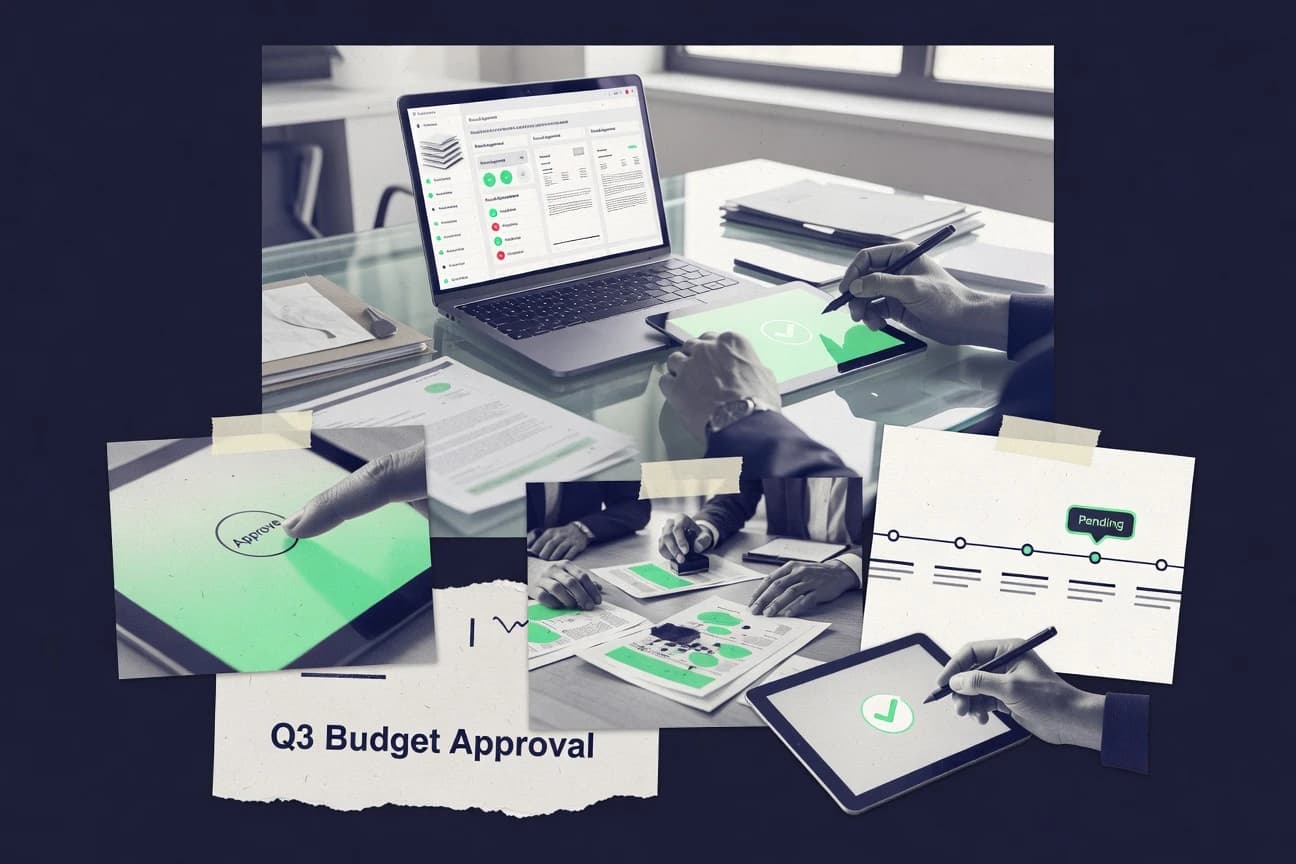
Business FinanceTop 10 Best Review And Approval Software of 2026
Find the best review and approval software to streamline workflows. Compare features, collaboration tools, and pick the ideal solution. Explore now.

How we ranked these tools
Core product claims cross-referenced against official documentation, changelogs, and independent technical reviews.
Analyzed video reviews and hundreds of written evaluations to capture real-world user experiences with each tool.
AI persona simulations modeled how different user types would experience each tool across common use cases and workflows.
Final rankings reviewed and approved by our editorial team with authority to override AI-generated scores based on domain expertise.
Score: Features 40% · Ease 30% · Value 30%
Gitnux may earn a commission through links on this page — this does not influence rankings. Editorial policy
Editor’s top 3 picks
Three quick recommendations before you dive into the full comparison below — each one leads on a different dimension.
DocuSign
Generation and retention of detailed audit trails for signing and approval events
Built for enterprises needing audit-backed approval workflows with reliable eSignature automation.
Microsoft SharePoint with Approvals
Editor pickSharePoint item approvals with decision history stored on documents and list records
Built for organizations using SharePoint for document governance and light to mid approval workflows.
Box Governance and Approvals
Editor pickBox approvals workflow that leverages Box governance controls for permission-aware routing and auditing
Built for organizations using Box for document governance and approval-centric compliance workflows.
Comparison Table
DocuSign
enterprise workflowDocuSign provides electronic signatures and structured approval workflows for documents with audit trails and enterprise controls.
Generation and retention of detailed audit trails for signing and approval events
DocuSign stands out with enterprise-grade digital signature workflows and broad business document coverage across contracts, approvals, and forms. It supports template-based sending, routing for approvals, conditional recipient actions, and audit trails that capture signer and event history.
Teams can manage documents across eSignature and workflow use cases with role-based permissions, reusable templates, and integrations that connect submissions to downstream systems. Strong compliance and traceability features make it effective for regulated and cross-team approval chains.
- +Robust signing and approval workflows with audit trails for every event
- +Template reuse and routing options speed up repeat contract processes
- +Strong integration ecosystem for CRM, ticketing, and document systems
- +Enterprise controls for recipient access, branding, and permissions
- –Advanced workflow and template setup requires onboarding and admin effort
- –Pricing can become expensive for large user counts
- –Some workflow customization feels less flexible than full BPM suites
Best for: Enterprises needing audit-backed approval workflows with reliable eSignature automation
Microsoft SharePoint with Approvals
collaboration-firstSharePoint document libraries support built-in review and approval flows that route content for feedback and capture approval history.
SharePoint item approvals with decision history stored on documents and list records
Microsoft SharePoint with Approvals integrates approval tasks into SharePoint document and list workflows. It assigns reviewers, captures decisions, and logs outcomes in the item history for audit trails.
Built-in approval experiences reduce custom workflow work for common document signoff and content governance. It also ties closely to Microsoft 365 permissions and versioning for controlled review cycles.
- +Approval actions attach directly to SharePoint document libraries and list items.
- +Reviewer assignments and decision history support clear audit trails.
- +Microsoft 365 permissions and versioning strengthen governance around approvals.
- +Works well with Microsoft Teams notifications for review follow-ups.
- –Complex multi-stage approvals often require additional workflow configuration.
- –Reporting and analytics are limited compared with dedicated workflow suites.
- –Approvals can be harder to standardize across many sites without governance.
Best for: Organizations using SharePoint for document governance and light to mid approval workflows
Box Governance and Approvals
governanceBox enables document governance with review and approval workflows for controlled sharing, versioning, and compliance reporting.
Box approvals workflow that leverages Box governance controls for permission-aware routing and auditing
Box Governance and Approvals builds review workflows inside Box content management, so reviewers operate on files they already access. It supports routing with role-based approvals, audit trails, and approval decision history for compliance-focused document processes.
The solution fits teams standardizing document handling in Box, including permissions, retention policies, and lifecycle controls that affect what reviewers can see. It is less suited to organizations needing non-Box-native form intake and approval data capture beyond document-centric workflows.
- +Native approvals workflow tied to Box file permissions and access controls
- +Role-based routing with clear approval decision history and audit logging
- +Strong compliance alignment through governance, retention, and lifecycle integration
- –Best results require a Box-first process rather than standalone approval intake
- –Workflow setup can feel complex when approvals depend on granular permissions
- –Limited flexibility for structured approvals that require extensive form fields
Best for: Organizations using Box for document governance and approval-centric compliance workflows
Nintex Workflow Cloud
workflow automationNintex Workflow Cloud automates review and approval processes across systems with configurable workflow logic and visibility.
Nintex workflow approvals with configurable assignment rules and approval routing
Nintex Workflow Cloud stands out with an end-to-end workflow engine focused on approval routing and process governance, built for organizations standardizing how requests move through people and systems. It provides visual workflow design, form and data capture, and configurable approval steps with notifications and role-based assignment.
The platform supports integrations for triggering workflows and syncing data, which helps connect approvals to upstream business processes. It is most compelling when teams need controlled workflow lifecycles and consistent review paths across multiple departments.
- +Visual designer supports complex approval routing without extensive scripting
- +Configurable approval steps with notifications and role-based assignment
- +Workflow governance and structured process execution for consistent reviews
- +Integration options support syncing approval outcomes with business systems
- –Advanced workflow logic can take time to configure correctly
- –Collaboration and change-management capabilities feel heavier than lighter tools
- –Cost rises with scaling across departments and workflow complexity
Best for: Organizations standardizing governed review and approval workflows across departments
Formstack Sign
signing and reviewFormstack Sign combines document signing with approval-style workflows for sending, tracking, and managing sign-and-review requests.
Approval workflow routing with audit-ready signing event history
Formstack Sign stands out with approval workflows that pair templates, routing rules, and audit-ready signing records for business review cycles. It supports document signing plus conditional logic for collecting inputs and distributing signed results to the right stakeholders.
Strong usability shows up in guided setup and reusable templates for repeatable approvals across teams. Review and approval outcomes are traceable through status tracking and event logs tied to each agreement.
- +Reusable templates speed up repeat contract and approval workflows
- +Routing and status tracking make it easier to manage review stages
- +Audit-friendly activity history supports compliance and dispute resolution
- –Workflow logic is less flexible than advanced BPM tools
- –Higher-tier approval features cost more for growing teams
- –Reporting is functional but not as deep as dedicated governance tools
Best for: Teams needing template-driven document approvals with audit trails and routing
Adobe Acrobat Sign
signing workflowAdobe Acrobat Sign supports review and approval through digital signing workflows with notifications, routing, and audit logs.
Tamper-evident audit trail records every change and approval event
Adobe Acrobat Sign stands out with deep PDF-first tooling that aligns signature workflows to the same documents teams already review. It supports template-based requests, configurable approval routing, and status visibility from send to completion. Audit trails, identity verification options, and robust integration coverage for enterprise systems help teams meet compliance needs during review and approval cycles.
- +PDF-native workflows reduce reformatting during review and approval
- +Configurable approval routing supports multi-step review processes
- +Tamper-evident audit trails strengthen compliance for sign-off history
- +Template reuse speeds repetitive document review requests
- –Advanced routing and controls feel complex without setup guidance
- –Pricing increases quickly for teams needing multiple workflows and seats
- –UI for templates and logic can slow down new users
- –Some review collaboration features are less lightweight than specialist tools
Best for: Organizations standardizing PDF review and approval with strong audit and compliance
OnBase by Hyland
enterprise contentOnBase delivers enterprise document management with configurable review and approval routing plus audit-ready case records.
OnBase Workflow includes advanced approval routing with configurable conditions and full audit history
OnBase by Hyland stands out for deep enterprise content services paired with configurable review and approval workflows. It connects document capture, records management, and case processing in one system so approvals can follow the full document lifecycle.
Robust permissions, audit trails, and integration options support regulated governance and cross-system routing. Implementation is complex, and the platform typically fits organizations ready for process design and system administration.
- +Enterprise-grade workflow controls with approvals, roles, and audit trails
- +Strong document capture, indexing, and content management for end-to-end processing
- +Integrates with ECM, line-of-business systems, and enterprise data sources
- +Scales across large departments with centralized governance
- –Workflow design often requires specialized configuration and administration
- –User experience can feel heavyweight for simple approval chains
- –Project cost and timeline increase with integration and customization needs
- –Out-of-the-box setup for unique approval logic is limited
Best for: Large enterprises needing regulated review workflows tied to document lifecycle and records
M-Files
metadata-drivenM-Files manages structured content and automates document approval states tied to metadata, users, and business rules.
Metadata-driven document management that enforces controlled approvals through business classifications
M-Files stands out with metadata-driven document control that ties review and approval decisions to business context. It supports configurable approval workflows, audit trails, and role-based access so reviewed documents can be tracked end to end.
Strong governance features like versioning, retention, and search by metadata help teams keep controlled documents consistent across departments. The solution is feature-rich but can require more setup effort than lighter workflow tools.
- +Metadata-driven governance links approvals to document context and classifications
- +Configurable approval workflows with detailed audit trails for compliance
- +Robust versioning, retention, and controlled access for document integrity
- +Powerful search and retrieval across large document libraries
- –Workflow setup can be complex for teams without document governance experience
- –Customization work often requires admin effort to maintain metadata and templates
- –User onboarding can take time due to configuration depth
Best for: Organizations needing metadata-driven document approvals with strong compliance controls
DocHub
SMB reviewDocHub provides lightweight document review, commenting, and signing workflows with tracking for shared documents.
Real-time PDF annotation and e-sign document workflows in a single browser editor
DocHub stands out with browser-based PDF editing plus annotation tools designed for sign and review workflows. It supports commenting, drawing, stamps, and form filling so teams can mark up documents before approval.
Sharing links and role-based signer workflows help route documents through review and approval without building custom workflow software. Audit-style traceability is available through activity history tied to edits and signing steps.
- +Browser-based PDF editing with markup tools for review and approval
- +Link-based sharing supports quick routing to reviewers and signers
- +Form filling and annotation reduce the need for separate PDF tools
- +Signing workflow includes page-level placement of signature and fields
- –Workflow depth is lighter than dedicated approval automation platforms
- –Complex multi-stage approvals can feel manual to configure
- –Granular permission controls for large approval programs are limited
- –Collaboration features rely heavily on shared links and invites
Best for: Teams needing fast PDF review, markup, and e-sign approvals without heavy workflow automation
Confluence with Approval plugins
wiki-based approvalsConfluence supports review and approval patterns through page workflows and approvals add-ons for managing content state.
Page-level approval workflows that bind decisions to specific Confluence content
Confluence with Approval plugins stands out by embedding review and signoff workflows directly inside Confluence pages, comments, and spaces. You can route approvals across teams, collect decisions, and use status transitions tied to specific page content. The solution fits orgs already standardizing on Atlassian collaboration, with workflow auditability built around Confluence artifacts rather than standalone forms.
- +Approvals run inside Confluence pages without exporting to another tool.
- +Clear history of review decisions tied to the exact content being approved.
- +Works well with existing Atlassian user management and collaboration patterns.
- –Workflow depth can feel limited versus full-featured standalone approval suites.
- –Setup relies heavily on Confluence structure and space conventions.
- –Licensing and per-user costs can raise total expense for review-heavy teams.
Best for: Teams needing Confluence-native page reviews and approvals for internal documentation
Conclusion
After evaluating 10 business finance, DocuSign stands out as our overall top pick — it scored highest across our combined criteria of features, ease of use, and value, which is why it sits at #1 in the rankings above.
Use the comparison table and detailed reviews above to validate the fit against your own requirements before committing to a tool.
How to Choose the Right Review And Approval Software
This buyer’s guide helps you choose the right review and approval software by mapping concrete workflow capabilities to real approval needs. You will see how DocuSign, Microsoft SharePoint with Approvals, Box Governance and Approvals, Nintex Workflow Cloud, Formstack Sign, Adobe Acrobat Sign, OnBase by Hyland, M-Files, DocHub, and Confluence with Approval plugins differ in audit trails, routing, governance, and document experience.
What Is Review And Approval Software?
Review and approval software routes documents, decisions, and tasks to the right reviewers and captures an approval history for traceability. It solves the problem of chaotic signoff by standardizing routing rules, status tracking, and decision records. It also reduces audit gaps by keeping event logs tied to a specific document or record. Tools like DocuSign and Microsoft SharePoint with Approvals show how approval steps can run on top of enterprise document systems with review history and task assignments.
Key Features to Look For
The right feature set determines whether your approval process is reliable under governance requirements or fragile under complex routing.
Detailed audit trails for signing and approval events
Look for systems that generate and retain event history for signing and approval decisions so you can reconstruct what happened. DocuSign focuses on detailed audit trails for signing and approval events, and Adobe Acrobat Sign records tamper-evident audit trail entries for changes and approval steps.
Approval routing with role-based assignments and decision history
Choose tools that route to reviewers based on roles and that store approval outcomes alongside the work item so decisions are not lost. Nintex Workflow Cloud provides configurable approval steps with role-based assignment, and Microsoft SharePoint with Approvals stores reviewer decisions in item history for SharePoint documents and list records.
Template-based document requests for repeatable approval cycles
If your team runs the same approval flow repeatedly, template-based sending reduces setup effort and keeps signoff consistent. DocuSign and Formstack Sign both emphasize reusable templates for repeatable approvals, and Adobe Acrobat Sign speeds repetitive PDF review requests with template reuse.
Document-native review experience to reduce rework
For fast approvals, reviewers need to work in the same format as the source document. Adobe Acrobat Sign is PDF-native to avoid reformatting during review and approval, and DocHub combines browser-based PDF editing and annotation with signing workflows.
Governance, permissions, and retention-aware workflows
If compliance requires controlled access and lifecycle management, select tools that tie approvals to governance controls and permissions. Box Governance and Approvals leverages Box governance controls for permission-aware routing and auditing, and M-Files enforces controlled approvals through metadata-driven classifications plus versioning and retention.
Workflow depth with configurable logic and system integration
For multi-step processes with conditions and cross-system triggers, prioritize tools with a configurable workflow engine and integration options. Nintex Workflow Cloud supports an end-to-end workflow engine with configurable approval routing and integration triggers, and OnBase by Hyland connects approvals to document capture and case records with advanced approval routing conditions.
How to Choose the Right Review And Approval Software
Pick the tool that matches your approval complexity, document type, and governance requirements so routing and audit history behave predictably.
Match your audit and compliance requirements to event-trail behavior
If you need audit-backed signoff with event-by-event traceability, choose DocuSign because it generates and retains detailed audit trails for signing and approval events. If you need tamper-evident records for compliance during PDF signoff, choose Adobe Acrobat Sign because it records tamper-evident audit trail entries for every change and approval event.
Choose routing that fits your organizational model
If your reviewers are defined by roles across teams, Nintex Workflow Cloud supports configurable approval steps with notifications and role-based assignment. If your documents already live in Microsoft 365, Microsoft SharePoint with Approvals ties approval actions to SharePoint permissions and stores decision history in item records.
Prioritize the document experience your reviewers actually use
If approvals center on PDFs, Adobe Acrobat Sign provides PDF-native workflows aligned to the documents teams review. If reviewers need markup and signing in one place via a browser editor, DocHub provides real-time PDF annotation plus e-sign document workflows.
Align with your governance and content control approach
If governance depends on content lifecycle and access control inside Box, Box Governance and Approvals routes approvals using Box governance controls and permission-aware auditing. If governance depends on metadata classifications and controlled access across libraries, M-Files enforces approval states tied to business classifications with versioning and retention.
Select based on how complex your workflow logic must be
If you need configurable conditions and approval routing across departments and systems, OnBase by Hyland supports advanced approval routing with configurable conditions and full audit history. If your workflow logic is primarily repeatable sign and review with templates and routing rules, Formstack Sign focuses on approval-style workflows that pair templates, routing rules, and audit-ready signing records.
Who Needs Review And Approval Software?
Review and approval software fits teams that need repeatable signoff, tracked decisions, and controlled routing across documents or page content.
Enterprises needing audit-backed approval workflows with reliable eSignature automation
DocuSign fits this need because it generates and retains detailed audit trails for signing and approval events and supports template-based sending and approval routing. Adobe Acrobat Sign also fits regulated PDF workflows because it records tamper-evident audit trail entries for changes and approval events.
Organizations using SharePoint as the system of record for document governance
Microsoft SharePoint with Approvals fits because it attaches approval actions directly to SharePoint document libraries and list items while storing decision history in item records. Teams that already rely on SharePoint versioning and permissions can keep governance consistent during review cycles.
Organizations standardizing document governance and compliance workflows inside Box
Box Governance and Approvals fits because it runs review and approval workflows inside Box while leveraging Box governance controls for permission-aware routing and auditing. It is best when reviewers operate on files they already access within Box.
Large enterprises requiring regulated approval routing tied to document lifecycle and case processing
OnBase by Hyland fits because it combines document capture, records management, and approvals in one system with robust permissions and audit trails. It supports complex case and document lifecycles beyond simple approval chains.
Common Mistakes to Avoid
The most common failures come from picking a tool that cannot match your routing complexity, governance model, or review format without heavy reconfiguration.
Ignoring audit-trail requirements until after rollout
Selecting a tool without strong event history can make disputes hard to resolve. DocuSign and Adobe Acrobat Sign both emphasize audit trails for signing and approval events, while Confluence with Approval plugins focuses on binding decisions to Confluence page artifacts rather than deep signing event histories.
Forcing approvals into the wrong content system
Approvals break down when reviewers must leave their daily content workspace or when routing cannot align with permissions. Box Governance and Approvals is designed for Box-first workflows, and Microsoft SharePoint with Approvals is designed to run approval actions inside SharePoint libraries and list items.
Underestimating workflow configuration effort for complex routing
Advanced routing logic often requires administration and careful setup. Nintex Workflow Cloud can take time to configure for advanced workflow logic, and OnBase by Hyland requires specialized configuration and administration for robust enterprise workflows.
Using lightweight annotation tools for multi-stage governance programs
Browser annotation tools help speed markup but can feel thin for full automation and granular governance. DocHub supports review, commenting, and signing with activity history, but it has lighter workflow depth than dedicated approval automation platforms.
How We Selected and Ranked These Tools
We evaluated these products on overall capability across review and approval workflows, feature depth, ease of use for building and managing those workflows, and value for the strengths each tool is built around. We emphasized concrete workflow mechanics like role-based routing, decision history storage, and audit trail quality because approval systems fail when event history is incomplete or hard to retrieve. DocuSign separated itself with detailed audit trail generation for signing and approval events plus reusable templates and structured approval routing, which supports enterprise approval chains and downstream integration needs. Tools like Microsoft SharePoint with Approvals and Box Governance and Approvals scored well when approvals could live inside the organizations’ existing content governance platforms with decision history attached to item or file records.
Frequently Asked Questions About Review And Approval Software
Which tools are best when you need an approval trail that records signer and event history for audits?
What should you use if your document workflows already live in Microsoft 365 and SharePoint?
Which option fits teams that standardize content handling inside Box rather than submitting documents through external intake forms?
How do workflow engines differ from eSignature tools when approvals must follow configurable process steps across departments?
Which tools work best for PDF-first teams that want review markup and signature in the same workflow?
What software is a good fit for metadata-driven document control where approvals depend on business classification?
Which platform best supports regulated, end-to-end document lifecycle routing across capture, records management, and case processing?
What should you choose when you want approval workflows embedded inside existing collaboration content instead of standalone forms?
How do teams typically connect approvals to upstream business processes instead of treating approval as a manual step?
What common setup approach helps you get approvals working quickly while keeping outputs traceable?
Tools reviewed
Primary sources checked during evaluation.
Referenced in the comparison table and product reviews above.
- Business FinanceTop 10 Best Document Approval Software of 2026
- Business FinanceTop 10 Best Proof Approval Software of 2026
- Business FinanceTop 10 Best Invoice Approval Workflow Software of 2026
- Business FinanceTop 10 Best Procurement Approval Software of 2026
- Marketing AdvertisingTop 10 Best Creative Approval Software of 2026
Keep exploring
Comparing two specific tools?
Software Alternatives
See head-to-head software comparisons with feature breakdowns, pricing, and our recommendation for each use case.
Explore software alternatives→In this category
Business Finance alternatives
See side-by-side comparisons of business finance tools and pick the right one for your stack.
Compare business finance tools→