
GITNUXSOFTWARE ADVICE
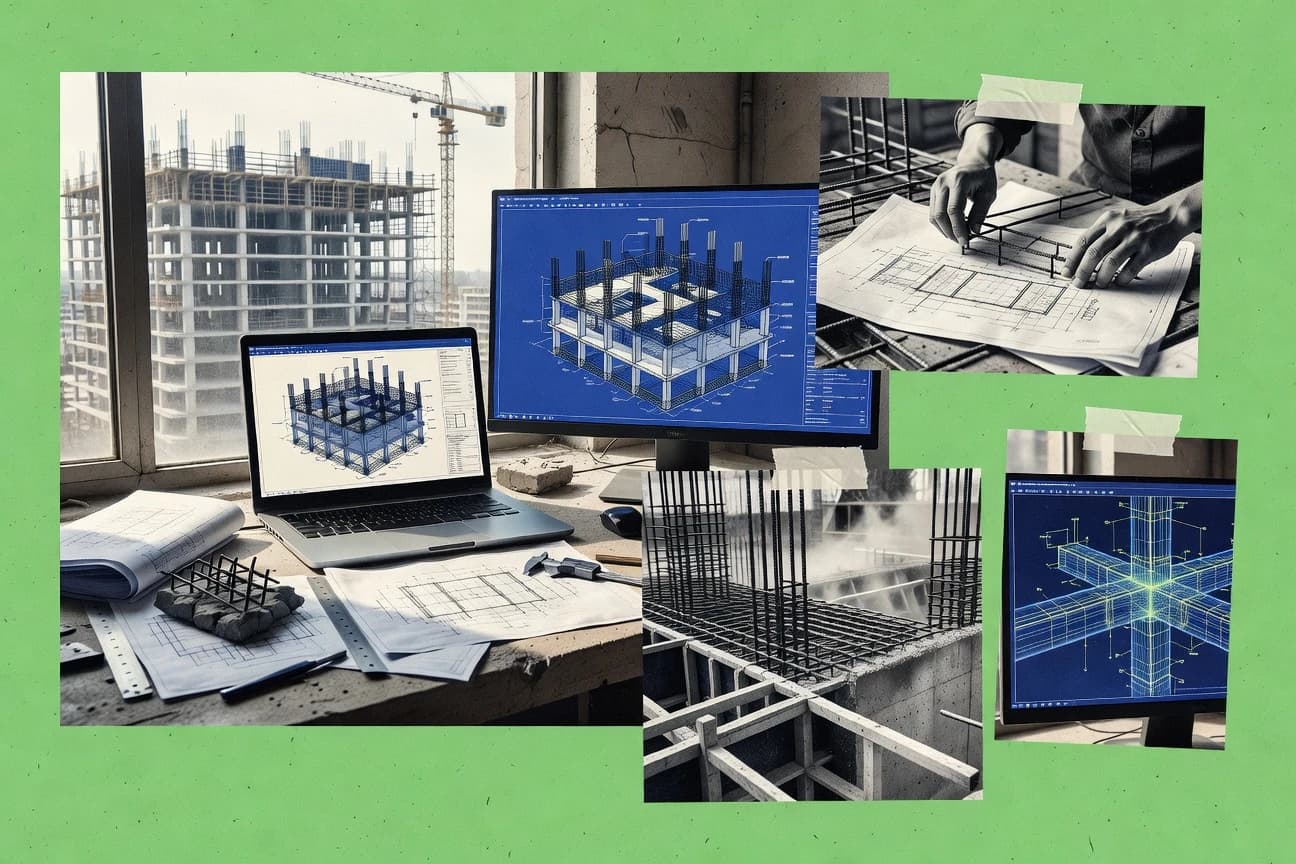
Construction InfrastructureTop 10 Best Reinforced Concrete Design Software of 2026
Ranked roundup of 10 reinforced concrete design software tools, with criteria and tradeoffs for engineers using SCIA Engineer, Tekla, StructurePoint.

How we ranked these tools
Core product claims cross-referenced against official documentation, changelogs, and independent technical reviews.
Analyzed video reviews and hundreds of written evaluations to capture real-world user experiences with each tool.
AI persona simulations modeled how different user types would experience each tool across common use cases and workflows.
Final rankings reviewed and approved by our editorial team with authority to override AI-generated scores based on domain expertise.
Score: Features 40% · Ease 30% · Value 30%
Gitnux may earn a commission through links on this page — this does not influence rankings. Editorial policy
SCIA Engineer is the best pick for RC teams that need analysis-to-detailing continuity to produce schedule-ready drawings, whereas StructurePoint fits when you want fast, consistent rebar detailing deliverables from structured inputs.
Editor’s top 3 picks
Three quick recommendations before you dive into the full comparison below — each one leads on a different dimension.
SCIA Engineer
Rebar detailing output tied to the same structural model so bar marking schedules match design checks.
Built for fits when RC teams need analysis-to-detailing continuity for schedule-ready drawings..
Tekla Structural Designer
Editor pickDirect regeneration of reinforcement results from updated analysis loading and member behavior inputs.
Built for fits when teams need fast RC regeneration with reinforcement schedules from analysis-driven inputs..
StructurePoint
Editor pickAutomated reinforcement detailing to bar marking schedules and marking views from the same configuration.
Built for fits when teams need fast, consistent RC rebar detailing deliverables from structured inputs..
Comparison Table
SCIA Engineer
enterpriseStructural analysis software with reinforced concrete design for buildings and civil works.
Rebar detailing output tied to the same structural model so bar marking schedules match design checks.
RC design projects use SCIA Engineer for load modeling, design checks, and production of reinforcement documentation in one continuous model. The workflow typically covers member-level analysis results feeding section and reinforcement verification, followed by detailing outputs such as bar schedules and marking plans. A key fit signal is the ability to keep geometry, material properties, and reinforcement parameters aligned across analysis, design checks, and documentation.
A tradeoff appears in large projects where detailing settings and code parameters must be managed carefully to avoid inconsistencies between analysis results and rebar layout outputs. SCIA Engineer fits situations where RC detailing output quality and traceability matter more than minimal modeling speed, such as competitive tender packages or multi-discipline coordination deliverables.
Teams also gain when they already structure projects around member-based design and recurring reinforcement templates, since the bar marking and schedule generation depend on repeatable configuration choices.
- +Single model supports RC analysis, design checks, and reinforcement schedules
- +Plastic hinge and nonlinear procedures enable more realistic RC capacity checks
- +Bar marking schedule outputs reduce manual transcription from design to drawings
- +Code-driven detailing parameters support repeatable member reinforcement layouts
- –Detailing output quality depends on disciplined configuration across project templates
- –Advanced RC scenarios can increase setup time before productive iterations
- –Large models may require careful performance tuning during reinforcement generation
- –Some collaboration workflows rely on model governance outside the core detailing features
Structural design engineers
Tender-ready RC reinforcement schedules
Fewer drafting errors, faster revisions
Seismic design specialists
Nonlinear capacity design verification
More defensible performance checks
Show 1 more scenario
Detailing drafters and BIM coordinators
Consistent reinforcement documentation
Traceable schedules and markings
Generates reinforcement documentation from member definitions to keep drawings aligned with calculated results.
Best for: Fits when RC teams need analysis-to-detailing continuity for schedule-ready drawings.
Tekla Structural Designer
enterpriseBuilding design software with reinforced concrete analysis and design.
Direct regeneration of reinforcement results from updated analysis loading and member behavior inputs.
Tekla Structural Designer is built for reinforced concrete design tasks where analysis results must be translated into enforceable design actions. The workflow typically starts from analysis loads, then applies code checks to sections and members, then produces reinforcement detailing outputs such as bar marking schedules. Configuration and automation are central because design checks and rebar quantities must track changes across multiple load cases and combinations. The integration depth is strongest when analysis and model geometry are maintained through Tekla workflows.
A notable tradeoff is that the reinforcement detailing outputs depend on the quality and completeness of the input structural model and design settings. Teams often get best results when model authors keep section definitions, material properties, and load case mapping consistent. Usage fits projects with recurring design iterations, where changes in loads or geometry require fast regeneration of reinforcement results and schedules.
- +Code-based RC design checks tied to member forces and section properties
- +Reinforcement layouts and bar marking schedules suitable for documentation workflows
- +Automation reduces repetitive re-checking across load combinations
- +Model-linked regeneration supports iterative design cycles
- –Output quality depends on analysis result mapping and consistent model setup
- –Automation requires careful configuration of design rules and scenario definitions
- –Some drafting-specific customization can be limited versus dedicated detailing tools
- –Large models may require performance tuning to maintain design throughput
Reinforced concrete design teams
Regenerate rebar schedules after load changes
Fewer manual recalculations and edits
Detailing coordinators
Standardize bar marking workflows
More consistent reinforcement documentation
Show 2 more scenarios
Structural engineers
Code-driven RC member design
Repeatable compliance-oriented checks
Applies code rules to members based on computed section and loading conditions.
Project managers
Control design scenario iterations
Tighter design iteration control
Manages design scenarios so changes propagate through design checks and outputs.
Best for: Fits when teams need fast RC regeneration with reinforcement schedules from analysis-driven inputs.
StructurePoint
vertical specialistSuite of reinforced concrete design tools for columns, slabs, and walls.
Automated reinforcement detailing to bar marking schedules and marking views from the same configuration.
StructurePoint centers on rebar detailing mechanics that map design decisions to reinforcement placement output, including bar marking schedules and drawings. The workflow ties reinforcement arrangements to geometry and rule sets, so updates can propagate when design parameters change. Deliverable generation favors production-oriented output rather than exploratory engineering modeling.
A key tradeoff is that the workflow expects RC detailing inputs to be structured in a way the detailing engine can consume. It fits best when a team needs consistent reinforcement production for typical RC member systems and recurring project templates.
- +Bar marking schedule generation tied to reinforcement layout updates
- +Repeatable detailing workflow reduces manual rework between design revisions
- +Drawings and schedules stay consistent with one reinforcement source
- +Automation-oriented rule handling for common RC detailing outcomes
- –Modeling flexibility is narrower than tools that prioritize deep nonlinear analysis
- –Advanced detailing workflows need careful project template configuration
- –Limited coverage for specialized research-grade material law modeling
- –Some complex reinforcement shapes may require more manual intervention
Structural detailing teams
Produce rebar schedules for typical RC frames
Fewer schedule mismatch errors
Engineering firms
Standardize reinforcement rules across projects
Consistent detailing across projects
Show 2 more scenarios
Project managers
Tighten revision turnaround cycles
Faster resubmittal packages
Detailing updates propagate into drawings and schedules to shorten coordination loops.
BIM coordination leads
Align reinforcement output with model geometry
Cleaner coordination with BIM
Geometry-driven reinforcement layout supports coordination with upstream structural definitions.
Best for: Fits when teams need fast, consistent RC rebar detailing deliverables from structured inputs.
Autodesk Robot Structural Analysis Professional
enterpriseStructural analysis and design software with reinforced concrete code checks.
Analysis-to-reinforcement automation that keeps design logic tightly coupled to calculation cases and internal member results.
Autodesk Robot Structural Analysis Professional is a reinforced concrete design workflow built around finite element modeling and automated member-by-member results for frames and slabs. The software provides section and reinforcement design automation that can generate rebar layouts, bar marking schedules, and common code checks without leaving the analysis environment.
It also supports nonlinear analysis workflows such as capacity-based pushover and plastic hinge modeling, which feeds more realistic seismic behavior into design decisions. For teams that need repeatable modeling patterns across many structures, Robot’s parametric generation and calculation case management reduce manual rework.
- +Automated RC reinforcement design driven by analysis results
- +Rebar detailing outputs include bar marking schedules and reports
- +Nonlinear analysis workflows support plastic hinge modeling
- +Parametric generation speeds consistent model setup across projects
- –Reinforcement detailing often requires manual review for constructability
- –Best results depend on upfront modeling conventions and load case discipline
- –Some RC joint and connection checks require add-on modules or extra setup
- –Large RC models can slow down when many combinations are active
Best for: Fits when engineering teams need analysis-linked RC design automation for frames and slab systems.
STAAD.Pro
enterpriseStructural analysis and design software with reinforced concrete design modules.
RC design checks run directly off the same finite element structural model used for stability and load path analysis, then produce detailing-ready reinforcement schedules.
STAAD.Pro performs reinforced concrete finite element analysis and capacity-oriented checks from a single model, then drives detailing outputs like rebar schedules. The workflow supports RC-specific members with code-based design checks, and it integrates with broader structural analysis for joint stiffness, load paths, and stability effects.
Automation is centered on parametric input generation through STAAD command scripting and batch run patterns for large project sets. Output can feed reinforcement detailing workflows, including bar marking style conventions and schedule-style reporting.
- +Command scripting enables repeatable RC analysis and design batch runs.
- +RC member design checks stay connected to the global structural model.
- +Rebar schedule style outputs support reinforcement detailing handoffs.
- +Iteration between structural analysis settings and RC checks is straightforward.
- –RC detailing depth depends heavily on correct member definition and releases.
- –Complex reinforcement schemes require careful verification of generated output.
- –Separation of analysis and detailing workflows adds coordination effort.
- –Automation is strongest with scripting, while GUI-only parametrization is limited.
Best for: Fits when teams need RC design checks tied to global analysis models and batch automation via scripting.
Graitec Advance Design
SMBStructural analysis and design software with reinforced concrete code checks.
Seismic-driven reinforcement detailing that generates confinement and stirrup requirements directly from structural design outputs and rebar parameters.
Graitec Advance Design targets reinforced concrete workflows with modeling, capacity checks, and reinforcement documentation built around structural design tasks. It supports seismic-oriented design practices such as confinement reinforcement and detailing driven by analysis results.
The software emphasizes automation around load combinations, section behavior checks, and rebar detailing output that feeds bar marking schedules. Integration is strongest when projects stay within Graitec’s ecosystem for analysis-to-design traceability and consistent reinforcing schedules.
- +Automates reinforcement schedules from design checks without manual re-keying
- +Seismic detailing workflows drive confinement and stirrup requirements from results
- +Produces consistent bar marking outputs tied to rebar design parameters
- +Project templates reduce variation across repeated RC beam and slab jobs
- –Rebar detailing customization needs more configuration than typical RC packages
- –Interoperability beyond the Graitec design chain can require extra data mapping
- –Complex detailing changes can be slower to propagate across linked drawings
- –Advanced concrete nonlinearity coverage depends on connected analysis modules
Best for: Fits when engineering teams need repeatable RC detailing and seismic-oriented reinforcement automation within a single design chain.
FEM-Design
SMBFEM-based structural design software with reinforced concrete design per Eurocode.
Integrated reinforcement detailing that turns structural analysis results into rebar schedules and bar markings for production drawings.
FEM-Design focuses on reinforced concrete design workflows that combine finite element analysis style results with practical RC detailing outputs. The core workflow covers element-based modeling and then drives concrete checks and reinforcement detailing for beams, slabs, columns, and walls.
It also supports seismic and ultimate limit state design settings, including interaction-based capacity checks for typical RC sections. Automation is strongest where analysis results flow into rebar detailing and bar marking formats used on drawings.
- +Detailing output ties directly to element design checks for RC components
- +Seismic design parameters and detailing options support ductile RC behavior
- +Rebar schedules and bar marking tools reduce manual translation errors
- +Design settings can be reused across projects to keep checks consistent
- –Model-to-detailing workflows require disciplined input setup to avoid mismatches
- –Some advanced component checks depend on specific modeling assumptions
- –Large models can feel slow during iterative reinforcement refinement
- –Automation depth varies by element type, which increases workflow branching
Best for: Fits when teams need analysis-driven RC detailing with consistent bar schedules for typical beams, slabs, columns, and walls.
SOFiSTiK
enterpriseFinite element software for structural analysis and reinforced concrete design.
SOFiSTiK section design and detailing chains keep reinforcement checks synchronized with modeled geometry.
SOFiSTiK is reinforced concrete design software that pairs structural analysis engines with detailed concrete and reinforcement workflows. It supports parametric modeling and calculation chains that connect section design, internal force checks, and detailing outputs for consistent documentation.
The toolset targets end-to-end RC work, including design for shear, anchorage, and reinforcement placement, rather than only analysis. Its strength is tighter workflow control from analysis results through rebar detailing and schedules.
- +Integrated RC design workflow links analysis outputs to reinforcement checks
- +Parametric handling of sections supports repeatable redesign across load cases
- +Detailing outputs include actionable bar placement for rebar documentation
- +Nonlinear and seismic-capable analysis tools fit advanced RC assessment
- –Workflow depth can require more training than analysis-first tools
- –Rebar detailing configuration can become complex for atypical geometry
- –Automation hinges on model conventions that must be kept consistent
Best for: Fits when engineering teams need analysis-to-detailing continuity for RC buildings.
RISA-3D
SMBGeneral structural analysis and design software with concrete design.
Integrated reinforcement output is driven directly from member design checks inside the same analysis model, not through manual export-and-reconcile steps.
RISA-3D performs reinforced concrete structural analysis and design with integrated modeling, design checks, and drawing output for frame and wall systems. It supports concrete section and member design workflows that connect geometry, loads, and rebar requirements into one analysis-to-design loop.
The tool is used to produce reinforcement detailing deliverables such as bar schedules and member-specific reinforcement layouts tied to analysis results. Verification workflows rely on repeatable design check runs so changes to loading or framing propagate into updated reinforcement output.
- +Tight analysis-to-reinforcement loop links design checks to the structural model
- +Rebar schedules and member reinforcement output reduce manual consolidation work
- +Batch design runs support iterative cycles across many concrete members
- +Concrete-focused design workflow fits frame and wall reinforcement detailing
- –Concrete design depth can feel narrower than specialty rebar detailing packages
- –Automation relies more on repeat runs than on a documented integration API
- –Complex detailing cases may require extra modeling discipline to avoid mismatches
- –Less suited for highly custom reinforcement logic beyond standard design checks
Best for: Fits when teams need integrated RC design output tied to a single analysis model for repeatable delivery.
Allplan
enterpriseBIM platform with reinforced concrete detailing and rebar modeling.
Bar marking schedule generation that tracks model-based reinforcement changes and keeps documentation aligned through revisions.
Allplan targets reinforced concrete design and detailing teams that need coordinated structural modeling and drawing production in one workflow. Reinforced concrete capabilities cover rebar detailing outputs such as bar marking schedule tables and drawing views tied to model elements.
The tool supports structural analysis workflows that feed detailing decisions, including checks linked to structural behavior like cracking and shear transfer logic. Governance is handled through project administration and collaborative production controls, which matters when multiple disciplines share a model.
- +Rebar detailing outputs link to model elements for consistent schedules
- +Bar marking schedule generation supports plant-ready reinforcement documentation
- +Structural analysis results can be carried into detailing-driven design review
- +Project administration supports multi-user coordination and production control
- –Setup of modeling standards and detailing conventions requires upfront configuration
- –Automation and API coverage is narrower than some engineering toolchains
- –Complex projects can demand more user training to maintain model discipline
- –Interoperability for specialized reinforcement workflows depends on exchange settings
Best for: Fits when structural teams need coordinated RC modeling, rebar schedules, and production drawings with shared project governance.
Conclusion
After evaluating 10 construction infrastructure, SCIA Engineer stands out as our overall top pick — it scored highest across our combined criteria of features, ease of use, and value, which is why it sits at #1 in the rankings above.
Use the comparison table and detailed reviews above to validate the fit against your own requirements before committing to a tool.
How to Choose the Right reinforced concrete design software
Reinforced concrete design software typically connects finite element analysis member results to RC design checks, then converts those decisions into reinforcement layouts, bar marking schedules, and production-ready documentation. This buyer’s guide covers SCIA Engineer, Tekla Structural Designer, and StructurePoint, plus Autodesk Robot Structural Analysis Professional, STAAD.Pro, Graitec Advance Design, FEM-Design, SOFiSTiK, RISA-3D, and Allplan.
The strongest category differentiator is integration depth between analysis outputs and reinforcement detailing, because bar marking schedules must stay consistent when load cases, member behavior inputs, or geometry change. Tools like SCIA Engineer and Tekla Structural Designer focus on keeping reinforcement regeneration tied to the same structural model workflow, while others place more emphasis on detailing output generation from configured structural design inputs.
Reinforced concrete design software for analysis-to-reinforcement detailing workflows
Reinforced concrete design software automates the conversion of structural analysis results into RC reinforcement design checks for elements like beams, slabs, columns, and walls, then generates reinforcement schedules and bar markings. SCIA Engineer provides a single model workflow where reinforcement detailing is tied to the same structural model so bar marking schedules match design checks.
Tekla Structural Designer also emphasizes analysis-driven regeneration by updating reinforcement results directly from changed analysis loading and member behavior inputs. Across the category, the practical buying question is how each tool handles the chain from member forces and section properties to reinforcement decisions and schedule outputs, and how much manual review is required when constructability constraints and detailing conventions come into play.
Analysis-to-detailing integration controls and automation coverage
Reinforced concrete design software earns practical value when reinforcement design checks and reinforcement layouts stay synchronized, because bar marking schedules must track the same member behavior inputs used for design decisions. SCIA Engineer, Tekla Structural Designer, and StructurePoint all generate bar marking schedules from reinforcement outputs tied to the same workflow configuration, which reduces manual reconciliation between design checks and production drawings.
Single-workflow reinforcement regeneration for schedule consistency
SCIA Engineer keeps a single structural model connected to RC analysis, design checks, and reinforcement schedules so bar marking schedules match decisions. Tekla Structural Designer regenerates reinforcement results directly from updated analysis loading and member behavior inputs so reinforcement schedules track analysis changes without a separate reconcile step.
Bar marking schedule generation linked to reinforcement layout updates
StructurePoint automates reinforcement detailing to bar marking schedules and marking views from the same configuration. Allplan also generates bar marking schedule outputs that track model-based reinforcement changes through revisions to keep documentation aligned.
Command scripting and batch automation for global structural model runs
STAAD.Pro supports command scripting for repeatable RC analysis and design batch runs, then keeps RC member design checks connected to the global structural model. RISA-3D provides an integrated reinforcement output driven directly from member design checks inside the same analysis model, which reduces export-and-reconcile overhead.
Seismic-oriented reinforcement detailing chain with confinement and stirrups
Graitec Advance Design generates confinement and stirrup requirements from structural design outputs and rebar parameters in a seismic-driven detailing workflow. FEM-Design includes seismic design parameters and detailing options that support ductile RC behavior while producing rebar schedules and bar markings.
Section and geometry synchronization for parametric redesign across load cases
SOFiSTiK keeps reinforcement checks synchronized with modeled geometry through section design and detailing chains, with parametric section handling across load cases. SOFiSTiK also supports repeatable redesign when geometry or section selections change, which helps keep reinforcement decisions aligned.
Choosing reinforced concrete design software by integration chain and automation style
The first fork is whether reinforcement schedules should regenerate from the same structural model workflow with minimal reconciliation, or whether the workflow starts with configured design inputs that then drive detailing outputs. SCIA Engineer and RISA-3D prioritize an integrated analysis-to-reinforcement loop, while other tools emphasize the tooling around design-input-driven detailing automation.
Select the integration chain model to match schedule governance
If bar marking schedules must match the same member forces and design decisions, SCIA Engineer is built around a single model that supports RC analysis, design checks, and reinforcement schedules. If reinforcement results need to regenerate as analysis loading changes, Tekla Structural Designer updates reinforcement results directly from updated analysis inputs so schedules remain aligned.
Decide whether automation is configuration-driven detailing or analysis-first regeneration
For configuration-driven detailing where reinforcement detailing outputs link to bar marking schedules from the same configuration set, StructurePoint is designed to produce repeatable detailing deliverables. For analysis-first regeneration where reinforcement layouts update from updated analysis loading and member behavior inputs, Tekla Structural Designer provides that direct regeneration loop.
Match batch throughput needs to the scripting and run-repeatability style
If the project pipeline needs batch automation across many cases, STAAD.Pro supports command scripting for repeatable RC analysis and design batch runs. If member reinforcement output needs to stay tightly tied to the same analysis model without export reconciliation, RISA-3D drives integrated reinforcement output directly from member design checks.
Choose seismic detailing coverage depth when confinement and stirrup automation matter
For seismic workflows that generate confinement and stirrup requirements directly from design outputs and rebar parameters, Graitec Advance Design focuses on seismic-driven reinforcement detailing automation. For teams that need seismic design parameters and detailing options alongside consistent rebar schedule generation, FEM-Design supports ductile RC detailing options.
Plan for geometry complexity and detailing configuration effort
If atypical geometry requires more training and reinforcement detailing configuration becomes complex, SOFiSTiK warns that workflow depth can require more training than analysis-first tools. If projects need upfront modeling standards to keep documentation aligned, Allplan highlights that setup of modeling standards and detailing conventions requires upfront configuration.
Teams that benefit from analysis-to-reinforcement synchronization
RC design teams benefit most when reinforcement schedules, bar marking schedules, and design check outputs update from the same chain so schedule-ready drawings match the underlying member decisions. This guide prioritizes workflows where output regeneration reduces manual consolidation work across revisions.
RC teams that manage revision cycles across analysis cases and production schedules
SCIA Engineer supports a single model workflow where reinforcement detailing is tied to the same structural model so bar marking schedules match design checks across revisions.
Firms that regenerate reinforcement directly from updated analysis loading and member behavior inputs
Tekla Structural Designer regenerates reinforcement results from changed analysis loading and member behavior inputs so reinforcement layouts and bar marking schedules follow analysis updates.
Engineering groups running many repetitive RC design checks via scripted batch execution
STAAD.Pro uses command scripting for repeatable RC analysis and design batch runs, and it keeps RC member design checks connected to the global structural model.
Seismic-focused detailing practices that need confinement and stirrup automation from design outputs
Graitec Advance Design drives confinement and stirrup requirements from structural design outputs and rebar parameters inside a seismic-oriented detailing chain.
Design teams that need documentation governance across shared modeling standards
Allplan keeps bar marking schedule generation aligned through revisions based on model-based reinforcement changes, but it requires upfront configuration of modeling standards and detailing conventions.
Common failure points in RC design-to-detailing workflows
Many RC projects fail on schedule consistency when model setup and design rule configuration are not disciplined, because reinforcement outputs then drift from the analysis inputs the team expects. Even tools with tight integration can produce outputs that demand manual review when modeling conventions and load case discipline are inconsistent.
Assuming reinforcement schedules will remain consistent without configuration discipline
SCIA Engineer depends on disciplined configuration across project templates, and Tekla Structural Designer output quality depends on analysis result mapping and consistent model setup.
Skipping manual constructability review for generated reinforcement layouts
Autodesk Robot Structural Analysis Professional produces automated RC reinforcement design and bar marking schedule outputs, but reinforcement detailing often requires manual review for constructability.
Feeding incomplete or inconsistent member definitions into batch RC design checks
STAAD.Pro warns that RC detailing depth depends heavily on correct member definition and releases, and complex reinforcement schemes require careful verification of generated output.
Treating seismic detailing automation as independent of rebar parameter setup
Graitec Advance Design drives confinement and stirrup requirements from rebar parameters, so incorrect rebar parameters can propagate through the seismic detailing chain.
Underestimating the configuration effort for atypical geometry or detailing conventions
SOFiSTiK notes that rebar detailing configuration can become complex for atypical geometry, and Allplan requires upfront configuration of modeling standards and detailing conventions to avoid documentation drift.
How We Selected and Ranked These Tools
We evaluated how each product couples analysis member results to RC design checks and then converts those decisions into reinforcement layouts and bar marking schedules, because schedule consistency across revisions is the category’s hardest requirement. Features received 40% weight by measuring whether the tool delivers integrated reinforcement output, reinforcement regeneration from updated analysis inputs, and automation for bar marking schedule creation without export-and-reconcile steps.
Ease and value each received 30% weight by comparing how much disciplined setup is needed before output quality stabilizes, including configuration burden and mapping sensitivity. SCIA Engineer ranked highest because a single model supports RC analysis, design checks, and reinforcement schedules together, which keeps bar marking schedules aligned with design checks, and because plastic hinge and nonlinear procedures enable more realistic RC capacity checks before detailing output is generated.
Frequently Asked Questions About reinforced concrete design software
How do SCIA Engineer and Tekla Structural Designer keep reinforcement schedules aligned with analysis updates?
Which tools generate bar marking schedules from a single configuration instead of an export-and-reconcile step?
When teams need nonlinear behavior for RC design, which software options provide the calculation chain for that workflow?
What breaks if a workflow changes load cases but detailing is generated from a separate, static design dataset?
How do Robot Structural Analysis Professional and FEM-Design differ in where detailing automation runs?
Which products focus on throughput for RC detailing deliverables using structured inputs?
How does SOFiSTiK connect section design checks to reinforcement placement and documentation outputs?
Which toolchain supports seismic-oriented reinforcement detailing like confinement requirements derived from analysis outputs?
When multiple disciplines share one model, what admin controls and production governance features matter most in reinforced concrete detailing?
How do SCIA Engineer and Allplan handle traceability between member design results and drawing-ready documentation?
Tools reviewed
Primary sources checked during evaluation.
Referenced in the comparison table and product reviews above.
- Construction InfrastructureTop 10 Best Design Product Software of 2026
- Construction InfrastructureTop 10 Best Truss Design Software of 2026
- Construction InfrastructureTop 10 Best Electrical Cabinet Design Software of 2026
- Construction InfrastructureTop 10 Best Pile Cap Design Software of 2026
- Construction InfrastructureTop 10 Best Construction Drawing Software of 2026
Keep exploring
Comparing two specific tools?
Software Alternatives
See head-to-head software comparisons with feature breakdowns, pricing, and our recommendation for each use case.
Explore software alternatives→In this category
Construction Infrastructure alternatives
See side-by-side comparisons of construction infrastructure tools and pick the right one for your stack.
Compare construction infrastructure tools→