
GITNUXSOFTWARE ADVICE
Technology Digital MediaTop 10 Best Photo Enhancement Software of 2026
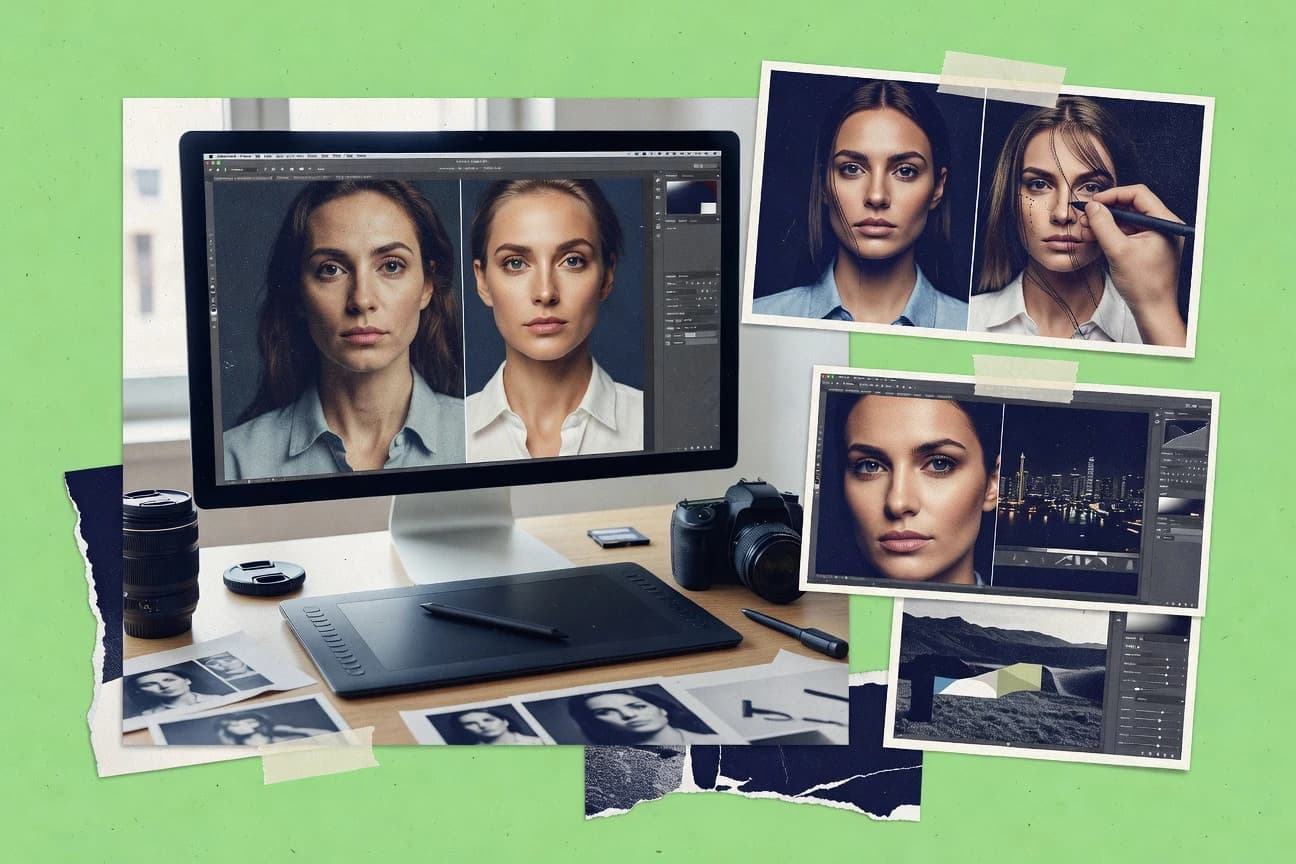
Ranked top photo enhancement software by editing features and image quality, with side-by-side notes on GIMP, Photoshop, Photopea for photographers.

How we ranked these tools
Core product claims cross-referenced against official documentation, changelogs, and independent technical reviews.
Analyzed video reviews and hundreds of written evaluations to capture real-world user experiences with each tool.
AI persona simulations modeled how different user types would experience each tool across common use cases and workflows.
Final rankings reviewed and approved by our editorial team with authority to override AI-generated scores based on domain expertise.
Score: Features 40% · Ease 30% · Value 30%
Gitnux may earn a commission through links on this page — this does not influence rankings. Editorial policy
GIMP is the best fit if you want precise, layer-mask driven retouching and customizable enhancement filters without relying on a single vendor, whereas Adobe Photoshop is the stronger choice when your photo enhancement needs deep RAW tuning and repeatable automation for production edits.
Editor’s top 3 picks
Three quick recommendations before you dive into the full comparison below — each one leads on a different dimension.
GIMP
Layer masks combine with non-destructive editing so localized retouching stays adjustable throughout the session.
Built for fits when photographers need layer-mask driven retouching and customizable enhancement filters..
Adobe Photoshop
Editor pickContent-Aware Fill with multi-step selection refinement supports realistic object removal and background reconstruction for enhancement work.
Built for fits when photo enhancement requires deep layered control, RAW tuning, and repeatable automation for production edits..
Photopea
Editor pickEditable PSD layer support inside a browser editor, including masks and blending workflows.
Built for fits when raster images already exist and layered touch-ups must finish quickly in a browser..
Comparison Table
GIMP
SMBOpen-source raster editor with curves, levels, and plugin enhancement.
Layer masks combine with non-destructive editing so localized retouching stays adjustable throughout the session.
GIMP’s editing model is built around layers, alpha channels, and layer masks, which supports localized corrections and repeatable refinement over a single working file. The tool includes histogram-based adjustments and channel-level control, plus plugin architecture for adding denoising, sharpening, or lens-specific correction filters. Batch processing helps apply the same pipeline steps across many images, which suits production work that still needs occasional manual polish.
A key tradeoff is that GIMP does not provide a guided RAW development workflow comparable to RAW-focused editors, so users often spend more time tuning demosaicing and exposure settings indirectly through preprocessing and filters. GIMP is a strong fit when enhancement needs include compositing tasks such as subject cutouts, selective background refinement, or mask-driven skin retouching in a project-based workflow.
- +Layer masks enable precise, localized correction without painting over changes
- +Extensible plugin ecosystem adds specialty enhancement filters
- +Channel-level control supports custom color and contrast work
- +Batch mode helps apply repeatable edits across folders
- –RAW workflow requires more manual setup than dedicated RAW converters
- –Automation is less guided than purpose-built photo editors
- –Some quality gains depend on installing and managing add-ons
- –Interface learning curve is higher than simplified photo tools
Wedding editors
Standardize edits across mixed lighting sets
More consistent galleries with less rework
Portrait photographers
Selective skin retouching and cleanup
Cleaner portraits with controlled artifacts
Show 2 more scenarios
Product photo teams
Perspective correction and background refinement
Faster production for catalog images
Layer-based composites speed up geometry fixes while keeping reusable backgrounds and overlays.
Fine art print makers
Custom color grading for print output
Print-ready consistency across batches
Histogram and channel controls support precise tonal shaping before format export.
Best for: Fits when photographers need layer-mask driven retouching and customizable enhancement filters.
Adobe Photoshop
enterpriseIndustry-standard raster image editor with AI-driven enhancement tools.
Content-Aware Fill with multi-step selection refinement supports realistic object removal and background reconstruction for enhancement work.
Photoshop is a top choice for photo enhancement because its layer stack enables local contrast adjustment, retouching, and color grading without flattening. RAW files can be processed through the built-in RAW converter with controllable demosaicing, noise reduction, and tone mapping before further edits. Dedicated workflows for perspective correction and chromatic aberration removal reduce time spent on common lens artifacts, especially for architectural and handheld shots. GPU acceleration supports interactive performance during zoomed edits and many filter operations.
The main tradeoff is that complex documents can become slow to manage when projects mix many adjustment layers, masks, and smart objects. Photoshop also requires skill to maintain consistency across batch work because enhancement intent often lives in custom layer setups rather than a single one-click profile. It is a strong fit for editorial retouching and composite-heavy enhancement, while photographers doing simple one-click improvements may find the workflow heavier than dedicated editors.
- +Layer-based non-destructive enhancement with precise masks and adjustment layers
- +RAW development controls for tone, color, and noise management
- +Strong color management with ICC profile embedding during export
- +Extensible automation via scripting and plugin integration
- –Batch enhancement often needs custom layer templates for consistency
- –Complex layer stacks can slow navigation and increase file bloat
- –High capability increases learning curve for consistent results
- –Automation coverage depends on scriptable steps and plugin availability
Wedding photographers
Deliver consistent retouching across large galleries
Faster, uniform photo delivery
Portrait retouchers
Refine composites and skin tones precisely
More controllable retouching
Show 2 more scenarios
Architectural photographers
Fix perspective and lens artifacts
Cleaner architectural lines
Perspective correction and chromatic aberration tools improve geometry and edge color on building shots.
Studio production teams
Automate enhancement steps across assets
Higher throughput editing
Scripting and plugin-based filters help standardize enhancements across multi-file workflows.
Best for: Fits when photo enhancement requires deep layered control, RAW tuning, and repeatable automation for production edits.
Photopea
SMBBrowser-based raster editor with layer-based enhancement toolset.
Editable PSD layer support inside a browser editor, including masks and blending workflows.
Photopea is a browser editor that preserves layer structure when working with PSD files, which lowers friction for photographers who already organize edits in layers. It provides blending modes, layer masks, and selection tools that enable local contrast adjustments and clean compositing without leaving the browser. Export controls include output formats and image resizing options that help finish images for web delivery.
A tradeoff is limited automation depth compared with desktop DAM or RAW converters, since it lacks a full RAW pipeline and guided demosaicing workflows. Photopea fits best when images are already processed to raster form and the remaining work is cleanup, masking, and presentation exports for galleries or social posts.
- +PSD import keeps editable layers for iterative retouching
- +Layer masks and blending modes support precise local edits
- +Selection and transform tools enable fast composite cleanup
- +Export and resizing options cover common web-ready formats
- –No true RAW converter workflow or sensor-level processing
- –Batch automation is limited to manual repetition and basic workflows
- –Advanced noise reduction tools are less specialized than dedicated editors
- –Complex projects can feel slower without desktop compute
Freelance photographers
Quick PSD-based retouching in browser
Faster client iteration cycles
Photo editors
Batch-ready web exports
More consistent presentation files
Show 1 more scenario
Agency production teams
Mask-based cleanup for composites
Cleaner composite deliverables
Use layer masks and selections to fix edges and remove distractions across layered comps.
Best for: Fits when raster images already exist and layered touch-ups must finish quickly in a browser.
ACDSee Photo Studio
SMBDigital asset manager with RAW processing and layered enhancement tools.
Catalog-linked batch editing that keeps selections, edits, and exports synchronized across many files.
ACDSee Photo Studio combines a photo editor with a library workflow for sorting, adjusting, and exporting large numbers of images. The editing stack emphasizes fast batch operations, practical local fixes, and RAW development controls that map to common correction needs like exposure, color, and lens-related adjustments.
It also supports layer-based editing for selective refinement and includes batch-friendly output controls aimed at production-style delivery. Across these areas, the differentiator is how consistently the app keeps selection, edits, and exports linked to the same catalog view.
- +Batch processing runs on catalog selections without breaking workflow context
- +Layer-based editing supports targeted fixes without overwriting the base
- +RAW adjustments cover exposure, color, and optics-style corrections in one module
- +Export controls support consistent output across multiple images
- –Some advanced retouching workflows feel less granular than dedicated editors
- –Tool access depth requires learning which view controls which edits
- –Power-user automation depends more on batching than on programmable pipelines
- –Tethered capture workflows are limited compared with pro capture apps
Best for: Fits when photographers need a catalog-driven editor for batch improvements and selective, layer-based touchups.
Pixlr
SMBBrowser photo editor with adjustment tools and AI enhancement features.
Layer masks inside the browser editor for targeted retouching without leaving the editing session.
Pixlr provides browser-based photo editing with adjustable effects and retouching aimed at fast visual improvements. The editor supports layers and masks for non-destructive adjustments, plus batch-friendly workflows for applying consistent looks across multiple images.
Tooling includes color and exposure adjustments and transform tools for perspective and cropping, with output options for common publishing formats. Pixlr is distinct in how quickly it moves from import to export inside a web workflow without installing a desktop app.
- +Layer-based editing with masking supports non-destructive refinements
- +Quick browser workflow reduces friction between edits and exports
- +Transform and crop tools handle perspective corrections without plugins
- +Color and exposure adjustments are accessible and easy to iterate
- –RAW converter controls are limited compared with dedicated RAW editors
- –Advanced RAW pipeline features like demosaicing depth are not exposed
- –High-end retouch workflows can feel shallow without deeper retouch layers
- –Batch consistency depends on manual settings review per export
Best for: Fits when photographers need quick web edits, layered masking, and publish-ready exports without desktop setup.
Topaz Photo AI
vertical specialistAutonomous AI tool for denoising, sharpening, and upscaling images.
Photo AI’s one-pass AI enhancement stack combines denoising, sharpening, and upscaling in a single workflow.
Topaz Photo AI focuses on automated enhancement driven by AI models, with toggles for denoising, sharpening, and super-resolution. It can run as a standalone editor for single images and batch-style workflows for sets of similar files.
The output pipeline emphasizes GPU-accelerated processing to reduce iteration time during tuning. For photographers who want repeatable results on large photo libraries, it supplies fewer manual controls than raw editors while still covering the core image-quality tasks.
- +AI-based denoising and sharpening produce consistent results across large batches
- +GPU acceleration improves iteration speed when testing enhancement strength
- +Super-resolution targets detail upscaling without requiring model-specific workflows
- +Standalone batch processing supports practical throughput for photo sets
- –Limited manual control compared with full-featured editors for artifact recovery
- –Automation can blur delicate textures when enhancement is pushed too far
Best for: Fits when photographers need repeatable AI enhancement for batches without deep raw-tool tuning.
Capture One
enterpriseTethered shooting and RAW enhancement for studio and fashion workflows.
Session-based tethering with live parameter updates during capture for controlled studio throughput.
Capture One focuses on RAW conversion and color management with a workflow built around tethered capture and precise image adjustments. Its editing model supports non-destructive parametric controls, calibrated ICC handling, and detailed lens and chromatic corrections.
Batch processing, catalog-driven organization, and session-based asset handling support high-throughput production work. The tool also supports GPU acceleration and plugin-style extensibility for specialized needs.
- +Color workflow and ICC embedding align with predictable print and proofing pipelines
- +Tethered capture keeps adjustments responsive during studio sessions
- +Layered non-destructive controls support controlled local edits without destructive resets
- +Batch styles and export presets reduce repeat work across large shoots
- –Asset catalog workflows add overhead compared with simpler editors
- –Some advanced effects require additional setup and careful order of operations
Best for: Fits when photographers need repeatable RAW conversion, color consistency, and efficient tethered sessions.
ON1 Photo RAW
SMBAll-in-one RAW editor with layers, effects, and AI noise reduction.
Layer-based editing inside the raw workflow, so mask-driven changes remain editable through export.
ON1 Photo RAW targets photographers who want a single app for raw conversion, high-detail enhancement, and organized editing in one workflow. The software provides non-destructive editing with layer masks, local adjustment tools, and color and tone controls that stay editable after export.
Image improvement tools include sharpening, noise reduction, lens correction, and chromatic aberration fixes, with options to tune results for skin tones and fine texture. Batch processing supports consistent enhancement across large libraries with saved edits and preset workflows.
- +Non-destructive layer masking supports precise local edits
- +Raw conversion and enhancement tools stay in one editor workspace
- +Batch processing applies consistent edits across many files
- +Lens correction and chromatic aberration removal reduce common optical artifacts
- –Large projects can feel slower when using many history steps
- –Advanced control depth requires learning studio-style panel workflows
Best for: Fits when photographers need repeatable raw enhancement and local masks without switching apps.
Fotor
SMBWeb and mobile editor with AI enhancement, retouching, and HDR tools.
Preset look matching with tweakable sliders inside the same editor for rapid style consistency across batches.
Fotor performs one-click style photo enhancement and manual adjustments through a web editor. It provides batch processing for common fixes like exposure, color temperature, and sharpening, plus a range of preset looks for fast output.
The editor focuses on non-destructive adjustments and export-friendly workflows rather than deep RAW pipeline control. Templates and media tools share the same workspace, which can speed review-to-export steps for social and marketing images.
- +Preset-based enhancement with adjustable sliders for fast iteration
- +Batch workflows for consistent exposure and color across multiple images
- +Export pipeline supports common web and social sharing formats
- +Non-destructive editing keeps the original image available for rework
- –Limited RAW converter depth compared with desktop RAW editors
- –Tone mapping control is basic for difficult dynamic range scenes
- –GPU-accelerated throughput is not documented for large batches
- –Layer masking and frequency separation tools are not geared for advanced retouching
Best for: Fits when quick enhancement, consistent batch edits, and preset looks matter more than RAW depth.
RawTherapee
SMBCross-platform RAW processor with advanced demosaicing and tone tools.
Extensive RAW pipeline parameter controls with detailed demosaicing and artifact-focused processing in one converter workflow.
RawTherapee targets photographers who want RAW conversion and detailed image processing controls without a subscription workflow. It supports a RAW-centric editing model with non-destructive parameter history, extensive demosaicing and noise reduction controls, and per-image color management via ICC handling.
Batch processing enables queued conversion and settings reuse, while output export options cover common formats and metadata preservation for downstream workflows. Compared with lighter editors, it trades guided simplicity for fine-grained control over tonal mapping, local contrast, and lens correction behavior.
- +RAW conversion exposes granular tone and local contrast controls
- +Non-destructive editing keeps parameter changes organized by processing steps
- +Batch processing reuses settings for consistent multi-image output
- +Color management supports ICC profile workflows and metadata preservation
- –Interface has a steep learning curve for fine controls
- –GPU acceleration is limited compared with GPU-first editors
- –Some advanced workflows require manual parameter tuning per image
- –Tethered capture support is not a primary workflow focus
Best for: Fits when consistent RAW conversions need deep parameter control and batch repeatability for large sets.
Conclusion
After evaluating 10 technology digital media, GIMP stands out as our overall top pick — it scored highest across our combined criteria of features, ease of use, and value, which is why it sits at #1 in the rankings above.
Use the comparison table and detailed reviews above to validate the fit against your own requirements before committing to a tool.
How to Choose the Right photo enhancement software
Photo enhancement software covers the workflow from RAW conversion through noise reduction, sharpening, local contrast adjustment, and exports back to common raster formats. This guide covers GIMP, Adobe Photoshop, Photopea, ACDSee Photo Studio, Pixlr, Topaz Photo AI, Capture One, ON1 Photo RAW, Fotor, and RawTherapee.
The tools land on different ends of the same practical trade space. GIMP and ON1 Photo RAW emphasize layer masking for adjustable, localized retouching, while Adobe Photoshop concentrates on deep layered control and production-style batch consistency through templates. Topaz Photo AI shifts enhancement into an AI-driven one-pass stack designed for batch iteration speed with GPU acceleration.
Photo enhancement software for RAW conversion, local retouching, and batch consistency
Photo enhancement software takes captured images and applies processing for cleaner detail, corrected color, and more controlled contrast. Core differences show up in how tools handle RAW conversion depth and how they keep edits non-destructive with layer masks or parameter steps.
GIMP supports layer-mask driven retouching and extends enhancement capability through an extensible plugin ecosystem, which keeps localized changes adjustable across the session. Capture One centers on session-based tethering and repeatable RAW conversion with color workflow controls, including ICC embedding that fits proofing and print pipelines.
Editing control depth for RAW conversion, local retouching, and batch output
Photo enhancement quality depends on whether a tool keeps RAW conversion settings organized while still allowing localized correction without repainting base pixels. The strongest workflows combine a repeatable RAW stage with non-destructive local edits that can be masked and reordered.
Batch work adds a second constraint. The best tools preserve edit intent across many images using catalog-aware selection context or templates that keep masks, parameter choices, and exports consistent.
Layer-mask non-destructive retouching across enhancement passes
GIMP and ON1 Photo RAW keep layer-mask driven changes editable through export, so local adjustments remain adjustable after sharpening and noise reduction steps. Adobe Photoshop also delivers layered non-destructive control with precise masks and adjustment layers for production editing.
Production-grade RAW development controls and repeatability
RawTherapee provides extensive RAW pipeline parameter controls with detailed demosaicing and artifact-focused processing in one converter workflow. Capture One focuses on session-based RAW conversion with a color workflow that supports predictable ICC embedding for proofing and print.
Batch consistency without breaking editing context
ACDSee Photo Studio runs batch processing on catalog selections while keeping selections, edits, and exports synchronized across many files. Adobe Photoshop supports repeatable automation for production edits, but batch enhancement often needs custom layer templates to stay consistent.
AI one-pass enhancement for iteration speed on large sets
Topaz Photo AI combines AI denoising, sharpening, and upscaling in a single workflow to keep results consistent across large batches. GIMP and Capture One remain better fits when enhancements require deep manual control instead of one-pass behavior.
Web or lightweight layered editing for fast touch-ups
Photopea supports editable PSD layer workflows in a browser editor, including masks and blending modes for quick layered touch-ups. Pixlr also offers layer masks inside the browser editor but exposes limited RAW converter controls compared with dedicated RAW editors.
RAW workspace integration to avoid app switching
ON1 Photo RAW keeps raw conversion and enhancement tools inside one workspace while still supporting non-destructive layer masking. ACDSee Photo Studio uses layer-based editing in its catalog workflow, which can reduce context switching during batch improvements.
Choose by workflow shape: manual layered control, RAW parameter depth, or batch-driven automation
The first decision should be workflow philosophy. Tools like GIMP and Adobe Photoshop center on a layered editor mindset where masks and adjustment ordering drive outcome, while Capture One and RawTherapee center on RAW conversion parameter control that later edits build on.
The second decision should be scale handling. Catalog-driven selection context favors ACDSee Photo Studio for many-image improvements, while AI one-pass enhancement favors Topaz Photo AI for batch iteration speed when manual artifact recovery is less central.
Pick the editing model: layer editor or RAW converter-first
Choose GIMP or Adobe Photoshop when local retouching must stay adjustable through layer masks and adjustment layers across the session. Choose RawTherapee or Capture One when RAW conversion parameter depth and consistent development settings are the primary control surface.
Match batch control to how images are selected
Choose ACDSee Photo Studio when batch improvements must run on catalog selections while keeping export context synchronized with the selection set. Choose Adobe Photoshop when batch behavior can be templated through custom layer templates for consistent results.
Decide how much manual artifact recovery is required
Choose RawTherapee when fine-grained artifact-focused processing and demosaicing behavior matter enough to learn a steeper interface. Choose Topaz Photo AI when repeatable AI denoising and sharpening consistency across batches matters more than manual artifact recovery.
Fit tethered studio throughput or offline batch work
Choose Capture One when tethered capture and live parameter updates during the session affect production throughput. Choose ON1 Photo RAW when repeatable raw enhancement and local masking must remain inside a single editor workspace for export.
Optimize for delivery speed in constrained environments
Choose Photopea when layered edits must be finalized quickly in a browser and PSD layer workflows are already available. Choose Pixlr when web publishing speed matters and browser layer masking is enough, even though RAW pipeline depth stays limited.
Who benefits from layer-centric editors, RAW conversion specialists, or AI batch enhancement
Different photo enhancement software choices map to different constraints in real editing work. Layer-mask centric tools benefit retouchers who rely on adjustable local corrections, while RAW conversion specialists benefit photographers who depend on repeatable development settings for color and detail.
Batch and studio workflows benefit from tools that preserve context during mass edits or during tethered capture, while web editors benefit quick-turn touch-ups that must stay close to the browser environment.
Wedding and portrait retouchers who refine details with masks
GIMP and ON1 Photo RAW keep layer-mask driven changes adjustable through export, which supports iterative local refinements after sharpening and noise reduction passes.
Photographers building repeatable RAW development pipelines for print
Capture One focuses on session-based RAW conversion with ICC embedding that supports predictable print and proofing workflows, while RawTherapee offers granular RAW pipeline parameter control for consistent conversions.
Studio teams running tethered sessions and live look checks
Capture One supports tethered capture with live parameter updates so color and enhancement settings can be evaluated during the session rather than after the shoot.
Creators who need high-throughput enhancement with consistent AI output
Topaz Photo AI provides a one-pass AI enhancement stack that combines denoising, sharpening, and upscaling for repeatable batch iteration speed on large sets.
Teams doing quick layered edits without a full desktop RAW pipeline
Photopea and Pixlr provide browser-based layered workflows with masks, which reduces friction for quick touch-ups when sensor-level RAW pipeline controls are not the priority.
Common pitfalls that lead to poor enhancements or wasted batch time
Photo enhancement failures usually come from mismatched workflow expectations. A tool that excels at one stage, like a RAW converter or an AI enhancement stack, may not handle the next stage with the control depth required for delicate corrections.
Batch work adds another failure mode. If batch consistency depends on templates, catalog context, or manual repetition, choosing a tool without the matching mechanism can turn consistent output into a rework loop.
Assuming a browser editor provides the same RAW conversion depth as a dedicated converter
Photopea supports layered PSD workflows but does not provide a true RAW converter workflow with sensor-level processing. Pixlr also limits RAW converter controls compared with dedicated RAW editors.
Pushing one-pass AI enhancement when manual artifact recovery is required
Topaz Photo AI can blur delicate textures when enhancement strength is pushed too far, which reduces control over fine artifacts. RawTherapee and Capture One provide deeper parameter control paths when artifact recovery must be tuned rather than accepted.
Breaking batch consistency by relying on ad hoc layer stacks without templates or selection context
Adobe Photoshop can require custom layer templates for consistent batch enhancement, and complex layer stacks can slow navigation. ACDSee Photo Studio avoids this by running batch processing on catalog selections that keep context synchronized.
Creating non-destructive edits that cannot stay organized during growth in complex projects
ON1 Photo RAW can feel slower for large projects when many history steps accumulate, which can hinder iterative improvements. Adobe Photoshop also warns that complex layer stacks can increase file bloat and slow navigation.
How We Selected and Ranked These Tools
We evaluated GIMP, Adobe Photoshop, Photopea, ACDSee Photo Studio, Pixlr, Topaz Photo AI, Capture One, ON1 Photo RAW, Fotor, and RawTherapee using a weighting of 40% for feature control in RAW conversion and editing workflow, 30% for ease of use during iterative enhancement, and 30% for value in how quickly edits can reach consistent output. GIMP ranked highest because layer masks combined with non-destructive editing keep localized retouching adjustable throughout the session, and its extensible plugin ecosystem adds specialty enhancement filters beyond the default toolset.
Adobe Photoshop placed high by combining layered non-destructive control and RAW development controls, while ACDSee Photo Studio ranked strongly for catalog-linked batch editing that keeps selections, edits, and exports synchronized across many files. Topaz Photo AI separated itself through a one-pass AI enhancement stack with GPU acceleration for fast batch iteration, while RawTherapee ranked for deep RAW pipeline parameter control and non-destructive organization by processing steps.
Frequently Asked Questions About photo enhancement software
How do GIMP and Photoshop handle non-destructive local edits for photo enhancement?
Which tool is better for catalog-driven batch enhancement across many photos, ACDSee Photo Studio or ON1 Photo RAW?
When do tethered shooting workflows in Capture One matter for image quality and throughput?
What breaks if a photographer relies on Topaz Photo AI for batch results that require deep RAW pipeline control?
How does Photopea’s browser editing approach compare with Pixlr for layer masks and export workflows?
How do RawTherapee and Capture One differ in RAW converter controls for noise reduction and detail preservation?
Where does Pixlr fall short compared with Photoshop for complex object removal during enhancement?
What should a workflow require if security and admin controls are needed for team-managed editing?
How can teams migrate existing edits or layered documents when moving between tools like Photoshop and Photopea?
Which tool offers a more extensible editing workflow through plugin-style customization, Capture One or Photoshop?
Tools reviewed
Primary sources checked during evaluation.
Referenced in the comparison table and product reviews above.
- Technology Digital MediaTop 10 Best Audio Enhancement Software of 2026
- Technology Digital MediaTop 10 Best Photo-Editing Software of 2026
- Technology Digital MediaTop 10 Best Professional Photo Editor Software of 2026
- Technology Digital MediaTop 10 Best Photo Noise Reduction Software of 2026
- Technology Digital MediaTop 10 Best Photo Organizer Software of 2026
Keep exploring
Comparing two specific tools?
Software Alternatives
See head-to-head software comparisons with feature breakdowns, pricing, and our recommendation for each use case.
Explore software alternatives→In this category
Technology Digital Media alternatives
See side-by-side comparisons of technology digital media tools and pick the right one for your stack.
Compare technology digital media tools→