
GITNUXSOFTWARE ADVICE
Agriculture FarmingTop 10 Best Nursery Inventory Software of 2026
Ranked comparison of top nursery inventory software for growers, featuring Farmbrite, Growmaster, and Arborgold with clear strengths and tradeoffs.

How we ranked these tools
Core product claims cross-referenced against official documentation, changelogs, and independent technical reviews.
Analyzed video reviews and hundreds of written evaluations to capture real-world user experiences with each tool.
AI persona simulations modeled how different user types would experience each tool across common use cases and workflows.
Final rankings reviewed and approved by our editorial team with authority to override AI-generated scores based on domain expertise.
Score: Features 40% · Ease 30% · Value 30%
Gitnux may earn a commission through links on this page — this does not influence rankings. Editorial policy
Farmbrite is the best pick for nursery teams who need barcode-driven counts tied to locations and wholesale stage availability, while Growmaster is the better fit when you want stage-ready production inventory with batch and location traceability built in.
Editor’s top 3 picks
Three quick recommendations before you dive into the full comparison below — each one leads on a different dimension.
Farmbrite
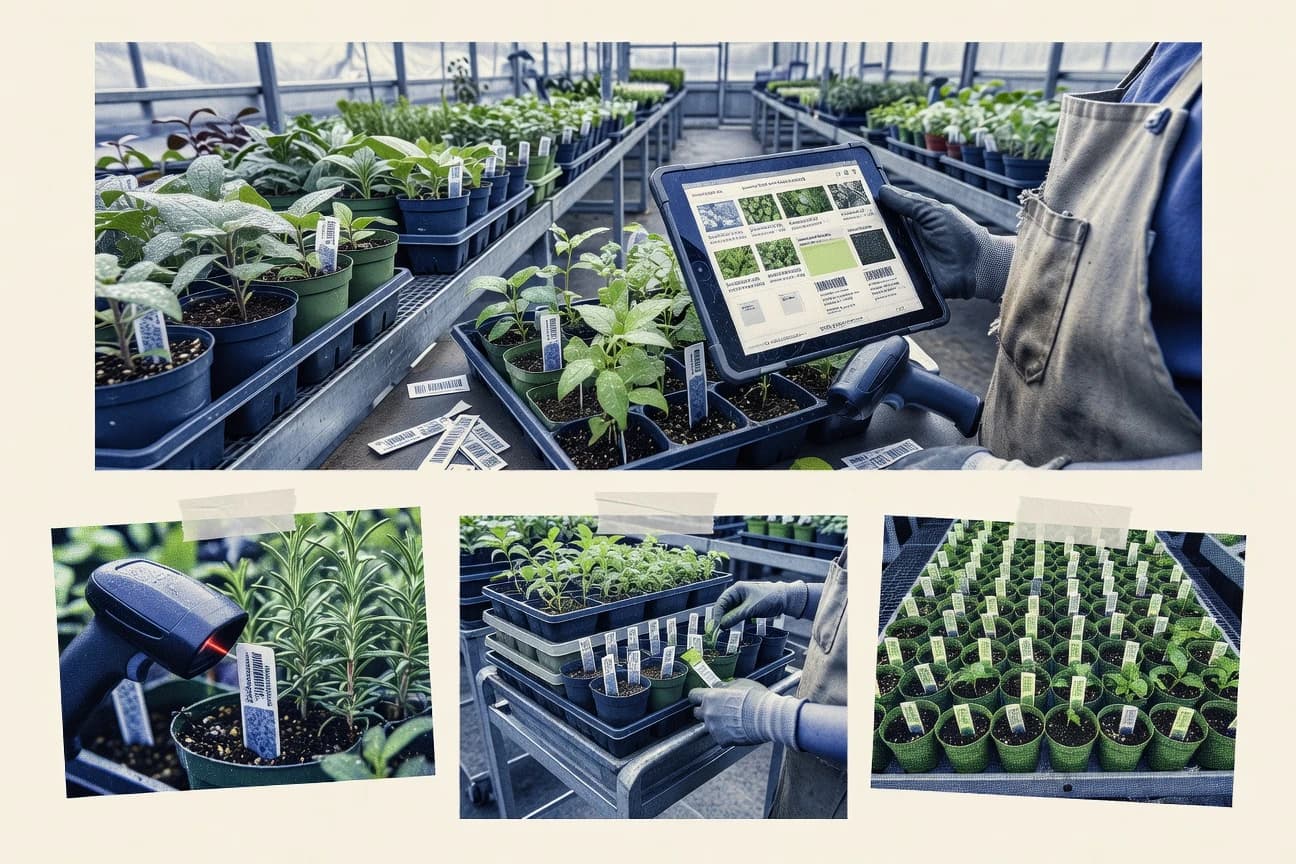
Barcode plant tags that drive mobile stock counts linked to bench and stage availability views.
Built for fits when nursery teams need barcode-driven counts and stage-specific wholesale availability tied to locations..
Growmaster
Editor pickGrow-stage availability status links plant location and batch identifiers to wholesale allocation decisions.
Built for fits when nurseries need stage-ready availability plus location and batch traceability..
Arborgold
Editor pickStage-driven availability that recalculates what can ship based on recorded grow-out status, not just current quantity.
Built for fits when nurseries need stage-aware availability and scan-based counts across zones..
Comparison Table
Farmbrite
SMBFarm management software with crop inventory tracking for diversified growers.
Barcode plant tags that drive mobile stock counts linked to bench and stage availability views.
Farmbrite centers on plant identity, location, and lifecycle status so nursery teams can reconcile what is on benches with what the sales floor can reserve. Inventory records can be grouped by cultivar and tracked through stage-oriented fields, including shrinkage and mortality inputs tied to counts. Barcode plant tags feed mobile stock counts, and receiving workflows reduce the gap between purchase intake and inventory availability.
A key tradeoff is that deeper automation and system integration depend on configuration and data alignment between Farmbrite and external order, accounting, or POS workflows. Farmbrite fits best for teams that run frequent stock counts and need stage-specific availability lists for wholesale customers, not for nurseries that want fully bespoke automation without administrator involvement.
- +Barcode plant tags connect mobile counts to plant records
- +Bench and location tracking improves reconcile accuracy
- +Lot and batch inventory handling supports input and stock traceability
- +Crop-cycle status fields produce stage-aware availability lists
- –Stage and location data require consistent setup to avoid bad availability
- –Integration depth depends on mapping of external order and inventory fields
- –Some governance tasks require admin time for ongoing taxonomy hygiene
- –Advanced reporting needs structured fields filled at data entry
Wholesale nursery operations
Stage-based availability for customer reservations
Fewer oversells and fewer adjustments
Receiving and inventory staff
PO receiving into tracked inventory
Faster inventory readiness
Show 2 more scenarios
Production managers
Grow-out tracking by bench location
Clearer production planning
Bench location and stage fields keep grow-out status aligned to physical space during cycles.
Accounting and reconciliation roles
Inventory reconciliation with adjustments
Cleaner month-end inventory
Shrinkage and mortality inputs tie to counts so reconciliation reflects real losses by cycle.
Best for: Fits when nursery teams need barcode-driven counts and stage-specific wholesale availability tied to locations.
Growmaster
vertical specialistGrowmaster provides nursery management software for plant production, inventory, sales, and purchasing.
Grow-stage availability status links plant location and batch identifiers to wholesale allocation decisions.
Growmaster fits nurseries that need plant-level traceability from seed or cutting intake through grow-out to sale readiness. The inventory workflow centers on stage status, location assignment, and per-plant identifiers so teams can answer what is available right now. Operations can handle reservation-to-allocation decisions by stage so wholesale orders map to real grow-out readiness.
A key tradeoff is that deep traceability depends on consistent identifier capture during receiving and movement events. Growmaster works best when staff can reliably scan barcode tags during purchase order receiving, bench moves, and mobile counts.
- +Stage-based availability ties sales readiness to grow-out status
- +Barcode scanning supports fast receiving, movements, and cycle counts
- +Lot and batch tracking helps trace propagation outcomes
- +Location and zone tracking supports bench-level inventory control
- –Full traceability relies on barcode discipline during daily receiving
- –Automation depth is limited without workflow configuration effort
- –Exports require mapping consistency when SKUs change across seasons
- –Mobile scanning workflows need role-based access planning
Wholesale sales ops teams
Confirm stage-ready inventory for allocations
Fewer backorders from mis-staged stock
Nursery production leads
Track movements through zones
Accurate availability by grow-out step
Show 2 more scenarios
Inventory controllers
Reconcile shrinkage and mortality
Cleaner inventory reconciliation
Capture mortality and shrink events to correct availability after scans and counts.
Procurement teams
Receive batches into inventory
Better propagation traceability
Track incoming lots and batches then link them to downstream grow-out records.
Best for: Fits when nurseries need stage-ready availability plus location and batch traceability.
Arborgold
vertical specialistArborgold combines nursery inventory, sales, purchasing, and operations management.
Stage-driven availability that recalculates what can ship based on recorded grow-out status, not just current quantity.
Arborgold organizes plant inventory around nurseries’ day-to-day units like varieties and production stages, then ties those records to bench and greenhouse zone tracking for operational visibility. The receiving and allocation workflows connect inventory updates to downstream reservations so availability lists reflect what staff can actually ship. Barcode scanning and mobile stock counts reduce time spent reconciling after deliveries and transfers. The strongest fit comes from teams that need stage-based availability driven by consistent status changes.
A tradeoff is that thorough setup is required to keep tags, locations, and stage statuses consistent across greenhouses. Staff adoption depends on disciplined scanning during move events and receiving. Arborgold is a better fit for operations that manage inventory through defined movements and grow-out statuses than for nurseries that treat inventory as loosely updated counts.
- +Stage-based availability updates from controlled status changes
- +Mobile scanning speeds inventory counts during bench walkthroughs
- +Location and zone tracking supports faster transfer verification
- +Allocation workflow reduces overselling from stale counts
- –Consistent tag and stage setup is required for clean traceability
- –Some reporting depends on how stage statuses are configured
- –Bulk data changes are less efficient without standardized conventions
- –Multi-location governance needs clear team scanning responsibilities
Wholesale nursery ops teams
Quote allocation against live availability
Fewer allocation mistakes
Greenhouse inventory managers
Mobile cycle counts by bench
Lower reconciliation time
Show 2 more scenarios
Propagation and production leads
Track movement through production stages
More reliable batch visibility
Propagation and transfer workflows update stage state to keep grow-out progress consistent.
Receiving coordinators
Receiving updates for traceable stock
Cleaner inbound traceability
Incoming lots are recorded so downstream availability reflects receipt timing and identity.
Best for: Fits when nurseries need stage-aware availability and scan-based counts across zones.
Plant Partner
vertical specialistNursery management software with inventory tracking and production planning.
Stage-aware availability derived from barcode counts and grow-out status fields, linked to lot or batch identifiers.
Plant Partner is a nursery inventory tracking system that focuses on plant SKU catalogs, bench-aware location entry, and lot or batch workflows tied to production cycles. It supports plant tag barcodes for scanning-based counts and uses stage and grow-out status fields to drive availability by stage.
Plant Partner also provides import and export paths for plant lists and stock snapshots using CSV files. Administrators get configuration controls for item attributes and user access boundaries, which reduces data drift during ongoing receiving and allocation.
- +Barcode-based mobile stock counts reduce recounting errors during shifts
- +Grow-out stage and status fields keep availability lists consistent
- +Lot or batch identifiers support traceability across production cycles
- +CSV inventory import and export helps migrate plant SKU catalogs
- –Advanced receiving and allocation workflows depend on disciplined setup in item fields
- –Mobile scanning coverage is limited to count flows instead of full order management
- –Rule depth for container and pot-size conversions is not as granular as specialized tools
- –External accounting or point-of-sale integration requires manual data bridging in many setups
Best for: Fits when nurseries need barcode-driven counts tied to lots, stages, and greenhouse zones with controlled item attributes.
Cin7
SMBCin7 connects inventory, purchasing, warehouse operations, sales channels, and order fulfillment.
Central order allocation that reserves inventory for sales orders, then drives pick and fulfillment from current availability.
Cin7 manages nursery inventory through sales and purchase order workflows tied to stock availability and multi-location execution. It supports barcode-driven receiving and picking through integrations with common hardware ecosystems and the order processes that nurseries use for wholesale fulfillment.
Cin7’s core data objects connect plant SKU catalog items to inventory movements like receiving, transfers, and allocations so availability can track what is actually reserved. Automation is centered on order-to-inventory execution and operational controls that support governance across warehouses and users.
- +Order allocation logic reduces overselling of limited nursery stock
- +Multi-location receiving and transfers fit greenhouse-to-warehouse flows
- +Barcode scanning support streamlines cycle counts and picking
- +Inventory valuation and reconciliation tools support audit workflows
- –Cultivar lot and batch traceability needs careful configuration
- –Bench location and greenhouse zone mapping require extra setup discipline
- –Inventory mobile counting depends on correct device and workflow enablement
- –API depth for nursery-specific records can require custom integration work
Best for: Fits when wholesalers need order allocation, multi-location stock control, and tight receiving-to-fulfillment execution.
Odoo
SMBOdoo combines inventory, purchasing, sales, accounting, and manufacturing applications.
Unified business-record posting keeps stock moves aligned with procurement, sales allocations, and accounting without separate reconciliation runs.
Odoo is a general-purpose business suite that can be configured into a nursery inventory system without swapping tools. Inventory, purchasing, sales, and accounting run from the same master data so plant-related transactions stay consistent across operations.
Barcode scanning, mobile stock counts, and CSV import and export support day-to-day plant SKU catalog maintenance and reconciliation. Odoo also exposes an API for integrations with warehouse devices, retail systems, and wholesale availability workflows.
- +Shared inventory transactions link purchasing, sales allocation, and accounting entries
- +Barcode scanning supports mobile receiving and counting workflows
- +CSV import and export helps maintain large plant SKU catalogs
- +Extensible modules and documented API support custom nursery workflows
- –Lot and batch tracking requires careful configuration for plant stage granularity
- –Some nursery-specific processes need custom add-ons instead of native screens
- –Role and permission design takes governance work to prevent cross-warehouse visibility
- –Reporting on shrinkage and mortality needs tailored fields and rules
Best for: Fits when a nursery wants one system for purchasing, sales, and accounting-backed stock accuracy.
Croptracker
vertical specialistCroptracker manages crop production, inventory, traceability, and compliance records.
Mobile barcode stock counting linked to plant records, with adjustments that carry through stage and allocation views.
Croptracker focuses on nursery-specific inventory workflows, not generic asset tracking, with plant-centric records that match how growers buy, propagate, and sell. Inventory control centers on lot and batch movement across grow-out stages, bench locations, and receiving or allocation steps tied to daily operations.
Barcode plant tags and mobile stock counts support fast adjustments and shrinkage tracking during cycle counts. The core value shows up when reservation and availability views need to stay consistent across sales, receiving, and internal transfers.
- +Nursery workflows map closely to receiving, allocation, and grow-out tracking
- +Barcode plant tags plus mobile stock counts reduce counting friction
- +Lot and batch tracking supports traceable movement across stages
- +CSV inventory import and export helps recover from spreadsheet-based history
- –Location and stage setup requires a disciplined nursery hierarchy design
- –API depth and partner integration breadth are not as extensive as enterprise-focused rivals
- –Complex reservation rules can require careful configuration to avoid allocation mismatches
- –Role-based permissions need review when multiple departments share receiving and staging
Best for: Fits when nurseries need lot-level inventory accuracy with stage and bench location visibility tied to reservations.
Sortly
SMBSortly provides visual inventory tracking with item records, barcode scanning, and location control.
Visual item cards with custom fields plus barcode scanning drive fast mobile stock updates for nursery locations.
Sortly is a visual inventory system that uses item cards, custom fields, and barcode-style scanning to track nursery stock from propagation through sale. It fits nursery operations that need bench or zone organization and quick mobile counts during receiving, transfers, and cycle check-ins.
Sortly’s configurable templates and workflow steps support lot-style record keeping and attachment of photos or documents to inventory items. Integration and automation depend on Sortly’s connectors and API for syncing catalog and stock movements with other systems.
- +Mobile scanning workflow speeds up receiving and stock counts on-site.
- +Custom item fields allow cultivar, container size, and stage attributes.
- +Visual organization of inventory supports bench or zone style layouts.
- +Export and import workflows help reconcile counts back to spreadsheets.
- –Nursery-specific workflows like crop-cycle status need careful template design.
- –Advanced RBAC and audit log depth can be limiting in large multi-user setups.
- –Batch or lot linkage across multiple moves requires disciplined data entry.
- –Two-way ERP or POS sync depends on integration coverage beyond core exports.
Best for: Fits when nurseries need barcode-friendly mobile counts and configurable item records without heavy custom software.
AgSquared
SMBFarm management software with inventory and production tracking for specialty crop growers.
Barcode scanning tied to nursery inventory transactions during receiving and allocation.
AgSquared tracks nursery inventory down to plant records and operational locations, with workflows for receiving, moving, and allocating stock. The system centers on a plant SKU catalog with cultivar-level details and batch-style traceability so teams can follow what is available by stage.
Inventory updates can be coordinated with barcode scanning and mobile stock counts to reduce manual adjustment work during cycle operations. Integrations focus on connecting inventory changes to sales and purchasing systems through data exchange and import export flows.
- +Plant-centric records support cultivar and SKU definitions for consistent labeling
- +Barcode scanning and mobile counts reduce count-to-record mismatches
- +Receiving, movement, and allocation workflows map to nursery operational steps
- +Import export supports bulk adjustments when catalog data changes
- –Advanced greenhouse zone mapping depends on careful configuration discipline
- –Outbound availability lists need manual review for complex stage exceptions
- –Integration automation depth is limited versus systems that expose event APIs
- –Lot and batch traceability requires consistent tagging at the point of receipt
Best for: Fits when nurseries need plant SKU catalog control plus mobile counts for frequent stock reconciliation.
Square for Retail
SMBSquare for Retail combines point of sale, product catalogs, stock counts, and purchase orders.
Barcode scanning plus mobile stock counts update inventory during on-site nursery walks without switching tools.
Square for Retail is best fit for nurseries that run primarily through a Square-based retail checkout and want inventory adjustments tied to that sales flow.
Core inventory is organized around items and stock on hand with barcode scanning and mobile counting for warehouse and greenhouse walk-throughs.
Nursery-specific tracking depth like lot and batch records, grow-out status, and bench location mapping is not handled as a dedicated native inventory data model, which limits audit-grade traceability.
Inventory exchange is mainly driven through CSV workflows and POS integration, with less emphasis on structured nursery automation and extensibility for inventory lifecycle operations.
- +Single checkout and inventory workflow reduces manual reconciliation work
- +Barcode scanning and mobile counts support faster in-field plant SKU updates
- +Item-level stock on hand stays aligned with sales transactions in Square
- +CSV import and export supports bulk adjustments for seasonal inventory shifts
- –Lack of native lot and batch tracking limits traceability for tracked cultivars
- –No bench location tracking or greenhouse zone mapping data structure for location-based counts
- –Grow-out status and crop-cycle tracking require external processes outside Square
- –Automation for stage-based availability and reservations is limited to basic inventory rules
Best for: Fits when nurseries need quick item and stock-on-hand control tied to retail checkout operations.
Conclusion
After evaluating 10 agriculture farming, Farmbrite stands out as our overall top pick — it scored highest across our combined criteria of features, ease of use, and value, which is why it sits at #1 in the rankings above.
Use the comparison table and detailed reviews above to validate the fit against your own requirements before committing to a tool.
How to Choose the Right nursery inventory software
This buyer’s guide covers ten nursery inventory software tools and maps them to concrete workflows like bench tracking, stage-aware availability, barcode cycle counts, and allocation tied to what can ship.
Tools covered include Farmbrite, Growmaster, Arborgold, Plant Partner, Cin7, Odoo, Croptracker, Sortly, AgSquared, and Square for Retail.
Nursery inventory software that ties plant SKU records to benches, stages, and fulfillment execution
Nursery inventory software manages plant SKU catalogs and tracks stock movements through receiving, grow-out, and allocation so availability stays tied to real greenhouse space and sale readiness. Most tools also use barcode scanning and mobile stock counts to keep cycle counts aligned with plant records and location hierarchies.
Farmbrite and Arborgold show a stage-aware approach by recalculating what can ship from grow-out status rather than only current quantity. Crop-focused teams also use these systems to reduce overselling, support lot and batch traceability, and produce allocation-ready wholesale availability lists for reservations and orders.
Evaluation criteria for stage-aware stock control, barcode counts, and allocation fidelity
Nursery inventory fails when counts do not map back to benches, stages, and allocation decisions in the same workflow context. The evaluation should prioritize how each tool represents plant records, how it turns scanning events into inventory truth, and how strongly it controls the data needed for correct stage availability.
Tools like Farmbrite, Growmaster, and Plant Partner lean into stage-aware availability and barcode-driven mobile counts. Tools like Cin7 and Odoo add execution and posting paths that connect inventory movements to order allocation and accounting.
Barcode plant tags linked to bench and stage availability views
Barcode plant tags that drive mobile stock counts and immediately update stage-aware views reduce the gap between field counts and what sales systems treat as shippable. Farmbrite and Croptracker connect barcode-driven adjustments to plant records that carry through stage and allocation views.
Grow-stage availability derived from controlled grow-out status changes
Stage availability that recalculates from recorded grow-out status prevents selling based on quantity alone. Arborgold and Plant Partner compute availability from stage-driven status changes tied to recorded grow-out outcomes.
Lot and batch traceability through receiving, propagation, and sales allocation
Lot and batch identifiers allow traceability across propagation steps and allocation events so inventory history matches compliance and internal accountability. Growmaster and Croptracker support lot or batch handling that links daily operations to traceable outcomes.
Order allocation logic that reserves inventory for sales orders before picking
Central allocation reserves nursery stock for specific sales orders so limited stock does not oversell when multiple orders compete. Cin7 provides order allocation that reserves inventory for sales orders and drives pick and fulfillment from current availability.
Unified posting across purchasing, sales, and accounting
A single business record posting keeps procurement receipts, sales allocations, and accounting entries aligned without separate reconciliation passes. Odoo ties shared inventory transactions to purchasing, sales allocation, and accounting so stock moves stay consistent across systems.
Mobile scanning workflows with governance controls and role-based access
Scanning-based inventory work needs governance so the right teams can count, receive, and stage stock without cross-warehouse or cross-department visibility. Growmaster and Farmbrite both depend on disciplined role and workflow setup for mobile scanning and stage-specific availability.
Decision framework for selecting nursery inventory software by workflow ownership
A correct choice starts with matching the tool’s stage and location data model to the nursery’s daily operating rhythm. The selection should then verify that barcode and mobile counts feed the same availability and allocation decisions used for wholesale shipping.
The fastest path is to choose a philosophy first. Stage-aware nursery platforms like Farmbrite, Growmaster, Arborgold, and Croptracker fit teams whose planning logic depends on grow-out status. Order execution or business suite platforms like Cin7 and Odoo fit teams whose priority is linking inventory to downstream fulfillment and accounting.
Pick the availability philosophy: stage recompute or quantity-only rules
Choose stage recompute when sales readiness depends on grow-out status fields and crop-cycle stage transitions. Arborgold and Plant Partner use stage-driven availability that recalculates what can ship from recorded grow-out status.
Map barcode counts to the exact movement targets used for shipping decisions
Verify that barcode plant tags update bench and stage views that feed allocation and wholesale availability lists. Farmbrite links barcode plant tags to mobile stock counts and bench and stage availability views. Square for Retail supports barcode scanning and mobile counts but does not provide native lot, batch, or bench and zone mapping for stage-based availability.
Validate traceability coverage for the nursery’s real reporting obligations
If lot and batch traceability must follow receiving and propagation outcomes, prioritize tools with lot and batch handling integrated into inventory workflows. Growmaster and Croptracker include lot or batch identifiers and stage-linked operations. Sortly can store lot-style record information through custom templates, but batch or lot linkage across moves depends on disciplined data entry.
Select integration depth by workflow boundary: warehouse execution or business-record posting
If allocation must reserve inventory for specific sales orders and drive picking, Cin7’s order allocation logic is built around sales order reservation and operational execution. If purchasing, sales, and accounting must share the same stock truth, Odoo provides unified business-record posting that keeps stock moves aligned across procurement, sales allocation, and accounting.
Choose governance structure for multi-team receiving, staging, and cycle counts
Plan role-based scanning and ensure stage and location taxonomies stay consistent over time. Farmbrite and Growmaster both require consistent stage and location setup so stage-aware availability lists do not become incorrect. Croptracker also needs a disciplined nursery hierarchy so reservations and allocation views stay consistent.
Confirm migration path if existing plant SKU catalogs live in spreadsheets
If plant lists and stock snapshots come from CSV files, tools with clear import and export paths reduce catalog migration friction. Plant Partner and Croptracker support CSV import and export for plant lists and stock snapshots. Square for Retail relies heavily on CSV import and export for seasonal shifts and uses POS-driven sales signals for inventory reporting.
Nursery inventory software fit by operational model and traceability depth
Nurseries do not use inventory software for the same reasons. Some need stage-aware availability to prevent overselling by grow-out status. Others need order allocation and accounting alignment to keep wholesale fulfillment and finance in sync.
The tool choice should match who owns receiving, who runs cycle counts, and how shipping readiness is determined. Farmbrite, Growmaster, Arborgold, and Croptracker suit teams where grow-out status drives what can ship. Cin7 and Odoo fit teams where order execution and shared transaction posting matter more.
Nursery teams running barcode cycle counts tied to benches and stage-aware shipping
Farmbrite and Croptracker fit teams that need barcode counts linked to bench and stage views so adjustments carry through stage and allocation decisions. These tools emphasize barcode plant tags and mobile stock counting that updates inventory truth for what can ship.
Nurseries whose wholesale readiness depends on grow-out status transitions
Arborgold and Plant Partner fit teams that treat stage transitions as the basis for availability. These tools drive stage-aware availability from controlled grow-out status changes rather than quantity-only rules.
Wholesalers coordinating reservations, picks, and multi-location execution
Cin7 fits wholesalers that must reserve inventory for sales orders and then drive pick and fulfillment from current availability. It also supports multi-location receiving and transfers that match greenhouse-to-warehouse flows.
Nurseries that must keep purchasing, sales allocation, and accounting aligned in one system
Odoo fits nurseries that want inventory, purchasing, sales, and accounting backed by shared inventory transactions. It also exposes an API and extensible modules to support nursery-specific workflows when native screens are insufficient.
Retail-focused nurseries that need quick on-site stock counts tied to checkout
Square for Retail fits teams that run nursery retail on Square payments and need barcode scanning plus mobile stock counts for day-to-day item and stock-on-hand updates. It supports CSV import and export for seasonal inventory shifts but does not provide native lot, batch, bench, and greenhouse zone tracking for stage-based availability.
Common failure modes in nursery inventory implementations
Nursery inventory tools fail when the nursery’s plant tagging conventions and stage taxonomies do not match what the system uses to compute availability. Several tools also require scanning discipline because mobile counts only stay correct when receiving and allocation workflows capture the right identifiers.
The most common issues come from stage and location setup, from mismatch between barcode discipline and traceability depth, and from expecting general-purpose or retail-first systems to provide nursery-grade lifecycle tracking.
Building stage and location taxonomies without a setup ownership plan
Farmbrite and Growmaster require consistent stage and location data setup so stage-specific availability lists remain correct. Assign taxonomy ownership and enforce tag and stage configuration standards so stage availability does not drift across shifts.
Allowing traceability to degrade because barcodes are not used at every receiving step
Growmaster and Arborgold rely on controlled status and barcode discipline so full traceability does not break across daily receiving. Treat barcode scanning as mandatory for receiving and stage transitions instead of optional cycle counts.
Assuming retail inventory workflows can replace nursery lifecycle tracking
Square for Retail updates item stock on hand tied to Square checkout signals and supports barcode scanning and mobile counts. It lacks native lot and batch tracking and lacks bench and greenhouse zone mapping, so grow-out status and crop-cycle tracking require external processes.
Overloading customizable templates without enforcing batch or lot linkage conventions
Sortly supports configurable templates and custom item fields, but batch or lot linkage across moves depends on disciplined data entry. Use standardized lot and batch conventions and map templates to required workflows before scaling to multiple users.
Expecting deep automation without workflow configuration effort
Growmaster and Arborgold have automation centered on stage and status changes, but automation depth depends on workflow configuration in daily operations. Define receiving, movement, and allocation workflows early so the tool’s status-driven logic can compute correct availability.
How We Selected and Ranked These Tools
We evaluated Farmbrite, Growmaster, Arborgold, Plant Partner, Cin7, Odoo, Croptracker, Sortly, AgSquared, and Square for Retail using a criteria-based scoring approach focused on features, ease of use, and value. Features carry the most weight at forty percent because nursery stock decisions depend on whether stage, lot or batch, locations, and barcode counts are wired into the right workflows. Ease of use and value each account for thirty percent because cycle counting and allocation workflows fail when teams cannot run them consistently. Ratings use a weighted average that reflects how well each tool supported nursery inventory tracking and execution in the provided review details.
Farmbrite stood out versus lower-ranked options because barcode plant tags drive mobile stock counts linked to bench and stage availability views. That capability lifted both the features score through stage-aware counting and the overall outcome because bench and location mapping directly affects reconciliation accuracy and what teams treat as ship-ready stock.
Frequently Asked Questions About nursery inventory software
How do nursery inventory systems represent bench placement and greenhouse zones in the data model?
What integrations and APIs matter for order allocation and wholesale fulfillment workflows?
How should data migration be handled when moving plant SKU catalogs and barcode tags into a new system?
How do these tools handle lot or batch traceability across receiving, propagation, and grow-out?
Which systems support mobile stock counts tied to barcode plant tags and cycle counts?
What security controls are typically needed for admin roles and operational audit trails?
What tradeoff occurs when a system prioritizes stage-driven availability over raw on-hand quantity?
How do systems connect inventory updates to purchase order receiving and sales order allocation?
Where does inventory valuation and reconciliation fit when the workflow includes shrinkage and mortality tracking?
Which nursery inventory setup best matches retailers operating primarily through POS workflows?
Tools reviewed
Primary sources checked during evaluation.
Referenced in the comparison table and product reviews above.
- Agriculture FarmingTop 10 Best Plant Nursery Software of 2026
- Business FinanceTop 10 Best Inventory Management Software of 2026
- Agriculture FarmingTop 10 Best Greenhouse Inventory Software of 2026
- Consumer RetailTop 10 Best Grocery Store Inventory Management Software of 2026
- Manufacturing EngineeringTop 10 Best Spare Parts Inventory Software of 2026
Keep exploring
Comparing two specific tools?
Software Alternatives
See head-to-head software comparisons with feature breakdowns, pricing, and our recommendation for each use case.
Explore software alternatives→In this category
Agriculture Farming alternatives
See side-by-side comparisons of agriculture farming tools and pick the right one for your stack.
Compare agriculture farming tools→