
GITNUXSOFTWARE ADVICE
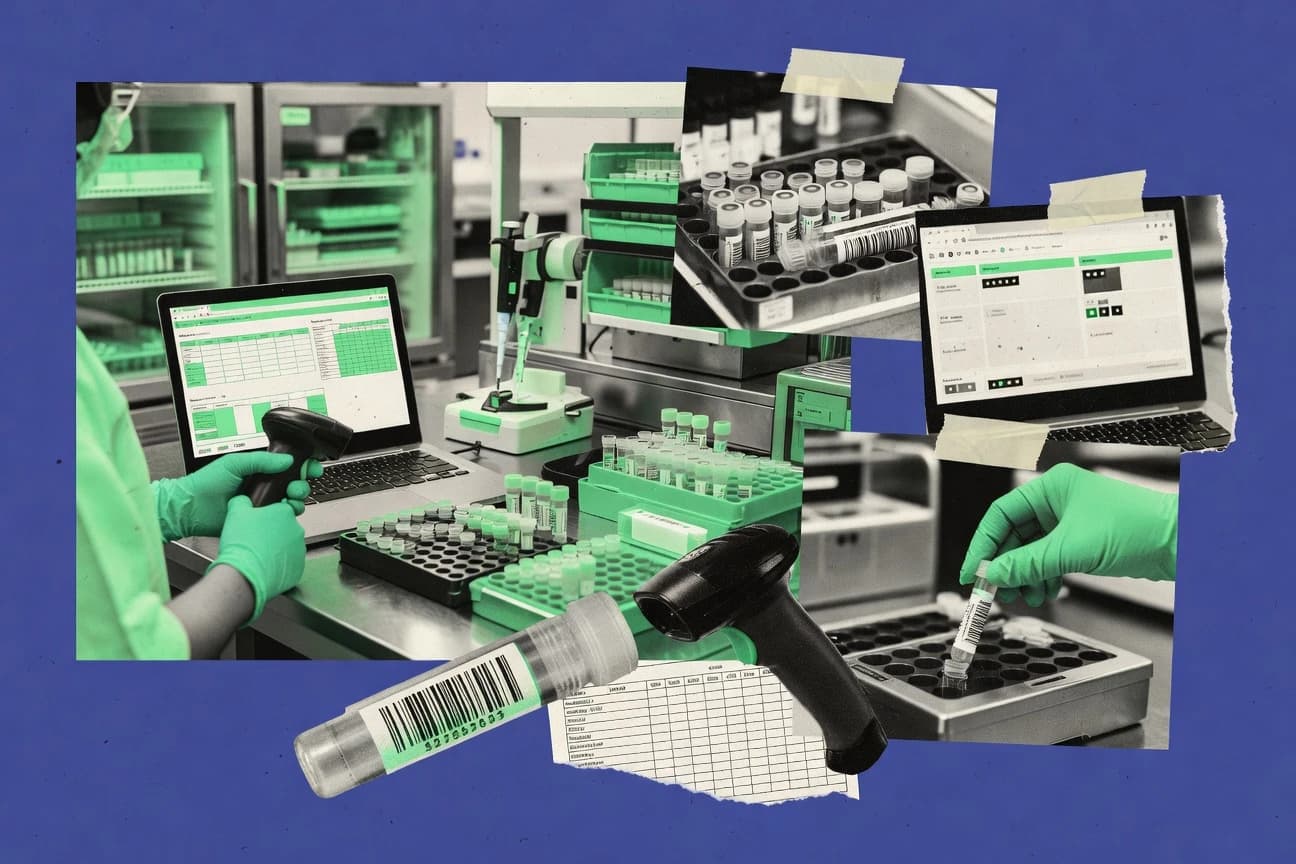
Science ResearchTop 10 Best Lab Sample Management Software of 2026
Ranked roundup of lab sample management software options with feature comparisons for labs using LabVantage LIMS, SampleManager LIMS, or Sapio Sciences LIMS.

How we ranked these tools
Core product claims cross-referenced against official documentation, changelogs, and independent technical reviews.
Analyzed video reviews and hundreds of written evaluations to capture real-world user experiences with each tool.
AI persona simulations modeled how different user types would experience each tool across common use cases and workflows.
Final rankings reviewed and approved by our editorial team with authority to override AI-generated scores based on domain expertise.
Score: Features 40% · Ease 30% · Value 30%
Gitnux may earn a commission through links on this page — this does not influence rankings. Editorial policy
LabVantage LIMS is the best fit for regulated labs that need barcode-driven custody tracking and state-based, multi-instrument workflows, whereas Labguru suits teams focused on aliquot-level sample tracking with automated lifecycle management.
Editor’s top 3 picks
Three quick recommendations before you dive into the full comparison below — each one leads on a different dimension.
LabVantage LIMS
Location-aware aliquot management that ties freezer inventory positions to barcode-handling workflows for traceability.
Built for fits when regulated labs need barcode-driven custody tracking and state-based workflows across multiple instruments..
SampleManager LIMS
Editor pickBuilt for instrument result ingestion that maps outputs to the exact specimen identifiers across aliquot and lineage relationships.
Built for fits when instrument-driven testing needs strong sample identity continuity and controlled workflows across locations..
Sapio Sciences LIMS
Editor pickConfigurable chain-of-custody workflows that keep sample events and audit history tied to barcode identities.
Built for fits when labs need strong traceability across storage, aliquots, and instrument workflows..
Comparison Table
LabVantage LIMS
enterpriseLabVantage LIMS manages samples, tests, instruments, results, and laboratory operations.
Location-aware aliquot management that ties freezer inventory positions to barcode-handling workflows for traceability.
LabVantage LIMS centers on specimen identifiers, chain-of-custody capture, and sample tracking across the lifecycle from intake to disposition. Barcode label printing supports controlled handling at scale, and freezer inventory management ties physical locations to tracked aliquots. Workflow automation links sample states to lab tasks, and automation can coordinate instrument runs with retrieval of results back to the correct specimen records.
A practical tradeoff is the need for deliberate configuration of workflows, sample states, and controlled vocabularies to match laboratory SOPs. LabVantage fits best when sample movement spans multiple departments, instruments, and storage zones where governance and traceability matter more than ad hoc usage.
- +Strong chain-of-custody capture and traceable sample transitions across workflows
- +Barcode-driven labeling and location-aware aliquot handling reduces manual mix-ups
- +Parent-child specimen modeling supports derived sample and retention workflows
- +Workflow automation connects sample states to instrument and results routing
- –Complex setup is required to align controlled vocabularies and workflow states
- –Advanced configuration breadth can slow first-time rollout for small labs
- –Tight governance can increase operational overhead for frequent SOP changes
- –Instrument integration depth may require system-specific configuration work
Clinical research lab teams
Accessioning and aliquot management for studies
Reduced specimen mix-ups
Quality and compliance leads
Chain-of-custody with audit trail
Fewer audit findings
Show 2 more scenarios
Biobanking operations
Freezer inventory reconciliation workflows
More accurate freezer counts
Coordinate barcode scans with storage location updates for retained aliquots.
Instrumentation and methods teams
Instrument run to specimen mapping
Lower rerun risk
Route instrument-generated results to the correct specimen identifiers during sample state changes.
Best for: Fits when regulated labs need barcode-driven custody tracking and state-based workflows across multiple instruments.
SampleManager LIMS
enterpriseSampleManager LIMS manages laboratory samples, testing workflows, instruments, and quality data.
Built for instrument result ingestion that maps outputs to the exact specimen identifiers across aliquot and lineage relationships.
SampleManager LIMS provides end-to-end sample tracking with barcode label support for accessioning and retrieval, plus storage location and freezer inventory management to support operational search. It connects sample lifecycle events to instrument data ingestion so generated results remain linked to the correct specimen identifiers and aliquot lineage. Governance features include configurable user roles and audit trails that record changes to key fields and workflow actions.
A key tradeoff is that deep configuration and workflow tuning take time, especially when the lab needs custom states or mapping rules across multiple instrument types. SampleManager is a strong fit for labs running high-throughput testing where instrument output must land in the correct sample record with minimal manual reconciliation. Labs that mostly do light manual accessioning may find the workflow overhead higher than simpler spreadsheet-based tracking systems.
- +Instrument result ingestion designed for correct specimen linkage
- +Barcode labeling supports fast accessioning and retrieval
- +Audit trail coverage for workflow and sample record changes
- +RBAC controls reduce unauthorized edits across sample states
- –Workflow configuration needs disciplined governance to avoid drift
- –Complex setups can slow adoption for new teams
- –Advanced tailoring can require specialist admin support
- –Integrations often assume established Thermo-centric instrument workflows
Clinical lab operations teams
Rapid accessioning and result capture
Fewer mislabels and rework events
Quality and compliance teams
Controlled changes with audit visibility
Cleaner inspection-ready history
Show 2 more scenarios
Translational research teams
Parent-child aliquot lineage tracking
Accurate lineage across studies
Maintains aliquot lineage so downstream assays reference the correct parent specimen across transfers.
Automation and integration teams
System handoff of sample status
Lower manual reconciliation effort
Coordinates sample state changes and result ingestion so downstream systems reflect the current specimen status.
Best for: Fits when instrument-driven testing needs strong sample identity continuity and controlled workflows across locations.
Sapio Sciences LIMS
enterpriseSapio Sciences provides LIMS workflows for samples, experiments, instruments, and laboratory data.
Configurable chain-of-custody workflows that keep sample events and audit history tied to barcode identities.
Sapio Sciences LIMS is built around sample lifecycle capture, linking specimen identifiers to storage locations and later processing steps. Barcode labeling and label printing workflows support accessioning and retrieval, while parent child relationships help represent aliquots derived from a primary sample. Audit trail coverage is designed to document edits and key events that affect chain of custody and sample disposition.
The main tradeoff is that workflow configuration and integrations require upfront design work to match existing lab conventions for identifiers, storage mapping, and state transitions. Sapio Sciences LIMS fits labs that need deterministic traceability for routine sampling and repeatable processing, especially when multiple instruments and storage points must stay aligned.
- +Barcode label printing supports consistent accessioning and retrieval
- +Audit history documents key edits across sample lifecycle events
- +Parent child relationships model aliquot derivation and tracking
- +Instrument-linked workflows reduce manual rekeying during processing
- –Workflow configuration takes time to match existing lab states
- –Advanced reporting needs structured setup of identifiers and fields
- –Integration design can require iterative mapping for instrument outputs
- –Complex freezer layouts demand careful storage location configuration
Clinical research coordinators
Aliquoting samples with full traceability
Fewer identity errors in processing
Laboratory operations teams
Inventory reconciliation across storage points
More reliable inventory counts
Show 2 more scenarios
Quality and compliance leads
Audit-ready event histories for dispositions
Stronger traceability for reviews
Edits and disposition actions leave an event trail tied to the responsible user roles.
Lab automation engineers
Instrument-driven updates to specimens
Lower manual data transcription
Instrument-related workflow steps connect results entry to the correct sample identifiers.
Best for: Fits when labs need strong traceability across storage, aliquots, and instrument workflows.
STARLIMS
enterpriseSTARLIMS supports sample tracking, laboratory workflows, results management, and regulatory processes.
A configurable chain-of-custody workflow that enforces state transitions across sample transfers and disposition events.
STARLIMS is lab sample management software focused on traceability from accessioning through storage and disposition. It supports specimen identifiers, chain-of-custody tracking, and barcode-based labeling workflows for samples and aliquots.
The product emphasizes configurable sample states and workflow automation for regulated handoffs, plus audit trails for data integrity. STARLIMS also targets integration with surrounding lab systems through APIs and data exchange mechanisms used for instrument and LIMS connectivity.
- +Configurable sample states for controlled workflow transitions
- +Barcode labeling tied to specimen records and aliquot handling
- +Chain-of-custody visibility with audit trail coverage
- +Workflow automation reduces manual transfer and disposition steps
- –Deep configuration requires governance around templates and workflows
- –Integration depth depends on available connectors and custom mapping
- –Complex parent-child sample structures need careful rule design
- –Permissions tuning for fine-grained roles can take iterative admin work
Best for: Fits when regulated labs need configurable sample workflows, custody tracking, and barcode-driven aliquot management across multiple labs.
Labguru
SMBLabguru combines sample management, inventory, electronic notebooks, and research workflows.
Parent-child specimen relationships with aliquot splits keep chain-of-custody context across transfers and derived materials.
Labguru handles lab sample tracking end to end by linking physical specimens to structured experiments, with accessioning records, locations, and lifecycle status. The system supports aliquot-level management and barcode labeling so sample transfers and retrievals can stay traceable during day-to-day work.
Workflow automation connects sample states to approvals and downstream steps, while audit trail records support integrity checks for regulated environments. Integrations with common lab systems focus on instrument and data capture so sample context stays aligned with results.
- +Aliquot-level tracking ties storage locations to specific child specimens
- +Barcode labeling and label printing support repeatable storage workflows
- +Workflow automation links sample lifecycle states to next actions
- +Audit trail records preserve sample history for internal reviews
- –Advanced governance depends on consistent role setup and permissions hygiene
- –Deep inventory reconciliation across multiple freezers needs disciplined data entry
- –Some integrations require technical effort for stable instrument mapping
- –Complex parent-child lineage becomes harder to query at scale
Best for: Fits when teams need aliquot-level sample tracking with automated lifecycle workflows.
CloudLIMS
SMBCloudLIMS manages sample accessioning, testing, results, instruments, and laboratory reporting.
Aliquot-centric tracking links derivatives to parent specimens so custody and storage history stays connected across transfers.
CloudLIMS manages lab sample accessioning through a web-based workflow that ties specimen identifiers to custody events and storage locations. Core capabilities include barcode labeling and label printing for specimen tracking, aliquot handling for parent-child relationships, and inventory-style retrieval for freezer location lookups.
The product also supports audit-oriented history of sample movements and configurable sample states to match different study lifecycles. Integration depth centers on connecting laboratory information systems and instrument sources while keeping sample-centric records consistent across transfers.
- +Barcode labeling supports fast sample accessioning and scan-based lookup
- +Aliquot and parent-child relationships keep derivative specimens traceable
- +Configurable sample states match common study lifecycle transitions
- +Search and retrieval work from specimen identifiers and storage locations
- –Requires deliberate configuration to model complex custody and disposition workflows
- –Instrument integration coverage is narrower than general LIMS suites
- –Advanced reporting depends on consistent identifier and event data entry
- –API automation depth is less extensive than top-ranking automation-first tools
Best for: Fits when labs need accessioning, aliquot tracking, and storage-location retrieval with barcode-driven workflows.
LabKey
API-firstLabKey supports sample tracking, study data, assays, specimen records, and research workflows.
Project-scoped governance with RBAC and audit logging tied to specimen-level objects and workflow actions, enforced through LabKey’s APIs.
LabKey differentiates with an application framework that supports sample tracking workflows alongside analysis and results management. Core capabilities include sample accessioning, storage location and freezer inventory views, and configurable specimen records with parent-child relationships.
LabKey also provides workflow automation and an API surface for integrating external instruments and laboratory systems. Governance is supported through RBAC controls and audit logging across projects and data objects.
- +Strong integration options via REST API and server-side query APIs
- +Configurable workflows for sample states and transfers across projects
- +Audit trail and RBAC support controlled access for sample records
- +Flexible search across identifiers and structured specimen metadata
- –Configuration depth can slow initial setup for teams without admins
- –Barcode labeling and label templates require careful configuration
- –Deep customization can increase maintenance for upgrades
- –Native freezer location modeling may not match all lab layouts
Best for: Fits when research teams need integrated sample workflows plus analysis and results in one system.
LabWare LIMS
enterpriseLabWare LIMS manages laboratory samples, workflows, results, instruments, and compliance records.
Configurable workflow orchestration that binds sample states, label printing, and custody-relevant events to specimen records.
LabWare LIMS is a configurable laboratory information management system built for end-to-end sample tracking workflows across accessioning, processing, and storage. It supports specimen identifiers, barcode labeling, and aliquot management tied to sample records so chain of custody and transfers stay auditable.
LabWare LIMS also provides workflow automation around configurable sample states and label printing, with extensibility for integrating instrument and external system events. Governance features include role-based access control and an audit trail designed for regulated laboratory operations.
- +Configurable sample workflow states connect receipt, testing, and disposition records
- +Barcode labeling and label templates support consistent specimen identifiers
- +Audit trail and RBAC support controlled access for regulated operations
- +Extensibility options fit instrument and external system integration patterns
- –Workflow and label configuration require disciplined admin setup
- –Complex configurations can slow changes without clear change control
- –Deeper integrations often depend on professional services for rollout
- –Specialized reporting may require custom configuration work
Best for: Fits when laboratories need configurable sample workflows with controlled access and traceable handling at scale.
QBench
SMBQBench manages laboratory samples, orders, workflows, results, billing, and reporting.
Location-scoped inventory that supports parent-child aliquot relationships tied to barcode labeling.
QBench is a lab sample management system built around sample lifecycle workflows, from accessioning through storage and disposition. It focuses on traceable specimen identifiers, barcode-driven labeling, and location-aware inventory so aliquots stay findable across transfers.
QBench also supports parent-child relationships and configurable sample status tracking to reflect stability and retention needs. Automation and governance features center on controlled workflows, audit-ready change visibility, and role-based access to limit who can move samples.
- +Barcode labeling workflow ties accessioning to storage locations
- +Parent-child relationships track derived material back to source
- +Role-based access controls limit edits to sample records
- +Search and reconciliation for freezer locations reduces misplacement
- –Workflow configuration requires careful upfront mapping of states
- –Advanced reporting and batch views need tighter operational presets
- –API and integrations are less transparent than top-tier competitors
- –Label template flexibility can lag behind complex compliance layouts
Best for: Fits when labs need location-aware tracking with barcode labeling and strict edit control for aliquot workflows.
Freezerworks
vertical specialistFreezerworks tracks biospecimens, storage locations, movements, shipments, and associated data.
Freezerworks’ freezer inventory and location-to-aliquot hierarchy supports detailed storage modeling beyond single-item tracking.
Freezerworks is lab sample management software focused on managing freezer inventory, locations, and specimen workflows for regulated research operations. The system supports accessioning, barcode labeling, aliquot management, and sample transfers with configurable sample states and searchable specimen identifiers.
Freezerworks also includes automation hooks for routine workflows and an extensibility surface for system integrations that labs use to connect instruments, notebooks, and downstream systems. Governance is handled through user roles and audit visibility for changes to samples, locations, and custody events.
- +Strong freezer inventory and location modeling for detailed storage layouts
- +Barcode labeling workflow supports consistent specimen identifiers and retrieval
- +Configurable sample states help enforce lab-specific handling rules
- +Audit trail supports change review across sample and location records
- –More setup time than spreadsheet-like systems for defining storage and workflows
- –Workflow depth can feel restrictive without customization for edge cases
- –Automation coverage is uneven across all transfer and disposition scenarios
- –Integration support needs careful mapping for nonstandard instrument metadata
Best for: Fits when labs need freezer-level sample tracking with barcode workflows and controlled handling states.
Conclusion
After evaluating 10 science research, LabVantage LIMS stands out as our overall top pick — it scored highest across our combined criteria of features, ease of use, and value, which is why it sits at #1 in the rankings above.
Use the comparison table and detailed reviews above to validate the fit against your own requirements before committing to a tool.
How to Choose the Right lab sample management software
This buyer’s guide covers lab sample management software selection across LabVantage LIMS, SampleManager LIMS, Sapio Sciences LIMS, STARLIMS, Labguru, CloudLIMS, LabKey, LabWare LIMS, QBench, and Freezerworks.
It maps tool capabilities to real lab workflows like barcode-driven custody, aliquot lineage, freezer location modeling, instrument result ingestion, and configurable sample state transitions.
Sample-centric software for accessioning, custody, storage, and downstream traceability
Lab sample management software manages specimen identifiers, barcode labeling, storage locations, and lifecycle workflows from accessioning through disposition. It links physical handling events to auditable records so sample tracking stays consistent during transfers, aliquot splits, and multi-instrument processing.
Teams in regulated labs and research environments use tools like STARLIMS and LabVantage LIMS to enforce controlled sample state transitions, capture chain-of-custody events, and maintain traceability across instruments and storage areas.
Controls and integrations that keep specimen identity and storage history consistent
Evaluation should focus on how each tool binds sample identity to handling events, not just how quickly it can label or search. LabVantage LIMS, SampleManager LIMS, and LabKey demonstrate that governance and automation surfaces determine whether traceability remains reliable as workflows scale.
Each feature below is grounded in what the tools actually do in accessioning, aliquot management, workflow automation, and integration behavior.
Barcode-driven custody and location-aware aliquot handling
LabVantage LIMS ties freezer inventory positions to barcode-handling workflows so custody stays traceable during aliquot movement. QBench and Freezerworks also center location-scoped inventory tied to barcode-labeled workflows so freezer search and retrieval can stay operationally consistent.
Instrument result ingestion mapped to specimen identifiers
SampleManager LIMS is built around instrument result ingestion that maps outputs to exact specimen identifiers across aliquot and lineage relationships. Sapio Sciences LIMS and LabVantage LIMS use instrument-linked workflows and routing to reduce manual rekeying when instruments generate worklist-driven actions.
Configurable chain-of-custody workflow enforcement with state transitions
STARLIMS enforces state transitions across sample transfers and disposition events through a configurable chain-of-custody workflow. Sapio Sciences LIMS uses configurable chain-of-custody workflows tied to barcode identities to keep sample events and audit history consistent across transfers.
Parent-child specimen and aliquot lineage modeling for derived materials
Labguru uses parent-child specimen relationships with aliquot splits to keep chain-of-custody context across transfers and derived materials. CloudLIMS and QBench also connect parent and derived specimens so custody and storage history remain connected across aliquot workflows.
Project or tenant governance with RBAC and audit trail coverage
LabKey provides project-scoped governance with RBAC and audit logging tied to specimen-level objects and workflow actions enforced through its APIs. LabWare LIMS and LabVantage LIMS provide RBAC and audit trails that support regulated laboratory operations and controlled access across sample workflow changes.
Automation-first workflow configuration versus extensibility for integration
LabVantage LIMS connects workflow states to instrument and results routing and manages aliquot movement with governance controls. LabKey and LabWare LIMS provide API surface and extensibility options for instrument and external system integration patterns, but initial setup and maintenance require configuration discipline.
A workflow-first selection path for custody, aliquots, and integrations
Start by mapping the lab’s highest-risk failure points. Barcode custody breaks show up when storage locations, transfers, and disposition events drift from the record, which is where tools like LabVantage LIMS, STARLIMS, and Sapio Sciences LIMS tend to perform well.
Then align the integration model to the lab’s instrument and data capture reality. SampleManager LIMS and LabVantage LIMS handle specimen identifier mapping into instrument outputs, while LabKey emphasizes APIs and project governance for connected research workflows.
Define the lineage requirement before choosing the workflow engine
If derived materials and aliquot splits must preserve source context across transfers, prioritize lineage modeling like Labguru and CloudLIMS. If derived custody events must be enforced through barcode-tied state transitions, prioritize chain-of-custody workflow enforcement like STARLIMS or Sapio Sciences LIMS.
Verify barcode-to-location traceability for freezer layouts
If freezer inventory modeling and location-to-aliquot hierarchies drive day-to-day retrieval, Freezerworks and LabVantage LIMS provide detailed location structures tied to barcode workflows. If location-scoped inventory needs to support parent-child aliquot relationships with search and reconciliation, use QBench as the comparison point.
Match instrument output handling to specimen identity mapping
If instrument outputs must land on the correct specimen identifiers without manual reconciliation, pick SampleManager LIMS or LabVantage LIMS. If worklist-driven routine lab actions must reduce manual rekeying through instrument-linked workflows, compare Sapio Sciences LIMS and LabVantage LIMS for iterative mapping effort.
Choose governance depth based on how often workflows and SOPs change
If frequent SOP and workflow changes require tight control, evaluate whether the tool’s governance model adds operational overhead such as LabVantage LIMS and STARLIMS configuration breadth. If governance must span research projects with controlled access and API-enforced specimen-level actions, LabKey is designed for project-scoped governance with RBAC and audit logging.
Select an integration posture aligned to admin bandwidth
If integration work is expected to be configuration-centric with mapping of instrument and external events into specimen records, LabWare LIMS and LabVantage LIMS fit labs that can run disciplined admin setup. If integration must be API-centric for external systems and app-layer workflows, LabKey provides REST API and server-side query APIs tied to workflow actions.
Which labs benefit from different sample management architectures
Different tools emphasize different parts of the sample lifecycle. Some focus on regulated custody enforcement and barcode-driven state transitions, while others focus on instrument ingestion, research project governance, or freezer layout fidelity.
The audience segments below reflect each tool’s stated best-fit workflow patterns.
Regulated labs needing barcode-driven custody tracking across multiple instruments
LabVantage LIMS is a fit when chain-of-custody capture and location-aware aliquot handling tie freezer inventory positions to barcode-handling workflows. STARLIMS also fits when configurable chain-of-custody workflow enforcement must cover transfers and disposition events with audit trail coverage.
Labs where instrument output accuracy depends on specimen identifier mapping
SampleManager LIMS fits labs that run Thermo instruments and need instrument result ingestion that maps outputs to exact specimen identifiers across aliquot and lineage relationships. Sapio Sciences LIMS also supports instrument-linked workflows that reduce manual rekeying during processing.
Research teams that need integrated specimen workflows plus analysis and results in one platform
LabKey fits research environments that need project-scoped governance with RBAC and audit logging tied to specimen-level objects and workflow actions. Its REST API and server-side query APIs support integration patterns when specimen workflows must connect to external laboratory systems.
Teams focused on aliquot-level tracking and automated lifecycle workflows
Labguru fits teams that need parent-child specimen relationships with aliquot splits and automated lifecycle workflows tied to approvals and downstream steps. CloudLIMS is a fit when accessioning, aliquot tracking, and storage-location retrieval must stay consistent through barcode-driven workflows.
Labs that prioritize freezer-level inventory modeling and controlled handling states
Freezerworks fits labs that need detailed freezer inventory and a location-to-aliquot hierarchy beyond single-item tracking. QBench is a fit when location-aware tracking with strict edit control must support parent-child aliquot relationships tied to barcode labeling.
Where sample management projects typically fail in custody, configuration, and reporting
Common failures show up when workflow configuration is treated as a minor setup task instead of a governance process. Several tools explicitly require careful alignment of controlled vocabularies, workflow states, identifiers, and storage location structures.
The pitfalls below connect to the specific constraints and configuration behaviors described for the reviewed tools.
Underestimating workflow and controlled vocabulary setup effort
LabVantage LIMS and STARLIMS require complex setup to align controlled vocabularies and workflow states, which can slow first-time rollout. LabWare LIMS and QBench also require disciplined admin setup to keep workflow states and label templates consistent with operational handling rules.
Letting governance drift create unauthorized edits or inconsistent state transitions
SampleManager LIMS and Labguru depend on disciplined RBAC and workflow governance configuration to avoid drift across sample states. If permission tuning and role setup are inconsistent, access control quality becomes the bottleneck instead of barcode capture and audit history.
Choosing a freezer workflow model that does not match actual storage layout complexity
Sapio Sciences LIMS and LabVantage LIMS require careful freezer layout configuration when freezer layouts are complex. Freezerworks also requires more setup time than spreadsheet-like systems when storage and workflows must be defined for detailed layouts.
Assuming integrations will map instrument outputs without identifier mapping work
CloudLIMS notes that API automation depth is less extensive than top-ranking automation-first tools, which can increase integration effort for complex scenarios. Sapio Sciences LIMS and STARLIMS call out that integration depth can require iterative mapping for instrument outputs and custom rule design.
Overloading advanced reporting needs without structured identifier and field setup
Sapio Sciences LIMS states that advanced reporting needs structured setup of identifiers and fields. CloudLIMS also notes that advanced reporting depends on consistent identifier and event data entry, which must be enforced during accessioning and transfers.
How We Selected and Ranked These Tools
We evaluated LabVantage LIMS, SampleManager LIMS, Sapio Sciences LIMS, STARLIMS, Labguru, CloudLIMS, LabKey, LabWare LIMS, QBench, and Freezerworks on features coverage, ease of use, and value, with features carrying the largest weight at forty percent while ease of use and value each account for thirty percent. Each overall rating is a weighted average across those three scored categories using criteria that map to sample accessioning, barcode-driven custody workflows, aliquot lineage, storage-location retrieval, and governance behavior described in the provided tool records. This editorial research also scored how directly each product supports automation and integration behavior such as instrument result ingestion and API surface described in the tool summaries.
LabVantage LIMS set the pace because location-aware aliquot management ties freezer inventory positions to barcode-handling workflows for traceability, and its workflow automation connects sample states to instrument and results routing. That combination raised both features and ease-of-use outcomes because it reduces manual mix-ups during barcode-driven storage handling while preserving auditability for regulated processes.
Frequently Asked Questions About lab sample management software
How should barcode labeling and scan-driven workflows differ across LabVantage LIMS, STARLIMS, and CloudLIMS?
Which tool maps instrument result ingestion to specimen identifiers without breaking lineage in SampleManager LIMS and LabKey?
When do parent-child specimen relationships matter for Sapio Sciences LIMS, Labguru, and Freezerworks?
What breaks if chain of custody state transitions are not enforced in STARLIMS and LabWare LIMS?
How do APIs and integration surfaces compare between STARLIMS, LabKey, and Freezerworks?
How do SSO and security controls show up in daily administration for LabWare LIMS, LabVantage LIMS, and QBench?
Which system best supports data migration for established projects in LabKey, CloudLIMS, and LabVantage LIMS?
How is freezer inventory retrieval handled when samples are stored across many locations in CloudLIMS and Freezerworks?
Where does extensibility matter most if workflows must connect to electronic laboratory notebook steps in Freezerworks and LabVantage LIMS?
Tools reviewed
Primary sources checked during evaluation.
Referenced in the comparison table and product reviews above.
- Science ResearchTop 10 Best Laboratory Sample Management Software of 2026
- Science ResearchTop 10 Best Lab Managment Software of 2026
- Science ResearchTop 10 Best Sample Manager Software of 2026
- Veterinary Animal CareTop 10 Best Lab Animal Management Software of 2026
- Science ResearchTop 10 Best Electronic Lab Notebook Software of 2026
Keep exploring
Comparing two specific tools?
Software Alternatives
See head-to-head software comparisons with feature breakdowns, pricing, and our recommendation for each use case.
Explore software alternatives→In this category
Science Research alternatives
See side-by-side comparisons of science research tools and pick the right one for your stack.
Compare science research tools→