
GITNUXSOFTWARE ADVICE
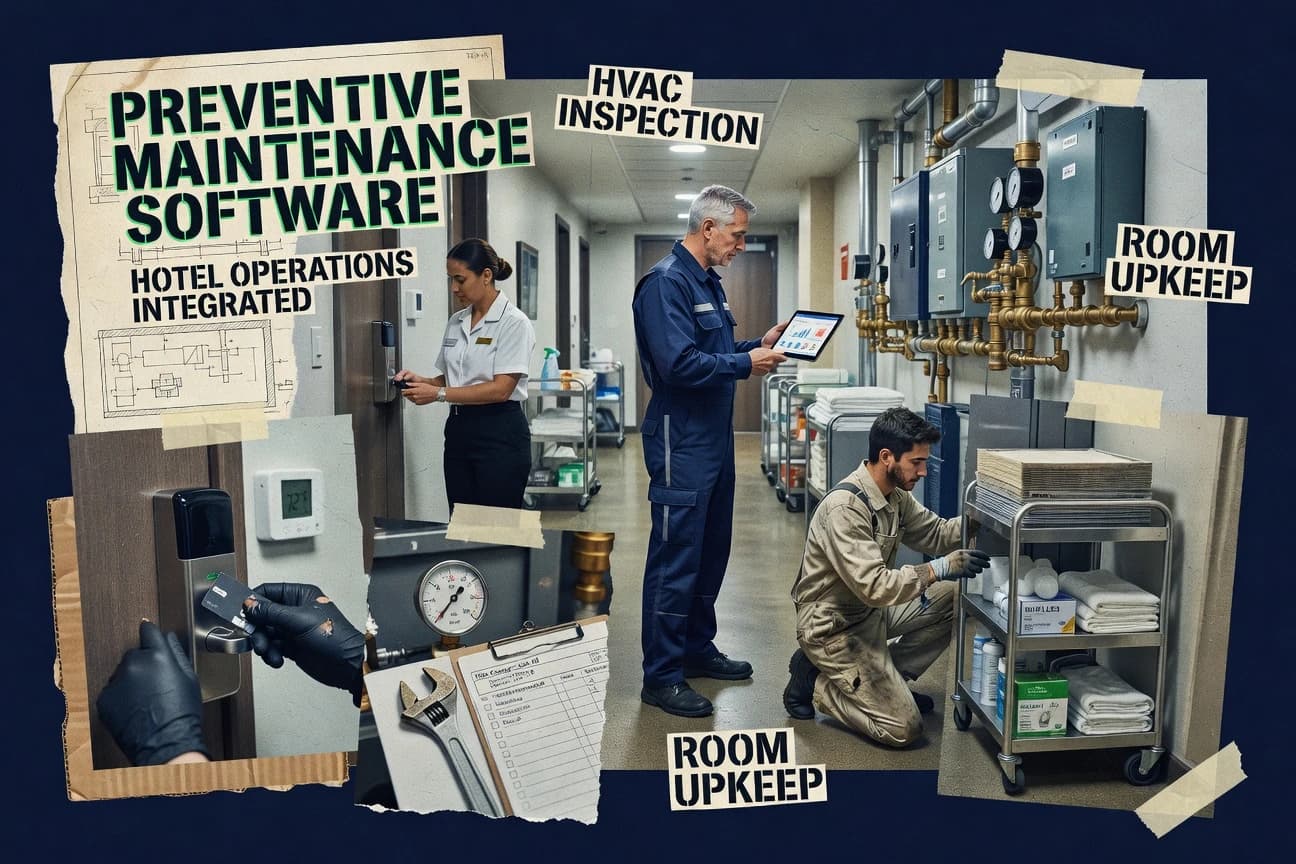
Tourism HospitalityTop 10 Best Hotel Preventive Maintenance Software of 2026
Top 10 hotel preventive maintenance software ranked for hotel teams, with comparisons of Quore, eMaint, Flexkeeping features and tradeoffs.

How we ranked these tools
Core product claims cross-referenced against official documentation, changelogs, and independent technical reviews.
Analyzed video reviews and hundreds of written evaluations to capture real-world user experiences with each tool.
AI persona simulations modeled how different user types would experience each tool across common use cases and workflows.
Final rankings reviewed and approved by our editorial team with authority to override AI-generated scores based on domain expertise.
Score: Features 40% · Ease 30% · Value 30%
Gitnux may earn a commission through links on this page — this does not influence rankings. Editorial policy
Quore is the best pick for hotel teams that need asset-linked preventive workflows with technician status tracking across multiple locations, whereas eMaint fits when hotel engineering relies on enterprise CMMS needs and integration-driven automation for compliant preventive maintenance.
Editor’s top 3 picks
Three quick recommendations before you dive into the full comparison below — each one leads on a different dimension.
Quore
Recurring inspection work orders generated from structured checklists tied to hotel assets and rooms.
Built for fits when hotels need asset-linked preventive workflows with technician status tracking across multiple locations..
eMaint
Editor pickMaintenance task templates and procedures can be configured to standardize inspection rounds across equipment types.
Built for fits when hotel engineering needs asset-linked preventive workflows with integration-driven automation..
Flexkeeping
Editor pickInspection-driven recurring work orders that keep maintenance procedures tied to executed history across assets.
Built for fits when hotel teams need recurring inspection workflows with consistent work order history..
Comparison Table
Quore
vertical specialistQuore provides hotel teams with maintenance requests, inspections, task assignments, and engineering workflows.
Recurring inspection work orders generated from structured checklists tied to hotel assets and rooms.
Quore is a strong fit for hotels that want planned maintenance scheduling built around asset-based execution, including recurring inspections and repeatable maintenance tasks. The system is designed to keep a maintenance backlog visible while technicians close the loop through in-work updates and completion records. This structure supports audit-style traceability for guestroom maintenance items because each work order can retain context and history.
A key tradeoff is that the workflow quality depends heavily on upfront asset and hierarchy setup so the right room or equipment gets the right tasks. Quore works best when an engineering manager runs recurring checklists for inspection rounds and wants technician execution to reflect that calendar without manual rework.
- +Recurring preventive tasks map cleanly to assets and locations for consistent execution
- +Work order status updates support end-to-end maintenance backlog visibility
- +Maintenance history preserves completion context for recurring inspections
- +Guestroom-focused workflows reduce manual handoffs between requests and dispatch
- –Asset hierarchy setup is heavy for multi-property rollouts
- –Edge-case workflows may require configuration work to match existing SOPs
Hotel engineering managers
Run recurring preventive rounds
Fewer missed maintenance items
Maintenance supervisors
Track backlog through closure
Lower operational downtime
Show 1 more scenario
Technicians in the field
Update work progress on site
Cleaner maintenance records
Record progress and completion against assigned work orders to keep history accurate.
Best for: Fits when hotels need asset-linked preventive workflows with technician status tracking across multiple locations.
eMaint
enterpriseeMaint provides enterprise CMMS functions for preventive maintenance, assets, work orders, inventory, and compliance.
Maintenance task templates and procedures can be configured to standardize inspection rounds across equipment types.
eMaint is a strong fit for hotel teams that need an equipment-driven maintenance flow, where inspections and work orders reference the asset hierarchy used in daily engineering operations. The configuration approach supports maintenance procedures and maintenance task templates, which helps standardize checklists across properties and technicians. Integration depth matters most in multi-system hotel stacks, and eMaint targets that with API access for data exchange and automation-triggered updates.
A key tradeoff is that achieving consistent results depends on clean initial asset and task configuration, including the mapping between equipment records and maintenance activities. eMaint tends to work best when engineering leadership wants a planned maintenance calendar that technicians can execute with mobile field capture and a governed approval path before work closes.
- +Configurable maintenance task templates standardize hotel inspection checklists
- +Asset hierarchy links work orders to room and equipment context
- +API supports maintenance data exchange with surrounding hotel systems
- +Recurring scheduling supports planned maintenance calendar execution
- –Initial asset and procedure configuration takes time and governance discipline
- –Some hotel-specific workflows may require configuration rather than out-of-box defaults
- –Multi-property rollout can be slower when equipment mapping is inconsistent
- –Reporting setup can require admin effort for advanced views
Hotel engineering directors
Standardize inspections across multiple properties
Lower missed inspection items
Facilities managers
Run recurring preventive maintenance cycles
Fewer preventable breakdowns
Show 2 more scenarios
Maintenance operations leads
Integrate work orders with hotel systems
Reduced manual status updates
API-based data exchange supports keeping maintenance events consistent across operational tools.
Regional maintenance coordinators
Track history for the same asset
Faster root cause patterns
Maintenance history tied to the asset hierarchy supports trend analysis for recurring issues.
Best for: Fits when hotel engineering needs asset-linked preventive workflows with integration-driven automation.
Flexkeeping
vertical specialistFlexkeeping manages hotel housekeeping, maintenance requests, inspections, and recurring operational tasks.
Inspection-driven recurring work orders that keep maintenance procedures tied to executed history across assets.
Flexkeeping is built for planned maintenance calendar management with recurring work orders, so engineering leaders can schedule inspections and maintenance routines as repeatable tasks. Work orders capture execution details that help preserve maintenance history for assets and locations used in hotel operations. The configuration approach is workflow oriented, which supports scaling repeatable rounds for guestroom and back-of-house maintenance without redesigning every task.
A key tradeoff is that teams with highly custom maintenance schemas often need extra setup to map their asset and checklist structures cleanly. Flexkeeping fits properties that want inspection rounds and corrective maintenance tickets to share the same work order backbone for follow-up and backlog control.
- +Recurring work orders make planned inspection rounds easier to standardize
- +Maintenance history is tied to work orders for asset continuity
- +Workflow-focused configuration supports hotel engineering task templates
- +Calendar visibility supports day-to-day planned maintenance execution
- –Complex asset hierarchies can require careful setup to stay consistent
- –Advanced integration paths may require partner engineering for depth
- –Offline technician workflows are not a core differentiator in common deployments
- –Highly bespoke inspection logic can increase configuration effort
Hotel engineering managers
Run recurring inspection rounds
Fewer missed planned tasks
Facilities and maintenance coordinators
Track maintenance backlog by asset
Improved triage and visibility
Show 1 more scenario
Multi-property maintenance teams
Standardize procedures across sites
Consistent maintenance practices
Apply recurring task templates to assets in multiple properties using shared workflows.
Best for: Fits when hotel teams need recurring inspection workflows with consistent work order history.
Limble
SMBUser-friendly CMMS with preventive maintenance automation and mobile access for hotel engineering teams.
Template-driven recurring work orders that carry checklist steps through assignment, completion, and maintenance-history records.
Limble focuses on managing preventive maintenance work orders through configurable checklists, recurring schedules, and asset records linked to maintenance history. The product supports workflow assignment, technician execution tracking, and audit-friendly documentation for inspections and completed tasks.
Limble also provides an API for integration use cases like syncing assets and work orders with other systems used by hotel engineering teams. For hotel preventive maintenance programs, its combination of template-based tasks and structured execution helps keep planned work consistent across properties.
- +Recurring work order scheduling with checklist execution and maintenance history
- +API supports asset and work order integrations for hotel engineering systems
- +Mobile-friendly technician completion flow with task-level status tracking
- +Configurable maintenance templates for repeatable preventive routines
- –Multi-property reporting needs careful setup to keep rollups clean
- –Complex governance and custom workflows require more admin configuration discipline
Best for: Fits when hotel teams need recurring preventive maintenance checklists tied to assets and history.
Asset Panda
SMBAsset tracking and maintenance platform with preventive scheduling used in hotel facility management.
Asset hierarchy driven inspection checklists that convert directly into assigned maintenance tasks per equipment.
Asset Panda focuses on maintenance execution around assets, with inspection and checklist content linked to equipment records.
Recurring preventive maintenance scheduling supports repeated inspections and planned work without rebuilding each task from scratch.
Technicians complete tasks in the mobile app with maintenance history retained per asset for later review.
- +Asset-first workflow ties checklists and work orders to specific equipment
- +Recurring task creation supports planned maintenance calendar execution
- +Mobile task execution reduces paper during guestroom maintenance rounds
- +Maintenance history accumulates per asset for troubleshooting and auditing
- –Complex multi-building rollups require careful asset hierarchy setup
- –Deep automation beyond templates can demand manual process design
Best for: Fits when hotel teams want asset-linked checklists and recurring work orders across guestroom and facility equipment.
ServiceChannel
enterpriseServiceChannel coordinates facilities work orders, preventive maintenance, vendors, assets, and property performance.
Asset-linked maintenance history with configurable task and inspection workflows for consistent preventive execution across properties.
ServiceChannel targets hotel preventive maintenance and facilities teams that need cross-property work order management with integrations into operational systems. It supports task templates, recurring scheduled work, and inspection workflows used to standardize preventive maintenance routines across an equipment hierarchy.
Admin control centers on configuration governance, role-based permissions, and maintenance history tied to assets so teams can audit what ran and when. Integration breadth and extensibility through an API surface are central to how ServiceChannel fits with property management system and third-party tooling.
- +Strong API surface for connecting work orders to hotel systems
- +Task templates and recurring schedules support repeatable preventive workflows
- +Asset-centric maintenance history ties inspections to the equipment record
- +Operational governance through roles and permission controls
- –Template and hierarchy setup needs governance discipline across properties
- –Complex workflows can require analyst time to model correctly
Best for: Fits when multi-property hotel engineering teams need standardized preventive work orders with integration and audit-ready maintenance history.
RoomChecking
vertical specialistRoomChecking organizes hotel inspections, maintenance requests, room readiness, and staff task management.
Room and equipment context is built into inspection execution so each preventive check links to the exact asset and location.
RoomChecking targets hotel preventive maintenance workflows with inspection-first planning and guestroom-focused checks. Work orders connect to equipment and room asset records so engineering teams can trace issues back to the specific location and item.
Recurring tasks support scheduled rounds for ongoing maintenance work. Mobile execution is designed around field check completion to keep engineering records aligned with what technicians actually inspect and fix.
- +Inspection-first workflow ties checks to room and equipment context
- +Recurring maintenance supports planned work across repeated schedules
- +Work orders capture execution details aligned to field inspections
- +Mobile use supports completing preventive tasks during on-site visits
- –Asset hierarchy and equipment modeling can be limiting for complex campus layouts
- –Automation and API depth lag compared with more integration-heavy competitors
- –Role controls and audit granularity may require tighter admin discipline
- –Offline work order handling can be less reliable for low-connectivity sites
Best for: Fits when hotel engineering teams need room-scoped preventive check execution with recurring work orders.
PurpleCloud Technologies
vertical specialistPurpleCloud Technologies supplies hotel operations software for maintenance, inspections, housekeeping, and task control.
Rules-driven checklist inspection rounds with configurable task outcomes tied to maintenance execution history.
PurpleCloud Technologies provides hotel preventive maintenance through task scheduling, recurring work orders, and maintenance execution tracking for engineering teams. Its distinct differentiator is a rules-driven workflow for inspection rounds and checklist-driven service work, designed to standardize how work is started, assigned, and recorded.
The solution also maintains maintenance history tied to equipment and locations, supporting planned calendars and follow-up for completed corrective maintenance. Integration depth centers on connecting maintenance activity with operational systems used by property teams, with an API surface intended to support data synchronization and automation.
- +Checklist-driven inspection rounds standardize preventive walkthroughs and signoffs
- +Recurring work order templates reduce manual scheduling effort for repetitive tasks
- +Maintenance history stays attached to assets and locations for faster traceability
- +API support supports maintenance activity synchronization with other hotel systems
- –Admin setup and workflow configuration require governance to avoid inconsistent task routing
- –Room-level asset tracking depth can be limited without careful equipment hierarchy design
Best for: Fits when hotel engineering teams need checklist workflows and recurring work orders with system integration.
MicroMain
SMBCMMS and asset management software with preventive maintenance scheduling used across hospitality facilities.
Inspection-round scheduling that converts standard checks into technician-ready work orders tied to the property’s asset hierarchy.
MicroMain manages hotel preventive maintenance workflows by turning checklists into recurring work orders tied to assets and locations. The system supports inspection rounds and mobile work execution so technicians can complete tasks, capture updates, and generate maintenance history from the field.
MicroMain also centers on governance for engineering teams through configurable maintenance plans, standard procedures, and reporting on work completion and backlog trends. Integration depth shows up through its API and data connectivity options for synchronizing equipment and maintenance context across operational systems.
- +Checklist-driven recurring work orders keep preventive maintenance cadence consistent
- +Mobile field capture supports faster closure and cleaner maintenance history entries
- +Maintenance procedures and templates reduce repeat setup across teams and shifts
- +API and integrations support syncing assets and maintenance context across systems
- –Advanced configuration takes time to model equipment, locations, and task scope
- –Reporting depth can lag specialized hotel engineering dashboards for senior leaders
Best for: Fits when hotel engineering teams need recurring inspection execution with mobile updates and accountable maintenance history.
hotelkit
vertical specialistHotelkit coordinates recurring maintenance tasks, work orders, inspections, and operational communication.
Room-focused checklist workflows connect equipment-level tasks to hotel execution and completion tracking.
Hotelkit targets hotel engineering teams that need preventive maintenance scheduling and work order management without a heavy CMMS implementation. It centers on recurring maintenance plans, task checklists, and an asset hierarchy that connects equipment to rooms and maintenance procedures.
The system supports operational workflows for inspections and execution tracking, with reporting built around maintenance activity and backlog visibility. Integration and automation depth depends on what the hotel team can map into hotelkit’s available connectors and configuration options.
- +Recurring work order templates reduce repetitive scheduling effort
- +Asset hierarchy links equipment to hotel engineering ownership and checks
- +Inspection and checklist workflows support consistent preventive maintenance execution
- +Maintenance activity reporting helps track backlog and completion rates
- –Limited integration surface can restrict data flow from PMS and CMMS systems
- –Multi-property governance needs careful setup of locations, assets, and users
Best for: Fits when a hotel team wants recurring preventive checklists and work tracking with minimal CMMS overhaul.
Conclusion
After evaluating 10 tourism hospitality, Quore stands out as our overall top pick — it scored highest across our combined criteria of features, ease of use, and value, which is why it sits at #1 in the rankings above.
Use the comparison table and detailed reviews above to validate the fit against your own requirements before committing to a tool.
How to Choose the Right hotel preventive maintenance software
Hotel preventive maintenance software organizes recurring inspections into work orders so hotel engineering teams can run a planned maintenance calendar across rooms, equipment, and locations. This buyer’s guide covers Quore, eMaint, Flexkeeping, Limble, Asset Panda, ServiceChannel, RoomChecking, PurpleCloud Technologies, MicroMain, and hotelkit.
The tools reviewed here vary in how they generate recurring work orders from checklists, how deeply they tie those orders to an asset hierarchy, and how much automation they offer through API and integration surfaces. The guide also highlights where teams need governance effort to keep multi-property rollouts consistent.
Hotel preventive maintenance software for recurring inspections, asset-linked work orders, and checklist-driven maintenance history
Hotel preventive maintenance software turns preventive maintenance scheduling into inspection rounds that produce recurring work orders tied to hotel assets and locations, then records maintenance history after technicians complete checks. Quore and Flexkeeping both center recurring inspection work orders on hotel assets, with maintenance backlog visibility tied to work order status updates.
In hotel engineering operations, task templates and inspection procedures standardize preventive check execution across equipment types, which eMaint supports through configurable maintenance task templates. Across the category, the key differences show up in how inspection checklists convert into assigned tasks, how asset hierarchy setup affects multi-property reporting, and how integration and automation depth reduces manual scheduling and reconciliations.
Hotel preventive maintenance software features that affect inspection-to-work order control
Hotel teams need preventive maintenance checklists to turn into technician-ready recurring work orders tied to the right room or piece of equipment, not just stored tasks. The feature differences show up in checklist structure, how work orders inherit context, and how maintenance history gets written back after execution.
These capabilities determine whether planned work runs on schedule with consistent signoffs across properties or whether engineering teams spend extra time reconciling missing locations, incomplete asset mappings, and mismatched task outcomes.
Asset-linked recurring inspection work orders
Quore generates recurring inspection work orders from structured checklists tied to hotel assets and rooms. Flexkeeping also centers recurring inspection work orders on assets, with maintenance backlog visibility tied to work order status updates.
Maintenance task templates and standardized inspection procedures
eMaint supports maintenance task templates and procedures that standardize inspection rounds across equipment types. PurpleCloud Technologies uses rules-driven checklist inspection rounds that attach configurable task outcomes to maintenance history.
Checklist execution that writes maintenance history tied to context
Limble carries checklist steps through assignment, completion, and maintenance-history records. RoomChecking builds room and equipment context into inspection execution so each preventive check links to the exact asset and location.
Asset hierarchy model depth for multi-property rollups
ServiceChannel offers configurable task and inspection workflows plus asset-linked maintenance history across properties. Quore performs best when asset hierarchy setup supports multi-property rollouts without overburdening the configuration path.
API surface and integration-driven automation
Limble includes an API that supports asset and work order integrations for hotel engineering systems. ServiceChannel is positioned for connecting work orders to hotel systems through a strong API surface.
Room and equipment modeling constraints for complex layouts
Asset Panda uses an asset-first workflow where asset hierarchy drives inspection checklists that convert into assigned maintenance tasks per equipment. RoomChecking can become limiting for complex campus layouts where equipment and location modeling needs exceed its room-scoped execution focus.
How to choose hotel preventive maintenance software for recurring inspection execution
Start by matching inspection ownership to how each tool builds recurring work orders from checklists. Some platforms center asset-first modeling so rooms and equipment receive tasks through hierarchy inheritance. Others center inspection execution so each check binds directly to room and equipment context at runtime.
Then validate automation and governance fit for the operating model across multiple properties. The inspection workflow must produce maintenance history consistently and the system must support the integration and reporting depth senior engineering leaders need.
Choose the checklist-to-work-order philosophy based on where context is created
If engineering teams want checklist structure to generate work orders through asset-linked mappings, Quore and Asset Panda fit that asset-first model. If engineering teams need room-scoped execution where each check binds to asset and location during inspection, RoomChecking aligns with inspection-first context creation.
Standardize inspections with templates only when work can follow controlled procedures
eMaint is built around configurable maintenance task templates and procedures that standardize inspection rounds across equipment types. PurpleCloud Technologies suits teams that can define checklist rules and task outcomes while accepting governance and configuration effort to keep routing consistent.
Validate multi-property asset hierarchy rollout effort before scaling schedules
Quore and ServiceChannel both depend on asset hierarchy setup quality for multi-property workflows. Limble and Asset Panda also require careful planning so multi-property reporting rollups remain clean when equipment and room ownership expand.
Match automation depth to integration requirements for hotel systems
ServiceChannel and Limble target integration-driven automation with work order connectivity via their API surfaces. Flexkeeping focuses on inspection-driven recurring work orders and may require deeper partner engineering for advanced integration paths when existing hotel systems demand more than template-level automation.
Plan for admin governance to keep recurring schedules consistent across users
Limble and eMaint require governance discipline because initial asset and procedure configuration drives inspection consistency across assets. PurpleCloud Technologies also needs governance to prevent inconsistent task routing across properties when workflow configuration expands beyond a small scope.
Who hotel preventive maintenance software is built for
Hotel engineering teams need recurring preventive maintenance scheduling that turns inspection rounds into trackable work orders tied to rooms, assets, and maintenance history. These tools also serve property managers when consistent execution reduces backlog growth and improves auditability of completed checks.
Different platforms fit different operating models based on whether engineering owns the asset hierarchy centrally or relies on inspection-time context binding to define what gets serviced.
Multi-property hotel engineering teams standardizing preventive workflows
ServiceChannel and Quore support asset-linked maintenance execution across properties, which helps standardize recurring work order generation and maintenance history collection.
Hotels with room and equipment execution where technician capture is the system of record
RoomChecking ties each preventive check to room and equipment context during inspection execution, which matches workflows that prioritize accurate inspection-time binding.
Engineering teams that want template-led standardization of inspection procedures
eMaint centralizes maintenance task templates and procedures so inspection rounds stay consistent across equipment types, reducing variation between teams.
Facilities teams planning planned inspection rounds with measurable work order history
Flexkeeping and Limble both emphasize recurring work orders connected to maintenance history so executed checks remain traceable across assets.
Common pitfalls when implementing hotel preventive maintenance software
Preventive maintenance systems fail when teams treat checklists as static forms rather than as structured inputs that must map to assets, rooms, assignments, and outcomes. Another failure mode appears during multi-property rollouts when asset hierarchy setup and workflow governance do not match how properties actually organize equipment ownership.
These mistakes show up as missing context on work orders, messy reporting rollups, and inconsistent maintenance history entries after technicians complete inspections.
Building recurring schedules without a consistent asset hierarchy across properties
Quore and Asset Panda depend on how asset hierarchy maps checklists to specific locations and equipment. Delay multi-property rollout until hierarchy and ownership rules are consistent enough for clean rollups.
Configuring inspection templates that do not reflect real hotel SOP edge cases
Quore can require configuration work for edge-case workflows that differ from structured checklist assumptions. Limit the initial template scope to procedures the hotel can execute consistently before expanding coverage.
Overlooking workflow governance so template routing and outcomes diverge by admin
Limble and PurpleCloud Technologies require governance discipline because admin configuration drives consistent scheduling and routing. Add controls for who can edit workflows and review changes that affect task outcomes.
Expecting deep integration automation without validating the integration surface early
ServiceChannel and Limble include strong API surfaces for connecting work orders to hotel systems. Flexkeeping may require partner engineering for advanced integration depth when existing hotel systems demand more than its template-level automation.
How We Selected and Ranked These Tools
We evaluated Flexkeeping, eMaint, and ServiceChannel against the ability to generate recurring inspection work orders from structured checklists, then write back consistent maintenance history after technician execution. Features carried 40% weight because recurring inspection generation, checklist execution depth, and asset-linked history determine day-to-day throughput for hotel engineering.
Ease of use and value each carried 30% weight because asset hierarchy setup effort and ongoing admin workload affect whether teams keep planned maintenance calendars on track. Quore ranked highest because its recurring inspection work orders generated from structured checklists tied to hotel assets and rooms paired with work order status updates that improve end-to-end maintenance backlog visibility.
Frequently Asked Questions About hotel preventive maintenance software
How do Quore and Flexkeeping generate recurring preventive work orders from checklists?
Which tools support asset hierarchy so hotel engineering teams can standardize tasks across similar rooms or equipment?
How does Limble's API usage compare with ServiceChannel's API surface for system integrations?
Which product handles inspection-first room workflows with execution tied to the exact location and item?
What breaks if a hotel team cannot maintain consistent data models when importing asset registers?
How do RBAC and audit logging show up in ServiceChannel versus Quore for engineering governance?
When does MicroMain perform better, when planned calendar visibility is required or when technicians must complete work in the field?
How does PurpleCloud Technologies handle checklist outcomes compared with RoomChecking's room-scoped execution?
Which tools are built for multi-property standardization with cross-property visibility into preventive maintenance backlog?
Where does hotelkit fall short compared with a full CMMS-style workflow for preventive scheduling and execution tracking?
Tools reviewed
Primary sources checked during evaluation.
Referenced in the comparison table and product reviews above.
- Tourism HospitalityTop 10 Best Hospitality Hotel Software of 2026
- Facilities Property ServicesTop 10 Best Preventive Maintenance Management Software of 2026
- Manufacturing EngineeringTop 10 Best Industrial Preventive Maintenance Software of 2026
- Construction InfrastructureTop 10 Best Hvac Preventive Maintenance Software of 2026
- Tourism HospitalityTop 10 Best Hotel Back Office Accounting Software of 2026
Keep exploring
Comparing two specific tools?
Software Alternatives
See head-to-head software comparisons with feature breakdowns, pricing, and our recommendation for each use case.
Explore software alternatives→In this category
Tourism Hospitality alternatives
See side-by-side comparisons of tourism hospitality tools and pick the right one for your stack.
Compare tourism hospitality tools→