
GITNUXSOFTWARE ADVICE
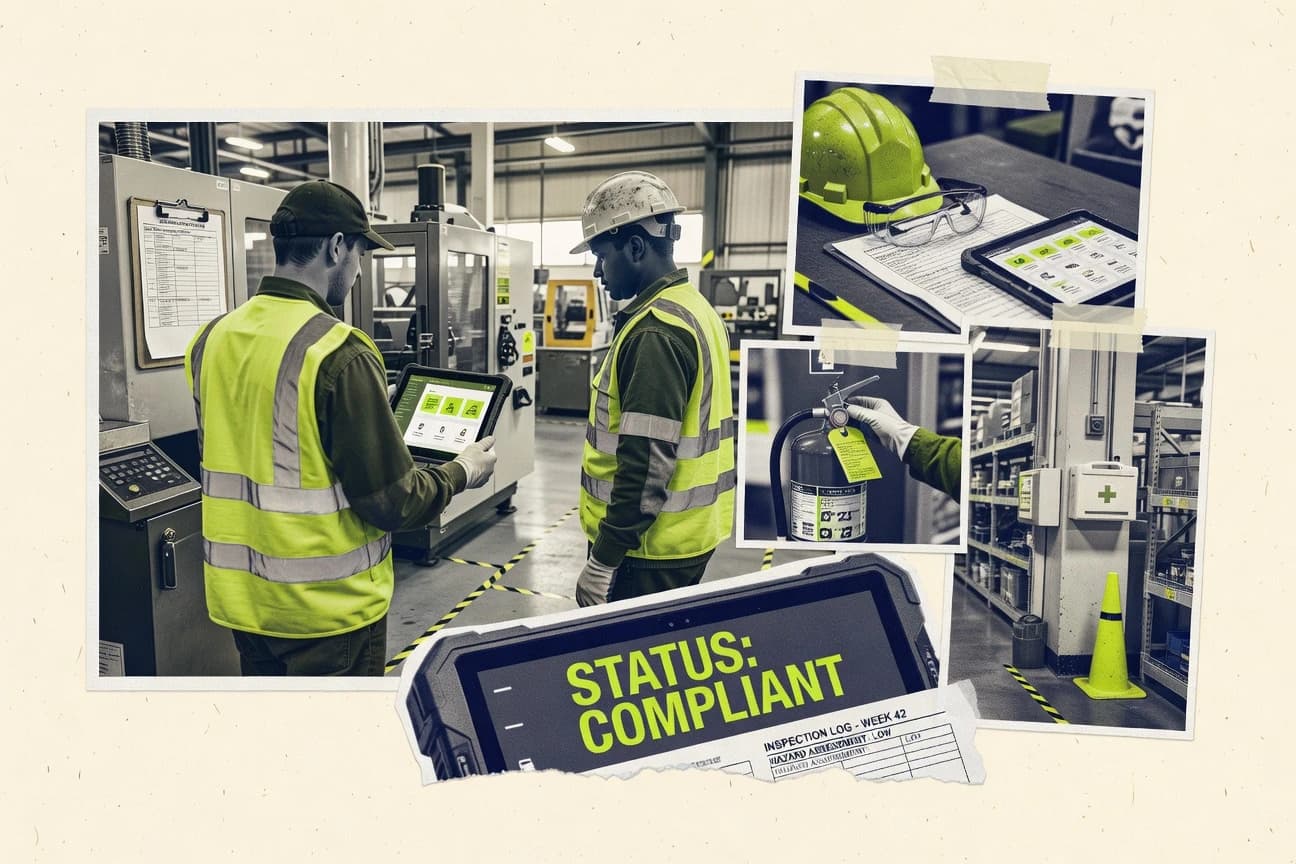
Business FinanceTop 10 Best Health And Safety Management Software of 2026
Ranking top health and safety management software for compliance teams, comparing Safesite, BIS Safety Software, Cority, and other tools with tradeoffs.

How we ranked these tools
Core product claims cross-referenced against official documentation, changelogs, and independent technical reviews.
Analyzed video reviews and hundreds of written evaluations to capture real-world user experiences with each tool.
AI persona simulations modeled how different user types would experience each tool across common use cases and workflows.
Final rankings reviewed and approved by our editorial team with authority to override AI-generated scores based on domain expertise.
Score: Features 40% · Ease 30% · Value 30%
Gitnux may earn a commission through links on this page — this does not influence rankings. Editorial policy
Safesite is the best fit for multi-site teams that need configurable mobile safety inspections, incident reporting, and corrective-action traceability with API integration, whereas Cority suits larger organizations that want governed EHS workflows across sites with broader suite integrations.
Editor’s top 3 picks
Three quick recommendations before you dive into the full comparison below — each one leads on a different dimension.
Safesite
Configurable investigation and action workflows that retain accountability through auditable status changes.
Built for fits when multi-site teams need configurable safety workflows and traceability with API integration..
BIS Safety Software
Editor pickConfigurable investigation and corrective action workflows that enforce closure steps and status discipline.
Built for fits when compliance teams need controlled safety workflows tied to evidence and recurring investigations..
Cority
Editor pickUnified case lifecycle for incidents, investigations, and follow-up actions reduces evidence fragmentation across audits.
Built for fits when multi-site compliance teams need governed safety workflows and integrations..
Comparison Table
Safesite
SMBMobile safety inspections, incident reporting, and corrective action tracking.
Configurable investigation and action workflows that retain accountability through auditable status changes.
Safesite is designed around end-to-end safety execution, where hazard reporting, workplace inspections, and incident workflows feed follow-up actions and accountability. The system records who did what and when through built-in audit logging, which supports regulatory audit trails and internal control testing. Automation is driven by configurable workflows, including assignment rules for investigations and action plans.
A practical tradeoff is that deeper governance, like consistent form structures and investigation templates across locations, requires deliberate configuration and adoption management. Safesite fits organizations that need repeatable safety workflows across multiple sites and want integrations that push events and statuses via REST APIs to payroll, maintenance, or risk systems.
- +Structured incident investigations with configurable follow-up actions
- +Audit trails that connect events to responsible users and timestamps
- +Workflow configuration supports consistent safety processes across sites
- +REST API access enables event and status synchronization
- –Cross-site standardization depends on careful template configuration
- –Advanced governance requires ongoing admin attention to maintain consistency
- –Some integrations may need custom mapping of fields and identifiers
- –Complex approval paths can take time to model correctly
EHS compliance teams
Standardize incident follow-ups across sites
Faster closure with clear ownership
Operations managers
Route hazards from field to remediation
Reduced hazard backlog
Show 2 more scenarios
Safety program administrators
Connect safety events to enterprise systems
Single source reporting feed
REST APIs and automation hooks push incident and action updates into connected tooling for reporting.
Internal audit teams
Validate control execution and timelines
Tighter internal control testing
Audit logs provide a review trail linking safety events to approvals, assignments, and timestamps.
Best for: Fits when multi-site teams need configurable safety workflows and traceability with API integration.
BIS Safety Software
SMBSafety management and training tracking software for mid-market organizations.
Configurable investigation and corrective action workflows that enforce closure steps and status discipline.
BIS Safety Software centers safety process execution around configurable checklists, investigations, and follow-up actions with status transitions. The system keeps a traceable thread from reporting through investigation and into closure workflows, which helps teams answer internal control questions during internal reviews. Automation is driven by workflow configuration and assignment rules that route tasks to the right roles instead of relying on manual email chasing.
A tradeoff is that deep customization requires disciplined setup of workflow templates and required fields, because inconsistent configurations create noisy reporting and harder governance. BIS Safety Software works well when teams run recurring inspections, investigate incidents, and track corrective actions across multiple sites that must produce consistent evidence.
- +End-to-end incident to action workflow with clear ownership
- +Configurable field reporting forms for site-specific processes
- +Audit trail captures user actions across safety records
- +Safety KPI reporting built around operational records
- –Advanced workflow setup requires governance discipline
- –Custom reporting often needs careful template planning
- –Some specialty EHS modules may require configuration effort
- –Large datasets can slow navigation without clear filters
EHS compliance managers
Centralize incident and follow-up actions
Faster corrective action closure
Site safety coordinators
Standardize inspections across sites
More consistent field evidence
Show 2 more scenarios
Quality and internal audit teams
Verify controls with audit trails
Cleaner audit trail evidence
Review user activity history on safety records and actions during internal control testing.
Operations risk leads
Manage hazard scoring and mitigation
More actionable risk reduction
Record hazards with risk scoring inputs and track mitigations through assigned workflows.
Best for: Fits when compliance teams need controlled safety workflows tied to evidence and recurring investigations.
Cority
enterpriseEnvironmental, health, safety, and quality management suite for mid-to-large enterprises.
Unified case lifecycle for incidents, investigations, and follow-up actions reduces evidence fragmentation across audits.
Cority is a strong fit for compliance teams that need connected workflows across reporting, investigation, corrective actions, and verification. The system supports structured hazard workflows, inspection and audit programs, and lifecycle tracking for nonconformities and CAPA-style closure. Admin controls include permissioning for sensitive records and workflow configuration so different organizations can use shared patterns without manual rework.
A tradeoff appears in rollout effort because Cority configuration requires careful mapping of organizational roles, workflow stages, and required fields before scaling to multiple sites. It fits best when a single risk and compliance instance will replace spreadsheets and email chains for incident, investigation, and evidence collection across recurring audit cycles.
- +Configurable workflow stages connect reports to investigation and closure
- +Role-based permissions and approval routing support controlled evidence trails
- +Audit trails record record changes across safety workflows
- +API-first integration enables EHS data movement to enterprise systems
- –Setup effort is high when required fields and stages are not standardized
- –Deep configuration can slow changes for small teams without admin capacity
- –Report and dashboard design depends on consistent data capture
- –Multi-department rollouts need careful governance to avoid workflow drift
EHS compliance managers
Run incident to closure workflows
Fewer audit gaps and faster closure
Operations safety leads
Manage hazards and inspections
Higher follow-through on findings
Show 2 more scenarios
GRC and internal controls teams
Track nonconformities and evidence
Clearer internal control testing artifacts
Use audit trails and controlled workflows to produce traceable evidence for internal reviews.
EHS IT integration teams
Sync EHS data to enterprise systems
Lower manual data re-entry
Use integration APIs to exchange master data and safety events with HR, ERP, and ticketing systems.
Best for: Fits when multi-site compliance teams need governed safety workflows and integrations.
SafetySync
SMBOnline safety management system for documentation, training, and incident tracking.
Investigation workflow templates that enforce investigation steps and require action completion before closure.
SafetySync is a health and safety management software that emphasizes incident and audit workflows with configurable forms and task routing. The system supports hazard identification, near-miss capture, incident investigation steps, and document tracking for compliance evidence.
SafetySync also provides safety training and competency tracking tied to operational records, plus KPI dashboards for safety trends. Admin controls cover user roles, audit history, and workflow governance so teams can standardize reporting and close corrective actions consistently.
- +Workflow routing for investigations keeps actions tied to specific events
- +Configurable checklists support consistent site inspections and evidence capture
- +Audit trail records changes to key safety records and decision steps
- +Training and competency tracking links learning to role requirements
- –Extensive configuration is needed to match complex, multi-entity reporting rules
- –Some advanced integrations rely on API work rather than out-of-the-box connectors
- –Dashboard KPI coverage can feel limited without careful data mapping
- –Bulk imports for historical records require preparation of source formats
Best for: Fits when compliance teams need configurable incident, inspection, and corrective action workflows with strong record traceability.
Intelex
enterpriseEHS and quality management software for enterprise compliance operations.
Workflow-driven incident investigations that route findings into corrective action tracking with governance and audit trail.
Intelex captures health and safety workflows in a configurable work-management system for incident reporting, investigations, and corrective actions. The product also supports safety document workflows and compliance register management with audit-ready traceability across tasks and approvals.
Automation is driven by configurable forms, status transitions, and assignment rules across reporting and follow-up cycles. Intelex emphasizes administration controls such as user roles, workflow governance, and audit logs that track record changes over time.
- +Configurable workflows for incidents, investigations, and corrective actions
- +Document and compliance register workflows with approval traceability
- +Audit logs that track record changes for regulatory review needs
- +Role-based access controls for separating duties across teams
- –Complex configuration can slow rollout when workflows are heavily customized
- –Integrations depend on the API and connector setup rather than turnkey data links
- –Reporting dashboards require configuration to match specific KPI definitions
- –Some safety field workflows can feel form-centric and less template-driven
Best for: Fits when compliance teams need end-to-end incident follow-up, approvals, and traceability across multiple locations.
Sphera
enterpriseEHS, operational risk, and sustainability management software for industrial operators.
Sphera’s audit trace ties operational actions to approvals and outcomes across governance workflows.
Sphera is a health and safety management system built for organizations that need EHS governance across sites, contractors, and audits. It supports incident workflows, risk management activities, and document and compliance tracking that map to internal control expectations.
The product’s administration and integration surface matter for compliance teams because REST APIs and automation hooks are used to connect operational systems and standardize data capture. Reporting and audit trail capabilities are designed for ongoing oversight rather than end-of-year document pulls.
- +Strong cross-site governance for EHS processes and compliance records
- +Configurable incident and risk workflows align with internal investigation stages
- +Audit trail supports traceability from approvals to outcomes
- +REST API and automation hooks support system integration for data capture
- –Requires disciplined configuration to keep workflows consistent across sites
- –Some specialist safety workflows need careful setup rather than plug-and-play templates
- –User experience depends on admin configuration more than on defaults
- –Reporting depth can require template design effort for tailored dashboards
Best for: Fits when multi-site compliance teams need consistent EHS workflows with traceable audit evidence.
Quentic
enterpriseEHS and sustainability management software for European and global enterprises.
Investigation-to-corrective-action execution with evidence attachments and trackable closure steps inside one configurable workflow.
Quentic pairs health and safety workflow tracking with structured integrations for document-heavy compliance work. Incident handling, investigations, and corrective actions can be configured to match internal processes and reporting deadlines.
The product also supports audit trails and change history so teams can show how issues were managed from first report to closure. Automation features focus on routing, approvals, and notifications rather than manual status chasing.
- +Configurable incident and corrective action workflows with clear ownership steps
- +Audit history supports regulatory audit trail needs for changes and status updates
- +Integrations via API and webhooks support syncing tasks and records into other systems
- +Centralized document attachments reduce scattered evidence across investigations
- –Advanced governance requires deliberate configuration of roles and approval chains
- –Reporting depth depends on how consistently teams label and categorize records
- –Deep cross-module automation needs more setup than basic status notifications
- –Some niche workflows may require process adjustments rather than ready-made templates
Best for: Fits when compliance teams need configurable incident-to-action workflows plus integration-driven evidence capture.
Ideagen EHS
enterpriseEHS, quality, and risk management software under the Ideagen product group.
Configurable EHS workflow engine that links hazards, incidents, and corrective actions into an auditable action chain.
Ideagen EHS is a health and safety management system built around structured compliance workflows for incident and risk handling.
It supports configurable safety processes like hazard identification, workplace inspection checklists, and corrective and preventive actions with traceable records.
Administration focuses on audit trail continuity, user permissions, and controlled document and form change through the work lifecycle.
Integration options include REST APIs and webhook-style events for connecting HR, maintenance, and reporting tools.
- +Configurable incident, hazard, and action workflows with end-to-end traceability
- +REST APIs and event-driven hooks support external reporting and system integration
- +Audit trail coverage supports compliance-oriented reviews of changes and ownership
- +Strong configuration for checklists, inspections, and follow-ups across sites
- –Workflow configuration requires governance discipline to avoid inconsistent data entry
- –Advanced integrations often depend on specialist setup rather than out-of-the-box connectors
- –Role and permission design can become complex across multiple business units
- –Dashboarding depth depends on how data capture is standardized during rollout
Best for: Fits when compliance teams need configurable EHS workflows with audit continuity and integration to enterprise systems.
Alcumus
enterpriseEHS and supply chain compliance software with strong UK market presence.
End-to-end linking of incident, hazard, and corrective action records into a single regulatory evidence path.
Alcumus manages safety compliance workflows by collecting incidents, hazards, and actions into audit-ready records. Core modules cover workplace inspections, risk assessment, and corrective and preventive actions with configurable forms and routing.
Admin controls support user provisioning, role-based permissions, and document retention for regulatory evidence. Integration options focus on connecting external systems through defined API and event hooks for data movement and automation.
- +Configurable workflow routing for incidents, hazards, and follow-up actions
- +Centralized audit trail that links reports to ownership and closure
- +Inspection and risk assessment forms designed for repeatable collection
- +Integration options support automation via API and webhook-style events
- –Configuration needs governance to keep forms, roles, and required fields consistent
- –Some advanced analytics require disciplined tagging and structured data entry
Best for: Fits when compliance teams need tightly connected safety workflows and evidence trails across sites.
SafetyIQ
enterpriseEHS software for incident management, risk assessment, inspections, actions, and safety analytics.
Incident and near-miss investigations can carry findings into corrective and preventive action with governed closeout steps.
SafetyIQ is a health and safety management system aimed at compliance teams that need structured workflows for hazard, incident, and audit activities. Core modules cover hazard identification with risk scoring, incident and near-miss reporting, and corrective action tracking through investigation and closeout steps.
Documented processes for inspections, training, and audit trails support regulatory readiness and internal control testing. Automation options include workflow configuration and integrations through REST APIs and webhooks for connecting safety records to other enterprise systems.
- +Workflow configuration supports end-to-end incident investigation and action closeout
- +Risk scoring for hazards supports consistent hierarchy of controls workflows
- +REST API and webhooks help connect safety events to enterprise systems
- +Audit trail visibility supports traceability for compliance reviews
- –Requires disciplined configuration to keep roles, forms, and steps consistent
- –Some advanced EHS analytics require export or additional reporting work
Best for: Fits when compliance teams need configurable safety workflows that integrate with existing IT systems.
Conclusion
After evaluating 10 business finance, Safesite stands out as our overall top pick — it scored highest across our combined criteria of features, ease of use, and value, which is why it sits at #1 in the rankings above.
Use the comparison table and detailed reviews above to validate the fit against your own requirements before committing to a tool.
How to Choose the Right health and safety management software
Health and safety management software is the workflow layer that captures safety events, routes investigations, and records closure actions with audit trail requirements. This guide covers Safesite, BIS Safety Software, Cority, and the other reviewed platforms that support incident management, corrective action tracking, and governed evidence chains.
The narrative focuses on how each tool carries accountability through status changes, how admin controls shape workflow consistency across sites, and how integration surfaces affect data sharing with existing systems. Tools with configurable investigation and corrective action workflows like Safesite and BIS Safety Software get compared alongside case-lifecycle approaches like Cority and workflow-enforcement templates like SafetySync.
Health and safety management software for governed incident, investigation, and action workflows
Health and safety management software organizes the full safety workflow from incident reporting through investigation and follow-up actions, including evidence capture and controlled closeout. Safesite and BIS Safety Software both emphasize configurable investigation and action workflows that retain accountability through auditable status changes and closure discipline.
Many deployments also require role-based permissions and evidence continuity so audits can trace what happened, who approved it, and when work was closed. Cority focuses on a unified case lifecycle that connects incident, investigation, and follow-up actions into a single governed record to reduce evidence fragmentation across audits.
Evaluation criteria for governed safety workflows and evidence integrity
Health and safety management software needs a controlled workflow that links incident reporting to investigation steps and corrective action closure with timestamps and ownership. Audit trail quality depends on whether the system enforces status transitions, approval routing, and evidence attachment paths rather than letting users close records without completing required steps.
Configurable investigation and corrective action workflows with disciplined closure
Safesite supports configurable investigation and action workflows that retain accountability through auditable status changes. BIS Safety Software enforces closure steps with configurable workflows designed to keep investigation outcomes tied to corrective action progress.
Unified case lifecycle that reduces evidence fragmentation across audits
Cority uses a unified case lifecycle that connects incidents, investigations, and follow-up actions into a governed record to reduce fragmented evidence. Alcumus links incident, hazard, and corrective action records into a single regulatory evidence path using centralized audit trail behavior.
Governance controls for roles, approvals, and audit traceability
Cority adds role-based permissions and approval routing so governance actions stay attached to evidence trails. Sphera emphasizes audit trace that ties operational actions to approvals and outcomes across governance workflows.
Automation and integration surfaces for cross-system reporting
Ideagen EHS provides REST APIs and event-driven hooks that support external reporting from connected EHS workflows. Quentic is designed around integration-driven evidence capture and configurable incident-to-corrective-action execution that keeps attachments inside the workflow chain.
Checklist and evidence capture patterns for inspections and investigations
SafetySync combines configurable checklists for site inspections with investigation routing that keeps actions tied to specific events. Intelex includes document and compliance register workflows with approval traceability alongside investigation routing into corrective action tracking.
Choosing health and safety management software by workflow control depth and governance fit
The decision should start with workflow control depth because incident management, investigation, and corrective actions only hold up under audit when the system enforces the steps that drive evidence quality. Then the decision should move to governance fit because multi-site standardization depends on how admins manage templates, required fields, role permissions, and approval routing without breaking day-to-day throughput.
Pick a workflow model that matches how safety cases close
If required steps must block closure, SafetySync uses investigation workflow templates that require action completion before closure. If status transitions must remain accountable across multi-site templates, Safesite retains accountability through auditable status changes tied to configurable workflows.
Decide between unified case lifecycle versus cross-entity routing
If audits need one governed record that spans incident, investigation, and follow-up, Cority’s unified case lifecycle reduces evidence fragmentation. If regulatory evidence must link incident, hazard, and corrective action records into one evidence path, Alcumus focuses on tightly connected workflow routing for incidents, hazards, and follow-up actions.
Map governance responsibilities to permissions and audit trace behavior
If approval routing and permissions must be enforced across the lifecycle, Cority supports role-based permissions and approval routing for controlled evidence trails. If the priority is operational governance traceability across sites, Sphera ties operational actions to approvals and outcomes using audit trace behavior.
Select based on integration and automation requirements for external systems
If external systems must receive events and data via REST and hooks, Ideagen EHS provides REST APIs and event-driven hooks for integration into enterprise reporting. If the main requirement is connector light integration and evidence capture through the workflow itself, Quentic emphasizes integration-driven evidence capture and trackable closure steps inside one configurable workflow.
Validate template governance before rollout to multiple sites
If template standardization must be controlled centrally, Cority and Safesite both require configuration consistency because deep configuration can slow changes when admin capacity is limited. If the organization lacks admin bandwidth, BIS Safety Software and Quentic both require deliberate governance discipline to avoid workflow and reporting drift.
Who health and safety management software fits best
The best-fit buyer is usually a compliance team that must show traceable evidence chains from incident to closure with consistent status discipline and role accountability. The next fit driver is deployment scale because multi-site standardization stresses template configuration and governance controls more than single-site teams.
Multi-site safety and compliance teams
Safesite fits when multi-site teams need configurable safety workflows and traceability with API integration. Sphera fits when multi-site governance requires consistent EHS workflows with traceable audit evidence.
Compliance teams running recurring investigations and corrective actions
BIS Safety Software fits when controlled safety workflows must enforce closure steps and status discipline tied to evidence and recurring investigations. Intelex fits when end-to-end incident follow-up must route into corrective action tracking with approvals and traceability across multiple locations.
Organizations facing audit evidence fragmentation risk
Cority fits teams that need a unified case lifecycle so incidents, investigations, and follow-up actions remain inside one governed record. Alcumus fits teams that need a single regulatory evidence path linking incident, hazard, and corrective action records.
Enterprises that must integrate EHS workflows with other systems
Ideagen EHS fits organizations that require REST APIs and event-driven hooks for external reporting and system integration. Quentic fits organizations that expect evidence attachments captured inside an integration-driven workflow chain.
Teams standardizing inspections and corrective actions
SafetySync fits when configurable checklists for site inspections must connect to investigation routing and action completion before closure. SafetySync also fits when investigation steps and evidence capture must follow consistent templates across entities.
Common mistakes that break audit traceability in safety workflow tools
Audit trail quality fails when workflow configuration allows closure without required evidence steps, or when required fields and templates drift across sites. Governance discipline also fails when permissions, roles, and approval chains are defined too late, causing inconsistent labeling and evidence attachment behavior.
Allowing closure without enforcing required investigation and action steps
SafetySync prevents premature closure by requiring action completion before closure, so workflow steps should be configured to block status transitions. Safesite and BIS Safety Software both rely on auditable status changes and closure discipline, so required steps should be mapped before rollout.
Underestimating admin workload needed to keep cross-site templates consistent
Safesite notes that cross-site standardization depends on careful template configuration, so central templates and governance rules should be prepared before adding sites. Sphera also requires disciplined configuration to keep workflows consistent across sites.
Mixing incident, investigation, and follow-up evidence across separate records without a unified lifecycle
Cority reduces evidence fragmentation by connecting incident, investigation, and follow-up actions into a single governed record. Alcumus similarly builds a single regulatory evidence path, so incident, hazard, and corrective action routing should be configured to stay linked.
Delaying role design and approval routing until after workflows are live
Cority’s role-based permissions and approval routing should be defined alongside workflow stages so approvals stay attached to evidence trails. Quentic requires deliberate configuration of roles and approval chains, so governance roles should be set before business users start filing cases.
Treating integrations as a shortcut instead of a defined automation surface
Ideagen EHS supports REST APIs and event-driven hooks, so the integration scope should be planned as part of the evidence chain. SafetyIQ and other tools that depend on API and export work should have integration and reporting outputs mapped before acceptance testing.
How We Selected and Ranked These Tools
We evaluated Safesite, BIS Safety Software, Cority, SafetySync, Intelex, Sphera, Quentic, Ideagen EHS, Alcumus, and SafetyIQ against workflow control depth, governance traceability, and integration automation surfaces. Features made up 40% of the scoring because configurable investigation and corrective action workflows drive auditable status changes and closure discipline.
Ease and value each made up 30% because advanced workflow configuration only helps if admin teams can maintain consistency across templates and required fields. Safesite ranked highest because configurable investigation and action workflows retained accountability through auditable status changes, and the tool connected events to responsible users with timestamps while also supporting API integration for safety data sharing.
Frequently Asked Questions About health and safety management software
How do Safesite and Cority connect incident and investigation outcomes to audit evidence?
Which tool is better for integrating safety records into other enterprise systems via API or automation hooks?
What breaks if teams try to move from spreadsheet workflows to a governed case lifecycle in Intelex, Ideagen EHS, or Quentic?
How do admin controls differ across BIS Safety Software and SafetySync for role-based access and workflow governance?
When should a compliance team prioritize document and form change control in Ideagen EHS versus document workflow depth in Intelex?
How does data migration work in practice for safety systems that require an incident-to-action data model in Cority or Alcumus?
Which tool offers investigation workflow templates that enforce step completion before closure?
How do audit trail and record traceability approaches differ between Sphera and Intelex during internal control testing?
Where does Quentic fall short compared with Safesite for configurable safety workflows across multi-site operations?
Tools reviewed
Primary sources checked during evaluation.
Referenced in the comparison table and product reviews above.
- Business FinanceTop 10 Best Health And Safety Management System Software of 2026
- Business FinanceTop 10 Best Environmental Health And Safety Management Software of 2026
- Business FinanceTop 10 Best Health And Safety Compliance Software of 2026
- Healthcare MedicineTop 10 Best Medical Equipment Maintenance Management Software of 2026
- Business FinanceTop 10 Best Ehs Audit Management Software of 2026
Keep exploring
Comparing two specific tools?
Software Alternatives
See head-to-head software comparisons with feature breakdowns, pricing, and our recommendation for each use case.
Explore software alternatives→In this category
Business Finance alternatives
See side-by-side comparisons of business finance tools and pick the right one for your stack.
Compare business finance tools→