
GITNUXSOFTWARE ADVICE
Healthcare MedicineTop 10 Best Dental Patient Education Software of 2026
Top 10 dental patient education software ranked for dental practices, with comparison of tools like Rendia and Dental Intelligence Patient Education.

How we ranked these tools
Core product claims cross-referenced against official documentation, changelogs, and independent technical reviews.
Analyzed video reviews and hundreds of written evaluations to capture real-world user experiences with each tool.
AI persona simulations modeled how different user types would experience each tool across common use cases and workflows.
Final rankings reviewed and approved by our editorial team with authority to override AI-generated scores based on domain expertise.
Score: Features 40% · Ease 30% · Value 30%
Gitnux may earn a commission through links on this page — this does not influence rankings. Editorial policy
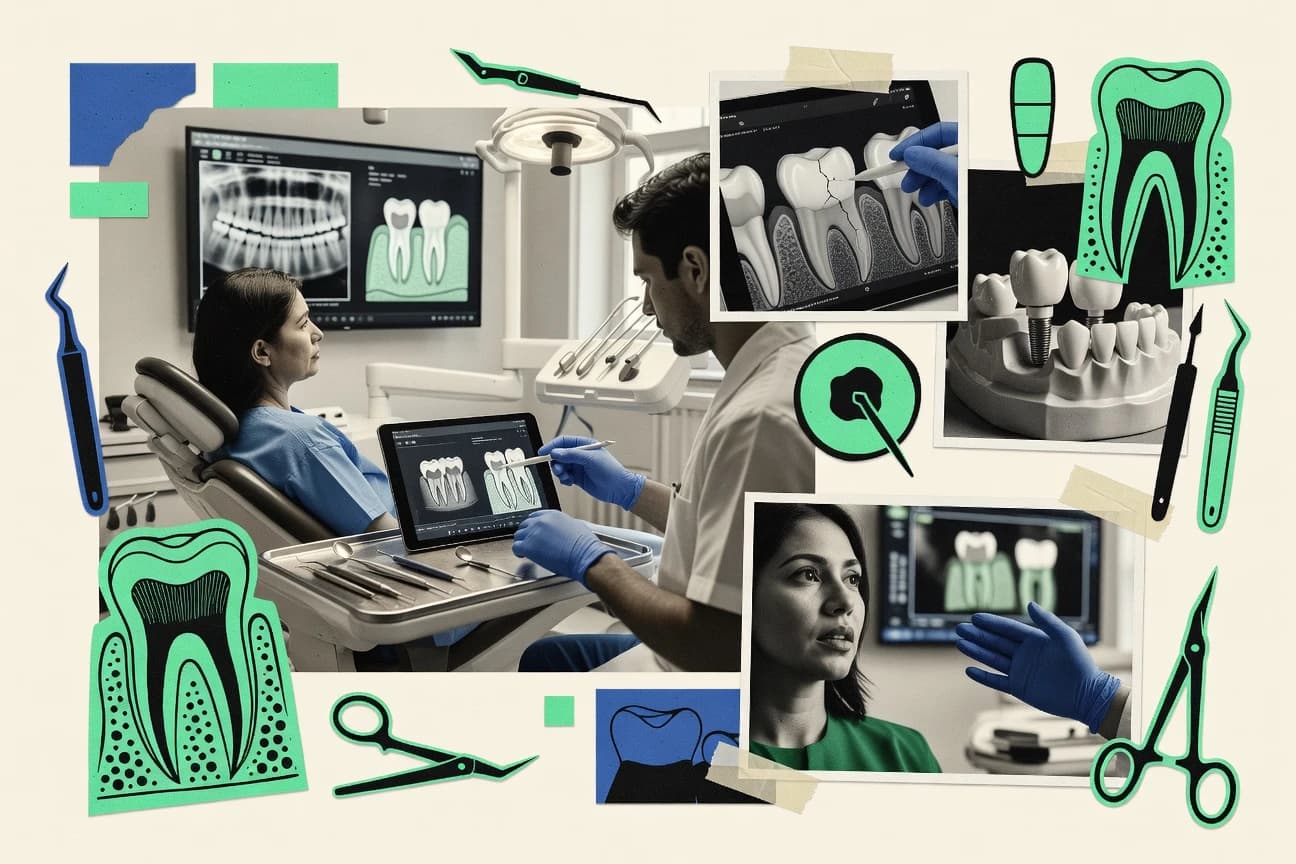
Rendia is the best fit when you need repeatable, procedure-specific chairside explanations that play consistently for diverse patients, whereas Dental Intelligence Patient Education works better if you want procedure-driven visuals embedded in a broader practice analytics workflow.
Editor’s top 3 picks
Three quick recommendations before you dive into the full comparison below — each one leads on a different dimension.
Rendia
Guided, case-linked education assembly that turns clinical findings into a patient-ready walkthrough.
Built for fits when practices need repeatable, procedure-specific chairside explanations with multilingual and accessible playback..
Patient Education by DentalCare
Editor pickThe education library is organized for dental visit teaching so staff can match procedure media to appointment workflows.
Built for fits when clinics want repeatable chairside instruction using built-in procedure education content..
Dental Intelligence Patient Education
Editor pickCase-aligned procedure education that guides a clinician through the same visual education flow used in treatment plan presentations.
Built for fits when practices need procedure-driven patient visuals for treatment-plan and consent communication..
Comparison Table
Rendia
vertical specialistRendia provides visual patient education content for dental and medical practices.
Guided, case-linked education assembly that turns clinical findings into a patient-ready walkthrough.
Rendia’s core capability is generating patient-facing treatment explanations that stay tied to the case narrative rather than being a generic library. The system organizes content for common dental workflows like restorations, implants, orthodontics, and periodontal education so presentation time can stay focused on the visit’s clinical story. Rendia also provides patient delivery modes for playback and presentation use by clinical teams, with language options intended for multilingual patient education.
A tradeoff is that high-quality results depend on staff using consistent case inputs so the assembled walkthrough aligns with the visit findings. Rendia fits best for practices that run frequent treatment plan presentations and need repeatable, visual explanations across operator teams while collecting engagement signals to improve comprehension over time.
- +Case-based walkthroughs keep explanations aligned with the visit narrative
- +Multilingual patient education supports consistent messaging across language needs
- +Captioned playback supports accessibility during chairside and patient review
- +Engagement analytics highlight which segments hold patient attention
- –Setup effort increases when teams want strict standardization across operators
- –Templates work best when staff consistently input case context
Dentist and assistants
Chairside treatment plan walkthrough
Cleaner consent conversations
Practice managers
Standardize operator education
More uniform patient messaging
Show 2 more scenarios
Multilingual care teams
Language-specific patient education
Lower comprehension gaps
Teams deliver captions and translated education that matches the same procedure walkthrough.
Treatment coordinators
Case acceptance support
Improved acceptance rates
Coordinators review engagement signals to refine which education segments precede decisions.
Best for: Fits when practices need repeatable, procedure-specific chairside explanations with multilingual and accessible playback.
Patient Education by DentalCare
vertical specialistColgate-backed patient education resources and interactive tools for dental offices.
The education library is organized for dental visit teaching so staff can match procedure media to appointment workflows.
Patient Education by DentalCare is designed for clinics that need consistent patient education across common procedures like restorations, implants, periodontal care, and orthodontic workflows. The content library approach supports procedure-specific teaching so clinicians can present the right media during consultations and instruction handoffs. Delivery is built for patient-facing viewing so education can happen during the same visit planning sequence as the treatment discussion. For organizations that already run a digital practice workflow, the value is higher when Patient Education is used as the education layer that standardizes what patients receive and when.
A key tradeoff is that deeper personalization can be limited when clinics need highly customized scripts, brand-specific media variations, or niche procedure adaptations beyond the built-in library. The strongest fit is a clinic that wants structured chairside education without building and maintaining custom patient content from scratch. Usage works best when staff follow a consistent mapping between appointment types and the education materials used for those visits.
- +Procedure-specific education helps standardize chairside explanations across visits
- +Content-first library reduces the need to assemble patient scripts manually
- +Supports visit workflows for pre-op and post-op instruction handoffs
- +Patient-facing delivery fits consultation and follow-up timing
- –Customization depth can lag clinics that need bespoke multimedia per case
- –Reliance on available media libraries limits coverage for rare procedures
- –Integration depth depends on which practice systems are already in use
- –Staff adoption can require appointment-type education mapping discipline
Dentists and treatment coordinators
Explain treatment plan steps during consults
Clearer decisions at the chair
Dental assistants and front-office staff
Deliver consistent pre-op and post-op instructions
Fewer missed instruction details
Show 2 more scenarios
Practice managers
Standardize patient education across clinicians
More consistent patient messaging
The practice can run repeatable education choices by appointment type to reduce variation between providers.
Periodontal and orthodontic teams
Reinforce condition-specific home care education
Better adherence to care plans
Clinicians use procedure-specific materials to support patient understanding of care routines and follow-up needs.
Best for: Fits when clinics want repeatable chairside instruction using built-in procedure education content.
Dental Intelligence Patient Education
SMBPatient education module within the Dental Intelligence practice analytics suite.
Case-aligned procedure education that guides a clinician through the same visual education flow used in treatment plan presentations.
Dental Intelligence Patient Education is built for clinics that need consistent, procedure-specific visuals during treatment planning and chairside walkthroughs. It provides a content library workflow for selecting and presenting educational media for common dental procedures and preventive guidance. Patient delivery is designed to fit appointment-driven education, including pre-visit instruction materials and follow-up education after procedures.
A tradeoff is that education accuracy depends on correct procedure and case selection during the presentation step. The clearest usage situation is when treatment coordinators and clinicians want a controlled visual script during plan reviews and consent discussions.
- +Procedure-specific patient media supports chairside treatment explanation
- +Clinic-controlled content library helps standardize patient education messages
- +Patient education delivery fits visit-based pre- and post-care workflows
- +Content selection supports repeatable consent and treatment-plan communication
- –Correct procedure mapping is required for education to match the case
- –Visual script setup can add time during fast-paced appointment starts
- –Deep analytics for comprehension tracking are not exposed as a primary workflow
Dental assistants and hygienists
Queue patient education for hygiene visits
More uniform chairside explanations
Treatment coordinators
Present plan visuals during consults
Faster, clearer plan discussions
Show 1 more scenario
Dentists
Guide informed consent with visuals
Better documented education conversations
Use procedure media during risk and benefits discussions to support patient understanding.
Best for: Fits when practices need procedure-driven patient visuals for treatment-plan and consent communication.
VixWin Patient Education
vertical specialistDental imaging software with patient communication and visual education features.
Clinic governance for the patient content library lets teams control which education materials appear during treatment plan presentation.
VixWin Patient Education focuses on chairside treatment education through reusable patient-facing content and procedure walkthroughs. The system supports digital delivery for preoperative and postoperative instructions and for oral hygiene instruction tied to specific care needs.
Content organization enables consistent treatment plan presentation across visits, which helps standardize informed consent education. Admin workflows support governance of patient education materials so clinics can control what appears during patient-facing sessions.
- +Procedure-specific content library supports repeatable chairside education
- +Structured instruction sets cover preoperative and postoperative guidance
- +Consistent treatment plan messaging across multiple appointment types
- +Patient materials can be controlled through clinic admin governance
- –Limited visibility into education engagement analytics compared with analytics-first tools
- –Multilingual delivery and ADA accessibility features are not as explicit as in top competitors
- –Integration depth depends on external systems for practice and EHR handoff
- –Re-creating tailored workflows can require more admin effort than simple templating
Best for: Fits when dental practices need controlled, procedure-linked patient education for chairside and follow-up instruction.
Pearl Second Opinion
API-firstAI-powered dental radiograph analysis used for real-time patient education at chairside.
Patient education generated from the active dental case so clinicians can present the same treatment narrative at the chairside and later.
Pearl Second Opinion creates chairside patient education using visual procedure explanations and guided treatment messaging tied to dental cases. Content is delivered through a patient-facing experience designed for treatment plan presentations, including procedure walkthroughs and supporting instructions.
The workflow centers on case-specific education so clinicians can keep the same narrative across the visit. Built for dental clinics that need consistent patient education delivery from internal case information.
- +Case-linked patient education reduces manual slide building during presentations
- +Procedure walkthroughs support clearer explanations for restorative and implant cases
- +Patient delivery is designed for viewable, appointment-friendly comprehension messaging
- +Supports multilingual patient education to match common clinic language needs
- –Practice management integration depth varies and can add mapping work for existing workflows
- –Education customization is constrained compared with fully custom content authoring
- –Multilingual content coverage may not match every niche procedure label
- –Admins may need governance discipline to keep education messaging consistent across providers
Best for: Fits when clinics want case-specific chairside education with consistent patient messaging across common procedures.
RevenueWell
SMBRevenueWell combines dental patient communication with educational campaigns and automated outreach.
Patient engagement analytics tied to procedure education delivery during treatment plan presentations.
RevenueWell is dental patient education software focused on chairside and patient-facing treatment explanation using image and media-driven teaching materials. It supports procedure-specific content creation and distribution, then uses engagement reporting to show what patients are viewing during informed consent and pre- and postoperative instruction flows.
The system also supports multilingual content delivery and presentation-mode workflows for treatment plan presentations. RevenueWell is distinct for pairing patient education delivery with staff-friendly case presentation assets rather than only storing static handouts.
- +Procedure-focused media supports chairside treatment walkthroughs
- +Engagement reporting maps education delivery to patient viewing activity
- +Multilingual patient education content supports language-specific explanations
- +Patient delivery tools align with informed consent education workflows
- –Best results depend on curating and maintaining procedure content
- –Some analytics focus on viewing activity instead of comprehension outcomes
- –Setup requires coordinating staff presentation steps with patient delivery
- –Extensibility options are limited compared with developer-first education stacks
Best for: Fits when teams need repeatable chairside education assets and patient viewing analytics.
Solutionreach
enterpriseSolutionreach provides patient engagement messaging that can deliver educational content and reminders.
Workflow-based patient education automation that triggers portal education and follow-up instructions from clinical and appointment events.
Solutionreach focuses on dental patient education delivered through a branded patient portal and automated communications tied to appointments and clinical workflows. Patient-facing content is structured to support chairside education, treatment plan presentation, and follow-up instructions around visits.
Admin teams manage messaging templates, audience targeting rules, and content governance to keep education consistent across providers and locations. Automation and integration options support practice management and clinical systems so education content can move with the patient lifecycle.
- +Automation ties patient education to appointment timing and clinical touchpoints
- +Content templates support consistent chairside education across staff and locations
- +Portal delivery keeps instructions and media accessible between visits
- +Integration options connect education flows with practice management and clinical data
- –Education setup requires careful configuration of targeting rules to avoid misfires
- –Visual media customization is less granular than dedicated animation tools
- –Advanced education engagement reporting is limited compared with analytics-first vendors
- –Multilingual content workflows can add operational overhead for multi-language practices
Best for: Fits when dental teams need automated, portal-delivered patient education tied to appointment and follow-up workflows.
Dentrix Patient Engage Suite
enterprisePatient communication and engagement platform integrated with Dentrix practice management for reminders, education, and scheduling.
Dentrix-integrated education delivery pairs patient-facing visual explanations with the live treatment context from day-to-day workflows.
Dentrix Patient Engage Suite is a Dentrix-linked patient education and communication suite focused on treatment education workflows tied to the practice’s own clinical data.
It supports patient-facing delivery of procedure education content such as visual explanations and instruction materials used around key treatment moments.
The suite emphasizes integration with Dentrix operational screens so staff can present education alongside treatment plan context rather than managing separate training decks.
Central administration and content configuration are designed to keep education consistent across users and channels.
- +Dentrix context integration supports education tied to the patient’s treatment workflow
- +Procedure-focused visual education helps standardize chairside explanations
- +Central content configuration reduces drift across staff and appointment types
- +Instruction sets support consistent preoperative and postoperative guidance delivery
- –Education outcomes depend on the quality of upstream clinical documentation in Dentrix
- –Multichannel publishing may require more coordination between staff roles
- –Advanced automation needs governance discipline for repeatable templates
- –Limited portability can slow adoption when practices expect standalone education hosting
Best for: Fits when practices want patient education tightly coordinated with Dentrix treatment plan presentation across staff.
DentalMaster
vertical specialistAI-powered 3D treatment planning and patient education platform using the patient's own clinical case for chairside visualization.
Procedure-specific guided patient walkthroughs designed for treatment plan presentation moments and appointment timing.
DentalMaster delivers patient-facing treatment education by turning clinical plans into guided, media-led explanations for common dental workflows. It focuses on chairside education support with procedure-specific content, guided patient walkthroughs, and structured pre-op and post-op instructions.
Its core value comes from consistent presentation of treatment steps that map to real appointment moments, including treatment plan presentation and follow-through instruction. DentalMaster is best evaluated on how well its media library, patient delivery workflow, and governance settings fit practice routines.
- +Procedure-specific walkthroughs that support chairside treatment explanation
- +Structured pre-op and post-op instruction flows for common visits
- +Consistent media-led patient presentation for repeatable patient education
- +Content organization that supports quick retrieval during appointments
- –Limited visibility into patient comprehension trends compared with analytics-first tools
- –Workflow automation depth depends on integration maturity with practice systems
- –Multilingual and accessibility coverage may require manual content selection discipline
- –Administration controls for multi-location rollouts may be less granular than top automation vendors
Best for: Fits when practices need appointment-ready, procedure walkthrough education with consistent instruction flows.
CAESY Cloud
vertical specialistCloud-based dental patient education platform with 280-plus multimedia presentations featuring 3D animation, video, and narration.
Case-linked patient portal delivery designed to keep treatment education tied to the same workflow as the visit.
CAESY Cloud is patient education software for dental practices that need chairside treatment education and a consistent library of patient-facing explanations. The system centers on procedure walkthrough content and supports presenting education during consultations and treatment plan discussions.
CAESY Cloud also supports patient portal delivery workflows so education materials stay attached to the right case. Governance features focus on practice-controlled content use, with admin oversight for how materials are accessed and deployed across teams.
- +Chairside presentation flow supports procedural education during consults
- +Patient portal delivery keeps case education aligned to the visit
- +Practice-controlled content usage supports consistent messaging across clinicians
- +Content library organization reduces time spent rebuilding explanations
- –Limited visibility into patient comprehension tracking compared with analytics-first tools
- –Multilingual content management feels restricted for clinics needing many locales
- –Integration options for common practice management systems are not consistently deep
- –Setup requires careful workflow mapping to keep materials tied to cases
Best for: Fits when practices want standardized chairside patient education with portal delivery and admin-controlled content deployment.
Conclusion
After evaluating 10 healthcare medicine, Rendia stands out as our overall top pick — it scored highest across our combined criteria of features, ease of use, and value, which is why it sits at #1 in the rankings above.
Use the comparison table and detailed reviews above to validate the fit against your own requirements before committing to a tool.
How to Choose the Right dental patient education software
Dental patient education software organizes patient-facing treatment explanations so they stay aligned with clinical findings and the chairside presentation flow. This guide covers Rendia, Patient Education by DentalCare, Dental Intelligence Patient Education, VixWin Patient Education, Pearl Second Opinion, RevenueWell, Solutionreach, Dentrix Patient Engage Suite, DentalMaster, and CAESY Cloud.
The key differences among these tools show up in how they generate case-linked walkthroughs, how much control teams have over the content library, and how far automation and analytics extend beyond standard slide creation. The coverage also focuses on multilingual and accessibility playback, and on the setup work needed to keep education mapping accurate across visits.
Dental patient education software for chairside education, treatment plan communication, and portal instruction
Dental patient education software builds patient-facing education media that can be tied to a specific case or procedure and delivered during treatment plan presentations and follow-up instructions. Rendia turns clinical findings into patient-ready walkthroughs using guided, case-linked education assembly, so the narrative stays consistent with the visit.
Patient Education by DentalCare emphasizes a content-first library organized for dental visit teaching, so staff match procedure media to appointment workflows without assembling patient scripts from scratch. Across the category, the main implementation variable is how education materials become procedure-linked and appointment-timed, either through guided case walkthrough assembly like Rendia or through workflow automation and targeting like Solutionreach. Control surfaces also matter, because tools such as VixWin Patient Education focus on clinic governance for which materials appear during treatment plan presentation.
Dental patient education software features that determine chairside control and delivery accuracy
Case-linked assembly is the core capability because it keeps patient-facing treatment explanations aligned with the same clinical narrative used during the visit. Rendia builds walkthroughs by connecting clinical findings to a patient-ready sequence, while Pearl Second Opinion generates patient education from the active dental case for the same treatment narrative at chairside and later.
Education governance matters because clinics need consistent content selection during treatment plan presentation and follow-up. VixWin Patient Education adds clinic governance for which materials appear, while Patient Education by DentalCare uses a procedure-organized education library so staff match procedure media to appointment workflows.
Case-linked walkthrough generation
Rendia turns clinical findings into patient-ready walkthroughs using guided, case-linked education assembly. Pearl Second Opinion generates patient education from the active dental case so clinicians present the same narrative at chairside and later.
Procedure-organized education libraries
Patient Education by DentalCare organizes the education library for dental visit teaching so staff match procedure media to appointment workflows. VixWin Patient Education structures repeatable instruction sets that cover preoperative and postoperative guidance.
Clinician workflow alignment for treatment-plan and consent
Dental Intelligence Patient Education uses case-aligned procedure education to guide clinicians through the same visual education flow used in treatment plan presentations. Dentrix Patient Engage Suite pairs Dentrix context with patient-facing visual explanations so education stays tied to day-to-day treatment workflow.
Portal and workflow-timed delivery
Solutionreach automates patient education triggers from clinical and appointment events so portal education and follow-up instructions are timed to touchpoints. CAESY Cloud delivers case-linked education through a patient portal so case education remains aligned to the visit.
Analytics tied to education delivery
RevenueWell connects procedure education delivery during treatment plan presentations to patient engagement analytics that track viewing activity. Rendia focuses on guided, case-linked assembly, while RevenueWell adds engagement reporting tied to what patients view.
A decision framework for dental patient education software selection
The first split should be about whether walkthrough creation is guided by case-linked assembly or delivered from a procedure-organized library that staff select during chairside. Rendia and Pearl Second Opinion emphasize case-linked education generation, while Patient Education by DentalCare and VixWin Patient Education emphasize library-driven, procedure-matched content.
The second split should be about how automation and measurement affect operations after setup. Solutionreach automates portal education from clinical and appointment events, while RevenueWell emphasizes engagement reporting tied to viewing activity during treatment plan presentations.
Choose the content-to-case mechanism
Select Rendia if clinical findings must be converted into patient-ready walkthroughs through guided, case-linked education assembly. Select Patient Education by DentalCare if the workflow needs a content-first library where staff match procedure media to appointment teaching steps.
Decide between clinician-led script building and template-driven structure
Select Dental Intelligence Patient Education if the goal is a clinician-consistent visual education flow that mirrors treatment plan presentation work, since the procedure mapping drives the education flow. Select VixWin Patient Education if instruction sets must be structured for preoperative and postoperative guidance with clinic governance over which materials appear.
Map education delivery to appointment and portal timing
Select Solutionreach if patient education must trigger automatically from appointment and clinical touchpoints, since workflows drive portal education and follow-up instructions. Select CAESY Cloud if the main requirement is case-linked patient portal delivery tied to the same visit workflow.
Pick the integration depth that matches the practice system
Select Dentrix Patient Engage Suite when Dentrix treatment plan presentation context must be used to coordinate education across staff roles. Select Pearl Second Opinion when practice management integration depth can be handled as part of mapping work for existing workflows.
Set expectations for analytics and education outcome visibility
Select RevenueWell when education analytics tied to procedure education delivery are required, since reporting maps education delivery to patient viewing activity. Select Rendia, DentalCare, or VixWin if standardization and repeatable chairside walkthroughs are the priority and comprehension trend analytics are not the main decision metric.
Who should buy dental patient education software
Clinics that deliver consistent patient narratives across chairside visits and follow-up benefit from tools that generate education from the active dental case. Practices also benefit when patient-facing materials can be tied to treatment plan presentation moments instead of being assembled ad hoc.
Teams with multi-location or multi-operator operations benefit from governance controls that prevent wrong content from being shown. Teams that rely on timely portal education benefit from automation that triggers instruction sets from appointment and clinical events.
Practices standardizing chairside treatment explanations across operators
Rendia and Dental Intelligence Patient Education align patient walkthroughs to the same case narrative used in the visit. This reduces operator-by-operator variation when procedure mapping stays accurate.
Clinics that depend on Dentrix-driven treatment plan workflows
Dentrix Patient Engage Suite coordinates education with live Dentrix treatment workflow context, which keeps patient education tied to day-to-day workflow. This is a better operational fit when Dentrix documentation quality drives education context.
Teams that want automated portal instructions based on appointment and clinical touchpoints
Solutionreach ties education delivery to appointment timing and clinical touchpoints through workflow-based automation. CAESY Cloud also centers portal delivery with case-linked alignment to the visit.
Organizations that need viewing analytics tied to procedure education delivery
RevenueWell provides engagement reporting that maps procedure education delivery to patient viewing activity. This supports measurement focused on what patients viewed during treatment plan presentation.
Common implementation and governance mistakes in dental patient education software
Most failures come from mismatched expectations about how education becomes case-linked or appointment-timed. Misconfigured procedure mapping can cause the wrong education flow to appear for a given case, and weak operator discipline can undermine template-driven standardization.
Another frequent mistake is picking analytics-first tools without confirming that the metrics match clinical outcomes. Engagement reporting tied to viewing activity can fall short for comprehension improvement goals, so governance and content quality still need attention.
Launching case-linked education without enforcing correct procedure-to-case mapping
Dental Intelligence Patient Education requires correct procedure mapping so the education matches the case. Rendia also depends on teams entering case context consistently so templates produce the intended patient walkthrough.
Treating a library as automatically adaptive instead of staff-driven matching
Patient Education by DentalCare uses a procedure-organized education library, so staff must match procedure media to appointment teaching workflows. Without disciplined matching, the content-first approach can still produce inconsistent patient explanations.
Overestimating analytics that only measure viewing behavior
RevenueWell focuses on engagement reporting tied to patient viewing activity during treatment plan presentations. Clinics should pair this with content governance so viewing behavior reflects the intended education experience.
Enabling workflow automation without tight targeting rule review
Solutionreach automation depends on careful configuration of targeting rules to avoid portal education misfires. Teams should treat targeting configuration as a governance step, not a one-time toggle.
How We Selected and Ranked These Tools
We evaluated dental patient education software across features, ease, and value, using a weighting of features at 40%, ease at 30%, and value at 30%. We compared case-linked walkthrough generation, procedure-specific library organization, and clinician workflow alignment because these determine whether education stays tied to the treatment narrative.
We prioritized integration breadth and control depth where present, since tools like Rendia convert clinical findings into guided case-linked walkthroughs that teams can reuse during chairside visits. Rendia received the highest overall rating because its guided, case-linked education assembly reliably turns clinical findings into patient-ready walkthroughs and supports consistent messaging through multilingual and accessible playback.
Frequently Asked Questions About dental patient education software
How do chairside education workflows differ between Rendia and Dental Intelligence Patient Education?
Which tools support appointment-triggered automation for patient portal education?
When do practices need case-based content assembly versus a reusable education library?
What breaks if admin governance is weak for patient-facing content control?
How do multilingual and accessibility playback requirements show up across the top options?
Which solutions handle patient comprehension tracking and engagement reporting during education delivery?
How do integration and API needs differ between Dentrix Patient Engage Suite and other chairside-first tools?
Which tool is better aligned with informed consent education that stays consistent across providers?
What getting-started path is most practical for teams with existing case workflows in mind?
Tools reviewed
Primary sources checked during evaluation.
Referenced in the comparison table and product reviews above.
- Healthcare MedicineTop 10 Best Dental Patient Management Software of 2026
- Education LearningTop 10 Best Education Software of 2026
- Healthcare MedicineTop 10 Best Dental Treatment Planning Software of 2026
- Healthcare MedicineTop 10 Best Dental Appointment Scheduling Software of 2026
- Healthcare MedicineTop 10 Best Patient Satisfaction Survey Software of 2026
Keep exploring
Comparing two specific tools?
Software Alternatives
See head-to-head software comparisons with feature breakdowns, pricing, and our recommendation for each use case.
Explore software alternatives→In this category
Healthcare Medicine alternatives
See side-by-side comparisons of healthcare medicine tools and pick the right one for your stack.
Compare healthcare medicine tools→