
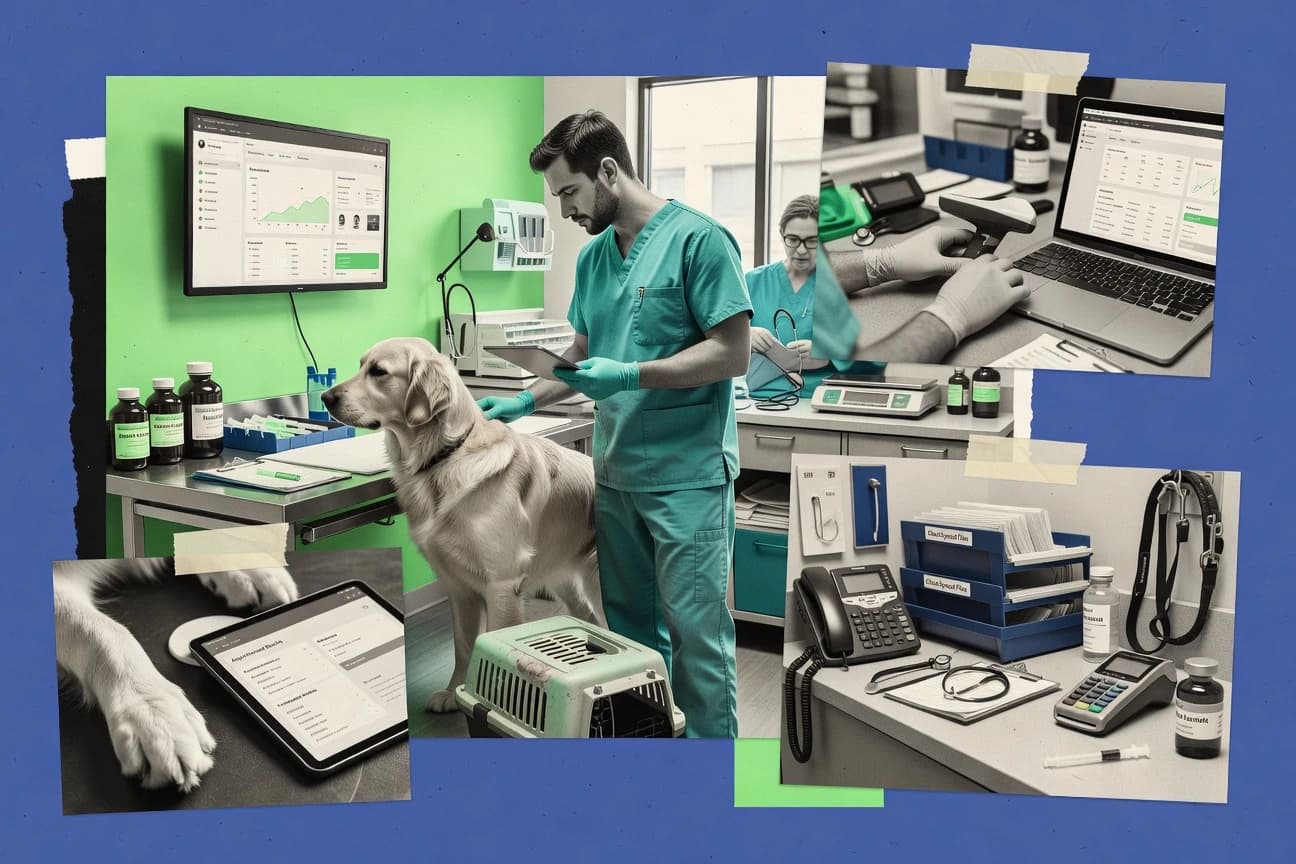
GITNUXSOFTWARE ADVICE
Pets Pet IndustryTop 10 Best Cloud Based Veterinary Software of 2026
Top 10 cloud based veterinary software ranked for clinics, with side-by-side comparisons of DaySmart Vet, ezyVet, and Shepherd features.

How we ranked these tools
Core product claims cross-referenced against official documentation, changelogs, and independent technical reviews.
Analyzed video reviews and hundreds of written evaluations to capture real-world user experiences with each tool.
AI persona simulations modeled how different user types would experience each tool across common use cases and workflows.
Final rankings reviewed and approved by our editorial team with authority to override AI-generated scores based on domain expertise.
Score: Features 40% · Ease 30% · Value 30%
Gitnux may earn a commission through links on this page — this does not influence rankings. Editorial policy
DaySmart Vet is the safest pick if you want one connected cloud workflow for scheduling, records, communications, and payments across daily operations, whereas ezyVet fits multi-site or specialty groups needing configurable workflows, centralized admin, and broad integrations.
Editor’s top 3 picks
Three quick recommendations before you dive into the full comparison below — each one leads on a different dimension.
DaySmart Vet
DaySmart Vet’s unified client and pet record links appointment history, treatment plans, invoices, and automated reminders.
Built for fits when general practices need connected scheduling, records, communications, and payments across daily operations..
ezyVet
Editor pickConfigurable workflow engine connects clinical tasks, approvals, inventory actions, and client communications across practice teams.
Built for fits when multi-site veterinary groups need configurable workflows, centralized administration, and broad system integrations..
Shepherd
Editor pickConfigurable workflow automation links clinical tasks, appointment stages, estimates, and client follow-up actions.
Built for fits when growing clinics need configurable workflows, shared browser access, and integrated client communication..
Comparison Table
DaySmart Vet
SMBCloud practice management software for veterinary businesses.
DaySmart Vet’s unified client and pet record links appointment history, treatment plans, invoices, and automated reminders.
DaySmart Vet supports multiple provider calendars, online booking, client and pet profiles, treatment plans, prescription records, vaccine tracking, estimates, invoices, and electronic payments. Automated email and text reminders reduce manual follow-up for upcoming visits, overdue care, and routine communications. Configurable reports give practice owners visibility into appointments, revenue, staff activity, and client retention.
The tradeoff is that specialty hospital workflows may require external systems or manual processes beyond the core practice-management features. A companion-animal clinic can use DaySmart Vet to manage appointments, document visits, send reminders, collect payments, and review daily performance from one web-based system.
- +Connects scheduling, medical records, estimates, invoices, and payments in one workspace.
- +Automates appointment reminders through email and text messaging.
- +Supports online booking and staff calendar management.
- +Provides configurable reports for operational and revenue review.
- –Specialty hospital workflows may require external systems or custom processes.
- –Initial setup requires careful configuration of services, templates, reminders, and user access.
- –Native laboratory and imaging workflows receive less emphasis than front-office operations.
- –Large multi-location groups may need deeper governance controls.
Companion-animal clinics
Managing daily appointments and follow-up
Fewer disconnected front-desk tasks
Multi-doctor practices
Coordinating provider calendars
Clearer daily capacity planning
Show 1 more scenario
Practice owners
Reviewing operational performance
Faster management reporting
Configured reports show appointment activity, revenue, staff performance, and client retention patterns.
Best for: Fits when general practices need connected scheduling, records, communications, and payments across daily operations.
ezyVet
enterpriseCloud veterinary practice management software for multi-site and specialty practices.
Configurable workflow engine connects clinical tasks, approvals, inventory actions, and client communications across practice teams.
ezyVet handles standard patient charting and SOAP notes while supporting species-specific templates for recurring clinical documentation. Teams can configure approvals, task routing, reminders, and status transitions across clinical and administrative work. Centralized administration supports location-level settings, user permissions, reporting, and shared client records.
The main tradeoff is implementation complexity because broad configuration affects workflows, permissions, integrations, and data migration. A hospital group replacing separate scheduling, medical record, inventory, and billing systems can consolidate operations through one browser-based deployment. API access and integration controls also give technical teams more options than a closed practice application.
- +Configurable workflows coordinate clinical, administrative, and approval steps.
- +API access supports connections to external business systems.
- +Species-specific templates reduce repetitive chart setup.
- +Multi-site controls centralize users, reporting, and operational policies.
- –Implementation can require dedicated configuration ownership.
- –Reporting changes may require administrator or vendor assistance.
- –Mobile work can expose fewer functions than desktop browser sessions.
- –Integration coverage depends on the connected laboratory or payment vendor.
Multi-site veterinary groups
Shared workflows across locations
Consistent cross-site operations
Specialty veterinary hospitals
Multi-step patient care
Fewer missed handoffs
Show 1 more scenario
Integration-focused IT teams
Connected business systems
Reduced duplicate entry
API connections synchronize selected clinical, financial, laboratory, and payment data.
Best for: Fits when multi-site veterinary groups need configurable workflows, centralized administration, and broad system integrations.
Shepherd
vertical specialistCloud veterinary practice software with clinical workflows, payments, and client communication.
Configurable workflow automation links clinical tasks, appointment stages, estimates, and client follow-up actions.
Shepherd gives veterinary teams a unified workspace for appointments, patient records, estimates, treatments, prescriptions, and follow-up communication. Configurable forms and workflow rules let practices adapt documentation to different species, appointment types, and internal responsibilities. Laboratory integration and payment connections reduce manual transfer between clinical and administrative systems.
The broad configuration surface can require careful template, permission, and automation design before rollout. Shepherd fits a growing multi-doctor clinic that wants shared browser access, centralized client messaging, and consistent workflows across several locations.
- +Configurable workflows connect clinical tasks with client communications.
- +Custom forms accommodate different species and appointment types.
- +Two-way texting, reminders, and online booking reduce front-desk workload.
- +Browser access supports shared workflows across clinic locations.
- –Initial configuration requires decisions about templates, permissions, and automation rules.
- –Migration from older practice systems can require structured data cleanup.
- –Advanced integration coverage depends on supported external vendors.
- –Highly customized workflows can increase staff training requirements.
Multi-location veterinary groups
Standardize workflows across clinics
Consistent clinic operations
Small animal practices
Coordinate appointment-to-checkout work
Fewer handoff delays
Show 1 more scenario
Practice administrators
Reduce manual client follow-up
Lower communication workload
Automated reminders, online booking, and two-way texting handle recurring communications from one operational workspace.
Best for: Fits when growing clinics need configurable workflows, shared browser access, and integrated client communication.
Vetblue
SMBCloud-based veterinary software offering records, scheduling, and billing for practices.
Species-aware SOAP documentation templates that maintain consistent chart structure across visit types.
Vetblue targets cloud-based veterinary practice management and veterinary electronic medical records in a browser-first workflow. The core charting flow supports structured patient records, SOAP-style documentation, and species-aware templates for consistent visits.
Appointments, treatment planning, and prescription tracking connect to daily operational steps inside the same record context. Integration depth is centered on external systems via API-driven data exchange and configurable interfaces rather than manual exports.
- +Species-aware templates keep charting consistent across exam types.
- +SOAP-style visit capture with repeatable note structure for quicker documentation.
- +Prescription tracking ties medication details to the patient timeline.
- +API-first integration approach supports external lab and imaging data flows.
- –Requires upfront configuration to align templates with clinic documentation standards.
- –Complex multi-location setup needs careful role and workflow assignment.
- –Advanced automation depends on how processes are configured per clinic.
- –Some operational reports may require data pulls outside core views.
Best for: Fits when mid-size clinics want browser-based EMR charting with configurable templates and integrations.
Animana
SMBCloud-based practice management software for veterinary professionals in Europe.
Species-specific SOAP templates that standardize clinical documentation inside the patient chart workflow.
Animana performs veterinary appointment scheduling, patient charting, and treatment plan documentation in a browser-based workflow. Core records support SOAP-style clinical entries with species-specific templates and structured follow-ups.
The system connects day-to-day clinic operations to prescriptions and dispensing workflows so clinicians can complete orders from the same chart context. Admin controls focus on role-based clinical permissions and audit trails for chart access and clinical edits.
- +SOAP-style charting with species templates reduces note rework
- +Prescription and dispensing steps stay tied to the patient visit
- +Audit trails cover chart access and clinical edits
- +Browser-based scheduling and charting support daily clinic throughput
- –Extensibility and automation via API are limited compared with higher-ranked suites
- –Controlled-substance logging workflows require extra operational discipline
- –Laboratory and imaging integrations need manual coordination for edge cases
- –Multi-location governance controls are less granular than top-tier vendors
Best for: Fits when mid-size veterinary teams need structured clinical notes and prescriptions tied to visits.
Digitail
vertical specialistCloud practice management software for veterinary teams and pet owners.
Species-specific charting templates that standardize SOAP and problem-oriented medical record fields across visit types.
Digitail targets veterinary clinics that want browser-based patient charting with built-in clinical workflows. The system supports SOAP-style documentation, species-specific charting templates, and appointment and treatment plan tracking for day-to-day operations.
Digitail also includes prescription and pharmacy-facing dispensing workflows, plus laboratory and imaging integrations aimed at reducing manual chart pulls. Administration centers on role-based clinical permissions and audit trails to support accountability across staff and locations.
- +Species-specific documentation templates reduce charting rework between visits
- +SOAP note and problem-oriented structure supports consistent clinical documentation
- +Prescription and pharmacy workflows connect directly to patient records
- +Role-based clinical permissions and audit trails support staff accountability
- –Laboratory integration depth can require extra mapping for less common lab feeds
- –Advanced automation depends on clinic-specific configuration discipline
- –Multi-location workflows need careful setup of shared inventory and scheduling rules
- –DICOM imaging workflows are strongest when imaging systems match supported formats
Best for: Fits when a multi-vet clinic needs consistent SOAP documentation and pharmacy workflows inside one chart.
Covetrus Ascend
enterpriseCloud veterinary practice management software from Covetrus.
Dispensing-focused prescribing documentation that keeps medication actions traceable within patient care workflows.
Covetrus Ascend targets veterinary practices that need a cloud-based workflow tied to medication, appointments, and clinical documentation under one operational system. It supports appointment scheduling, veterinary patient charting, and prescription management that can feed day-to-day dispensing and follow-up workflows.
The system also emphasizes controlled processes around pharmacy-related actions, including documentation and tracking used during dispensing. Administrators get role-based clinical permissions and governance controls needed to separate front-desk, technician, and clinician tasks.
- +Medication and prescribing workflows stay attached to the patient record.
- +Role-based clinical permissions help limit who can perform chart and prescription actions.
- +Appointment scheduling supports operational handoffs to technicians and clinicians.
- +Dispensing-oriented documentation reduces gaps between orders and in-clinic fulfillment.
- –Some workflows depend on add-on integrations for lab and imaging coverage.
- –Configuration for species-specific behaviors can require clinic governance discipline.
- –Reporting granularity can feel limited compared with specialized analytics tools.
- –Data migration for legacy charts can be operationally heavy for smaller teams.
Best for: Fits when multi-staff practices need controlled medication and chart workflows with RBAC.
Hippo Manager
SMBCloud veterinary practice management software for small and midsize practices.
Species-specific clinical templates tied directly to SOAP notes, appointment documentation, and follow-up plans in a single visit workflow.
Hippo Manager is a cloud-based veterinary practice management and clinical workflow system designed around daily appointment, charting, and follow-up tasks. It supports veterinary patient charting with SOAP-style documentation, species-specific templates, and structured clinical notes for consistent recordkeeping.
Appointment scheduling and treatment planning are handled inside the same browser workspace to keep exam notes, plans, and prescriptions connected. Operational workflows for inventory, pharmacy dispensing, and referral documentation are integrated to reduce manual handoffs between roles.
- +SOAP-based charting workflow with reusable templates
- +Tight linkage between visit notes and treatment plans
- +Inventory and pharmacy dispensing workflows inside the same workspace
- +Browser-first layout for day-to-day clinic operations
- –Limited visibility into controlled-substance controls and audit reporting
- –Automation depth depends on how teams standardize templates
- –External integration coverage may require add-ons for specialty needs
- –Multi-location governance tools feel lighter than enterprise-grade systems
Best for: Fits when a multi-role clinic needs consistent SOAP charting and connected scheduling to treatment and dispensing.
VetOfficeSuite
SMBOnline veterinary practice management software for scheduling, electronic records, billing, and reporting.
SOAP-first charting that links clinical notes to treatment plans inside a single visit workflow.
VetOfficeSuite provides browser-based veterinary practice management with patient charting, appointment scheduling, and treatment plan documentation. Case workflows cover SOAP notes and problem-oriented style chart entries with species-specific templates intended to reduce repeated typing.
The suite also handles veterinary prescription management with electronic prescribing workflows and pharmacy dispensing-oriented tasking. Built for clinic operations, it emphasizes centralized records access across roles and locations while supporting integrations for imaging, labs, and client communication.
- +SOAP and problem-focused charting flows reduce chart rework
- +Species-specific templates speed up common notes and orders
- +Electronic prescribing supports end-to-end medication documentation
- +Client communication features support consistent follow-up inside the record
- –Automation depth lags systems that expose configurable workflow engines
- –Integration coverage depends on specific lab and imaging connectors
- –Role governance controls lack fine-grained control for some clinical fields
- –Data migration tooling can be demanding for complex historical charts
Best for: Fits when multi-role clinics need fast charting plus prescribing workflows without heavy customization work.
Instinct
vertical specialistCloud veterinary software for patient records, treatment workflows, communication, and practice operations.
Audit trail tied to clinical record edits for governance across roles
Instinct from instinct.vet targets browser-based veterinary practice management and clinical documentation with a focus on structured charting. The workflow centers on patient records that capture SOAP-style notes, problem lists, and species-specific fields used during visit documentation.
Appointment and treatment workflow steps are tied into the same record context so staff can complete documentation and follow-ups in fewer handoffs. Built for multi-role clinics, it supports role-based clinical permissions and tracks changes for governance.
- +Structured clinical notes with SOAP-style entry fields per visit
- +Role-based clinical permissions support controlled access to charts
- +Record-linked workflows reduce handoffs between charting steps
- +Audit trail supports review of chart changes over time
- –Integration depth for labs, imaging, and pharmacy depends on setup
- –Automation options are limited compared with higher-ranked suites
- –Data migration tooling for legacy records can be labor intensive
- –Multi-location reporting and admin controls are not as granular
Best for: Fits when a mid-size clinic needs structured visit documentation and controlled chart access in one browser workflow.
Conclusion
After evaluating 10 pets pet industry, DaySmart Vet stands out as our overall top pick — it scored highest across our combined criteria of features, ease of use, and value, which is why it sits at #1 in the rankings above.
Use the comparison table and detailed reviews above to validate the fit against your own requirements before committing to a tool.
How to Choose the Right cloud based veterinary software
This guide covers cloud based veterinary software across appointment scheduling, veterinary electronic medical records, and day-to-day practice workflows using DaySmart Vet, ezyVet, Shepherd, and Vetblue as key benchmarks.
The remaining tools in the guide range from species-aware charting in Animana, Digitail, Hippo Manager, and VetOfficeSuite to dispensing-focused prescribing governance in Covetrus Ascend and audit-trail centric record edits in Instinct.
Each section focuses on how clinic teams configure automation, connect external systems, and maintain chart and prescription controls inside a browser-based deployment.
The evaluation also tracks how strongly each platform links visit documentation to follow-up actions, estimates, invoices, and reminders rather than treating clinical notes as isolated forms.
Cloud-based veterinary practice management and EMR workflows built for browser access
Cloud based veterinary software is a browser-deployed practice management and veterinary electronic medical records workflow that ties appointments, patient charts, and prescription actions into a shared operational record.
Systems like DaySmart Vet connect scheduling, treatment plans, invoices, and automated reminders through linked client and pet records, which reduces the handoffs between front-desk and clinical teams.
Platforms like Vetblue emphasize species-aware SOAP documentation templates so chart structure stays consistent across exam types while still supporting integrations.
The category definition also includes configuration of permissions and workflow automation that controls who can edit clinical documentation, trigger client communications, and run prescribing and dispensing steps.
Integration depth and workflow governance in cloud veterinary suites
Cloud based veterinary software has to keep the operational record consistent across scheduling, charting, and follow-up actions so teams do not rebuild context between departments. Day-to-day throughput depends on how well appointment history, visit notes, treatment plans, and client communications stay linked to the same client and pet records.
End-to-end links across client and pet records
DaySmart Vet links appointment history, treatment plans, invoices, and automated reminders through unified client and pet record connections. Shepherd and Hippo Manager also tie visit documentation to treatment plans inside a connected visit workflow, but DaySmart Vet adds stronger operational linkage to estimates, invoices, and reminders.
Configurable workflow automation with approval and routing steps
ezyVet provides a configurable workflow engine that coordinates clinical tasks, approvals, inventory actions, and client communications. Shepherd and DaySmart Vet focus workflow automation around appointment stages and follow-up actions, which works well for clinics that want structured processes without building long multi-team approval chains.
SOAP and problem-oriented chart consistency via species-aware templates
Vetblue emphasizes species-aware SOAP templates that preserve consistent chart structure across visit types. Animana and Digitail also standardize SOAP documentation with species-specific templates, while VetOfficeSuite adds SOAP-first charting tied to treatment plans for faster note-to-plan handoffs.
Prescribing and dispensing traceability inside the patient record
Covetrus Ascend keeps medication and prescribing actions traceable by attaching medication workflows to the patient record. DaySmart Vet connects prescriptions and downstream operational actions to broader workflows, while Instinct and Hippo Manager prioritize controlled chart access with role-based clinical permissions and structured visit documentation.
API and integration surface for external systems
ezyVet includes API access that supports connections to external business systems for integration depth. DaySmart Vet provides broad workflow connections across scheduling and billing artifacts, while Digitail and Covetrus Ascend require extra mapping or add-on integrations for lab and imaging coverage when lab feeds or imaging sources are uncommon.
Governance controls: RBAC and audit trail coverage for clinical edits
Covetrus Ascend uses role-based clinical permissions to limit who can perform chart and prescription actions. Instinct adds an audit trail tied to clinical record edits for governance across roles, while Hippo Manager reports limited visibility into controlled-substance controls and audit reporting.
Choose by automation philosophy, documentation structure, and governance depth
Selection works best when the clinic aligns product behavior with how workflows are actually run, because these systems differ in where configuration happens and how much automation they can drive. Some platforms centralize workflow orchestration, while others emphasize document templates that shape clinical consistency and restrict variability.
Pick the workflow engine model: centralized configuration vs template-led consistency
Choose ezyVet when practice teams need a configurable workflow engine that coordinates clinical, approval, inventory, and client communication steps. Choose Vetblue, Animana, Digitail, Hippo Manager, or VetOfficeSuite when standardized SOAP templates and visit workflow linkage are the primary mechanism for consistency and the clinic wants less orchestration complexity.
Decide how much automation should be linked to appointments and follow-up
Choose DaySmart Vet when appointment history needs to drive treatment plans, invoices, and automated reminders through unified client and pet record links. Choose Shepherd when configurable workflow automation should connect clinical tasks with client communications across appointment stages and follow-up actions.
Match clinical documentation needs to species-aware SOAP coverage
Choose Vetblue when species-aware SOAP templates must keep chart structure consistent across exam types and documentation standards. Choose Animana or Digitail when the practice requires species templates to reduce note rework and keep SOAP and problem-oriented fields consistent across visit types.
Validate prescribing governance and what actions remain traceable
Choose Covetrus Ascend when medication actions and prescribing steps must stay attached to the patient record under role-based clinical permissions. Choose Instinct when audit trail coverage for clinical record edits is the governance priority and controlled chart access must be enforced across roles.
Confirm integration path for labs and imaging workflows before committing to migration
Choose ezyVet when external business systems need API access for integration planning and ongoing extensibility. Choose Digitail when lab integration depth is acceptable with extra mapping for less common lab feeds, and choose Covetrus Ascend when lab and imaging coverage depends on add-on integrations.
Stress-test configuration ownership and permission setup during rollout
Choose ezyVet or Shepherd when internal teams can own configuration decisions for templates, permissions, and automation rules to avoid vendor or admin assistance later. Choose DaySmart Vet or Vetblue when rollout needs careful configuration of services, templates, reminders, and role access to keep the unified workflow model consistent.
Who each clinic setup fits best
These platforms fit best when the clinic process matches how the software binds records, automation, and permissions. The strongest fit usually appears in the way systems connect visit documentation to follow-up actions and in how prescribing and controlled actions are governed.
General practices that want linked scheduling, charting, and payments in one operational record
DaySmart Vet fits because it connects scheduling, medical records, estimates, invoices, and payments while also automating appointment reminders through email and text messaging.
Multi-site veterinary groups that need centralized administration and configurable workflows
ezyVet fits because its configurable workflow engine connects clinical tasks, approvals, inventory actions, and client communications with API access for external system connectivity.
Clinics that standardize SOAP notes by species and want repeatable chart structure
Vetblue fits because species-aware SOAP documentation templates keep chart structure consistent across exam types, and the visit capture follows a SOAP-style note structure.
Multi-staff practices that require prescribing governance tied to patient records
Covetrus Ascend fits because medication and prescribing workflows stay attached to the patient record and role-based clinical permissions limit who can perform chart and prescription actions.
Mid-size clinics that prioritize auditability of clinical edits across roles
Instinct fits because it ties an audit trail to clinical record edits and enforces role-based clinical permissions for controlled chart access.
Common implementation pitfalls in cloud veterinary software selection
Clinics frequently lose time when configuration work is underestimated or when workflows are mapped to the wrong product philosophy. Mistakes usually show up as missing traceability between visit notes and follow-up actions or as inadequate permission governance for prescribing and clinical edits.
Choosing a template-led SOAP charting tool without verifying automation depth for follow-up and client actions
VetOfficeSuite and Hippo Manager link SOAP notes to treatment plans, but automation depth depends on how teams standardize templates and may lag systems with configurable workflow engines like ezyVet.
Assuming lab and imaging integrations work out of the box across every external source
Digitail may require extra mapping for less common lab feeds, and Covetrus Ascend may depend on add-on integrations for lab and imaging coverage when workflows are not part of the default connector set.
Underestimating configuration ownership for templates, permissions, and automation rules
DaySmart Vet needs careful setup for services, templates, reminders, and user access, while ezyVet and Shepherd can require dedicated configuration ownership to keep workflow coordination aligned with real team processes.
Skipping governance validation for controlled medication actions and audit trail coverage
Hippo Manager reports limited visibility into controlled-substance controls and audit reporting, while Instinct focuses on audit trails tied to clinical edits and Covetrus Ascend enforces role-based clinical permissions for chart and prescription actions.
Treating migration as a simple file transfer when structured cleanup is needed
Shepherd flags that migration from older practice systems can require structured data cleanup, which can change how templates and visit workflows align after go-live.
How We Selected and Ranked These Tools
We evaluated cloud based veterinary software on integration depth, workflow automation, and governance coverage across appointment history, clinical documentation, prescriptions, dispensing steps, and client communication artifacts. Features accounted for 40% of the ranking because the tools must connect scheduling and charting into the same operational record rather than isolating visit notes.
Ease of use and value each accounted for 30% because multi-role clinics still need consistent setup outcomes for templates, reminders, and permissions. DaySmart Vet separated itself with unified client and pet record links that connect appointment history, treatment plans, invoices, and automated reminders inside one operational workspace.
Frequently Asked Questions About cloud based veterinary software
Which tools connect appointment scheduling to patient charting and reminders inside one browser workflow?
How do cloud veterinary platforms handle data migration into an existing practice management or EMR setup?
What API and integration paths are used for labs, imaging, and payments?
How is SSO and session security typically implemented for multi-user clinics?
What breaks if a clinic needs strong audit trails for clinical edits across roles?
How do admin controls differ between configurable workflow engines and template-driven charting?
Which platforms support dispensing-focused prescribing workflows and controlled processes?
How do SOAP notes and problem-oriented records get structured during a visit?
Where does extensibility matter most when clinics need to add new workflows or external systems?
Tools reviewed
Primary sources checked during evaluation.
Referenced in the comparison table and product reviews above.
- Pets Pet IndustryTop 10 Best Cloud Based Veterinary Practice Management Software of 2026
- Pets Pet IndustryTop 10 Best Vet Clinic Software of 2026
- Pets Pet IndustryTop 10 Best Mobile Veterinary Software of 2026
- Veterinary Animal CareTop 10 Best Veterinary Client Communication Software of 2026
- Pets Pet IndustryTop 10 Best Doggie Daycare Software of 2026
Keep exploring
Comparing two specific tools?
Software Alternatives
See head-to-head software comparisons with feature breakdowns, pricing, and our recommendation for each use case.
Explore software alternatives→In this category
Pets Pet Industry alternatives
See side-by-side comparisons of pets pet industry tools and pick the right one for your stack.
Compare pets pet industry tools→