
GITNUXSOFTWARE ADVICE
Tourism HospitalityTop 10 Best Campsite Booking Software of 2026
Ranked roundup of campsite booking software with feature tradeoffs for Firefly Reservations, Parkzilla, and Bookinglayer teams.

How we ranked these tools
Core product claims cross-referenced against official documentation, changelogs, and independent technical reviews.
Analyzed video reviews and hundreds of written evaluations to capture real-world user experiences with each tool.
AI persona simulations modeled how different user types would experience each tool across common use cases and workflows.
Final rankings reviewed and approved by our editorial team with authority to override AI-generated scores based on domain expertise.
Score: Features 40% · Ease 30% · Value 30%
Gitnux may earn a commission through links on this page — this does not influence rankings. Editorial policy
Firefly Reservations is the best fit overall for campground teams that want an operational booking workflow with strong admin control, while Bookinglayer is the better choice when you need rule-driven pitch allocation and a consistent portal for activities or retreats.
Editor’s top 3 picks
Three quick recommendations before you dive into the full comparison below — each one leads on a different dimension.
Firefly Reservations
Admin tools that manage reservation status changes while keeping guest communications synchronized with each update.
Built for fits when campground teams need an operational booking workflow with strong admin control..
Parkzilla
Editor pickRule-driven site-type configuration that ties availability enforcement to pitch allocation behavior during booking.
Built for fits when seasonal campground teams need rule-driven bookings with staff-managed reservation changes..
Bookinglayer
Editor pickRule-driven availability generation that keeps pitch or site-type constraints enforced across the booking journey.
Built for fits when campground operators need rule-driven pitch allocation and a consistent booking portal..
Comparison Table
Firefly Reservations
vertical specialistReservation and management software designed for campgrounds, RV parks, and outdoor lodging businesses.
Admin tools that manage reservation status changes while keeping guest communications synchronized with each update.
Firefly Reservations is designed to run daily campground reservations by combining an availability calendar, campsite inventory, and reservation status management in one place. Property setup centers on defining site types and constraints that shape which dates can be booked. The booking portal supports reservation confirmation and guest-facing messaging that reduces manual follow-ups. Admin controls focus on managing reservation records and updating outcomes when changes occur.
A key tradeoff is that complex inventory logic, like multi-constraint pitch allocation across overlapping date ranges, requires careful configuration at setup time. Firefly Reservations fits best for campground teams that want fewer manual steps for standard booking operations while still retaining admin control over modifications and exceptions. A typical usage case is a small campground shifting occupancy between seasonal periods while keeping arrival and departure rules consistent across all reservations.
- +Centralized reservation lifecycle workflow with confirmation and change handling
- +Configurable site types and booking constraints for consistent availability behavior
- +Guest notifications tied to reservation status changes to reduce manual messaging
- +Admin-first reservation record management for day-to-day operations
- –Advanced allocation across overlapping stays depends on precise initial configuration
- –Automation depth for edge-case policies may need manual review
- –Limited ability to model highly bespoke allocation rules without admin oversight
Campground operations managers
Handle booking changes and confirmations
Fewer manual follow-ups
Owners managing multiple site types
Maintain consistent booking constraints
Lower booking mistakes
Show 1 more scenario
Guest services teams
Process modifications and cancellations
Faster resolution times
Staff manage lifecycle actions using reservation records and keep confirmations aligned.
Best for: Fits when campground teams need an operational booking workflow with strong admin control.
Parkzilla
vertical specialistCampground and RV park reservation software with online booking and site management capabilities.
Rule-driven site-type configuration that ties availability enforcement to pitch allocation behavior during booking.
Parkzilla fits operators who manage campsite inventory across multiple site types and need a single online reservation portal that reflects real availability. The system supports reservation lifecycle actions such as modifications and cancellations, with operator-driven confirmation outcomes and guest communications. Inventory and booking rules are configured to control pitch allocation behavior and enforce stay constraints during booking.
A practical tradeoff is that advanced workflows, like complex group allocation and custom operational routing, require careful configuration discipline because the booking logic is driven by the configured ruleset. Parkzilla is a strong fit for seasonal campground teams that want day-to-day bookings and staff processing inside one operational flow rather than split tools.
- +Reservation lifecycle actions cover modifications and cancellations
- +Site-type configuration keeps availability aligned to inventory rules
- +Guest-facing booking portal updates from operator inventory changes
- +Policy controls reduce manual checks during booking operations
- –Complex group allocation workflows need careful rule design
- –Deep integration customization depends on the available integration surface
Campground operations managers
Handle booking changes during peak weekends
Fewer manual inventory corrections
Reservation coordinators
Process walk-up adjustments to bookings
Faster turnaround for guests
Show 1 more scenario
Campground owners
Run multi-site seasonal inventory
Lower operational overhead
Inventory and booking constraints remain consistent across site types during seasonal availability periods.
Best for: Fits when seasonal campground teams need rule-driven bookings with staff-managed reservation changes.
Bookinglayer
API-firstBooking and property management software for activity providers, camps, retreats, and outdoor stays.
Rule-driven availability generation that keeps pitch or site-type constraints enforced across the booking journey.
Bookinglayer is built around a booking engine that drives an availability calendar from configured campsite inventory and site types. The admin experience centers on managing rules that affect booking outcomes and keeping reservation status consistent from search to confirmation.
A key tradeoff is the amount of configuration needed to express complex pitch rules, like minimum-stay and occupancy constraints, before the booking experience matches operational policy. Best fit appears when campgrounds need a single booking portal that stays consistent across multiple assets and recurring seasonal availability changes.
- +Configurable booking engine ties inventory rules to real-time availability
- +Reservation lifecycle supports confirmations, cancellations, and modification status updates
- +Online reservation portal keeps guest-facing booking consistent with admin rules
- +Notification workflow updates guests based on booking state changes
- –Complex pitch policies require careful setup to avoid mismatched availability
- –Multi-location workflows can add operational overhead when assets differ widely
Campground operations teams
Manage site-type booking rules
Fewer policy exceptions
Guest services managers
Handle cancellations and modifications
Lower manual follow-ups
Show 1 more scenario
Multi-campsite administrators
Run consistent portals across locations
More consistent booking decisions
Campground inventory and booking configuration keeps guest-facing results aligned with internal policy.
Best for: Fits when campground operators need rule-driven pitch allocation and a consistent booking portal.
CampManager
SMBCampground reservation and management software for campsite operators.
Seasonal availability handling with rule-driven allocation supports arrival and departure constraints without manual calendar edits.
CampManager targets campsite reservation system workflows with an inventory-first approach that supports site-type configuration, availability rules, and reservation lifecycle actions. The product connects guest-facing booking pages with operational steps like confirmation handling, modifications, and cancellation workflows, which reduces manual rework for common changes.
CampManager also supports integrations that matter for campsites, including payment gateway integration and external channel connectivity for faster occupancy movement. Admin users get control over property and booking settings so teams can run seasonal availability and arrival and departure rules without rebuilding processes each season.
- +Strong campsite-specific booking workflows across confirmations, modifications, and cancellations
- +Inventory and site-type configuration supports pitch-level allocation patterns
- +Availability calendar aligns seasonal changes with reservation actions
- +Integration surface includes payment gateway integration for online bookings
- –Complex rule sets can require careful setup to avoid availability mismatches
- –Channel and partner integration coverage may be narrower than some alternatives
- –Group bookings workflows can feel less structured than one-to-one reservations
- –Deep customization of guest communications can require configuration discipline
Best for: Fits when multi-season campsites need dependable availability and booking workflows with operational controls.
CampLife
vertical specialistCloud-based reservation system built for campgrounds and RV parks with site mapping and online booking.
Pitch-focused booking where guest site selection stays constrained by the configured inventory and rule set.
CampLife manages campsite inventory and guest reservations through an online booking flow tied to configurable site and season rules. CampLife supports availability calendars, booking confirmations, cancellations, and reservation modifications across the stay lifecycle.
CampLife also provides campground listing and a map-style presentation aimed at helping guests choose specific pitches or accommodation types. Operational control centers on admin handling of reservations and guest communications linked to booking events.
- +Configurable availability rules per season and site type support varied campground policies
- +Reservation lifecycle workflows cover confirmation, modification, and cancellation handling
- +Guest-facing booking journey keeps pitch or accommodation selection tightly aligned to inventory
- +Campground presentation and guest messaging reduce manual back-and-forth for common questions
- –Advanced pitch allocation and optimization workflows depend on careful setup of rules
- –Automation depth for external systems appears limited without direct integration pathways
- –Group bookings and recurring stays require more manual handling than automated scheduling
- –Reporting depth for operational analytics is thinner than specialized campground management suites
Best for: Fits when campground staff need a reservation portal with strong rule-driven availability and manageable admin workflows.
Campspot
vertical specialistCloud software for campground reservations, operations, payments, and guest management.
Campground map integration inside the booking experience that ties location context to available sites.
Campspot is a campsite booking software solution focused on running an online reservation portal for campgrounds with defined site inventory and arrival rules. Campspot supports campsite inventory management with availability calendars, reservation confirmations, and cancellation and modification workflows.
The system also covers guest-facing booking flows with campground map content and mobile-responsive reservation pages. Admins can configure site types and seasonal availability to match pitch allocation needs.
- +Clear availability calendar tied to site inventory and reservation status
- +Campground map content improves guest navigation during booking
- +Configurable site-type rules for arrival and departure constraints
- +Modification and cancellation workflows handle common policy changes
- –Complex pitch allocation scenarios require careful site-type configuration
- –Automation depth for multi-property channel distribution can be limited
Best for: Fits when camp operators need a configurable online reservation portal with site inventory rules and map-driven booking clarity.
RoverPass
vertical specialistCampground management software with reservations, payments, guest communication, and marketplace distribution.
Map-driven site selection that connects campground layout to live availability and booking inventory.
RoverPass focuses on campsite reservations with a booking flow built around campsite inventory and availability visibility. The system supports campground map and site-type configuration so staff can manage pitch allocation across sites and seasons.
Booking actions connect to guest messaging workflows for confirmations and updates, reducing manual follow-ups. Admin controls emphasize reservation status changes, policy enforcement, and operational visibility for multi-location teams.
- +Campsite inventory and availability display are built into the booking flow
- +Campground map and site-type configuration reduce manual site referencing
- +Reservation status updates drive consistent guest-facing messaging
- +Operational visibility covers multi-step modification and cancellation workflows
- –Policy edge cases can require extra setup to match real-world operations
- –Advanced automation depends on external integrations for full workflow coverage
- –Waitlist and group scenarios can be less structured than specialized systems
- –Reporting granularity lags behind products that optimize for revenue operations
Best for: Fits when campgrounds need a reservation portal tied to clear site inventory and staff workflow visibility.
Newbook
enterpriseProperty management and reservation software for holiday parks, campgrounds, and accommodation operators.
Pitch availability driven by site-type configuration to keep reservations consistent across multiple campgrounds.
Newbook is a campsite booking software for publishing live pitch availability and turning reservations into confirmations with built-in workflows. The system focuses on campgrounds and multi-location operations, with configuration for site types and occupancy constraints that drive an availability calendar.
Booking pages support guest-facing actions like selecting dates and completing a reservation request. Admin tooling centers on reservation lifecycle management, including modification handling and cancellation processing.
- +Date-driven availability that updates from pitch and occupancy constraints
- +Reservation lifecycle workflows for confirmations, modifications, and cancellations
- +Campground and multi-location setup supports multi-site operations
- +Guest booking pages handle core selection and reservation submission flow
- –Channel manager depth and OTA coverage are narrower than top alternatives
- –Advanced automation and event-trigger logic depend on integration work
- –Waitlist and complex reallocation workflows are less complete than specialized rivals
- –Admin configuration requires careful setup of site types and rules
Best for: Fits when multi-site camping teams need a reliable booking portal and reservation workflow without heavy customization work.
RMS Cloud
enterpriseCloud property management software supporting holiday parks, caravan parks, campgrounds, and resorts.
Rule-driven reservation status workflows link confirmation, modification, and cancellation to automated guest notifications.
RMS Cloud processes campsite booking requests end-to-end with a configurable inventory setup for pitches and seasonal availability. It supports reservation lifecycle workflows like confirmation, modification, and cancellation handling, then triggers guest-facing communications tied to each status.
The system adds operational controls for managing arrivals, departures, and capacity constraints across a multi-campground setup. Administration centers on rule configuration for site types and occupancy limits to keep availability consistent between the booking portal and onsite operations.
- +Configurable pitch and site-type rules keep availability aligned with operations
- +Reservation lifecycle workflows include modification and cancellation handling
- +Multi-campground support supports shared administrative processes
- +Status-driven messaging reduces manual follow-up for common events
- –Complex rule sets take governance discipline to prevent inventory drift
- –Channel connectivity depends on integration scope and setup effort
- –Advanced allocation workflows can require more admin time than basic setups
- –Some reporting outputs feel tailored toward operations rather than marketing needs
Best for: Fits when camp operators need consistent inventory rules across multiple seasons and locations.
Campground Master
SMBDesktop campground reservation and management software for RV parks and campgrounds.
Rule enforcement that combines minimum-stay and arrival and departure constraints directly into the booking availability flow.
Campground Master is a campsite booking software option aimed at operators who need online reservation and campground management workflows tied to real inventory. It supports managing seasonal availability, site-type configuration, and rules like minimum stays and arrival and departure constraints.
The system also handles reservation lifecycle operations such as confirmations, modifications, and cancellations through an availability-driven booking flow. Administration centers on managing inventory and booking settings so multiple campgrounds can share consistent operational rules.
- +Availability-driven booking tied to campsite inventory reduces double-booking risk
- +Seasonal availability controls support recurring peaks across a year
- +Rule-based minimum-stay and arrival and departure constraints enforce policy consistently
- +Reservation modification and cancellation workflows keep changes trackable
- –Channel manager and OTA integration depth is limited compared with marketplace-focused systems
- –Automation options for complex group bookings and custom workflows are comparatively narrow
- –Admin configuration requires careful site-type setup to reflect real-world inventory
- –API and extensibility surface is not detailed enough for high-integration deployments
Best for: Fits when campground operators want rule-based reservation control with a single operational workflow, not heavy integrations.
Conclusion
After evaluating 10 tourism hospitality, Firefly Reservations stands out as our overall top pick — it scored highest across our combined criteria of features, ease of use, and value, which is why it sits at #1 in the rankings above.
Use the comparison table and detailed reviews above to validate the fit against your own requirements before committing to a tool.
How to Choose the Right campsite booking software
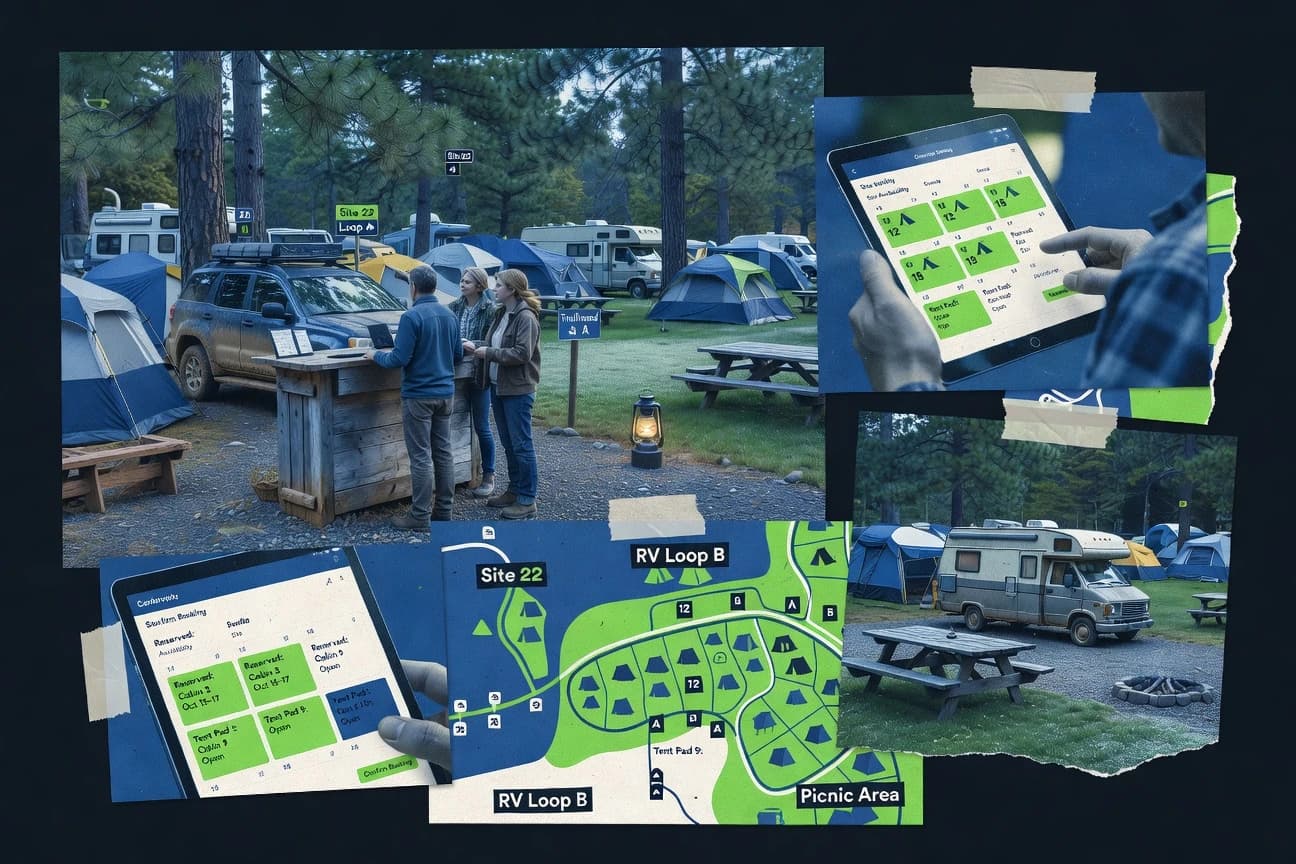
Campsite booking software centralizes availability and reservation workflows so campground teams can allocate pitches or campsites without manual calendar edits. This guide covers Firefly Reservations, Parkzilla, and Bookinglayer in depth alongside eight additional campsite booking systems.
The selection emphasis focuses on how inventory constraints flow from configuration into booking decisions and how reservation lifecycle actions keep guest communications synchronized. Each tool is assessed for operational controls, including reservation status change handling and rule-driven enforcement in the booking journey.
Campsite booking software that allocates pitch and enforces rules across reservations
Campsite booking software powers an online reservation portal by generating availability from campsite or pitch inventory plus booking rules. It then processes reservation confirmations, modification status updates, and cancellations while keeping guest communication aligned with the reservation lifecycle.
Firefly Reservations is built around admin control for reservation status changes that stays synchronized with guest communications, and it also supports configurable site types and booking constraints to produce consistent availability behavior. Parkzilla emphasizes rule-driven site-type configuration that ties availability enforcement to pitch allocation behavior, while Bookinglayer uses rule-driven availability generation to keep pitch/server constraints enforced across the booking journey.
Inventory-driven booking behavior and reservation lifecycle control
Campsite booking software succeeds when campsite or pitch availability flows from configuration into the online reservation portal without manual calendar edits. Every tool in this guide ties availability enforcement to how pitch or site-type rules are expressed during booking.
Reservation status change workflows with synchronized guest communications
Firefly Reservations provides centralized reservation lifecycle actions that keep guest communications synchronized with status changes. RMS Cloud also links confirmation, modification, and cancellation workflows to automated guest notifications.
Rule-driven site-type configuration tied to pitch allocation enforcement
Parkzilla uses rule-driven site-type configuration that aligns availability enforcement with pitch allocation behavior during booking. Bookinglayer similarly uses rule-driven availability generation so pitch or site-type constraints stay enforced across the booking journey.
Configurable constraints for consistent availability outcomes
Firefly Reservations supports configurable site types and booking constraints to produce consistent availability behavior across reservation actions. CampManager supports campsite-specific booking workflows with inventory and site-type configuration for pitch-level allocation patterns.
Seasonal availability handling driven by allocation rules
CampManager applies seasonal availability handling with rule-driven allocation tied to arrival and departure constraints. Campground Master combines minimum-stay rules and arrival and departure constraints directly into the booking availability flow.
Map context embedded in the booking experience
Campspot includes a campground map inside the booking experience and ties location context to available sites. RoverPass provides map-driven site selection that connects campground layout to live availability and booking inventory.
Choose by how rules become availability, then by how staff updates reservations
The first decision is how availability is generated from pitch or site-type constraints during the booking journey. Firefly Reservations emphasizes operational admin control during reservation lifecycle changes, while Parkzilla and Bookinglayer focus on rule-driven enforcement that must match pitch allocation logic.
Match your pitch or site-type rules to each tool’s enforcement model
If pitch allocation behavior must track rule-driven site-type configuration, Parkzilla fits the workflow that ties availability enforcement to pitch allocation behavior. If availability must be generated from rule-driven pitch or site-type constraints across the booking journey, Bookinglayer fits the approach that enforces constraints throughout booking.
Select admin control depth based on how often staff edits bookings
Choose Firefly Reservations when staff needs centralized reservation lifecycle workflow with confirmation and change handling tied to guest communications. Choose RMS Cloud when teams want reservation status workflows that link confirmation, modification, and cancellation to automated guest notifications.
Use seasonal and arrival-departure constraints when your operations span multiple seasons
Choose CampManager when seasonal availability and rule-driven allocation must handle arrival and departure constraints without manual calendar edits. Choose Campground Master when minimum-stay and arrival and departure constraints must be enforced directly in the availability flow.
Assess group allocation complexity before committing to rule-heavy configurations
If group allocation workflows will be frequent, Parkzilla flags that complex group allocation needs careful rule design. If pitch policies are complex, Bookinglayer flags that advanced pitch policies require careful setup to prevent mismatched availability.
Decide whether map-driven selection is a core part of booking clarity
Choose Campspot when campground map content inside the booking experience is required to improve guest navigation and tie location context to available sites. Choose RoverPass when map-driven site selection must connect campground layout to live availability and inventory display within the booking flow.
Teams that need rule enforcement plus controlled reservation lifecycle operations
Campground operators benefit when a system converts campsite or pitch constraints into availability decisions and then applies reservation lifecycle changes without desynchronizing communications. Several tools in this guide emphasize rule-driven configuration, while Firefly Reservations and RMS Cloud emphasize staff-driven reservation updates tied to guest messaging.
Campgrounds with high-touch operations where staff changes reservations often
Firefly Reservations fits teams that need admin tools to manage reservation status changes while keeping guest communications synchronized with each update. RMS Cloud also targets consistent inventory rules across seasons and ties workflow events to automated guest notifications.
Seasonal operators with pitch-level allocation behavior that must match rules
Parkzilla supports rule-driven site-type configuration that keeps availability aligned to pitch allocation behavior. CampManager adds seasonal availability handling with rule-driven allocation for arrival and departure constraints.
Operators that want constraint enforcement during booking rather than after booking
Bookinglayer emphasizes rule-driven availability generation so pitch or site-type constraints remain enforced across the booking journey. Newbook also supports date-driven availability updates from pitch and occupancy constraints, but with narrower channel manager depth.
Campgrounds where map context reduces manual site referencing
Campspot embeds a campground map within the booking experience to connect location context to available sites. RoverPass uses map-driven site selection that ties campground layout to live availability and booking inventory.
Where buyers get tripped up by configuration and workflow mismatch
Reservation systems fail when rule configuration does not mirror real allocation edge cases or when admin workflows do not match how staff actually updates reservations. Several tools warn that correct behavior depends on precise setup and disciplined governance around rules that produce availability.
Assuming rule-based availability will handle every pitch edge case without careful initial configuration
Firefly Reservations flags that advanced allocation across overlapping stays depends on precise initial configuration. Bookinglayer and CampLife similarly warn that complex pitch policies require careful setup to avoid availability mismatches.
Picking a tool without evaluating how group allocation will be modeled in rules
Parkzilla calls out that complex group allocation workflows need careful rule design. CampManager and other rule-forward systems also require careful setup to prevent availability mismatches during complex booking patterns.
Underestimating operational governance when rule sets grow over multiple seasons and locations
RMS Cloud notes that complex rule sets take governance discipline to prevent inventory drift. Campground Master also warns that teams seeking heavy group workflow automation may find automation options comparatively narrow.
Overvaluing portal clarity while ignoring reservation lifecycle communication synchronization needs
Campspot and RoverPass improve booking clarity with campground map integration, but they still require correct site-type and pitch allocation configuration for correct availability. Firefly Reservations and RMS Cloud focus more directly on keeping guest communications aligned with status updates.
How We Selected and Ranked These Tools
We evaluated Firefly Reservations, Parkzilla, Bookinglayer, and seven additional campsite booking systems by weighing availability enforcement behavior, reservation lifecycle controls, and operational usability in daily campground workflows. Features account for 40% of the score, and ease and value each account for 30%.
Firefly Reservations earned the top position by combining centralized reservation lifecycle workflow for confirmations and change handling with configurable site types and booking constraints that aim to keep guest communications synchronized with each reservation status update. Parkzilla and Bookinglayer scored highly when rule-driven configuration or rule-driven availability generation kept constraints enforced across booking, but the overall ranking reflected tradeoffs around rule design complexity and edge-case handling.
Frequently Asked Questions About campsite booking software
How do Firefly Reservations, Parkzilla, and Bookinglayer handle reservation lifecycle changes without breaking availability?
Which tools support admin workflows that keep guest communications aligned with status updates?
When does a campground need pitch allocation rules across arrival and departure dates, and which products support that workflow?
What breaks if minimum-stay rules conflict with guest modification requests in Firefly Reservations, Campground Master, and CampLife?
How do Campspot, RoverPass, and CampLife present a campground map inside the reservation flow?
How are multi-location operations handled when availability and policies vary by campground in Newbook and RMS Cloud?
Which products provide an integrations-oriented architecture for connecting payment gateways or external channels into the booking workflow?
How should data migration be planned when moving campsite inventory and existing reservations into CampManager, RMS Cloud, or Campground Master?
What security and access control capabilities matter for admin operations, and which tools highlight audit-ready change management?
Where does extensibility fall short if requirements include custom workflows beyond confirmation, modification, and cancellation?
Tools reviewed
Primary sources checked during evaluation.
Referenced in the comparison table and product reviews above.
- Tourism HospitalityTop 10 Best Campsite Software of 2026
- Sports RecreationTop 10 Best Camp Booking Software of 2026
- Tourism HospitalityTop 10 Best Serviced Apartment Booking Software of 2026
- Tourism HospitalityTop 10 Best Campground Booking Software of 2026
- Tourism HospitalityTop 10 Best Camping Booking Software of 2026
Keep exploring
Comparing two specific tools?
Software Alternatives
See head-to-head software comparisons with feature breakdowns, pricing, and our recommendation for each use case.
Explore software alternatives→In this category
Tourism Hospitality alternatives
See side-by-side comparisons of tourism hospitality tools and pick the right one for your stack.
Compare tourism hospitality tools→