
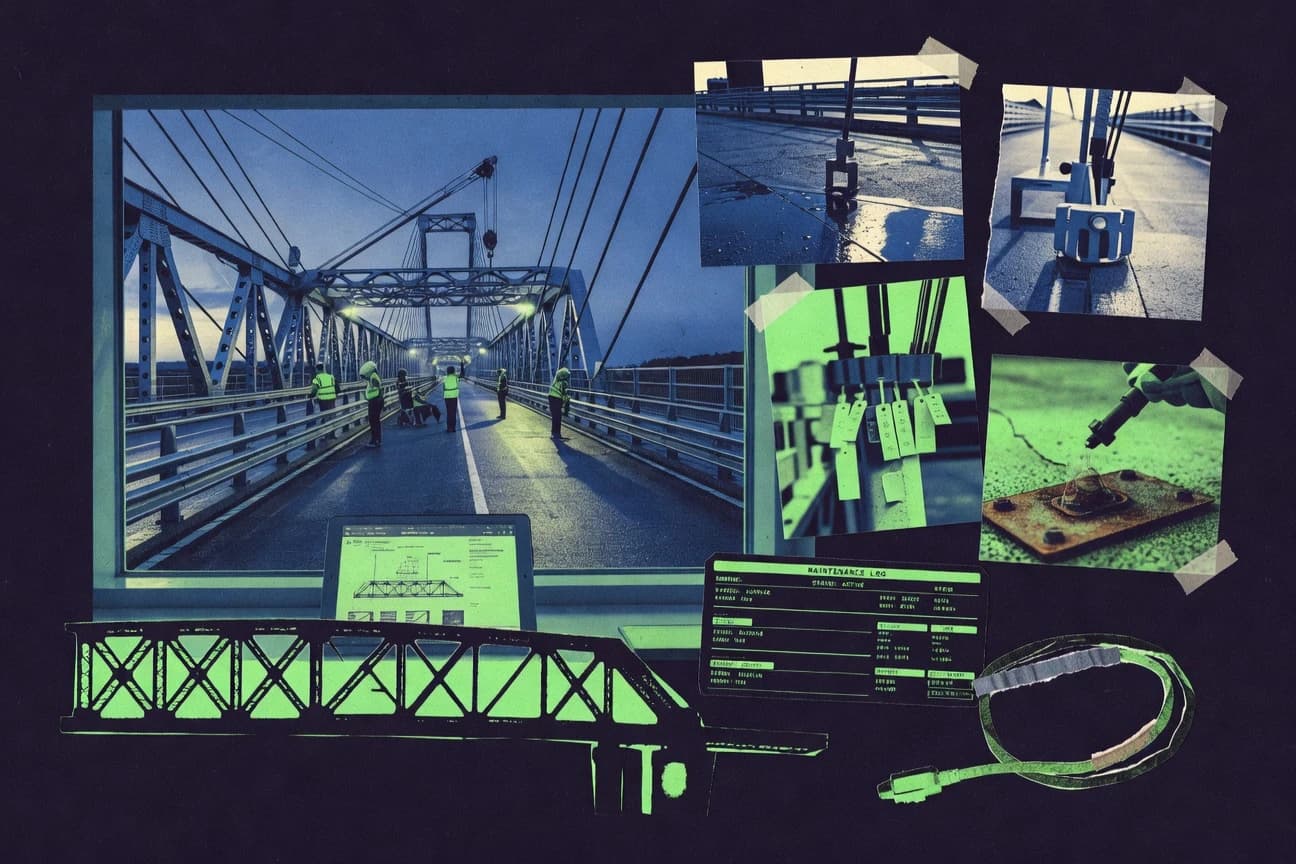
GITNUXSOFTWARE ADVICE
Construction InfrastructureTop 9 Best Bridge Management System Software of 2026
Top 10 bridge management system software ranking for 2026 compares OpenGov Cartegraph, AASHTOWare Bridge Management, Trimble AgileAssets.

How we ranked these tools
Core product claims cross-referenced against official documentation, changelogs, and independent technical reviews.
Analyzed video reviews and hundreds of written evaluations to capture real-world user experiences with each tool.
AI persona simulations modeled how different user types would experience each tool across common use cases and workflows.
Final rankings reviewed and approved by our editorial team with authority to override AI-generated scores based on domain expertise.
Score: Features 40% · Ease 30% · Value 30%
Gitnux may earn a commission through links on this page — this does not influence rankings. Editorial policy
OpenGov Cartegraph is the best fit when agencies need repeatable bridge inspection-to-work-order workflows across shared asset inventory, whereas AASHTOWare Bridge Management is the stronger alternative if your teams rely on governed element-level inspection flows feeding consistent condition rating decisions.
Editor’s top 3 picks
Three quick recommendations before you dive into the full comparison below — each one leads on a different dimension.
OpenGov Cartegraph
Mobile field inspection with offline capture that syncs element findings and photos into structured bridge inspection events.
Built for fits when agencies need repeatable bridge inspection-to-work-order workflows across shared asset inventory..
AASHTOWare Bridge Management
Editor pickTightly linked element-level defect coding that drives repeatable condition rating and report generation from inspection findings.
Built for fits when agencies need governed element-level inspection workflows feeding consistent condition rating decisions..
Trimble AgileAssets
Editor pickOffline mobile field inspection that syncs element-level findings, defect coding, and inspection photos into inspection report outputs.
Built for fits when bridge programs need offline mobile capture with governed inspection templates and evidence-linked reporting..
Comparison Table
OpenGov Cartegraph
SMBPublic asset management software for inspections, condition tracking, and bridge maintenance work.
Mobile field inspection with offline capture that syncs element findings and photos into structured bridge inspection events.
OpenGov Cartegraph provides a centralized bridge inventory structure with inspection type handling, element-level observation storage, and photo attachment capture for each inspection event. Reporting ties inspection findings to bridge inspection report outputs that can be reused across inspection frequency and recurring programs. It also supports mobile field inspection workflows with offline data capture so inspectors can record element observations and defects without immediate connectivity.
A key tradeoff is that bridge workflows depend on configuration discipline for inspection forms, defect coding structures, and review states before results produce repeatable outputs. Teams typically use it when multiple departments share the same bridge inventory and need controlled routing from inspection findings to maintenance work orders and preservation planning.
- +Element-level inspection capture with photo attachments tied to findings
- +Mobile inspection workflows with offline data capture for field reliability
- +Inspection schedules drive repeatable inspection frequency workflows
- +Controlled steps connect inspection findings to maintenance work orders
- –Bridge form configuration requires governance to keep defect coding consistent
- –Complex bridge reporting often needs careful setup of report templates
- –Integration outcomes depend on how external GIS and document workflows are mapped
- –Offline capture requires disciplined sync checks before closing inspection events
Asset management teams
Run recurring bridge inspections
Consistent inspection frequency reporting
Engineering inspection contractors
Capture defect-coded observations in the field
Fewer delayed handoffs
Show 2 more scenarios
Maintenance operations groups
Convert findings into work orders
Faster response to defects
Use inspection results to generate maintenance work orders with traceable links to the originating observations.
Program managers
Plan preservation and rehabilitation work
Clearer funding and prioritization inputs
Roll up inspection findings to support preservation planning decisions and recurring bridge program reviews.
Best for: Fits when agencies need repeatable bridge inspection-to-work-order workflows across shared asset inventory.
AASHTOWare Bridge Management
enterpriseBridge management software for network-level analysis, prioritization, and maintenance planning.
Tightly linked element-level defect coding that drives repeatable condition rating and report generation from inspection findings.
Bridge inspection management in AASHTOWare Bridge Management centers on capturing inspection findings at the right granularity and maintaining traceability to prior inspections. The tool’s defect coding and element-level inspection structure supports recurring inspection frequency planning and reporting of condition ratings tied to inspection type. Engineering document management links inspection records with supporting files like bridge inspection report content and photos. Geographic information system integration supports location-based views and mapping for field and office workflows.
A common tradeoff is that deep configuration of inspection forms, scoring logic, and reporting outputs requires governance discipline to keep coding and rating rules consistent across regions. A strong usage situation is a multi-district program that needs consistent element-level condition assessment plus preservation planning outputs for rehabilitation and capital improvement programming.
- +Element-level inspection workflows with defect coding tied to condition rating outputs
- +Inspection records retain supporting photographs and report artifacts for audits and review
- +GIS-linked location views support bridge inventory rollups and inspection planning
- +Automation for repeating inspection and reporting cycles reduces manual rework
- –Configuration of inspection forms and rating rules needs disciplined governance
- –External document workflows can require added process alignment with field capture teams
- –Some integrations depend on local setup to match agency data exchange expectations
- –Reporting customization can take time when rating logic differs across programs
Bridge asset management teams
Manage recurring inspection findings and reports
Faster, consistent review cycles
Regional inspection offices
Standardize inspection type and scoring
Lower variance in results
Show 2 more scenarios
Planning and programming staff
Feed preservation and rehab decisions
More traceable investment decisions
Use condition rating outputs and inspection history to support rehabilitation programming and preservation planning inputs.
Systems integration teams
Connect bridge locations and documents
Reduced data handoffs
Link bridge inventory locations in GIS and attach engineering document artifacts to inspection records for retrieval.
Best for: Fits when agencies need governed element-level inspection workflows feeding consistent condition rating decisions.
Trimble AgileAssets
enterpriseTransportation asset management software supporting bridge maintenance and lifecycle planning.
Offline mobile field inspection that syncs element-level findings, defect coding, and inspection photos into inspection report outputs.
AgileAssets provides configuration for element-level inspection workflows that tie defect coding and inspection observations to specific asset elements. Mobile capture supports offline data capture and later synchronization, which reduces field disruption when coverage is limited. Engineering document management helps keep inspection photographs and report outputs associated with the right asset record for downstream review cycles.
A clear tradeoff is that deeper governance and data consistency require disciplined configuration of inspection templates and defect coding rules before large-scale rollout. AgileAssets fits teams that already run recurring inspection frequency schedules and need consistent handling of inspection findings and photographic evidence across multiple inspection types.
- +Mobile inspection supports offline capture and later synchronization of findings and photos
- +Inspection templates keep element-level observations tied to the correct asset geometry records
- +Engineering document management links report outputs to field artifacts
- +Extensibility through integration-friendly data exchange supports transportation asset workflows
- –Inspection template and defect coding governance takes ongoing administration effort
- –Complex multi-organization deployments require careful configuration to avoid cross-team data overlap
- –Document handling is strong for inspection artifacts but less detailed for non-inspection engineering libraries
- –Automation coverage is strongest for inspection workflows and weaker for unrelated asset processes
State DOT bridge inspection teams
Recurring inspections across many structures
Faster evidence-ready reporting cycles
Bridge engineering consultants
Element-level defect coding on projects
Consistent defect documentation
Show 2 more scenarios
Municipal asset data managers
Bridge inventory records synchronization
Reduced record fragmentation
Asset records connect to inspection artifacts and engineering documents for structured reviews.
Transportation program PMOs
Coordinating multiple inspection types
More repeatable inspection operations
Configured workflows standardize how inspection findings and photos flow into reporting outputs.
Best for: Fits when bridge programs need offline mobile capture with governed inspection templates and evidence-linked reporting.
Bentley InspectTech
enterpriseBridge inspection and asset management software for transportation infrastructure owners.
Element-level inspection workflows that connect defect coding, member tracking, and report packaging from mobile capture.
Bentley InspectTech ties bridge inspection management to engineering workflows used by transportation asset teams. It supports mobile field inspection capture with photo and documentation attachments, then packages inspection findings into bridge inspection report outputs.
The system emphasizes defect coding and element-level tracking so inspection frequency, inspection type, and fracture-critical processes can be tracked against an asset inventory. Integration depth shows up through connections into Bentley workflows and exports that fit engineering document management and transportation asset management system handoffs.
- +Mobile capture supports offline field data with attached inspection photographs
- +Element-level defect coding keeps inspection findings traceable per bridge member
- +Engineering report generation turns captured results into bridge inspection report packages
- +Bentley workflow integration supports document management handoffs to downstream tools
- –Deep workflows need disciplined configuration of inspection frequency and inspection types
- –Advanced automation relies on API and integration work beyond core configuration
- –Offline capture can require process changes for teams used to direct-to-server entry
- –Model-to-report customization can be time-intensive for nonstandard bridge schemas
Best for: Fits when asset teams need mobile inspection capture tied to defect coding and report-ready outputs.
BridgeNEXUS
vertical specialistBridge management software for inventory, inspection, and maintenance planning.
Inspection templates map directly to defect coding fields and evidence attachments for consistent bridge inspection report output.
BridgeNEXUS manages the end-to-end bridge inspection workflow by coordinating bridge inventory records, inspection templates, and field data capture outputs. The system focuses on defect coding and storing inspection findings with attached evidence such as inspection photographs.
It also supports maintenance work orders and engineering document management so inspection results can move into preservation planning and rehabilitation programming inputs. Administrative control centers on configuration of inspection types and governance of user access for operational use across projects.
- +Defect coding storage keeps inspection findings traceable to evidence
- +Inspection templates support repeatable element-level inspection workflows
- +Maintenance work orders link from inspection findings for follow-through
- +Engineering document management helps bundle inspection reports and photos
- –Geographic information system integration is not a primary workflow center
- –Offline data capture support depends on specific field configuration
- –Automation depth for cross-system publishing is limited by API surface
- –RBAC coverage can require careful setup for multi-team environments
Best for: Fits when inspection teams need defect-level evidence capture and work-order handoff within a controlled workflow.
AgileAssets Structures Analyst
enterpriseBridge asset management software for network-level deterioration modeling, preservation planning, and capital program optimization.
Reusable structural analysis output packaging that preserves the linkage between input setup and engineering review artifacts.
AgileAssets Structures Analyst is a bridge engineering workflow tool hosted under Trimble’s asset lifecycle ecosystem. It focuses on structuring bridge-related engineering inputs, managing model-driven calculations, and producing analysis outputs tied to inspection and maintenance decisions.
The solution’s distinctiveness comes from how it links structural analysis artifacts to ongoing asset data so teams can reuse models and documents across review cycles. It supports integration patterns common in transportation asset management by fitting into document and inspection workflows rather than operating as a standalone analysis calculator.
- +Model-driven reuse of structural analysis inputs and outputs across lifecycle cycles
- +Document-centric workflow support for analysis artifacts used in engineering reviews
- +Fits into Trimble ecosystem patterns for transportation asset data coordination
- +Clear separation between analysis setup and review output packages
- –Requires disciplined configuration to keep bridge variants and documentation aligned
- –Inspection field capture and defect coding workflows are not its primary strength
- –Automation depth depends heavily on external integration patterns and governance
- –Element-level review workflows can feel indirect without tight process alignment
Best for: Fits when transportation asset teams need repeatable structural analysis workflows integrated with ongoing bridge data and documentation cycles.
BridgeStation
vertical specialistCloud-based bridge and highway structure asset management system with inventory, inspection scheduling, and condition reporting.
Field-first inspection capture with photo and document attachment that flows into structured bridge inspection report outputs.
BridgeStation centers on bridge inventory and inspection workflows with an engineering-document mindset, linking inspection records to the supporting files captured in the field. It supports mobile field inspection capture with offline-friendly operation, so inspectors can log findings and attach photos where connectivity is unreliable.
The system is designed for repeatable inspection schedules using inspection frequency and inspection type controls tied to asset records. BridgeStation also supports reporting for inspection findings and bridges the gap between field capture and the bridge inspection report outputs.
- +Mobile capture supports offline work and later synchronization of findings
- +Inspection records link to photos and engineering documents within the bridge context
- +Scheduling controls support inspection frequency and inspection type alignment to assets
- +Report outputs map inspection findings into consistent bridge inspection report structures
- –Advanced workflows require disciplined configuration of inspection templates
- –Depth for fracture-critical member inspection workflows can be limited
- –Geographic reporting needs extra effort for strong geographic information system integration
- –Bulk import and normalization of legacy bridge inspection data can be time-consuming
Best for: Fits when regional teams need mobile inspection capture, document linking, and repeatable reporting for bridge assets.
inspectX
vertical specialistWeb and tablet-based bridge inspection software with SNBI compliance, offline field data capture, and AASHTOWare BrM integration.
Photo-linked inspection findings that persist from mobile capture to inspection report output.
inspectX from assetintel.co ties bridge inspection workflows to a repeatable asset record, with field capture built around photos, defects, and inspection reporting. The system focuses on inspection frequency and inspection type scheduling so teams can plan and execute recurring inspections without rewriting procedures.
It also manages engineering document attachments and inspection findings in a way that supports bridge condition assessment outputs used in reporting. For teams that need automation, inspectX exposes integration paths for data exchange rather than relying only on manual data entry.
- +Inspection scheduling supports recurring inspection frequency across bridge assets
- +Photo and finding capture stays attached through inspection report generation
- +Document management links engineering files to inspection records
- +Integration surface supports data exchange for downstream systems
- –RBAC and governance controls require careful role design for multi-agency use
- –Element-level inspection workflows take configuration to match custom defect coding
- –Offline field capture depth depends on deployment setup and device workflow
- –Load-rating files support can be limited without established document conventions
Best for: Fits when bridge owners need recurring inspection workflows with photo-linked findings and report-ready documentation across teams.
Field Eagle
vertical specialistTablet-based transportation infrastructure inspection software covering bridges, culverts, tunnels, and ancillary structures with FHWA compliance reporting.
Inspection workflow configuration that ties field capture requirements to report-ready deliverables with controlled publishing.
Field Eagle manages bridge inspection workflows from field capture through inspection report assembly. It provides defect and findings tracking with photo attachments and supports document handling that aligns with engineering review needs.
The system emphasizes work instruction execution for recurring inspection cycles and centralizes inspection outputs for downstream reporting. Admin and governance features focus on controlling who can create inspections, edit findings, and publish inspection deliverables.
- +Field-to-report workflow reduces manual stitching of findings and attachments
- +Defect and finding capture supports element-level review patterns
- +Engineering document management keeps inspection artifacts grouped
- +Role-based controls limit who can edit and publish inspection deliverables
- –Integration depth for GIS and CAD file roundtrips depends on custom setup
- –Offline field capture is not clearly positioned for high-tempo offline capture
- –Automation and API surface for bulk processing needs stronger documentation
- –Data modeling for specialized defect coding can require configuration work
Best for: Fits when agencies or consultants need repeatable bridge inspection execution with controlled review and report assembly.
Conclusion
After evaluating 9 construction infrastructure, OpenGov Cartegraph stands out as our overall top pick — it scored highest across our combined criteria of features, ease of use, and value, which is why it sits at #1 in the rankings above.
Use the comparison table and detailed reviews above to validate the fit against your own requirements before committing to a tool.
How to Choose the Right bridge management system software
Bridge management system software brings bridge inspection management, element-level findings, and report packaging into one controlled workflow for transportation agencies. This guide covers OpenGov Cartegraph, AASHTOWare Bridge Management, Trimble AgileAssets, Bentley InspectTech, BridgeNEXUS, AgileAssets Structures Analyst, BridgeStation, inspectX, and Field Eagle.
The tool evaluations in this guide focus on integration depth, automation and API surface, and admin governance controls that affect repeatable inspection type handling and condition rating decisions. OpenGov Cartegraph and AASHTOWare Bridge Management are used as reference points because their defect coding workflows and evidence-linked outputs drive most downstream reporting and work initiation patterns.
Bridge inventory and bridge inspection management platforms for governed condition rating workflows
Bridge management system software manages bridge inventory records and organizes bridge inspection execution so findings, defect coding, and inspection photographs map into bridge inspection report outputs. The systems typically keep element-level observations tied to the correct asset geometry so condition rating artifacts stay consistent across inspection frequency and inspection type variations.
OpenGov Cartegraph emphasizes mobile field inspection with offline capture that syncs element findings and photos into structured bridge inspection events. AASHTOWare Bridge Management emphasizes tightly linked element-level defect coding that drives repeatable condition rating and report generation from inspection findings, which shifts the center of control toward governed rating rules and inspection form configuration.
Integration, automation, and governed inspection workflows
Bridge management system software succeeds when mobile capture, element-level findings, and evidence attachments stay linked through inspection events and report packaging. The differentiator is how tightly each product ties inspection inputs to defect coding decisions, so condition rating artifacts remain consistent across inspection type variations.
Integration depth and automation surface matter because agencies must move inspection findings into work initiation patterns without rebuilding workflows in spreadsheets. Tools with clear API and extensibility support can connect bridge inventory records, inspection photographs, and downstream document packages into one governed chain of custody.
Offline mobile capture that synchronizes findings and photos into structured inspection events
OpenGov Cartegraph uses mobile field inspection with offline capture that syncs element findings and photos into structured bridge inspection events. Trimble AgileAssets also supports offline capture that later synchronizes element-level findings, defect coding, and inspection photos into inspection report outputs.
Element-level defect coding that drives repeatable condition rating and report generation
AASHTOWare Bridge Management tightly links element-level defect coding to condition rating outputs and report generation. BridgeNEXUS maps inspection templates directly to defect coding fields and evidence attachments for consistent bridge inspection report output.
Governance controls for defect coding consistency across inspection frequency and types
OpenGov Cartegraph requires governance to keep defect coding consistent when bridge form configuration is maintained across teams. AASHTOWare Bridge Management similarly needs disciplined governance because inspection forms and rating rules must be configured with consistent logic.
Document and evidence packaging that remains traceable from mobile capture to report artifacts
Bentley InspectTech packages element-level defect coding and member tracking into report-ready outputs with mobile offline capture and attached inspection photographs. BridgeStation links inspection records to photos and engineering documents within the bridge context to feed structured bridge inspection reports.
Automation and API extensibility for deeper workflow integration
Bentley InspectTech depends on API and integration work for advanced automation beyond core configuration. Field Eagle focuses on field-to-report workflow assembly with controlled publishing that reduces manual stitching for inspection execution.
Pick the inspection workflow philosophy that matches governance, automation, and integration needs
The first fork is whether the organization needs mobile-first, offline-capable capture that synchronizes evidence and element findings into governed inspection events. The second fork is whether the organization wants defect coding rules to be the primary control plane that drives condition rating decisions and report generation.
The third fork is how much the agency expects to customize inspection templates and rating rules without operational overhead. The final decision point is the depth of integration support for GIS, CAD, and engineering document workflows so inspection artifacts align with transportation asset management system integration patterns.
Choose a synchronization-first workflow if field capture reliability drives outcomes
Select OpenGov Cartegraph or Trimble AgileAssets when offline capture is required and field photos must sync into structured inspection events without losing element context. Confirm that element findings and photo attachments flow into the inspection report outputs after synchronization.
Choose a defect-coding-first workflow if rating governance drives outcomes
Select AASHTOWare Bridge Management or BridgeNEXUS when defect coding fields must map directly to condition rating decisions and inspection report artifacts. Validate that inspection templates or defect coding rules generate consistent report packaging from inspection findings.
Assess governance workload for inspection form configuration and rating rule consistency
If the organization cannot sustain disciplined configuration, OpenGov Cartegraph and AASHTOWare Bridge Management may increase admin overhead because form configuration and rating rule setup need governance. If templates must change frequently, plan for template governance and controlled rollout to avoid inconsistent defect coding.
Pick document and evidence packaging depth that matches engineering review expectations
If engineering teams need element-level traceability into report-ready member tracking, evaluate Bentley InspectTech and ensure mobile capture ties defects to member context. If regional teams rely on multi-document linking, evaluate BridgeStation for photo and engineering document attachment within the bridge context.
Check integration dependencies before committing to advanced automation scope
If advanced automation requires external integration work, evaluate Bentley InspectTech’s API and integration dependency rather than assuming core configuration covers it. If the organization needs a controlled field-to-report assembly process, evaluate Field Eagle for workflow configuration that ties capture requirements to controlled publishing deliverables.
Who should buy bridge management system software
Bridge management system software fits organizations that run repeatable bridge inspection execution with evidence-linked reporting. The best fit depends on whether the organization treats field capture as the critical control point or treats defect coding and rating rules as the control point.
The strongest candidates also depend on whether the organization shares assets across teams and needs consistent defect coding logic and report templates. Tools that emphasize mobile offline capture and element-level evidence binding reduce rework when inspections occur in low-connectivity sites.
Transportation agencies with shared bridge inventory and multi-team inspection execution
OpenGov Cartegraph supports mobile inspection workflows with offline capture that syncs element findings and photos into structured bridge inspection events for repeatable execution. The product fit improves when agencies need consistent report outputs across shared asset inventory.
Agencies that prioritize governed defect coding and repeatable condition rating decisions
AASHTOWare Bridge Management tightly connects element-level defect coding to condition rating outputs and report generation. This alignment supports organizations that want rating rules to reflect standardized defect coding decisions.
Programs that must deliver offline-first field capture with evidence-backed reporting
Trimble AgileAssets supports offline mobile inspection that later syncs element-level findings, defect coding, and inspection photos into report outputs. This suits inspection programs where field teams cannot rely on continuous connectivity.
Engineering and asset teams that need element traceability into report-ready artifacts
Bentley InspectTech provides element-level defect coding traceability tied to member tracking and report packaging from mobile capture. This supports teams that want evidence-backed member-level inspection outputs.
Consultancies or regional teams focused on field-to-report workflow assembly
Field Eagle configures field capture requirements into report-ready deliverables with controlled publishing to reduce manual stitching of findings and attachments. This matches groups that assemble reports from repeated inspection execution patterns.
Common pitfalls when selecting bridge management system software
Most failures come from mismatched workflow control expectations. Teams that expect minimal governance usually underestimate the operational work required to keep defect coding and inspection templates consistent.
Other failures come from assuming integration depth exists for GIS, CAD, and document roundtrips without planning setup. Tools that are strong in mobile evidence capture still require careful configuration for template governance and cross-organization deployments.
Selecting a tool that offers element-level capture but underestimating defect coding governance effort
OpenGov Cartegraph and AASHTOWare Bridge Management both require disciplined governance so defect coding stays consistent across bridge form configuration and rating rules. Plan for template and rating rule ownership before ramping field capture.
Assuming complex reporting works out-of-the-box for multi-bridge, multi-team programs
OpenGov Cartegraph flags that complex bridge reporting often needs careful setup of report templates. Confirm report template work distribution across teams before selecting a configuration approach.
Ignoring cross-organization configuration requirements that can cause overlap in inspection data
Trimble AgileAssets warns that complex multi-organization deployments require careful configuration to avoid cross-team data overlap. Validate multi-organization data separation requirements early.
Overlooking offline configuration dependencies that affect capture reliability
BridgeNEXUS notes that offline data capture support depends on specific field configuration. Treat offline field readiness as a configuration test, not a default capability.
Assuming deep automation and integrations are part of core setup rather than an implementation project
Bentley InspectTech indicates that advanced automation relies on API and integration work beyond core configuration. Align implementation staffing and integration scope with the intended automation level.
How We Selected and Ranked These Tools
We evaluated OpenGov Cartegraph, AASHTOWare Bridge Management, Trimble AgileAssets, Bentley InspectTech, BridgeNEXUS, AgileAssets Structures Analyst, BridgeStation, inspectX, and Field Eagle on mobile inspection workflow fit, element-level evidence traceability, and the operational overhead implied by template and rating rule governance. Features accounted for 40% of the scoring, ease and admin usability accounted for 30% together, and value accounted for the remaining 30% with emphasis on how well inspection outputs reduce manual stitching into report artifacts. OpenGov Cartegraph earned the top position because its mobile field inspection with offline capture synchronizes element findings and photos into structured bridge inspection events, which supports repeatable inspection-to-report outcomes with fewer workflow gaps.
Frequently Asked Questions About bridge management system software
How do OpenGov Cartegraph and BridgeNEXUS handle mobile offline capture and evidence sync into inspection events?
Which tools provide element-level defect coding that drives condition rating and bridge inspection report generation?
When teams need offline mobile inspections, how do Trimble AgileAssets and BridgeStation differ in preserving inspection context?
How do AASHTOWare Bridge Management and inspectX support recurring inspection scheduling based on inspection frequency and inspection type?
What breaks if inspection templates are misconfigured in BridgeNEXUS compared with Field Eagle?
Which system best supports integrating bridge inspection records with GIS and engineering document repositories?
How do Bentley InspectTech and BridgeNEXUS differ in handling fracture-critical processes and member-level tracking?
How does Field Eagle handle admin controls for who can edit findings versus publish deliverables?
What integration and automation patterns do inspectX and OpenGov Cartegraph use for moving data beyond manual entry?
When a bridge program needs structural analysis artifacts tied to inspection and maintenance decisions, how does AgileAssets Structures Analyst fit against pure inspection workflows?
Tools reviewed
Primary sources checked during evaluation.
Referenced in the comparison table and product reviews above.
- Construction InfrastructureTop 10 Best Bridge Management Software of 2026
- Construction InfrastructureTop 10 Best Bridge Load Rating Software of 2026
- Construction InfrastructureTop 10 Best Bridge Abutment Design Software of 2026
- Construction InfrastructureTop 10 Best Bridge Engineering Services of 2026
- Construction InfrastructureTop 10 Best Bim Management Services of 2026
Keep exploring
Comparing two specific tools?
Software Alternatives
See head-to-head software comparisons with feature breakdowns, pricing, and our recommendation for each use case.
Explore software alternatives→In this category
Construction Infrastructure alternatives
See side-by-side comparisons of construction infrastructure tools and pick the right one for your stack.
Compare construction infrastructure tools→