
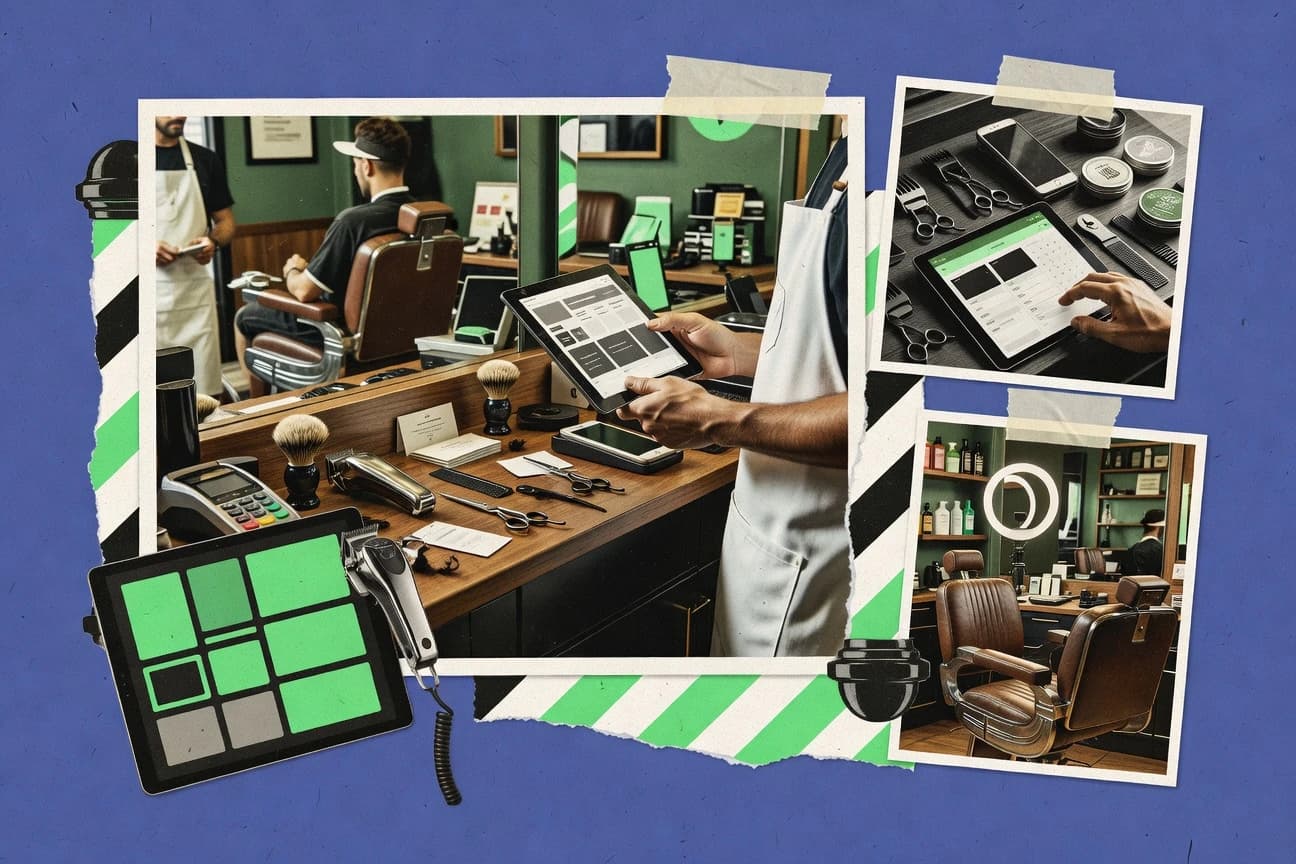
GITNUXSOFTWARE ADVICE
Personal Care ServicesTop 10 Best Barber Shop Software of 2026
Ranked top 10 barber shop software tools for booking, payments, and client management, with comparisons and notes for shop owners.

How we ranked these tools
Core product claims cross-referenced against official documentation, changelogs, and independent technical reviews.
Analyzed video reviews and hundreds of written evaluations to capture real-world user experiences with each tool.
AI persona simulations modeled how different user types would experience each tool across common use cases and workflows.
Final rankings reviewed and approved by our editorial team with authority to override AI-generated scores based on domain expertise.
Score: Features 40% · Ease 30% · Value 30%
Gitnux may earn a commission through links on this page — this does not influence rankings. Editorial policy
GlossGenius is the best fit for independent barbers who want branded booking, payments, and marketing in one owner-managed system, while Setmore works when you need an affordable entry for online booking and reminders and StyleSeat is a smart alternative if you’re happy using a client marketplace workflow.
Editor’s top 3 picks
Three quick recommendations before you dive into the full comparison below — each one leads on a different dimension.
GlossGenius
GlossGenius-branded booking website builder with embedded checkout, custom forms, and automated client messaging.
Built for fits when independent barbers need branded booking, payments, and marketing in one owner-managed system..
Mangomint
Editor pickEvent-based automations connect intake forms, notifications, and follow-up tasks to customer events.
Built for fits when multi-chair shops need configurable operations, integrated checkout, and automated client communication..
Square Appointments
Editor pickSquare customer directory links appointment history with POS receipts and customer activity.
Built for fits when barbers need online booking, Square POS payments, and one customer database..
Comparison Table
GlossGenius
SMBBooking, payments, marketing, and business management software for beauty professionals.
GlossGenius-branded booking website builder with embedded checkout, custom forms, and automated client messaging.
GlossGenius connects the booking page to payment capture, digital receipts, tipping, and service configuration. Custom forms collect intake details before visits, while client records retain contact information and interaction history. Automated campaigns support rebooking prompts, promotions, and review requests without requiring a separate marketing application.
The main tradeoff is a narrower integration surface than systems designed around public APIs and extensive third-party connectors. Reporting and configuration work well for a single shop, but larger organizations may need additional tools for custom data flows or granular location governance. A solo barber or small team benefits most when daily operations stay inside the native GlossGenius workflow.
- +Branded booking site reduces dependence on third-party scheduling pages.
- +Integrated card payments, tips, receipts, and checkout keep transactions in one workflow.
- +Automated campaigns support rebooking, promotions, and review requests.
- +Client profiles retain contact details, forms, and service history.
- –Open API coverage is limited for custom integrations and bespoke reporting.
- –Advanced chair utilization and floor-level capacity planning are not core features.
- –Multi-location controls are less granular than enterprise salon systems.
- –Marketing automation requires careful audience and message configuration.
Independent barbers
Launch a branded storefront
Fewer disconnected tools
Small barber teams
Coordinate daily staff appointments
Consistent shop operations
Show 1 more scenario
Mobile barbers
Accept remote appointment deposits
Fewer payment delays
Payment capture and digital receipts support advance collection before an off-site service visit.
Best for: Fits when independent barbers need branded booking, payments, and marketing in one owner-managed system.
Mangomint
SMBSalon and barbershop management software for scheduling, checkout, reporting, and team operations.
Event-based automations connect intake forms, notifications, and follow-up tasks to customer events.
Multi-chair barber shops gain configurable workflows for intake, reminders, rebooking prompts, and post-visit communication. Mangomint also connects checkout with client profiles, product sales, discounts, tips, and operational reporting. Multi-location operators can apply separate staff, service, and permission settings across sites.
The tradeoff is configuration depth, which can exceed the needs of a single-chair shop that only needs a calendar and card reader. Shops selling grooming products also receive retail inventory controls for counts, adjustments, and low-stock visibility.
- +Event-based automations trigger forms, messages, and follow-up tasks.
- +Integrated checkout handles services, products, discounts, tips, and receipt delivery.
- +Client profiles retain notes, forms, visit history, and contact details.
- +Retail inventory supports product counts, adjustments, and low-stock visibility.
- –Automation workflows need deliberate trigger, audience, and message configuration.
- –Single-chair shops may find the operational scope excessive.
- –Barber-specific haircut records receive less emphasis than general salon records.
Multi-chair barber shops
Coordinating multiple barbers
Fewer manual front-desk tasks
Independent shop owners
Managing daily shop administration
Centralized shop administration
Show 2 more scenarios
Growing barber groups
Standardizing multiple locations
More consistent site operations
Location-level settings and reporting help operators maintain consistent services, permissions, and operating procedures.
Retail-focused barbers
Tracking grooming product sales
Fewer stock discrepancies
Product counts, stock adjustments, and sales records give staff clearer control over retail replenishment.
Best for: Fits when multi-chair shops need configurable operations, integrated checkout, and automated client communication.
Square Appointments
SMBAppointment scheduling integrated with Square payments, point-of-sale, staff, and customer records.
Square customer directory links appointment history with POS receipts and customer activity.
Square Appointments suits shops already using Square POS because appointment payments, product sales, receipts, and customer activity remain connected. Service durations, staff availability, booking policies, and automated reminders can be configured from the Square dashboard. The customer directory adds appointment context to existing customer records.
The tradeoff is limited barber-specific documentation for style history, haircut references, and repeat preferences. A single-barber shop can use the public booking page for routine services, while larger operations may need external workflows for advanced reporting or custom intake.
- +Square POS connects appointment payments with in-store sales records.
- +Bookings API supports custom synchronization and reporting workflows.
- +Customer directory retains appointment and purchase context.
- +Automated SMS reminders reduce missed appointment communication.
- –Barber style documentation lacks a dedicated workspace.
- –Walk-in handling is less specialized than dedicated shop systems.
- –Advanced reporting often requires exports or API development.
- –Custom operational workflows require configuration beyond dashboard settings.
Independent barbers
Online booking for solo barbers
Fewer booking messages
Multi-barber shops
Shared calendars across barbers
Centralized appointment control
Show 2 more scenarios
Retail barber shops
Appointments linked to Square POS
Unified sales records
Service payments and product sales remain within the same Square merchant workflow.
Square developers
Custom booking data synchronization
Connected operational reporting
Square APIs expose booking, customer, catalog, and payment objects for external reporting or automation.
Best for: Fits when barbers need online booking, Square POS payments, and one customer database.
StyleSeat
vertical specialistMarketplace and booking software connecting clients with independent beauty and barber professionals.
Barber and client profile pages tie together booking, style history, and persistent service context across visits.
StyleSeat is built around online booking for beauty and barber services with a marketplace-style client acquisition layer. It supports barber profiles, service menus with durations, and recurring availability that clients can book against.
Staff can manage bookings from a unified calendar and capture client-specific haircut notes plus style history. Built-in messaging and notifications reduce the operational friction of reminders, confirmations, and rescheduling workflows.
- +Calendar-based booking management matches common barber workflows
- +Client profiles store haircut notes and style history for follow-up
- +Built-in reminders and messaging reduce manual follow-ups
- +Service menu supports durations for better appointment-time planning
- –Walk-in queue and chair-by-chair operations are less central than booking
- –Retail inventory and stock adjustments are not a core focus
- –Multi-location governance controls can feel limited for larger chains
- –Payment processing and receipt printing depend on external components
Best for: Fits when independent barbers need client booking, reminders, and client history in one workflow.
Fresha
SMBBooking, payments, client management, and marketplace tools for salons and barbers.
Client profile timeline ties haircut notes with before-and-after photos for faster repeat booking decisions.
Fresha runs appointment scheduling with online booking and real-time availability for barber shops. It manages a service menu with staff assignment, processes payments with receipt support, and tracks client profiles with haircut notes and style history.
Fresha also covers multi-location operations with staff visibility controls and calendar synchronization. The product focuses on reducing manual coordination through automated appointment reminders and client rebooking flows.
- +Online booking and availability updates change instantly across staff
- +Client profiles store haircut notes and style history for repeat visits
- +Built-in payments streamline checkouts and reduce manual reconciliation
- +Multi-location management keeps staff and calendars organized
- –Some advanced workflows require careful setup to match shop policies
- –Walk-in queue handling is less visible than appointment-first operations
- –Staff permissions need governance to prevent accidental edits
- –Deep reporting needs more configuration than simple monthly rollups
Best for: Fits when multi-location barber teams need online booking, payments, and automated rebooking coordination.
Phorest
enterpriseSalon and barbershop software for appointments, marketing, client retention, and business reporting.
A booking experience that ties recurring appointments and client profiles into one front desk workflow for day-to-day throughput.
Phorest is barber shop software built around online booking and operational workflows across appointments, clients, and services. It supports staff availability, recurring bookings, and appointment reminders so reception can run daily scheduling with less manual chasing.
Admin configuration covers service menus, haircut duration, cancellation policy handling, and walk-in flow through the same booking engine. Built-in reporting and client history help teams track repeat visits and style notes while keeping day-to-day check-in consistent.
- +Appointment reminders reduce no-shows without manual follow-ups
- +Staff availability rules support real-world chair and barber scheduling
- +Client profile history keeps haircut notes and style continuity visible
- +Recurring appointment workflows fit regular rebooking patterns
- –Walk-in queue management needs tight front desk habits to stay accurate
- –Deeper automation often depends on external integrations and custom processes
- –Multi-location administration can require extra configuration discipline
- –Some reporting views feel less detailed than export-first workflows
Best for: Fits when multi-staff shops need online booking plus reminders, with consistent client history and repeat booking workflows.
Timely
SMBOnline booking, payments, client records, and staff scheduling for salons and barbers.
Live appointment board that keeps staff availability, booking changes, and walk-in coverage in sync during the day.
Timely pairs appointment scheduling with an operations layer built around real-time appointment boards and staff workflows. It supports client records, haircut service menus with durations, and recurring appointments for regular clients.
The product also includes automated appointment reminders and SMS-style notification workflows to reduce no-shows. For barber shops running multiple staff and locations, Timely provides appointment management that keeps walk-in and booked work aligned.
- +Real-time appointment board updates across staff schedules
- +Service menu supports duration-based scheduling for chair time accuracy
- +Automated appointment reminders reduce missed appointments
- +Client profiles store haircut notes and style history
- –Workflows for complex retail inventory and variants are limited
- –Multi-location setup requires careful configuration discipline
- –Reporting depth for payroll-style breakdowns is not focused
- –Advanced POS and receipt workflows depend on integrations
Best for: Fits when mid-size barber teams need staff coordination with automated reminders and chair-time scheduling accuracy.
Zenoti
enterpriseEnterprise management software for salons, spas, barbershops, memberships, and multi-site operations.
Client record continuity links haircut notes, style history, and photos directly to service visits for rebooking context.
Zenoti combines appointment scheduling, online booking, and point of sale in a single system used by multi-location service businesses. It pairs client profiles with service and staff execution so haircut notes, style history, and before-and-after photos stay attached to the right appointment.
Automation features like appointment reminders and cancellation tracking reduce avoidable no-shows. Multi-location administration supports shared business rules and reporting across teams handling multiple barbers.
- +Client profiles keep haircut notes and style history tied to appointments
- +POS supports retail sales and receipts aligned to service visits
- +Appointment reminders and cancellation tracking reduce predictable no-show loss
- +Multi-location administration supports consistent operations across teams
- –Configuration depth is higher for complex multi-location service and staff models
- –Walk-in queue management and waitlist flows can feel less tailored for barbershops
- –Calendar synchronization needs careful setup to prevent booking drift
- –Advanced automation rules take time to map to real appointment patterns
Best for: Fits when a multi-location barbershop needs client-linked service history plus POS, reminders, and centralized administration.
Shortcuts
SMBSalon and barbershop management software for scheduling, point-of-sale, marketing, and reporting.
Appointment notes and haircut history persist per client, keeping staff context attached to each visit for faster rebooking decisions.
Shortcuts manages barbershop operations through booking workflows, client records, and service configuration tied to real appointment outcomes. The system focuses on appointment execution with staff assignment, service duration capture, and notes that travel with each visit.
It supports reminders and calendar synchronization so clients and barbers stay aligned across day-to-day scheduling changes. Integration options center on connecting scheduling, payments, and data flows rather than adding separate back-office apps.
- +Appointment-first workflow reduces switching between booking and check-in steps
- +Service durations and barber availability are reflected in day scheduling
- +Client profiles keep haircut notes and style history attached to visits
- +Calendar sync and reminders reduce no-show impact
- –Queue-style walk-in handling is weaker than dedicated walk-in queue products
- –Reporting depth is limited for multi-location payroll and tax breakdowns
- –Automation relies on configuration patterns rather than a broad visual builder
- –Complex service packages with many variants need careful setup discipline
Best for: Fits when a single-shop or small team wants appointment execution, reminders, and client histories in one workflow.
Setmore
SMBFree appointment scheduling with calendar sync, online booking, and payment processing.
Built-in staff-level scheduling with availability rules that drive what clients can book in real time.
Setmore is a scheduling-focused barber shop system with online booking and staff calendars as its core operational layer. Appointment reminders, cancellation and reschedule workflows, and service menu setup support day-to-day haircut operations and client rebooking.
Built-in client profiles and appointment history make it practical to capture barber notes and style follow-ups across repeat visits. Calendar sync and availability controls help coordinate barber schedules across devices without manual coordination.
- +Online booking that uses staff calendars to show real barber availability
- +Appointment reminders reduce no-shows through automated client notifications
- +Client profiles keep repeat visit context for haircut notes and style history
- +Calendar sync keeps schedules aligned across devices and managed calendars
- –Walk-in queue management is limited compared to queue-first scheduling tools
- –Service package bundling for multi-step services needs careful setup
- –Multi-location governance requires disciplined user role management
- –POS-grade receipts and inventory workflows are not the core focus
Best for: Fits when a barber shop needs online booking, staff scheduling, and automated reminders without heavy operations tooling.
Conclusion
After evaluating 10 personal care services, GlossGenius stands out as our overall top pick — it scored highest across our combined criteria of features, ease of use, and value, which is why it sits at #1 in the rankings above.
Use the comparison table and detailed reviews above to validate the fit against your own requirements before committing to a tool.
How to Choose the Right barber shop software
Barber shop software covers appointment scheduling, client profiles, and shop workflows that connect booking changes to execution at check-in and checkout. This guide covers GlossGenius, Mangomint, Square Appointments, StyleSeat, Fresha, Phorest, Timely, Zenoti, Shortcuts, and Setmore.
Each tool card below focuses on how appointments move through staff calendars, how client history like haircut notes and style history is stored, and how shop operations handle reminders and rebooking triggers. Integration depth also gets attention where GlossGenius and Square Appointments expose a bookings API for synchronization and custom reporting workflows.
Barber shop software for appointment-first scheduling, client history, and shop operations control
Barber shop software manages online booking and appointment execution by linking services, durations, and staff availability to a day schedule that barbers and front desk staff can follow. Client profiles store haircut notes and style history so repeat bookings can reuse context instead of rebuilding details each visit, which shows up clearly in StyleSeat and Fresha.
Beyond booking, the best systems tie messaging and follow-up to appointment events so clients get reminders and shops can coordinate rebooking decisions. GlossGenius concentrates on a branded booking website with embedded checkout and automated client messaging for independent operators, while Mangomint uses event-based automations that connect intake forms, notifications, and follow-up tasks to customer events.
Shop operations control points: scheduling, client context, and automated execution
Barber shop software should connect what gets booked to what happens at check-in so staff can execute the right service with the right timing. Client context should persist across visits with haircut notes and style history so rebooking decisions do not start from scratch each appointment.
Appointment-first scheduling with staff availability
Shortcuts uses an appointment-first workflow that keeps barber availability and service durations aligned in the day schedule. Setmore drives what clients can book in real time using staff-level scheduling and availability rules.
Client history and service context that travels with the visit
StyleSeat ties booking to client profiles that store haircut notes and style history for follow-up between visits. Zenoti links client record continuity to service visits so haircut notes and photos support rebooking context.
Event-triggered automation for forms, notifications, and follow-up
Mangomint connects intake forms, notifications, and follow-up tasks through event-based automations. GlossGenius uses automated client messaging tied to its branded booking website flow with embedded checkout.
Online booking updates that stay current across teams and locations
Fresha updates online booking and staff availability instantly, which supports repeat booking decisions in busy multi-location teams. Phorest ties recurring appointments and client profiles into a front desk workflow for consistent day-to-day throughput.
Walk-in queue visibility and day-of coverage handling
Timely runs a live appointment board that keeps staff availability, booking changes, and walk-in coverage in sync during the day. Phorest provides booking and reminders but requires tight front desk habits to keep walk-in queue management accurate.
Integrated payments and receipts aligned to appointment activity
GlossGenius keeps transactions in one workflow with integrated card payments, tips, and receipt delivery during checkout. Square Appointments links appointment payments to Square POS records by connecting appointment history with customer directory activity.
Decision framework for barber shop software selection by workflow fit
Selection should start with which operations the software must handle every day, then move to integration depth for the rest of the shop stack. The strongest systems match the shop’s execution model, whether it is independent chair operations or a front desk that manages throughput across staff.
Choose the execution model: owner-managed booking vs appointment-first operations
GlossGenius fits when a branded booking site with embedded checkout and automated client messaging needs to run as the primary front door for independent barbers. Shortcuts fits when appointment-first execution reduces switching between booking and check-in steps and keeps haircut history attached to each visit.
Validate client context persistence and what gets stored per visit
StyleSeat and Fresha both store haircut notes and style history in client profiles, but Fresha adds a timeline tied to before-and-after photos. Zenoti keeps haircut notes, style history, and photos directly connected to service visits so rebooking context stays centralized.
Map automation to real intake and follow-up events
Mangomint supports event-based automations that trigger intake forms, notifications, and follow-up tasks tied to customer events. GlossGenius concentrates automation around its branded booking flow with embedded checkout and automated client messaging.
Test day-of scheduling accuracy for chair time and coverage changes
Timely maintains a live appointment board with real-time updates across staff schedules for booking changes and walk-in coverage. Square Appointments fits when the priority is matching appointment payments with Square POS records and using bookings API workflows for synchronization and reporting.
Stress-test walk-in queue handling against the shop’s front desk habits
If walk-ins and coverage changes dominate the day, Timely’s live board supports synchronization of coverage during the day. If front desk throughput and reminders are primary, Phorest can work, but walk-in queue accuracy depends on disciplined front desk habits.
Confirm integration depth for custom synchronization and reporting
GlossGenius has limited open API coverage for custom integrations and bespoke reporting, so integration-heavy workflows need a clear plan. Square Appointments supports bookings API capabilities for custom synchronization and reporting workflows, which reduces manual data handling.
Who barber shop software serves best by shop structure and daily workflows
Different shop sizes rely on different daily control points. The right tool aligns the scheduling workflow, client history storage, and automation triggers with how the shop runs appointments and handles walk-in flow.
Independent barbers running chair-by-chair availability
GlossGenius reduces dependence on third-party scheduling pages by providing a branded booking website with embedded checkout and automated client messaging. Setmore also targets staff-level scheduling and online booking driven by staff calendars for real barber availability.
Multi-chair shops that need configurable operations automation
Mangomint supports event-based automations that connect intake forms, notifications, and follow-up tasks to customer events across operations. Zenoti supports centralized administration with client-linked service history and POS receipts aligned to service visits.
Multi-location teams coordinating rebooking decisions across staff
Fresha updates online booking and availability instantly across staff which supports repeat booking coordination across locations. Phorest ties recurring appointments and client profiles into one front desk workflow designed for day-to-day throughput.
Teams that rely on live same-day coverage changes
Timely keeps a live appointment board in sync during the day for staff availability, booking changes, and walk-in coverage. Shortcuts keeps appointment execution and notes attached to visits, which helps when day-of changes must preserve client service context.
Common buyer pitfalls that break appointment execution and client history continuity
Many failures come from buying for booking convenience while overlooking how the system executes at check-in and how history persists for rebooking. Other failures come from underestimating how walk-in queue accuracy depends on staff habits and how automation needs deliberate configuration.
Selecting based on booking UI and ignoring whether client history supports rebooking decisions
StyleSeat and Fresha store haircut notes and style history inside client profiles so staff can reuse context on follow-ups. Zenoti adds photos tied to service visits, so buyers should validate that the timeline or photo capture matches the shop’s rebooking workflow.
Assuming walk-in queue handling works automatically without front desk process discipline
Phorest can keep reminders and recurring workflow tight, but walk-in queue management depends on tight front desk habits to stay accurate. Timely provides a live appointment board with walk-in coverage synchronization, which better supports teams that change coverage during the day.
Automating follow-up without mapping events, audiences, and message content
Mangomint automation workflows require deliberate trigger, audience, and message configuration or they will not match real shop follow-up timing. GlossGenius concentrates automation on its booking website flow, so buyers should confirm message timing aligns with how clients rebook.
Underestimating integration constraints when custom reporting or bespoke workflows are required
GlossGenius has limited open API coverage for custom integrations and bespoke reporting, so integration-heavy shops need a clear fit for their sync requirements. Square Appointments supports bookings API workflows for custom synchronization and reporting, which helps avoid manual reporting gaps.
How We Selected and Ranked These Tools
We evaluated GlossGenius, Mangomint, Square Appointments, StyleSeat, Fresha, Phorest, Timely, Zenoti, Shortcuts, and Setmore using features fit at 40%, ease of operational use at 30%, and value at 30%. Features scoring emphasized how scheduling and client history connect so haircut notes and style history support rebooking and check-in execution.
Ease scoring emphasized how quickly staff can run day-to-day workflows such as appointment management and reminders without introducing manual handoffs. GlossGenius ranked first because its branded booking website with embedded checkout plus integrated card payments, tips, and receipt delivery keeps appointment execution and transaction handling inside one owner-managed workflow.
Frequently Asked Questions About barber shop software
Which platforms tie online booking to a built-in payments flow for appointment deposits or checkout?
How do barber shop systems keep haircut notes and style history attached to the correct visit?
When do appointment boards and live schedule updates matter for walk-in queue management and staffing coverage?
What breaks if a team needs multi-location administration across the same client data model?
Which tools support event-based automations triggered by customer or appointment events?
How do integrations and APIs affect data flows for appointments, customers, and payments?
How does admin configuration control service menus, haircut durations, cancellation policy handling, and recurring bookings?
Which systems provide staff-level scheduling controls that determine what clients can book in real time?
What security or access controls should shops verify for staff permissions in scheduling and client records?
How should a shop plan data migration for client profiles, service history, and appointment notes?
Tools reviewed
Primary sources checked during evaluation.
Referenced in the comparison table and product reviews above.
- Personal Care ServicesTop 10 Best Barbershop Software of 2026
- Consumer RetailTop 10 Best Webshop Software of 2026
- Personal Care ServicesTop 10 Best Tailor Shop Management Software of 2026
- Personal Care ServicesTop 10 Best Hair Salon Accounting Software of 2026
- Food Service RestaurantsTop 10 Best Bar Restaurant Software of 2026
Keep exploring
Comparing two specific tools?
Software Alternatives
See head-to-head software comparisons with feature breakdowns, pricing, and our recommendation for each use case.
Explore software alternatives→In this category
Personal Care Services alternatives
See side-by-side comparisons of personal care services tools and pick the right one for your stack.
Compare personal care services tools→