
GITNUXSOFTWARE ADVICE
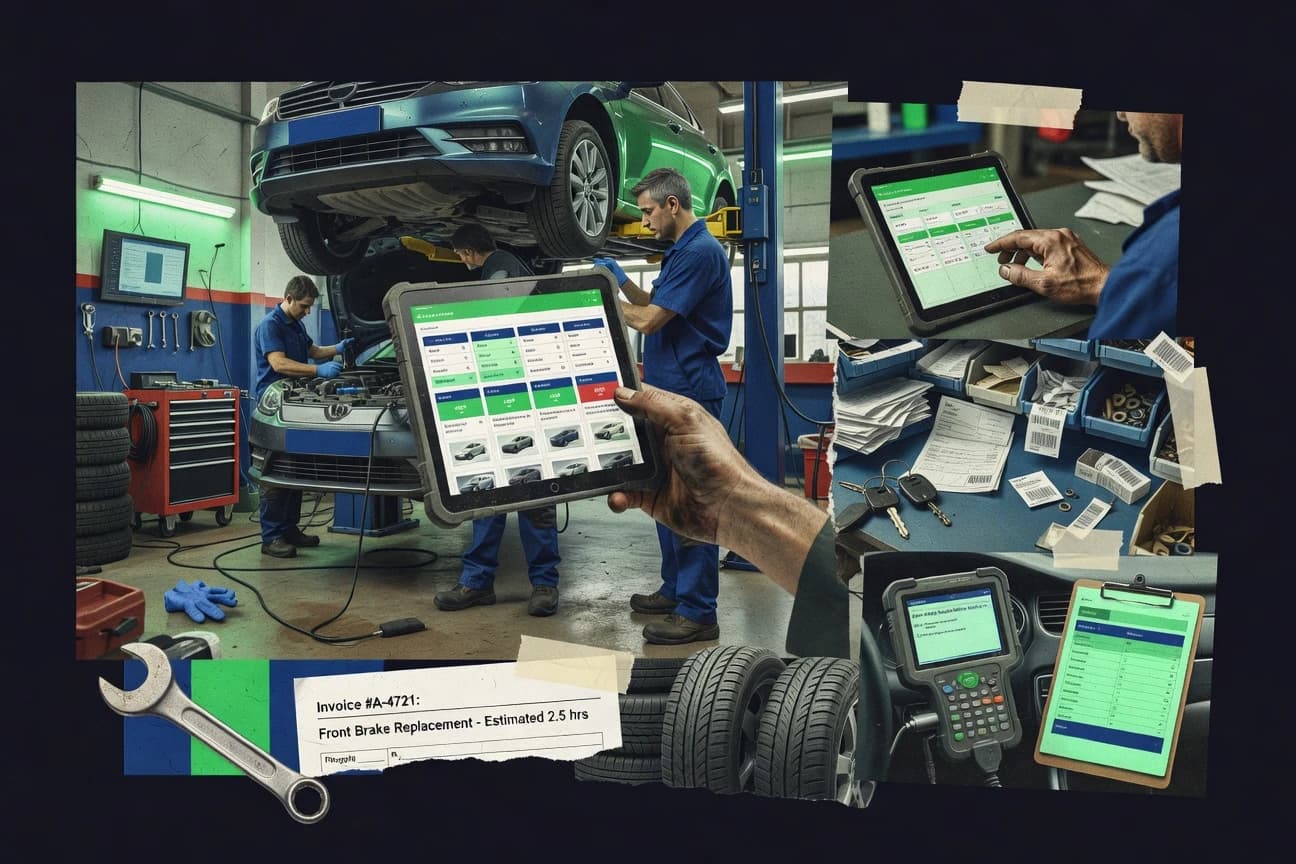
Automotive ServicesTop 10 Best Auto Workshop Management Software of 2026
Ranked roundup of auto workshop management software for scheduling, inventory, and shop operations, covering Shop Boss, MaxxTraxx, Omni Auto.

How we ranked these tools
Core product claims cross-referenced against official documentation, changelogs, and independent technical reviews.
Analyzed video reviews and hundreds of written evaluations to capture real-world user experiences with each tool.
AI persona simulations modeled how different user types would experience each tool across common use cases and workflows.
Final rankings reviewed and approved by our editorial team with authority to override AI-generated scores based on domain expertise.
Score: Features 40% · Ease 30% · Value 30%
Gitnux may earn a commission through links on this page — this does not influence rankings. Editorial policy
Torque360 is the best fit if you’re a mid-size shop that wants one system linking repair orders, staffing, and parts control, while Tekmetric works better for multi-bay teams that need job card execution tied to labor coding and technician time.
Editor’s top 3 picks
Three quick recommendations before you dive into the full comparison below — each one leads on a different dimension.
Torque360
Vehicle history stays attached to each repair order so follow-up work reuses prior context automatically.
Built for fits when mid-size shops need one system linking repair orders, staffing, and parts control..
Tekmetric
Editor pickJob card workflow plus technician time tracking ties labor to execution so repair orders bill accurately.
Built for fits when multi-bay shops need job card execution tied to labor coding and technician time..
Shopmonkey
Editor pickRepair order workflow keeps labor and parts changes synchronized from estimate through invoice.
Built for fits when multi-location shops need connected job, scheduling, and parts workflows with integration support..
Comparison Table
Torque360
SMBAuto repair shop management software for repair orders, scheduling, and invoicing.
Vehicle history stays attached to each repair order so follow-up work reuses prior context automatically.
Torque360 is positioned for daily shop execution, with repair order status tracking tied to appointment and technician dispatch workflows. The system keeps service history records available on the vehicle file, which reduces rework when customers return for follow-up diagnostics. Inventory and purchasing workflows support parts availability decisions while work proceeds across multiple repair orders.
A key tradeoff is that setup effort increases when shops need tighter control over labor inputs, parts sources, and workflow steps per location. Torque360 fits best when a shop wants one operational record for intake to completion and then uses that record to keep parts usage and job progress aligned.
- +Repair order workflow tracks job status through scheduling and technician dispatch
- +Service history is tied to vehicle records for faster repeat work
- +Inventory and purchasing support parts decisions during active jobs
- +Role-based access controls limit who can change operational states
- –Workflow configuration becomes heavy for shops with custom labor or parts rules
- –Reporting depth depends on how consistently jobs are coded
Service advisors
Convert intake into staffed repair orders
Fewer handoff delays
Shop foremen
Plan bay and technician throughput
Better daily throughput
Show 2 more scenarios
Parts managers
Control parts availability for active work
Lower parts-related downtime
Parts use inventory and purchasing workflows to prevent stock gaps during multi-order periods.
Multi-location ops teams
Standardize process across locations
Consistent work control
Operations enforce access limits and workflow rules so job handling matches local operational needs.
Best for: Fits when mid-size shops need one system linking repair orders, staffing, and parts control.
Tekmetric
vertical specialistCloud-based shop management software for automotive repair businesses.
Job card workflow plus technician time tracking ties labor to execution so repair orders bill accurately.
Tekmetric supports repair order management with job card execution and labor operation codes for structured work billing. Technician time tracking ties labor to the job card workflow, which helps shops review throughput by bay and technician. Inventory and purchasing workflows connect to parts handling so estimate line items can move toward invoice-ready work without manual rekeying. Governance controls come through role-based access and operational rules that restrict who can change key repair order fields.
A clear tradeoff is that Tekmetric configuration choices shape how quickly the workflow becomes consistent across locations. Shops with multiple service advisors need disciplined setup for statuses, labor coding, and parts behaviors. Tekmetric fits best when appointment scheduling already exists or is being adopted, and repair orders must start with consistent data and continue through invoice and service history capture.
- +Job card workflow links technician time to repair order labor coding
- +Strong appointment-to-repair-order execution reduces handoff drops
- +Multi-location operations work with consistent repair order status rules
- +Integration options support scan tool and accounting data flow
- –Workflow consistency depends on upfront configuration discipline
- –Some advanced automation needs careful change management across advisors
- –Parts purchasing setup can be time-consuming for new catalogs
- –Reports can require export work for custom operational views
Service advisors and shop managers
Convert appointments into invoice-ready repair orders
Faster estimate-to-invoice completion
Technicians and dispatch coordinators
Track bay work with time and job cards
More accurate labor accountability
Show 2 more scenarios
Accounting and operations teams
Reduce rekeying into financial records
Lower administrative rework
Accounting integration moves repair order line data into bookkeeping workflows with less duplicate entry.
Multi-location service operations
Standardize repair order statuses across sites
Consistent customer documentation
Operational rules keep repair order stages consistent so service history and invoice output match across locations.
Best for: Fits when multi-bay shops need job card execution tied to labor coding and technician time.
Shopmonkey
vertical specialistShop management software covering repair orders, inspections, payments, and customer messaging.
Repair order workflow keeps labor and parts changes synchronized from estimate through invoice.
Shopmonkey centers on repair order management with a job card workflow that moves from estimate through authorization and invoice. Scheduling and dispatch features support bay planning and technician assignment so work stops drifting between planning and execution. Inventory tools manage parts inventory control and tie ordering activity back to active jobs. This tool is also positioned for automation through extensibility and API access for syncing operational data.
A key tradeoff is that deeper automation and integrations depend on setup effort across shop processes and connected systems. Shopmonkey fits best for multi-bay or multi-location shops that need consistent workflows for job creation, parts procurement, and labor capture across teams.
- +Job card workflow links estimating, authorization, and invoice steps
- +Scheduling and dispatch align bay planning with technician assignment
- +Inventory control ties parts activity back to active repair orders
- +API support helps connect operational systems beyond the core app
- –Integration depth depends on configuration across shop workflows
- –Advanced automation requires disciplined internal process design
Service operations managers
Standardize job workflow across locations
Fewer handoff errors
Service advisors
Convert estimates into authorized work
Faster estimate-to-invoice
Show 2 more scenarios
Parts and procurement teams
Control inventory against live jobs
Lower parts shortages
Parts inventory control connects ordering activity to the repair order so missing items are visible.
Shop owners
Coordinate technician throughput
More predictable throughput
Scheduling and dispatch features help assign bays and technicians to reduce idle time between tasks.
Best for: Fits when multi-location shops need connected job, scheduling, and parts workflows with integration support.
Shop Boss
SMBWeb-based auto repair shop management software for repair orders, estimates, and inventory.
Bay and technician dispatch are planned inside a single scheduling view tied to each job card.
Shop Boss supports auto workshop operations with job card workflows, technician dispatch, and scheduling organized around bays and appointments. The system links estimates to invoice steps and tracks vehicle service history so repeat work can be referenced during approvals and comebacks.
Inventory workflows cover parts catalog handling and purchase order creation for replenishment tied to ongoing jobs. Automation focuses on operational routing and reminder-style service follow-ups instead of complex custom rules.
- +Job card workflow keeps technician steps attached to each work order
- +Appointment and bay scheduling support faster day-of throughput planning
- +Estimate-to-invoice conversion reduces rekeying during approval cycles
- +Service history records make repeat visits easier to reference
- –Automation options feel oriented to operational routing rather than custom business rules
- –Integration depth beyond workshop workflows may require external tooling
Best for: Fits when a mid-size shop needs job cards, dispatch, and scheduling tied to service history and invoices.
Omni Auto
SMBAuto repair shop management platform for estimates, invoices, and parts ordering.
Job documentation and status tracking stay attached to each vehicle visit, so RO-to-completion handoffs remain auditable.
Omni Auto manages the end-to-end workshop workflow from inbound vehicle details to completed job paperwork. It focuses on repair order management with technician assignment support, service status progression, and job documentation captured per vehicle visit.
The system also covers parts inventory control and procurement flows that connect work orders to purchase orders. Omni Auto further supports maintenance schedules and service reminders so repeat work can be scheduled and tracked across visits.
- +Strong repair order workflow with clear status progression and job documentation
- +Parts inventory control ties work to buying activity for faster replenishment
- +Maintenance schedules and service reminders support repeat-visit planning
- +Technician assignment reduces manual handoffs between dispatch and bay work
- –Automation coverage depends on manual setup of workflow rules
- –Integration options need validation for scan tool and accounting connections
- –Multi-location workflows can require extra data discipline to avoid duplicates
- –Reporting depth is adequate but not built for advanced operational analytics
Best for: Fits when mid-size workshops need repair order workflow control plus parts inventory and repeat-visit scheduling.
Mitchell 1 Manager SE
enterpriseAutomotive shop management software connected to repair information and estimating tools.
Repair order job cards link technician work, estimate approvals, and final invoicing in a single guided workflow.
Mitchell 1 Manager SE fits multi-bay repair facilities that already run on Mitchell 1 parts and labor data and want a single workflow for job cards, estimates, and billing. Manager SE supports estimate-to-invoice processes, technician job assignment, and vehicle-centric service history so dispatch and completion stay tied to the same repair order record.
The software also supports workshop administration tasks such as user roles, permissions, and audit trails around core transaction changes that affect repair authorization and invoicing. Mitchell 1 Manager SE is less about general-purpose business management and more about tight linkage between repair order throughput and Mitchell reference data.
- +Estimate-to-invoice workflow keeps approvals and billing aligned to the same repair order
- +Vehicle records centralize service history for faster review during re-inspection
- +Role-based access supports controlled edits to authorization and invoicing steps
- +Technician dispatch and job completion map directly to repair order status changes
- –Configuration depth for workflow screens can slow initial rollout across multiple bays
- –Parts purchasing and supplier coordination depend on connected Mitchell data sources
- –Reporting flexibility is limited compared with spreadsheet-based extraction from some competitors
- –API-driven custom integrations require more vendor coordination than simpler systems
Best for: Fits when repair shops need repair-order throughput tied closely to Mitchell labor and parts reference data.
ARI
SMBAutomotive repair invoicing and shop management software for estimates, invoices, and customer tracking.
Estimate-to-invoice job card workflow with service history context for each repair order.
ARI brings workshop job management into a single workflow built around estimating and invoicing handoffs. It focuses on managing repair orders and job card execution with service history context that helps staff keep work consistent across repeat visits.
ARI also covers digital inspection outputs, odometer capture, and appointment-to-bay workflow tracking to reduce manual retyping. For inventory and procurement, ARI supports parts tracking that ties purchase activity back to job requirements.
- +Job workflow links estimate, approval steps, and invoice creation
- +Service history context reduces repeated data entry for repeat vehicles
- +Inspection and odometer capture fit common check-in routines
- +Parts records can be traced from job needs to procurement activity
- –Multi-location workflows require disciplined configuration to stay consistent
- –Parts and procurement flows can need manual reconciliation for edge cases
Best for: Fits when mid-size shops want one repair-order workflow with consistent inspection and invoicing steps.
Fullbay
vertical specialistCloud-based management software for heavy-duty repair shops and commercial fleets.
VIN-to-job workflows that populate service details and reduce rekeying inside the repair-order record.
Fullbay centers on auto workshop job management with a repair-order workflow that links customer, vehicle, approvals, and technician work into one record. The system focuses on VIN-driven vehicle lookup, estimate-to-invoice transitions, and parts-related order tracking so service teams can move faster between steps.
Fullbay also supports technician time tracking tied to jobs and uses operational rules to standardize shop processes across locations. Integrations and data exchange are part of the workflow, but the admin control depth is narrower than suites built for large multi-store enterprise governance.
- +VIN-based vehicle lookup reduces manual make model and trim entry
- +Repair order workflow ties approvals, labor, and parts steps to one job record
- +Technician time tracking associates hours with active work assignments
- +Mobile-friendly job updates keep dispatch and bays aligned
- –Multi-location governance controls need careful setup for consistent rule enforcement
- –Some inventory and purchasing workflows depend on tighter process discipline
Best for: Fits when multi-bay shops want VIN-driven job workflows and technician time tracking without heavy enterprise customization.
AutoLeap
vertical specialistAutomotive repair shop software for estimates, inspections, scheduling, and marketing.
Job execution workflow that links technician time tracking directly to repair order progress steps.
AutoLeap provides shop-floor workflow for service jobs, from intake to job completion, with a focus on operational task tracking. It supports technician time tracking tied to work performed, plus vehicle and service history visibility to reduce lookup time.
The system also covers appointment and scheduling workflows and ties service documents into an estimate-to-invoice flow. AutoLeap’s fit is strongest for multi-step repair order execution where recurring operational steps need consistent capture and handoffs.
- +Technician time tracking tied to active jobs reduces after-the-fact adjustments
- +Appointment and scheduling workflows connect planning to job execution
- +Service history visibility helps technicians avoid repeated vehicle lookups
- +Estimate-to-invoice workflow keeps totals tied to captured work
- –Integration breadth for accounting and terminals can require additional setup effort
- –Multi-location controls are weaker than specialized competitors with deeper governance
Best for: Fits when shops need repeatable job execution with technician time tracking and scheduling handoffs.
Shop-Ware
vertical specialistCloud software for digital inspections, estimates, repair orders, and shop operations.
Job workflow and status tracking tie customer work records to inventory movements for tighter execution control.
Shop-Ware is a workshop management system aimed at coordinating repair orders, job workflows, and operational records in automotive service shops. It centers on vehicle service intake and ongoing job tracking, including estimates moving toward invoice status.
Shop-Ware also supports parts and inventory movements tied to customer work so shops can reduce manual reconciliation. For organizations that need consistent processes across daily scheduling and bay or tech assignment, it focuses on repeatable job data entry and workflow steps.
- +Repair order workflow keeps job notes and status transitions in one record
- +Parts inventory transactions can be tied to specific customer work
- +Job history records support follow up on prior services and customer context
- +Multi-day work tracking reduces the risk of losing job context between shifts
- –Scheduling and dispatch depth can feel limited for complex multi-bay, multi-tech routing
- –Automation coverage depends heavily on how workflows are configured by an admin
- –Integration options for accounting and payment terminals are not clearly documented as standard
- –Reporting capabilities can require manual effort to shape workshop KPIs
Best for: Fits when single or small multi-location shops need consistent repair order tracking and parts-linked execution.
Conclusion
After evaluating 10 automotive services, Torque360 stands out as our overall top pick — it scored highest across our combined criteria of features, ease of use, and value, which is why it sits at #1 in the rankings above.
Use the comparison table and detailed reviews above to validate the fit against your own requirements before committing to a tool.
How to Choose the Right auto workshop management software
Auto workshop management software coordinates the repair-order workflow from intake to completion, and the top options here keep job status and documentation tied to the visit so follow-up work does not start from scratch. Torque360 is designed around that vehicle and repair-order context, while Tekmetric ties job card execution directly to technician time tracking for accurate labor billing.
Shopmonkey keeps labor and parts changes synchronized from estimate through invoice, and Shop Boss plans bay and technician dispatch inside the same scheduling view tied to each job card. Omni Auto adds parts inventory control tied to work, and the rest of the shortlist covers similar execution and scheduling needs with different workflow emphasis.
Auto workshop management software for repair-order workflow, scheduling, and parts-linked execution
Auto workshop management software runs the job card workflow that moves work from estimate to approvals, then to invoicing, with job status updates and job documentation staying attached to the repair order as the vehicle progresses. Tools like Torque360 focus on preserving service history context on each repair order so repeat work can reuse prior details automatically.
The same software category also coordinates scheduling and dispatch so appointments and technician assignment stay aligned with the work order being executed. Tekmetric anchors that execution link by connecting job card workflow to technician time tracking so labor coding and billed hours stay consistent across the appointment-to-repair-order handoff.
Repair-order workflow depth, scheduling control, and parts-linked execution
Auto workshop management software matters most when repair orders carry the right context across intake, job execution, approvals, and invoicing. Tools that keep vehicle-visit documentation and job status attached to the same repair-order record reduce rekeying during re-inspection and repeat visits.
Vehicle and repair-order context that persists through the visit
Torque360 keeps service history attached to each repair order so follow-up work reuses prior context automatically. Omni Auto keeps job documentation and status tracking attached to each vehicle visit so RO-to-completion handoffs stay auditable.
Job card workflow tied to labor coding and billable execution
Tekmetric links job card workflow to technician time tracking so repair orders bill accurately. AutoLeap links technician time tracking directly to repair order progress steps so billed hours match execution timing.
Synchronization of labor and parts changes from estimate to invoice
Shopmonkey keeps labor and parts changes synchronized from estimate through invoice inside the repair-order flow. Shop-Ware ties customer work records to inventory movements so parts transactions stay tied to specific customer work.
Scheduling and dispatch planning connected to job cards
Shop Boss plans bay and technician dispatch inside a single scheduling view tied to each job card. Shopmonkey aligns scheduling and dispatch with bay planning and technician assignment to reduce handoff drops.
Parts inventory control tied to work and replenishment
Omni Auto ties parts inventory control to buying activity for faster replenishment tied to work demand. Torque360 includes parts control alongside repair-order and staffing context so parts planning follows job progression.
Choose a workflow model that matches shop routing complexity and change-control needs
The right auto workshop management software depends on how the workflow is configured and how strictly work steps map to labor and parts behavior. Some tools are designed to preserve vehicle and job context tightly, while others emphasize execution accuracy through job cards and technician time tracking.
Map repair-order workflow emphasis to the shop’s biggest rework cause
If repeat vehicles cause repeated data entry, prioritize Torque360 because service history stays attached to each repair order for faster repeat work. If handoffs fail because documentation drifts, prioritize Omni Auto because job documentation and status tracking stay attached to each vehicle visit.
Match labor billing risk to job card and time-tracking linkage strength
If billable labor accuracy depends on technician execution steps, prioritize Tekmetric because job card workflow ties labor coding to technician time tracking. If job progress must reflect active execution timing, prioritize AutoLeap because technician time tracking drives repair order progress steps.
Pick the system that keeps labor and parts aligned through approvals
If estimate authorizations and invoice totals often diverge due to parts changes, prioritize Shopmonkey because labor and parts changes stay synchronized from estimate through invoice. If inventory movements must be traceable to each customer work package, prioritize Shop-Ware because inventory transactions can be tied to specific customer work.
Stress-test scheduling and dispatch fit against bay count and routing patterns
If bay and technician dispatch planning must stay inside the same workspace as each job card, prioritize Shop Boss because bay and technician dispatch are planned inside a single scheduling view tied to each job card. If bay planning and technician assignment must stay aligned during execution, prioritize Shopmonkey because scheduling and dispatch align with bay planning and technician assignment.
Validate integration and workflow automation tolerance for the shop’s change-control capacity
If advanced automation needs careful change management, Tekmetric is constrained by the need for upfront configuration discipline to keep workflow consistency stable. If inventory and buying alignment must be validated for scan tool and accounting connections, Omni Auto requires validation for scan tool and accounting connections beyond workshop workflows.
Teams that benefit from different workflow architectures
Auto workshop management software fits shops where repair-order execution, scheduling, and parts transactions must be tied to the same vehicle visit record. The best choice depends on whether the shop’s bottleneck is repeat-work context, labor coding accuracy, or labor-to-parts synchronization.
Mid-size shops coordinating intake to completion across scheduling and parts
Torque360 fits shops that need one system linking repair orders, staffing, and parts control while keeping service history tied to the vehicle record for faster repeat work.
Multi-bay shops where job cards must control both execution and billable labor
Tekmetric fits multi-bay shops that tie technician time tracking to repair order labor coding so billed labor stays consistent across the appointment-to-repair-order handoff.
Multi-location workshops trying to keep estimate, authorization, and invoicing steps synchronized
Shopmonkey fits multi-location workflows that require labor and parts changes synchronized from estimate through invoice while scheduling and dispatch stay aligned to bay planning.
Shops that need day-of throughput planning using bay and dispatch inside job cards
Shop Boss fits teams that plan bay and technician dispatch inside a single scheduling view tied to each job card so work routing stays attached to each job card.
Workshops that want parts inventory control tied to vehicle visits and replenishment
Omni Auto fits shops that need repair order workflow control plus parts inventory and repeat-visit scheduling with auditable RO-to-completion handoffs.
Common buying and rollout pitfalls for auto workshop management software
Many rollout failures come from treating workflow configuration as a one-time admin task instead of a governance practice tied to how jobs are coded and routed. Another failure pattern comes from selecting scheduling depth that does not match bay routing complexity, then trying to compensate with manual workarounds.
Choosing a repair-order workflow tool but underestimating the coding consistency needed for reporting depth
Torque360 depends on how consistently jobs are coded to deliver reporting depth, so workflow mapping must include labor and parts coding rules before rollout.
Assuming multi-location workflows will stay consistent without configuration discipline
Tekmetric and ARI both show that workflow consistency or multi-location consistency depends on upfront configuration discipline, so rollout plans need standardized rule templates per location.
Selecting a system for job execution accuracy while ignoring how parts and purchasing flows reconcile
Omni Auto requires manual setup of workflow rules for automation coverage and needs validation for scan tool and accounting connections, so procurement reconciliation steps must be tested before go-live.
Buying for scheduling control but not matching routing complexity to the dispatch model
Shop Boss automation options feel oriented to operational routing rather than custom business rules, so shops with complex routing logic should validate workflow flexibility in the scheduling and dispatch workflow.
How We Selected and Ranked These Tools
We evaluated auto workshop management software across repair-order workflow depth, scheduling and dispatch linkage, technician execution control, and parts-linked execution. Features carried 40% weight, ease and operational adoption carried 30% total weight, and value carried 30% total weight.
Torque360 separated on vehicle context persistence because service history stays attached to each repair order so follow-up work reuses prior context automatically. Torque360 also ranked high for job status tracking through scheduling and technician dispatch with service history tied to vehicle records for faster repeat work.
Frequently Asked Questions About auto workshop management software
How do Shop Boss and Omni Auto connect job cards to invoicing status during daily execution?
Which tools provide stronger technician time tracking tied to repair order steps?
How does Shopmonkey handle multi-location workflows compared with Torque360’s single-operations model?
When do bay scheduling and technician dispatch sync most reliably with repair order records?
What integration and API coverage differences matter for scan tools, accounting, and operational systems?
How does data migration typically work when moving vehicle and service history into a new system like ARI or Fullbay?
What admin controls and audit trails are expected for repair authorization and invoicing changes?
What breaks if a shop depends on labor coding alignment rather than generic scheduling?
Where does warranty and comeback follow-up fit best across the shortlist?
Tools reviewed
Primary sources checked during evaluation.
Referenced in the comparison table and product reviews above.
- Automotive ServicesTop 10 Best Automotive Workshop Software of 2026
- Automotive ServicesTop 10 Best Auto Repair Shop Management Software of 2026
- Automotive ServicesTop 10 Best Heavy Duty Shop Management Software of 2026
- Automotive ServicesTop 10 Best Used Car Dealer Management Software of 2026
- Automotive ServicesTop 10 Best Mechanic Shop Invoice Software of 2026
Keep exploring
Comparing two specific tools?
Software Alternatives
See head-to-head software comparisons with feature breakdowns, pricing, and our recommendation for each use case.
Explore software alternatives→In this category
Automotive Services alternatives
See side-by-side comparisons of automotive services tools and pick the right one for your stack.
Compare automotive services tools→