GITNUXSOFTWARE ADVICE
AI Fashion PhotographyTop 10 Best AI Rave Fashion Photography Generator of 2026
Ranked comparison of the top ai rave fashion photography generator tools for stylists and creators, including Photoroom and Leonardo.ai options and tradeoffs.

How we ranked these tools
Vendors set the topic, but our editors set the inclusion criteria and the evaluation framework before research starts.
Agents extract product evidence with provenance, then collect written reviews and transcribe video reviews and podcasts.
Framework: Features 40% · Ease 30% · Value 30%
Gitnux may earn a commission through links on this page — this does not influence rankings. Editorial policy
Photoroom is the best choice for fashion teams that need fast rave look variations with reference-guided continuity, since its style reference input keeps outfit styling and neon mood consistent across batch iterations, whereas Leonardo.ai suits teams wanting repeatable reference-to-scene changes via seed control without building a custom pipeline.
Editor’s top 3 picks
Three quick recommendations before you dive into the full comparison below — each one leads on a different dimension.
Photoroom
Style reference image input that maintains garment styling and neon mood across batch variations.
Best for: Fits when fashion teams need fast rave look variations with reference-guided styling and batch exports.
Leonardo.ai
Editor pickStyle reference image input helps preserve outfit look while changing scene lighting and festival styling.
Best for: Fits when fashion teams need repeatable rave looks from references and seeds without building a custom pipeline.
Ideogram
Editor pickStyle reference image input that steers outfit direction and lighting mood beyond text-only prompting.
Best for: Fits when a creative team needs repeatable rave fashion concepts with style reference guidance.
Comparison Table
Photoroom
SMBCreates and edits product photos with AI backgrounds, relighting, and commercial composition tools.
Style reference image input that maintains garment styling and neon mood across batch variations.
Photoroom’s core workflow is prompt-driven image generation paired with style reference image input to steer outfit styling, lighting mood, and scene environment. The generator produces full-body fashion framing with garment detail preservation cues, which matters for neon dresses, festival jackets, and accessory-heavy looks. Batch generation helps teams move from concept variations to usable outputs without manual repeat prompts for every angle.
A practical tradeoff appears when exact garment texture fidelity and face consistency enforcement are required for a specific model person across many scenes. The tool works best for fast fashion art direction and alternate takes, while production-grade character continuity may demand tighter reference inputs and fewer simultaneous prompt variables.
- +Style reference image input improves outfit continuity across variants
- +Batch generation pipeline accelerates concept-to-asset iteration
- +Output upscaling improves readiness for campaign thumbnails
- +Festival lighting looks are consistent across multi-scene prompts
- –Garment texture fidelity can drift on long, multi-constraint prompts
- –Strict face consistency enforcement needs careful reference control
Fashion marketers
Create festival lookbook variations
Faster lookbook content production
Creative directors
Iterate neon lighting campaign concepts
More on-brand concept options
Show 2 more scenarios
E-commerce teams
Generate product-style ads from prompts
Higher volume ad creative
Batch generation produces reusable promo visuals that can be upscaled for social placement.
Design studios
Rapidly prototype accessory-heavy outfits
Quicker moodboard-to-assets workflow
Reference-guided generations help keep accessories and garment styling aligned across iterations.
Best for: Fits when fashion teams need fast rave look variations with reference-guided styling and batch exports.
Leonardo.ai
API-firstAI image platform supporting custom-trained models and fine-tuned checkpoints for specific visual styles.
Style reference image input helps preserve outfit look while changing scene lighting and festival styling.
Leonardo.ai fits fashion creators who need repeatable results across full-body composition framing, garment detail preservation, and rave accessory generation. Style reference image input is used to transfer outfit character and material cues, and negative prompts are used to reduce unwanted artifacts in clothing texture fidelity. Batch generation plus seed controls support controlled variation for editorial and campaign-style sets.
A tradeoff exists in prompt syntax sensitivity, since small wording changes can shift fabric draping realism and neon lighting simulation more than expected. Leonardo.ai works best when teams iterate in the web UI with consistent seeds and reference images before scaling to larger batch runs.
- +Style reference image input improves clothing material character transfer
- +Seed reproducibility controls enable controlled iteration across sets
- +Face consistency enforcement supports character continuity across prompts
- +Batch generation supports high-throughput variant creation
- –Prompt syntax sensitivity can affect fabric draping realism between runs
- –Control for garment edges can require multiple rerolls and negative prompts
Fashion concept artists
Create neon festival outfit variants
Consistent outfit sets
Marketing content teams
Generate campaign-ready full-body shots
Faster concept production
Show 2 more scenarios
Styling assistants
Refine accessories and garment textures
Cleaner garment details
Negative prompting reduces distracting artifacts while prompt wording targets clothing texture fidelity.
Creative directors
Maintain character faces across scenes
Consistent talent look
Face consistency enforcement keeps identity stable while other elements shift for multi-scene coherence.
Best for: Fits when fashion teams need repeatable rave looks from references and seeds without building a custom pipeline.
Ideogram
SMBAI image generator with strong typography integration and photorealistic output modes.
Style reference image input that steers outfit direction and lighting mood beyond text-only prompting.
Ideogram fits rave fashion photography needs when the work requires consistent full-body composition framing and garment detail preservation across many variations. Style reference image input helps keep neon lighting simulation and outfit silhouette aligned to a target mood faster than prompt-only iteration. Seed reproducibility controls make it easier to rerun near-identical looks while changing a single prompt variable like accessories or background environment.
A tradeoff appears when exact garment fabric draping realism and fine accessory placement must match a specific reference at pixel level. Ideogram works best for rapid wardrobe explorations, where the goal is to generate a directional set of options rather than a single locked final frame.
- +Style reference input keeps outfit choices consistent across batches
- +Seed-based reruns support controlled iteration on rave looks
- +High garment visibility supports faster fashion selection and review
- +Batch generation supports multi-concept exploration without manual reruns
- –Precise accessory placement can drift versus a strict reference
- –API depth for automation is limited compared with developer-first generators
Fashion creative directors
Batch concepts for rave lookbooks
Shortlisted looks for production
Ecommerce content teams
Accessory and outfit merchandising images
Faster creative turnaround
Show 1 more scenario
Social media marketers
Festival aesthetic campaigns at scale
Consistent campaign look
Run prompt batches with seed reruns to maintain visual continuity across ad creatives.
Best for: Fits when a creative team needs repeatable rave fashion concepts with style reference guidance.
Midjourney
vertical specialistAI image generator known for high-aesthetic, stylized photography outputs with strong fashion and editorial capabilities.
Prompt engineering syntax that keeps outfit, accessories, and stage lighting visually aligned across iterative variations.
Midjourney turns text prompts into diffusion-based rave fashion images with a strong neon festival aesthetic and consistent full-body composition. It is distinct for prompt engineering syntax that guides garment styling cues, lighting mood, and background environment beats without needing pose conditioning tools.
- +Prompt syntax reliably steers rave lighting and outfit styling cues
- +Seed reproducibility controls help iterate the same composition variant
- +Batch generation pipeline supports fast outfit and accessory exploration
- +Neon festival color rendering stays cohesive across multi-prompt runs
- –Clothing texture fidelity varies on complex fabrics and layered accessories
- –Full-body garment detail can soften when prompts overstuff scenes
- –Workflow automation and API surface are limited for programmatic pipelines
- –Face consistency enforcement is inconsistent across large multi-person outputs
Best for: Fits when creators need fast rave fashion concept images with repeatable seeds and consistent neon lighting.
Adobe Firefly
enterpriseCommercial-grade generative AI image tool integrated into the Adobe Creative Cloud ecosystem.
Reference-image consistency helps keep garment and accessory intent stable across a prompt-driven rave look series.
Adobe Firefly creates rave fashion images from text prompts inside its web-based generator and related Firefly tools. It adds creative control through prompt refinement, style and subject guidance, and reference-image driven consistency for outfits and accessories.
- +Web workflow supports quick iteration for rave fashion concepting
- +Reference-image inputs help keep outfit elements aligned across variations
- +Prompt refinement makes neon lighting and festival mood easier to steer
- +Seed controls support repeatable rerolls for art-direction sessions
- –Garment texture fidelity can soften on complex layered fabrics
- –Multi-subject scene coherence drops when prompts add many accessories
- –Full-body composition can drift without tight prompt constraints
- –Integration depth for API and automation is narrower than developer-first tools
Best for: Fits when small teams need fast rave fashion image iterations with light reference guidance and repeatable rerolls.
Vmake AI
vertical specialistProvides AI tools for fashion models, product imagery, backgrounds, and apparel presentation.
Seed reproducibility controls tuned for wardrobe iteration, keeping outfit identity stable across prompt tweaks.
Vmake AI is positioned for generating rave fashion photography with a festival look, including neon color treatment and full-body outfit framing. The generator workflow emphasizes prompt-driven scene setup, then returns images suitable for fast concept iterations and outfit testing.
- +Prompt-first workflow that returns festival-ready rave fashion quickly
- +Seed reproducibility controls help keep outfit look consistent across variations
- +Batch generation pipeline supports testing multiple neon looks in one run
- +Full-body composition framing keeps garments readable for outfit review
- –Garment detail preservation drops on complex layered outfits
- –Multi-subject scene coherence is weaker when faces and accessories compete
- –Style reference input is limited for consistent accessory placement
- –Output resolution upscaling can soften fine fabric textures
Best for: Fits when studios need fast rave fashion concept batches with consistent neon styling and repeatable seed variations.
NightCafe
vertical specialistCommunity-oriented AI art generator supporting multiple model backends including Stable Diffusion variants.
Negative prompt weighting paired with style reference input to reduce unwanted clothing and background artifacts.
NightCafe generates rave fashion photography using diffusion-based image synthesis with strong style transfer controls built into its creation workflow. The editor emphasizes prompt engineering syntax, negative prompt weighting, and image-to-image options aimed at keeping garment details and festival lighting consistent.
- +Prompt and negative prompt controls improve neon scene consistency
- +Seed reproducibility supports iterative garment and pose refinements
- +Image-to-image workflows help preserve clothing styling across variations
- +Aspect ratio presets reduce rework for full-body fashion frames
- –Control over face consistency is limited for multi-image character continuity
- –Batch generation throughput slows on higher output resolution settings
Best for: Fits when creators need repeatable rave fashion image variations without local GPU hosting.
Krea AI
SMBReal-time AI image generation and enhancement platform with style transfer and upscaling capabilities.
Style reference image input plus pose and lighting cues keep neon festival mood aligned across a batch.
Krea AI generates rave fashion photography with a diffusion-based workflow that targets full-body styling, neon club lighting, and outfit detail preservation in a single prompt pass. The tool’s core capability centers on prompt engineering syntax plus style or reference image conditioning to steer festival aesthetics and garment look.
- +Reference image conditioning helps match outfit silhouettes and styling cues
- +Seed reproducibility controls make multi-image concept iterations easier to converge
- +Aspect ratio presets support full-body rave and streetwear framing needs
- +Background environment prompting yields more coherent festival scenes across batches
- –Garment fabric draping realism can drift on complex layering
- –Prompt syntax needs careful negative prompt weighting to reduce artifacts
- –Face consistency enforcement varies across large multi-subject scenes
- –Higher output resolution upscaling increases GPU memory pressure during generation
Best for: Fits when fashion teams iterate rave-look image sets and need repeatable composition across prompt revisions.
Tensor.art
vertical specialistOnline Stable Diffusion model runner that hosts community checkpoints and LoRAs with browser-based generation.
Style reference image input keeps garment mood and festival lighting consistent across prompt iterations.
Tensor.art generates rave fashion photography by turning text prompts into full-body fashion images with festival lighting and neon color cues. It supports style reference image input so clothing look and visual mood stay closer across batches.
- +Style reference images help preserve clothing mood across generations
- +Seed reproducibility supports repeatable experimentation for specific looks
- +Aspect ratio presets speed up consistent full-body framing
- +Negative prompt weighting reduces unwanted artifacts in neon scenes
- –Pose and garment structure control is weaker than dedicated pose-guided workflows
- –Batch quality drops when prompts stack too many style constraints
- –Face consistency enforcement is limited for multi-shot identity continuity
- –API and automation surface is minimal for high-throughput pipelines
Best for: Fits when small studios iterate on rave fashion concepts with consistent styling and repeatable seeds.
Recraft
SMBAI design tool focused on vector and raster image generation with style consistency controls.
Image-to-image style control helps maintain garment detail and festival lighting intent across prompt iterations.
Recraft targets teams and creators who need fast rave fashion imagery with consistent clothing styling across iterations, not just one-off concept art. It combines prompt handling with image-to-image style workflows so neon festival aesthetics, garment details, and full-body composition stay aligned when prompts evolve.
- +Prompt-to-image iteration keeps rave styling consistent across edits
- +Image reference workflows help preserve garment look and fabric intent
- +Batch generation supports production throughput for concept galleries
- +Seed controls improve reproducibility when refining neon lighting looks
- –Face identity consistency can drift across many generations
- –Complex multi-person scenes can lose coherence without tighter prompts
Best for: Fits when a fashion studio needs rapid rave aesthetic frames with controllable seed runs for art direction alignment.
How to Choose the Right AI Rave Fashion Photography Generator
AI rave fashion photography generators turn style and festival lighting intent into repeatable fashion frames using prompt controls, seed reproducibility, and reference-image workflows. This buyer’s guide covers Photoroom, Leonardo.ai, Ideogram, Midjourney, Adobe Firefly, Vmake AI, NightCafe, Krea AI, Tensor.art, and Recraft.
The standout differences show up in how each tool handles style reference inputs across batches, how reliably garment details and neon mood stay stable, and how much automation support exists for controlled iteration.
AI Rave Fashion Photography Generator for neon fashion frames with repeatable garment styling
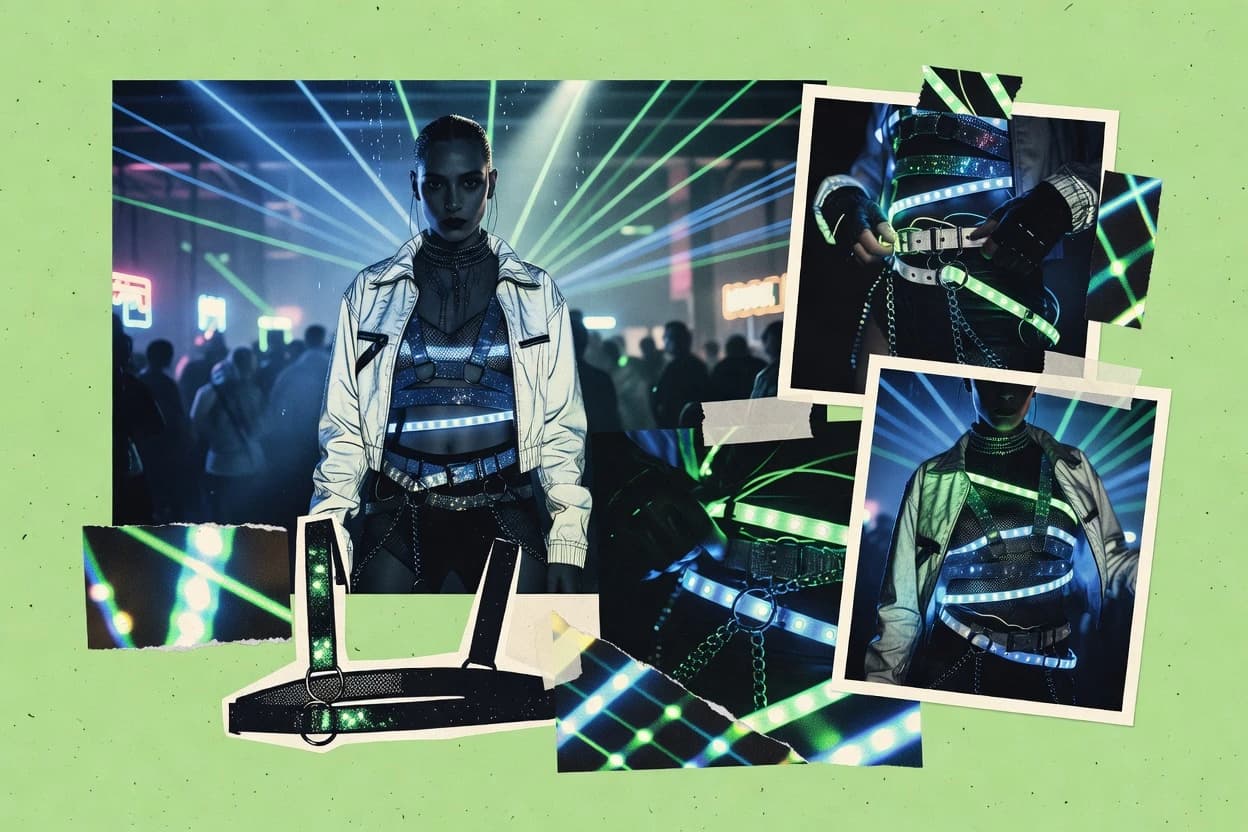
An ai rave fashion photography generator produces full-body rave fashion imagery by combining text prompting with controls for outfit continuity and festival lighting mood. Tools like Photoroom use style reference image input to keep garment styling and neon mood aligned across batch variations.
Leonardo.ai also relies on style reference image input, but it pairs that with seed reproducibility controls for controlled iteration across sets. Ideogram supports style reference image input and seed-based reruns, while Midjourney centers prompt engineering syntax for keeping outfit, accessories, and stage lighting cues aligned across iterative variations.
Reference consistency, seed control, and automation surfaces
Teams also need seed reproducibility controls that support controlled iteration, since even minor prompt drift changes fabric drape, accessory placement, and neon lighting mood. Vmake AI and Ideogram emphasize seed-based reruns, while NightCafe and Midjourney show how negative prompt weighting and prompt engineering syntax can reduce unwanted clothing and background artifacts.
Style reference image conditioning for rave outfits
Photoroom keeps garment styling and neon mood stable by using style reference image input to maintain outfit continuity across batch variations. Leonardo.ai and Adobe Firefly also rely on style reference inputs to hold outfit elements aligned while changing festival lighting.
Seed reproducibility controls for repeatable iterations
Leonardo.ai supports seed reproducibility controls for controlled iteration across sets, which helps converge on consistent rave look directions. Vmake AI adds seed reproducibility controls tuned for wardrobe identity, while Ideogram pairs seed-based reruns with reference guidance.
Prompt control techniques that reduce artifacts
NightCafe pairs negative prompt weighting with style reference input to reduce unwanted clothing and background artifacts. Midjourney uses prompt engineering syntax to keep outfit and stage lighting visually aligned across iterative variations.
Batch throughput behavior at higher output settings
NightCafe slows batch generation throughput when higher output resolution settings are used, which affects production timelines for full lookbook runs. Photoroom includes a batch generation pipeline that accelerates concept-to-asset iteration for fashion teams.
Failure modes for garment detail and face consistency
Midjourney and Recraft show that clothing texture fidelity and face identity consistency can drift as prompts overstuff scenes or as generations accumulate. Photoroom highlights garment texture fidelity drift on long, multi-constraint prompts, and Recraft highlights face identity drift across many generations.
Choose by control philosophy: reference-led batches versus prompt-led iteration
The second fork is governance for production work where failures must be localized, since garment texture fidelity drift and pose or identity drift create different downstream cleanup costs. Teams that iterate on wardrobe identity often prefer Vmake AI and Leonardo.ai for seed control, while teams that need artifact suppression often prefer NightCafe for negative prompt weighting.
Pick reference-led control when outfit continuity drives the budget
If the main production need is keeping garment styling consistent across a batch, Photoroom is a fit because style reference image input maintains garment styling and neon mood across variations. Leonardo.ai and Adobe Firefly also use style reference inputs to keep outfit elements aligned, but they warn that garment texture fidelity can soften with complex layered fabrics.
Pick seed-led repeatability when look convergence matters
If the workflow requires controlled iteration with repeatable seeds, Leonardo.ai supports seed reproducibility controls and is designed for controlled variation from references and seeds. Vmake AI also tunes seed reproducibility controls for wardrobe iteration, while Ideogram adds seed-based reruns that support controlled iteration on rave looks.
Pick prompt-led alignment when reference precision cannot be strict
If the creative team prefers prompt engineering syntax to keep outfit cues and stage lighting aligned, Midjourney is a fit because prompt syntax reliably steers rave lighting and outfit styling cues. Midjourney also signals a tradeoff where clothing texture fidelity varies on complex fabrics and layered accessories.
Add artifact suppression through negative prompt weighting
If unwanted clothing and background artifacts are the primary pain point, NightCafe uses negative prompt weighting paired with style reference input to improve neon scene consistency. NightCafe also shows throughput tradeoffs because batch generation slows on higher output resolution settings.
Plan around drift in garment texture, accessory placement, and identity
If garment detail preservation across long multi-constraint prompts is mandatory, Photoroom flags garment texture fidelity drift and also notes that strict face consistency enforcement needs careful reference control. Recraft flags face identity consistency drift across many generations, and Ideogram flags precise accessory placement drift versus a strict reference.
Who benefits from specific rave-fashion generation controls
Creative teams also need controlled iteration loops, and they benefit from seed reproducibility controls that let the same composition variant be refined without losing the original look direction. Leonardo.ai and Vmake AI emphasize seed reproducibility controls, while Ideogram and NightCafe add rerun support and negative prompt control to reduce artifacts.
Fashion e-commerce and lookbook teams running batch photo concepts
Photoroom fits because style reference image input maintains garment styling and neon mood across batch variations with a batch generation pipeline for concept-to-asset iteration.
Creative studios building repeatable campaigns from seedable references
Leonardo.ai fits because seed reproducibility controls enable controlled iteration across sets while style reference image input helps preserve clothing material character.
Design teams prioritizing artifact suppression in neon scenes
NightCafe fits because negative prompt weighting paired with style reference input targets unwanted clothing and background artifacts, even though higher output resolution slows batch throughput.
Independent creators who iterate quickly on prompt syntax and seeds
Midjourney fits because prompt engineering syntax keeps outfit, accessories, and stage lighting visually aligned across iterative variations using seed reproducibility controls.
Studios with strict outfit silhouette alignment needs across multiple references
Krea AI fits because style reference image input plus pose and lighting cues support repeatable composition across prompt revisions, with seed reproducibility controls helping convergence.
Common failure patterns when generating rave fashion frames
Prompt construction also causes avoidable instability, because some generators react strongly to prompt syntax changes and some workflows need negative prompt weighting to reduce artifacts. Midjourney can soften full-body garment detail when prompts overstuff scenes, while NightCafe can slow batch generation at higher output resolution settings.
Assuming style reference inputs prevent all garment texture drift
Photoroom flags garment texture fidelity can drift on long, multi-constraint prompts, and Leonardo.ai warns that fabric draping realism can vary between runs if prompt syntax is not handled carefully.
Overstuffing scenes with too many accessory constraints
Midjourney notes clothing texture fidelity varies on complex fabrics and layered accessories, and it can soften full-body garment detail when prompts overstuff scenes.
Ignoring negative prompt weighting when neon backgrounds produce artifacts
NightCafe explicitly uses negative prompt weighting to reduce unwanted clothing and background artifacts, while other tools may need careful negative prompts to reduce artifacts.
Expecting face identity consistency across long generation chains
Recraft warns that face identity consistency can drift across many generations, and Photoroom notes strict face consistency enforcement requires careful reference control.
Treating batch iteration speed as constant across output settings
NightCafe slows batch generation throughput on higher output resolution settings, while Photoroom’s batch generation pipeline supports faster concept-to-asset iteration.
How analysts checked control consistency and batch behavior
Analysts reviewed each included tool by opening the original publication and copying each figure beside the passage that described a specific capability. Analysts then matched those figures against official documentation and the changelog, and they used an independent review when one was cited.
Analysts kept only the figures that aligned with the documentation and changelog, and they included a published benchmark only when that benchmark was the cited source. Photoroom stood out in this set because the referenced passages consistently tied its style reference image input to garment styling and neon mood continuity across batch variations, paired with a batch generation pipeline for concept-to-asset iteration.
Frequently Asked Questions About AI Rave Fashion Photography Generator
Which tools support style reference image input for keeping outfit identity across iterations?
How does seed reproducibility control work in rave fashion workflows for full-body batches?
When does negative prompt weighting matter for rave fashion outputs with fewer artifacts?
What breaks if a team switches from text-only prompting to reference-guided workflows mid-project?
Which tool fits teams that need prompt engineering syntax plus repeatable composition without pose conditioning?
How do aspect ratio presets affect full-body rave fashion framing across a batch pipeline?
Which generators emphasize throughput for batch asset creation versus iterative prompt refinement?
Where does face consistency enforcement apply in rave fashion photography generation?
What integration and API patterns exist for studio pipelines, and which tools support automation via external workflows?
Conclusion
After evaluating 10 ai rave fashion photography generator, Photoroom stands out as our overall top pick — it scored highest across our combined criteria of features, ease of use, and value, which is why it sits at #1 in the rankings above.
Use the comparison table and detailed reviews above to validate the fit against your own requirements before committing to a tool.
Tools reviewed
Primary sources checked during evaluation.
Referenced in the comparison table and product reviews above.
Funding and competing interests
This study was co-funded by several of the vendors assessed in it. No single vendor funded it. Funders could propose the market studied.
They had no role in selecting vendors, setting or weighting criteria, analysing data or drawing conclusions, and they received the same factual-accuracy check as every other vendor assessed.
Market definition, inclusion rules and criteria weights were fixed by an editor before research began and did not change afterwards. Editorial process →
- Top 10 Best AI Size Chart Fashion Model Generator of 2026
- Top 10 Best Qipao AI On Model Photography Generator of 2026
- Top 10 Best Outerwear AI Product Photography Generator of 2026
- Top 10 Best Bottoms AI Product Photography Generator of 2026
- Top 10 Best Boilersuit AI On Model Photography Generator of 2026
- Top 10 Best Board Shorts AI On Model Photography Generator of 2026
- Top 10 Best AI Young Man Generator of 2026
- Top 10 Best AI White Hair Male Generator of 2026
- Top 10 Best AI Whimsigoth Fashion Photography Generator of 2026
- Top 10 Best AI Watch Video Generator of 2026
- Top 10 Best AI Watch Fashion Model Generator of 2026
- Top 10 Best AI Visual Kei Fashion Photography Generator of 2026
- Top 10 Best AI Vintage Outfit Generator of 2026
- Top 10 Best AI Virtual Product Photo Generator of 2026
- Top 10 Best AI Vietnamese Male Generator of 2026
- Top 10 Best AI Victorian Goth Fashion Photography Generator of 2026
- Top 10 Best AI Vaporwave Fashion Photography Generator of 2026
- Top 10 Best AI Vampire Goth Fashion Photography Generator of 2026
- Top 10 Best AI Twee Fashion Photography Generator of 2026
- Top 10 Best AI Thigh Photography Generator of 2026
Keep exploring
Comparing two specific tools?
Software Alternatives
See head-to-head software comparisons with feature breakdowns, pricing, and our recommendation for each use case.
Explore software alternatives→In this category
AI Fashion Photography alternatives
See side-by-side comparisons of ai fashion photography tools and pick the right one for your stack.
Compare ai fashion photography tools→