GITNUXSOFTWARE REVIEW
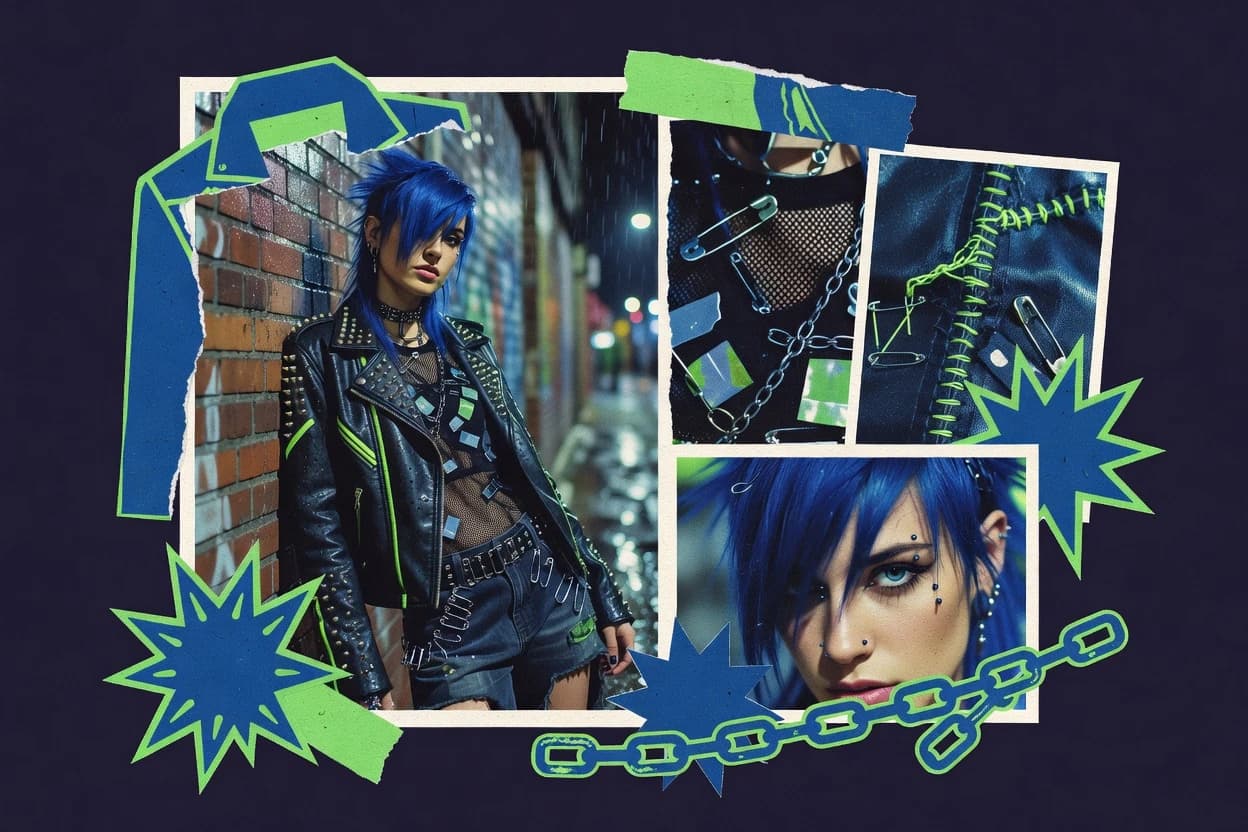
AI Fashion PhotographyTop 10 Best AI Punk Girl Fashion Photography Generator of 2026
Compare ai punk girl fashion photography generator options for stylists and creators, with tools like Midjourney and tradeoffs that matter.

How we ranked these tools
Vendors set the topic, but our editors set the inclusion criteria and the evaluation framework before research starts.
AI search agents find sources, extract figures with provenance, and aggregate written reviews. They also transcribe video reviews and podcasts.
Framework: Features 40% · Ease 30% · Value 30%
Gitnux may earn a commission through links on this page. This does not influence our reviews. Editorial policy
Midjourney is the best pick for fashion teams that want fast punk-girl photo concepts with a consistent character look, since seed-based iteration keeps identity stable while outfits and lighting shift. Fotor is a strong alternative for creators who want generation plus quick non-destructive edits in one place.
Editor’s top 3 picks
Three quick recommendations before you dive into the full comparison below — each one leads on a different dimension.
Midjourney
Seed-based iteration that keeps a character’s identity stable while varying outfits and lighting across generations.
Best for: Fits when fashion teams need fast punk-girl concept sets with repeatable character look.
Fotor
Editor pickIntegrated generation plus non-destructive photo editing tools for rapid refinement of punk fashion portraits.
Best for: Fits when creators need quick punk fashion generations and edits in one workflow.
Ideogram
Editor pickPrompting that reliably preserves outfit structure and styling cues across batches for punk girl fashion photography.
Best for: Fits when fashion teams need consistent punk styling concept sheets with fast prompt iteration.
Comparison Table
Midjourney
anchorAI image generator renowned for high-quality photorealistic and stylized character outputs.
Seed-based iteration that keeps a character’s identity stable while varying outfits and lighting across generations.
Midjourney is a fit for fashion creatives who want fast visual exploration of subculture aesthetics without building a custom model or dataset. Prompting controls composition and lighting intent, and seed reproducibility helps keep a character’s look consistent during iteration. Batch generation supports producing multiple looks per brief for art direction reviews.
A tradeoff appears when style matching requires exact garment transfer or precise pose control, since native conditioning is not as granular as workflows built around ControlNet-style conditioning. Midjourney works best when the goal is a coherent concept series with consistent vibes, rather than pixel-accurate edits to a specific reference person or garment.
- +Consistent punk fashion mood through strong style priors and prompt sensitivity
- +Seed reproducibility supports iterative character refinement across a series
- +Batch generation speeds up moodboard coverage with varied outfits and poses
- +Strong aesthetic control for lighting, grunge styling, and streetwear framing
- –Precise garment transfer and reference-person fidelity are limited
- –Exact pose and multi-subject placement require more prompt iterations
- –High-detail results can still need external upscaling for print-ready output
- –Output resolution caps can constrain large-format editorial crops
Fashion art directors
Create punk editorial moodboard sets
Faster concept review cycles
Indie fashion marketers
Produce social-ready styling snapshots
Cohesive campaign visuals
Show 2 more scenarios
Creative agencies
Rapid pre-visualization for shoots
Reduced production planning churn
Use batch generation to test lighting and composition before production decisions.
Editorial illustrators
Concept studies for publication spreads
Clear direction for final artwork
Refine moody street fashion compositions using prompt re-rolls and variations.
Best for: Fits when fashion teams need fast punk-girl concept sets with repeatable character look.
Fotor
SMBOnline photo editor with AI image generation, retouching, and design features.
Integrated generation plus non-destructive photo editing tools for rapid refinement of punk fashion portraits.
Fotor focuses on producing fashion-forward portraits with stylistic direction from prompts while keeping a traditional editor interface available for iteration. It supports multiple aspect ratio presets for social crops and provides post-generation tools to adjust composition and clean up visible issues. Batch generation and seed handling support repeatable variations, which helps when punk looks require consistent outfit framing across a set.
A tradeoff appears in fine control depth, since deep conditioning workflows are not exposed through the same level of technical interfaces as specialized control tooling. Fotor fits best when the workflow needs quick generation-to-polish cycles for punk girl shoots, rather than when it needs detailed pose control, garment transfer, or model-level customization.
- +Generation and photo finishing use one continuous workspace
- +Aspect ratio presets speed up punk portrait framing for social crops
- +Seed-based variation support helps maintain look consistency
- +Prompt-to-outfit iteration is fast without external tooling
- –Deep technical conditioning controls are limited versus specialist editors
- –Output consistency can drop across large multi-image batches
- –Pose and garment specificity are less controllable than advanced pipelines
- –Advanced metadata control for downstream pipelines is limited
Fashion content creators
Make punk girl outfit concept sets
Cohesive character outfit lineup
Small marketing teams
Rapid campaign visuals for subculture themes
Short turn visual production
Show 1 more scenario
Independent photographers
Previsualize punk shoot lighting and styling
Faster pre-shoot decisions
Start from written styling cues, iterate quickly, and select frames for real-world planning.
Best for: Fits when creators need quick punk fashion generations and edits in one workflow.
Ideogram
anchorAI image generator known for typography integration and realistic rendering.
Prompting that reliably preserves outfit structure and styling cues across batches for punk girl fashion photography.
Ideogram is suited to ai punk girl fashion photography work where prompts must carry outfit structure and mood, such as boots, layered tops, dyed hair styling, and street setting. Prompting supports negative constraints so unwanted elements like extra limbs and mismatched clothing can be reduced across a batch. Seed reproducibility helps teams iterate without losing earlier composition choices when they refine lighting and garment details. For fashion concepting, it supports aspect ratio presets and higher-resolution outputs to create shot-ready images for boards.
A key tradeoff is that fine-grained garment fidelity can degrade when prompts ask for multiple complex fabric materials at once, such as mixing lace, vinyl, and heavily patterned textiles in a single look. Ideogram fits best when the workflow favors prompt refinement and controlled variation rather than exact, per-garment placement like strict garment transfer onto a specific body template. It also fits teams that want fast concept output and consistent styling across iterations without building a custom diffusion pipeline.
- +Prompt-driven outfit styling keeps ai punk girl looks cohesive
- +Negative prompting reduces common prompt failures across batches
- +Seed reproducibility speeds outfit iteration with stable composition
- +Image editing supports targeted changes for scene and styling
- –Complex multi-fabric requests can reduce garment texture fidelity
- –Strict placement across multiple garments is less deterministic
Fashion designers
Create punk girl lookbook concepts
Faster lookbook ideation
Creative studios
Produce batch variations for campaigns
More consistent campaign options
Show 2 more scenarios
E-commerce merchandisers
Mock lifestyle shots for products
Quicker merchandising visual drafts
Merchandisers generate photo-like scenes that match garment design intent and subculture aesthetics.
Brand content teams
Refine art direction from drafts
Fewer rework cycles
Teams make targeted edits to adjust composition and clothing details after reviewing initial concept images.
Best for: Fits when fashion teams need consistent punk styling concept sheets with fast prompt iteration.
Flair AI
vertical specialistFlair AI creates product and fashion compositions using uploaded items, generated scenes, and virtual models.
Outfit-centered generation that keeps punk styling cues aligned across rapid prompt variations.
Flair AI focuses on generating fashion photography prompts into stylized images with a workflow aimed at quick visual iteration. It supports prompt-driven outputs for punk girl subculture aesthetics, including outfit-forward compositions and lighting moods.
- +Prompt-first image generation fits punk girl fashion ideation
- +Fast iteration helps converge on outfit, mood, and color direction
- +Variation sets make it practical to compare styling outcomes
- +Exported images support straightforward offline review and curation
- –Pose and framing control is less deterministic than conditioning-first tools
- –Garment-specific edits and transfers are limited in precision
- –Batch throughput controls are basic for large catalog runs
- –Metadata customization is minimal beyond standard export behaviors
Apparel sellers and marketers
Generate model scenes from uploaded garments
On-figure campaign visuals
Fashion lookbook teams
Create coordinated multi-image fashion spreads
Cohesive lookbook drafts
Show 2 more scenarios
Ecommerce merchandising teams
Generate studio-like product scenes
More product visuals
Creates background and scene variations from product photos for punk girl themed listings and product-page imagery.
Brand marketing teams
Place products into editorial environments
Campaign-ready concepts
Generates lifestyle campaign scenes with models, props, and backgrounds aligned to punk girl styling goals.
Best for: Fits when fashion creators need prompt-driven punk girl visuals for moodboards and small lookbook drafts.
Adobe Firefly
enterpriseGenerative AI system integrated into Adobe products designed for commercial safety.
Masked inpainting with generative fill lets creators swap specific wardrobe areas like hair, boots, or jacket panels without rebuilding the full scene.
Adobe Firefly generates fashion-focused punk girl images from text prompts and lets creators steer outputs with inpainting and generative fill on chosen regions. Its core image workflow supports iterative refinement by editing the prompt and masking areas instead of regenerating from scratch.
- +Inpainting and generative fill support targeted edits for punk styling changes
- +Prompt iteration keeps fashion composition aligned across multiple variations
- +Batch generation supports producing many outfit looks for selection
- +Safety filtering reduces accidental unsafe outputs in fashion imagery
- –Garment-specific fidelity can drift across iterations for complex punk layers
- –Region edits can alter adjacent accessories like belts and jewelry
- –Reference control is limited when exact outfit identity must be preserved
- –Safety constraints can restrict some aggressive punk aesthetics and text elements
Fashion brands and creatives
Create editorial fashion images from prompts
Lookbook and mockup variations
Editorial creative teams
Iterate monochrome styling and lighting
Rapid monochrome concepts
Show 2 more scenarios
Ecommerce product marketing
Generate product scenes and background changes
More listing options
Creates punk girl product mockups and replaces backgrounds or surrounding elements while keeping the product subject central.
Designers and production artists
Target-region revisions with masks
Focused corrections
Applies localized edits to selected regions for punk girl garments, facial details, and scene elements without rebuilding fully.
Best for: Fits when fashion creators need fast punk girl photo concepts with masked refinement and batch variation selection.
Krea AI
emergingReal-time AI image and video generation platform with high-resolution upscaling.
Reference-driven look matching that keeps punk outfit structure and styling cues consistent across variations.
Krea AI focuses on fashion-style diffusion generation with an interface tuned for art direction, including pose and clothing consistency workflows. It supports reference-driven creation so punk girl looks keep key details like hair silhouette, outfit shape, and styling cues across variations.
- +Reference-first workflow helps maintain outfit and styling continuity
- +Fast iteration loop supports rapid punk fashion concept variations
- +Pose and scene direction cues improve look consistency across reruns
- +Export outputs are usable for mood boards and concept sheet drafting
- –Prompt discipline is required for consistent garment fabric and prints
- –Batch creation and queue controls are limited for high-volume workflows
- –Hard style consistency across multiple subjects needs careful input curation
- –Advanced control depth is weaker than tools focused on conditioning pipelines
Fashion editors and stylists
Iterate punk girl styling and scene direction
Editorial concept drafts
Fashion marketing and art teams
Generate batches from prompts and references
Comparable direction set
Show 2 more scenarios
Visual creators and editors
Fix details and extend backgrounds
Fewer manual touchups
Makes targeted corrections to generated punk girl images or extends background areas to improve composition continuity.
Designers and visualization teams
Generate room concepts with fashion rendering
Room style reviews
Generates interior concept images guided toward a 3D-like look so punk girl editorial scenes can be reviewed with set ideas.
Best for: Fits when fashion creators need quick punk girl concept sheets with repeatable look direction.
SeaArt
specialistAI image generation platform with a strong focus on character art and model hosting.
Inpainting masking plus outpainting extension lets punk outfit corrections and street background growth happen in one continuous production loop.
SeaArt delivers a diffusion-based image generator focused on fashion prompts, with an interface geared toward fast iteration on outfit, pose, and styling details. The workflow supports common fashion photography edits like inpainting masking and outpainting extension, which helps refine garment edges and extend backgrounds for full-body looks.
- +Pose and outfit prompts converge well for full-body punk fashion scenes
- +Inpainting masking workflows fix garment seams, bangs, and accessory details
- +Outpainting extension helps grow street backgrounds around the subject
- +LoRA and checkpoint loading support consistent punk style directions
- –Prompt weighting can take multiple retries to stabilize fabric textures
- –Background extensions sometimes introduce inconsistent lighting across frames
Fashion creatives and marketers
Draft full-body punk girl fashion ideas
Pre-production visuals
Digital artists and illustrators
Iterate images from a source reference
Controlled visual variations
Show 2 more scenarios
Artists and image editors
Correct artifacts with localized editing
Cleaner generated outputs
Uses canvas and localized edits to fix punk girl image issues like hands, hair, seams, and texture drift.
Independent concept designers
Test structured prompt variations quickly
Curated direction shortlist
Runs multiple punk girl prompt changes and model combinations to compare outputs and select stronger directions.
Best for: Fits when solo creators need fashion-first iteration with edit tools for outfit and background refinement.
VModel
vertical specialistAI fashion model generator for e-commerce and apparel photography.
Look-consistent punk fashion output where outfit motifs and styling cues hold across batch variations.
VModel targets AI punk girl fashion photography generation with a workflow focused on repeatable visual output and style consistency across batches. It translates subculture cues into images that keep outfit motifs, hair styling, and streetwear styling recognizable frame to frame.
- +Strong punk girl fashion consistency across batches and iterations
- +Prompt controls help keep outfits, styling cues, and scene mood aligned
- +Batch generation supports fast variant production for lookbook-style sets
- +Export-ready outputs reduce extra post-processing for basic use
- –Fine-grained pose control can drift when scenes change significantly
- –Garment texture fidelity varies across complex fabrics and accessories
- –Model customization depth is limited for users needing checkpoint tuning
- –Automation and API surface are not clearly positioned for pipeline integration
Editorial and brand creative teams
Generate campaign scenes from briefs
Reviewable concept previews
Fashion retailers expanding categories
Create virtual models for product imagery
Reusable on-figure images
Show 2 more scenarios
Fashion designers and merchandisers
Iterate styling and accessories across variations
Faster seasonal exploration
Explores punk girl garment attributes, accessories, body shapes, and poses across related image directions.
Fashion marketing teams
Assemble coordinated lookbook images
Consistent lookbook set
Creates a sequence of punk girl outfit and ensemble images with continuity so the set reads as one lookbook.
Best for: Fits when a creator needs consistent punk girl fashion photo drafts at scale without deep model tinkering.
Civitai
vertical specialistModel-sharing platform hosting thousands of community-trained checkpoints and LoRA models for alternative fashion aesthetics.
Civitai’s model pages combine versioned checkpoint downloads with creator-specific prompt context for fashion-oriented looks.
Civitai is a model and asset hub used for diffusion-based punk girl fashion photography workflows, where the site’s core distinction is its large library of community model checkpoints, LoRA add-ons, and prompt examples. Generation happens in the user’s own local or hosted inference tool, while Civitai supplies the selection, metadata, and files that shape the style, character look, and garment treatment.
- +Large library of punk girl fashion-tuned checkpoints and LoRAs
- +Versioned files with community notes that reduce trial-and-error
- +Tag-based browsing that narrows results to subculture aesthetics quickly
- +Prompt examples that match specific garment and styling intents
- –No unified generator or inpainting interface, so workflow depends on external tools
- –Metadata and prompt guidance vary by creator quality and completeness
- –Model compatibility and output limits still require manual pipeline alignment
- –Batch iteration and seed reproducibility are not managed by Civitai
Fashion designers and photographers
Browse models and prompt examples
Faster visual direction exploration
Illustrators and campaign planners
Test poses and body proportions
Broader pose references
Show 2 more scenarios
Artists in niche fashion genres
Combine checkpoints and LoRAs for substyles
Style-specific generation
Builds punk girl visual directions by combining specialized checkpoints and LoRAs tied to specific aesthetics.
Prompt-focused AI experimenters
Compare settings and refine prompts
Shorter trial cycles
Uses community example outputs to tune prompts, negative prompts, and model combinations for punk girl consistency.
Best for: Fits when fashion-focused creators already run diffusion tooling and want curated punk styling checkpoints.
Mage
SMBBrowser-based generative image platform with access to multiple visual models.
Prompt-driven punk fashion styling that preserves outfit identity while lighting and pose cues change.
Mage generates ai punk girl fashion photography images from text prompts with a strong fashion-forward visual style. It supports prompt tuning for pose, lighting mood, and styling cues that affect outfit look, hair presence, and scene atmosphere.
- +Fashion-focused prompt interpretation keeps punk outfits consistent across variations
- +Pose and lighting cues noticeably shift scene mood and subject framing
- +Batch iteration workflow supports fast re-rolls for composition choices
- +Image outputs are ready for publishing without extra formatting steps
- –Fine garment detail control is limited compared with specialized conditioning workflows
- –Advanced automation and API access are not exposed as a first-class surface
- –Multi-subject composition tends to degrade when prompts specify complex scenes
- –Seed reproducibility is not documented with workflow-level guarantees
Fashion creatives and art directors
Explore clothing and makeup with prompts
Photoshoot concept packs
Content creators and visual experimenters
Transform source photos with variations
Alternative image versions
Show 2 more scenarios
Character designers and indie creators
Create related character image sets
Related character sets
Generates punk girl character variations across body types, outfits, poses, backgrounds, and styles for development.
Illustrators and animators
Produce pose and scene reference batches
Pose reference library
Creates multiple action and portrait poses with garment emphasis so punk girl scenes can be planned with fewer sketches.
Best for: Fits when creators iterate punk fashion concepts quickly and need shareable results without heavy production tooling.
Conclusion
After evaluating 10 ai punk girl fashion photography generator, Midjourney stands out as our overall top pick — it scored highest across our combined criteria of features, ease of use, and value, which is why it sits at #1 in the rankings above.
Use the comparison table and detailed reviews above to validate the fit against your own requirements before committing to a tool.
Frequently Asked Questions About AI Punk Girl Fashion Photography Generator
Which tool best preserves the same punk outfit structure across a batch of variations?
How do masked edits work for punk wardrobe changes without rebuilding the whole scene?
When is seed reproducibility a deciding factor for a consistent punk character look?
What breaks if the prompt lacks garment-level detail for punk fashion generators?
Which tool handles iterative finishing in the same workspace as generation?
How do reference-driven workflows affect outfit consistency in punk girl fashion photos?
When does outpainting matter more than re-rolling, especially for full-body street scenes?
Which tool is best suited for concept sheets that require repeatable styling cues and fast batch export?
How do API and automation workflows typically differ across these generators?
Tools reviewed
Primary sources checked during evaluation.
Referenced in the comparison table and product reviews above.
How to Choose the Right AI Punk Girl Fashion Photography Generator
We see the biggest differences in how reliably a tool produces punk girl fashion photography that matches your intent across runs, and how much control you get over look, pose, and scene. Focus on Image consistency controls, Style lock behavior, and Prompt editing workflow before you commit.
Image consistency controls
Why it matters
When Image consistency controls are weak, the same punk girl fashion prompt drifts between edgy, wearable outcomes. Good controls help you converge on a visual direction without repeated guesswork.
How to check
Run the same prompt 3–5 times and compare wardrobe, hairstyle, and background mood. Then try a small change (one adjective or color) and confirm it predictably shifts the image instead of changing everything.
Style lock behavior
Why it matters
Style lock behavior matters for keeping the punk fashion look stable—without smearing into unrelated aesthetics. For this keyword, we want the edgy streetwear vibe to remain recognizable across scenes.
How to check
Pick one reference image from your intended look, then generate with two different scenes while keeping the punk fashion cues unchanged. Ask the demo to show “same style, new location” outputs.
Prompt editing workflow
Why it matters
A clear Prompt editing workflow determines how fast you can iterate on punk girl fashion details like silhouette, accessories, and color accents. We also look for whether edits affect only what you changed.
How to check
Use the editor during a live demo: start with a base prompt, then revise only one attribute (e.g., jacket type). Confirm the change stays localized and you can reuse the revised prompt without rebuilding the whole request.
Fashion detail retention
Why it matters
For punk girl fashion photography generator outputs, Fashion detail retention separates “vibe-only” images from images that respect real garments. This is where seams, prints, and accessories tend to break.
How to check
Test prompts that mention concrete clothing traits (e.g., leather jacket, band tee, ripped tights). Compare multiple results for consistent garment elements rather than generic textures.
Scene and lighting coherence
Why it matters
Scene and lighting coherence affects whether the punk girl fashion subject looks like a photograph in one believable setup. Incoherence reads as collage-like, even if the outfit looks close.
How to check
Generate images with the same outfit prompt under two lighting descriptions (e.g., neon night vs. overcast day). Check if the shadows, highlights, and atmosphere match the stated lighting without changing the outfit.
Export and metadata quality
Why it matters
Export and metadata quality helps you track what produced a look when you’re iterating styles and saving candidates. For creators, this reduces time lost to rebuilding prompts.
How to check
Export from the tool and inspect whether you receive readable prompt notes or a generation record alongside the image. Ask where the tool stores the settings used for that export.
Red flags
- The same prompt produces different outfits every time
- Changing a single prompt detail shifts too many unrelated elements
- Exports lack any usable record of what settings created the image
Fit by situation
- If you iterate quickly with small prompt tweaks, prioritize Prompt editing workflow.
- If you need repeatable punk girl fashion looks across multiple scenes, prioritize Image consistency controls.
- If your focus is keeping garment features believable, prioritize Fashion detail retention.
What changed in this review
Updated
New in this edition10
CivitaiOften searched
Adobe FireflyOften searched
Flair AIOften searched
FotorOften searched
Show 6 more
IdeogramOften searched
Krea AIMarket leader in our current research
MageFits when creators iterate punk fashion concepts quickly and need shareable results…
MidjourneyMarket leader in our current research
SeaArtMarket leader in our current research
VModelFits when a creator needs consistent punk girl fashion photo drafts at scale without deep…
We pick this list from a vetted pool in our market research. Market leaders stay; the other places can change with each update.
Funding and competing interests
This study was co-funded by several of the vendors assessed in it. No single vendor funded it. Funders could propose the market studied.
They had no role in selecting vendors, setting or weighting criteria, analysing data or drawing conclusions, and they received the same factual-accuracy check as every other vendor assessed.
Market definition, inclusion rules and criteria weights were fixed by an editor before research began and did not change afterwards. Editorial process →
- Top 10 Best AI Activewear Model Generator of 2026
- Top 10 Best AI Size Chart Fashion Model Generator of 2026
- Top 10 Best AI Fashion Model Diversity Generator of 2026
- Top 10 Best AI Photorealistic Model Generator of 2026
- Top 10 Best AI Photo Image Generator of 2026
- Top 10 Best AI Neo Soul Fashion Photography Generator of 2026
- Top 10 Best AI Human Picture Generator of 2026
- Top 10 Best AI Avant Garde Outfit Generator of 2026
- Top 10 Best Sweater AI Product Photography Generator of 2026
- Top 10 Best Kurta AI On Model Photography Generator of 2026
- Top 10 Best Clutch AI On Model Photography Generator of 2026
- Top 10 Best AI Sustainable Fashion Photo Generator of 2026
- Top 10 Best AI Professional Studio Photography Generator of 2026
- Top 10 Best AI Product Photography Generator of 2026
- Top 10 Best AI Product Clothing Photography Generator of 2026
- Top 10 Best AI Natural Light Product Photography Generator of 2026
- Top 10 Best AI Mens Fashion Photography Generator of 2026
- Top 10 Best AI Luxury Campaign Generator of 2026
- Top 10 Best AI Instagram Fashion Model Generator of 2026
- Top 10 Best AI Image Generator of 2026
Keep exploring
Comparing two specific tools?
Software Alternatives
See head-to-head software comparisons with feature breakdowns, pricing, and our recommendation for each use case.
Explore software alternatives→In this category
AI Fashion Photography alternatives
See side-by-side comparisons of ai fashion photography tools and pick the right one for your stack.
Compare ai fashion photography tools→