GITNUXSOFTWARE REVIEW
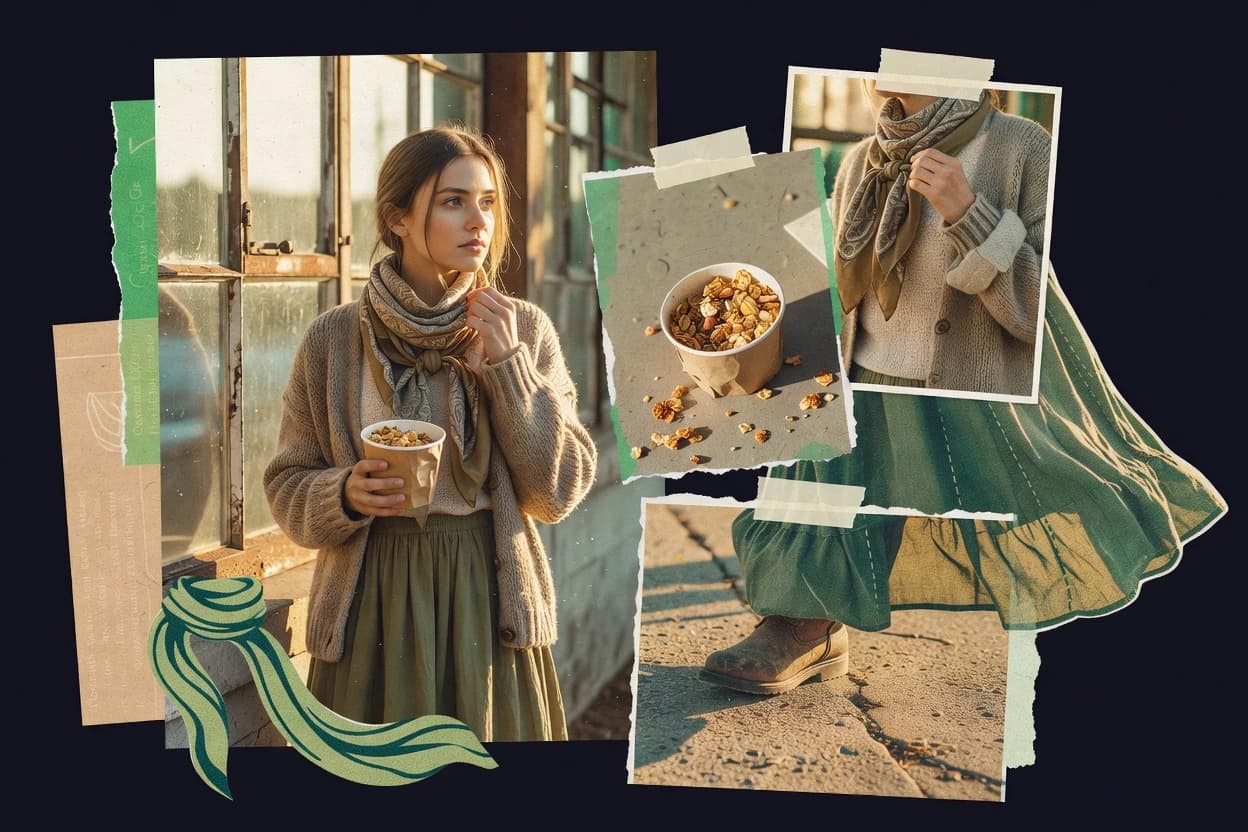
AI Fashion PhotographyTop 10 Best AI Granola Girl Fashion Photography Generator of 2026
Ranking roundup of the ai granola girl fashion photography generator tools, with criteria and tradeoffs for photographers and creators choosing software.

How we ranked these tools
Vendors set the topic, but our editors set the inclusion criteria and the evaluation framework before research starts.
Search agents gather the source set and the review record, including transcriptions of video reviews and podcasts.
Framework: Features 40% · Ease 30% · Value 30%
Gitnux may earn a commission through links on this page — this does not influence rankings. Editorial policy
Photoroom is the best pick for solo creators or small teams needing fast granola girl fashion mockups from existing photos, because transparent PNG export plus background substitution keeps layered outfits clean and production-light. Flair AI is the alternative for fashion moodboards, since reference-image conditioning helps keep outfit and setting aligned across prompt variations.
Editor’s top 3 picks
Three quick recommendations before you dive into the full comparison below — each one leads on a different dimension.
Photoroom
Transparent PNG export plus background substitution enables layered fashion compositions without edge cleanup.
Best for: Fits when solo creators or small teams need fast granola girl fashion mockups from existing photos.
Flair AI
Editor pickReference-image conditioning helps keep outfits and setting mood aligned across prompt variations.
Best for: Fits when fashion creators need consistent granola girl editorial imagery for moodboards.
Adobe Firefly
Editor pickReference-image conditioning that keeps fashion styling anchored while generating new outdoor editorial compositions.
Best for: Fits when fashion teams need repeatable granola girl editorial images from references and prompt iterations.
Comparison Table
Photoroom
SMBCreates product backgrounds, virtual models, and marketing images from product photos.
Transparent PNG export plus background substitution enables layered fashion compositions without edge cleanup.
Photoroom is built around photo-to-photo transformation, where reference-image conditioning guides how the subject should look after background changes, color grading, and finishing effects. The tool supports transparent PNG export for cutout workflows and batch variation generation for apparel mockups across poses and settings. It also provides consistent prompt reproducibility inputs, which helps teams regenerate similar granola girl outcomes without rethinking the entire creative direction. Admin control is mostly centered on account permissions rather than granular workspace governance features like RBAC or audit logs.
A key tradeoff is that editorial pose control and character consistency across multiple generated scenes remain limited compared with tools that specialize in multi-frame character locking. Photoroom fits best when a creator already has strong source photos and needs fast scene swaps, earth-tone finishing, and outfit-ready exports for social and product pages.
- +Background replacement and outfit scene swaps from a single photo
- +Transparent PNG export supports cutout layering in design workflows
- +Batch variation generation reduces repeated manual mockup steps
- +High-resolution upscaling keeps apparel edges and textures clearer
- –Editorial pose control is weaker than dedicated composition tools
- –Character consistency across multiple scenes can drift without tight input discipline
Ecommerce content teams
Seasonal outdoor apparel mockups
More visuals per product faster
Fashion creators
Granola girl editorial series
Cohesive editorial feed
Show 2 more scenarios
Graphic designers
Layered knitwear poster layouts
Reduced mask cleanup work
Designers export cutouts as transparent PNGs to place garments into botanical settings.
Social media managers
Batch aspect-ratio variations
Fewer manual exports
Managers produce multiple crops and scene variants to match feed and story formats.
Best for: Fits when solo creators or small teams need fast granola girl fashion mockups from existing photos.
Flair AI
vertical specialistProduces product and fashion compositions from uploaded assets, prompts, and scene layouts.
Reference-image conditioning helps keep outfits and setting mood aligned across prompt variations.
Flair AI fits creators who need consistent fashion editorial compositions in natural-light outdoor scenes, especially when building a granola girl or cottagecore wardrobe concept. It works best when the workflow starts with strong prompt phrasing and continues with iterations that refine pose, styling details, and background botanicals. Reference-image conditioning helps reduce drift when the goal is to keep outfit elements and overall look aligned across variations.
A key tradeoff is that deeper control over fine-grained pose and subject identity may require more prompt iteration than tooling with dedicated composition controls. Flair AI is a good fit for batch variation generation for social posts and moodboard sets, where visual consistency across multiple shots matters more than perfect character locking.
- +Strong results for outdoor cottagecore fashion scenes
- +Reference-image conditioning improves look continuity across variations
- +Analog-style film grain and earthy color feel come through reliably
- +Batch generation supports quick moodboard and set creation
- –Pose control can require multiple prompt iterations
- –High consistency across complex outfits needs careful prompting
Fashion content creators
Create granola girl editorial sets
Consistent visual sets
E-commerce merch teams
Generate lifestyle imagery for product lines
Faster lifestyle asset creation
Show 2 more scenarios
Brand art directors
Test campaign look and color direction
Quicker pre-production exploration
Generate analog-like editorial concepts to validate earth-tone palette and botanical settings.
Social media managers
Produce weekly granola girl posts
More consistent posting cadence
Generate multiple outdoor looks with coherent mood to reduce per-post image production time.
Best for: Fits when fashion creators need consistent granola girl editorial imagery for moodboards.
Adobe Firefly
creative suiteAdobe's generative image tool creates styled fashion scenes with commercial workflow integration.
Reference-image conditioning that keeps fashion styling anchored while generating new outdoor editorial compositions.
Adobe Firefly is a strong fit for granola girl fashion photography generation because it combines fashion-specific prompt understanding with reference-image conditioning for subject and style anchoring. Editorial pose control works well for producing consistent character staging across variations when prompts keep wardrobe and setting language stable. Earth-tone color grading and natural-light simulation cues often read as cohesive, so images tend to land in outdoor lifestyle imagery and botanical setting moods without heavy post interpretation.
A key tradeoff is that strict character consistency can weaken when prompts change too many identity signals across batches, so repeatable results require consistent subject descriptors. Firefly works best when teams start from a reference image and then iterate using negative prompting to remove unwanted artifacts like extra limbs, warped hands, or text-like shapes.
- +Reference-image conditioning anchors wardrobe and styling for granola girl shoots
- +Natural-light simulation and film-grain emulation read like analog fashion photography
- +Editorial pose control improves composition consistency across prompt iterations
- +Negative prompting reduces artifacts in fashion silhouettes and hands
- –Character identity consistency drops when prompt identity details shift
- –Granular control of small garment details needs multiple prompt iterations
- –Complex layered knitwear styling sometimes collapses into simplified textures
- –Some high-precision outcomes still depend on manual inpainting passes
Fashion creative teams
Granola girl lookbook concepting
Faster lookbook visual ideation
Product marketing designers
Seasonal campaign moodboards
More cohesive campaign imagery
Show 2 more scenarios
Art directors
Editorial pose and composition drafts
Quicker composition exploration
Use editorial pose prompts to draft photo-like staging for analog photography look concepts.
Independent photographers
Style tests before shoots
Fewer wasted pre-production concepts
Try linen wardrobe and botanical setting concepts with negative prompting to reduce visual defects.
Best for: Fits when fashion teams need repeatable granola girl editorial images from references and prompt iterations.
Midjourney
creative image generationAI image generation platform used heavily for stylized fashion photography concepts and editorial aesthetics.
Reference-image conditioning lets granola girl outfits and scene styling persist across prompt variations.
Midjourney converts text prompts into fashion editorial images with a strong analog photography look and film-grain texture. It also supports reference-image conditioning via image prompts to steer styling and composition for granola girl aesthetic shoots in botanical settings.
- +Film grain emulation produces a convincing analog editorial finish
- +Image prompts steer granola girl styling and outdoor scene composition
- +Prompt parameters give repeatable aspect ratios and composition control
- +High-resolution upscaling improves readability for fashion editorial crops
- –Character consistency across large batch runs takes careful prompt discipline
- –Precise pose control is limited compared with dedicated composition tools
Best for: Fits when creators need fashion editorial images with analog texture and consistent styling cues.
Leonardo AI
creative image generationLeonardo AI provides image generation with style control features suited to fashion concept work.
Transparent PNG export combined with inpainting enables clean subject layering for fashion editorial mockups.
Leonardo AI turns text prompts into fashion editorial imagery that can match a granola girl aesthetic through strong styling control and consistent outdoor scenarios. The workflow supports reference-image conditioning for scene continuity, prompt reproducibility for repeatable results, and batch variation generation for fast concept sweeps.
- +Reference-image conditioning improves consistency across outfit and setting iterations.
- +Inpainting and outpainting refine granola girl compositions without full rerenders.
- +Transparent PNG export supports layered editorial layouts and quick composites.
- +Batch variation generation speeds up pose and styling exploration.
- –Character consistency still needs prompt iteration for reliable face identity.
- –High-resolution upscaling can soften fine fabric texture if overused.
- –Negative prompting is effective but requires careful wording for wardrobe accuracy.
Best for: Fits when editorial concepting needs rapid granola girl fashion scenes with iterative outfit and background refinement.
Ideogram
specialistAn image generation platform specializing in typography and photorealistic compositions.
Image-conditioned generation that preserves granola styling elements like layered knits and outdoor props across prompt iterations.
Ideogram creates fashion editorial images that lean into the granola girl aesthetic with consistent typography-aware composition and fast iteration from prompts. It supports text-to-image generation, plus image-conditioned workflows that help keep outfits, props, and scene direction aligned across variations.
- +Reference-image conditioning keeps styling intent across batch variations
- +Prompt iteration supports quick editorial pose and outfit direction
- +Consistent composition reduces rework when refining story beats
- +Strong film-like texture and earth-tone grading from prompt cues
- –Character consistency across many generations can drift without tight prompts
- –Negative prompting is limited for removing specific outfit details
- –Transparent PNG export is not a guaranteed fit for layered workflows
- –High-resolution upscaling can soften fine knit and fabric weave
Best for: Fits when fashion editors need rapid granola girl editorial drafts with reference-guided styling and repeatable prompt workflows.
OpenArt
creative image generationOpenArt offers AI image generation and model access for styled editorial and lifestyle visuals.
Reference-image conditioning combined with analog photo styling controls for maintaining granola girl outfit identity across iterations.
OpenArt targets fashion editorial image creation with controls aimed at a granola girl aesthetic. Its core workflow centers on prompt-based generation plus reference-image conditioning to keep outfits, scene mood, and analog photo styling consistent.
- +Reference-image conditioning helps lock outfit details across variations.
- +Iterative in-editor refinement shortens the prompt-to-result loop.
- +Film grain emulation and earth-tone grading stay consistent across edits.
- +Batch variation generation speeds up look-set exploration for sets.
- –Character consistency can drift when prompts change wardrobe categories.
- –Pose control is less granular than dedicated editorial composition tools.
- –Transparent PNG export may be limited for complex multi-layer outputs.
- –Negative prompting works best with careful phrasing and repeatable prompts.
Best for: Fits when fashion teams need consistent outdoor editorial looks from references and iterate quickly without a full art pipeline.
Stable Diffusion 3
API-firstA multimodal diffusion model architecture supporting commercial and local deployment.
Reference-image conditioning plus inpainting supports outfit-accurate iteration where only selected garment regions change.
Stable Diffusion 3 from stability.ai is a text-to-image model built for controllable fashion editorial composition, where prompt phrasing and conditioning drive the granola girl fashion look. It supports reference-image conditioning for aligning outfits, styling cues, and analog photography aesthetics across variations.
- +Reference-image conditioning helps keep cottagecore outfits consistent across batches
- +Inpainting and outpainting target garment edits and background swaps without full rerenders
- +Prompt reproducibility is strong when prompts and seeds are kept tightly managed
- +Analog photography look comes through via film-grain emulation and natural-light styling
- –Editorial pose control can drift when prompts and reference images conflict
- –Character consistency across many sessions needs governance of references and settings
- –High-resolution upscaling adds workflow steps and can soften fine knit details
- –Negative prompting coverage varies by scene complexity and may require iteration
Best for: Fits when fashion editors need repeatable granola girl fashion imagery with reference-guided consistency and targeted edits.
FASHN AI
vertical specialistGenerates fashion imagery, virtual try-ons, and model images from text or reference photos.
Reference-image conditioning that carries outfit styling into outdoor editorial compositions, reducing drift across batch variations.
FASHN AI generates granola girl fashion photography from text prompts, with a built-in editorial composition focus aimed at outdoor lifestyle scenes. The generator supports image-to-image conditioning using reference images so outfits, wardrobe styling, and pose direction can stay closer across a batch.
- +Reference-image conditioning helps maintain outfit styling across variations.
- +Editorial-style framing produces outdoor granola girl compositions quickly.
- +Aspect-ratio presets reduce cropping and rework for social layouts.
- +High-resolution upscaling preserves knit and fabric detail more reliably.
- –Character consistency is weaker when prompts change pose and scene together.
- –Negative prompting control is limited compared with advanced creator workflows.
Best for: Fits when small studios need rapid granola girl editorial images with reference-image consistency.
insMind
SMBEdits product photos and generates backgrounds, models, and ecommerce-ready fashion imagery.
Reference-image conditioning paired with negative prompting to steer wardrobe details and botanical settings in the same generation loop.
insMind is an AI fashion photography generator aimed at granola girl and cottagecore editorial scenes, with an emphasis on photo-real composition and outdoor lifestyle imagery. The workflow centers on prompt-driven generation plus reference-image conditioning, so outfits and settings can be iterated toward a specific look.
- +Reference-image conditioning helps keep granola girl outfits aligned across variations
- +Aspect-ratio presets and high-resolution upscaling fit editorial layout workflows
- +Negative prompting reduces wardrobe drift and background mismatches
- +Film grain emulation and earth-tone grading help maintain a consistent analog mood
- –Character consistency across many batch runs can break without tight prompt repetition
- –Inpainting and outpainting support feels limited for complex, multi-object scene edits
- –Transparent PNG export exists, but layered image workflow control is not granular
- –Prompt reproducibility depends heavily on retaining prompt wording and parameters
Best for: Fits when a small creative team needs fast granola girl fashion editorials with reference-guided iteration and upscale-ready outputs.
How to Choose the Right AI Granola Girl Fashion Photography Generator
Creators building AI granola girl fashion editorial images often need more than text-to-image generation. This buyer’s guide covers Photoroom, Flair AI, Adobe Firefly, Midjourney, Leonardo AI, Ideogram, OpenArt, Stable Diffusion 3, FASHN AI, and insMind based on how each tool handles reference-image conditioning, posing, and iteration.
The tool set spans background substitution workflows, reference-guided outfit continuity, and analog-style finish controls. Photoroom leads for Transparent PNG export plus background substitution from an existing photo, while Adobe Firefly and Midjourney emphasize reference-image conditioning for repeatable outdoor editorial composition.
AI Granola Girl Fashion Photography Generator: reference-led editorial composition and outfit continuity
An AI granola girl fashion photography generator produces outdoor lifestyle imagery and fashion editorial compositions by using text prompts and reference-image conditioning to keep outfits and settings aligned across variations. Flair AI and Adobe Firefly focus on reference-image conditioning so the same cottagecore styling intent carries across prompt iterations for moodboard-ready drafts.
Different tools vary most in how they handle editing granularity and identity continuity. Photoroom accelerates layered fashion workflows by exporting Transparent PNG cutouts and swapping backgrounds from a single photo, while Midjourney emphasizes film grain emulation and reference-guided styling that persists when prompt discipline stays tight across batch runs.
Reference conditioning, posing control, and iteration paths that preserve granola styling
The category’s core work is keeping layered knits, linen wardrobe tones, and outdoor cottagecore props aligned when the image changes across variations. Photoroom’s transparent cutout output and background substitution handle this continuity through a layered fashion workflow rather than only prompt repetition.
Pose and identity control decide whether edits look like the same editorial subject across a batch. Flair AI, Adobe Firefly, and Midjourney emphasize reference-image conditioning, while Leonardo AI, Stable Diffusion 3, and Photoroom add targeted editing paths that reduce full-scene rerenders.
Transparent cutouts and background substitution for layered fashion scenes
Photoroom exports Transparent PNG and swaps backgrounds from a single photo to keep outfit edges clean in a layered workflow. Leonardo AI also supports Transparent PNG export, but Photoroom focuses the pipeline on fast background replacement for granola girl fashion mockups.
Reference-image conditioning for outfit and outdoor mood continuity
Flair AI preserves styling intent across prompt variations using reference-image conditioning. Adobe Firefly and Midjourney anchor granola girl wardrobe cues with reference guidance so outdoor editorial compositions stay consistent when prompts iterate.
Analog photo finishing controls via film grain emulation
Midjourney adds film grain emulation that reads like analog fashion photography for granola girl editorial texture. Adobe Firefly pairs natural-light simulation with film-grain emulation to keep the look close to outdoor lifestyle imagery.
Targeted edits using inpainting and outpainting
Leonardo AI combines inpainting and outpainting to refine garment and setting details without rerendering every element. Stable Diffusion 3 and OpenArt support iterative in-editor refinement patterns that target edits for cottagecore outfits and outdoor scene swaps.
Batch consistency controls for identity drift avoidance
Photoroom can drift in character identity across multiple scenes when pose control needs tighter input discipline. Adobe Firefly and Midjourney also show character identity stability limits when prompt identity details shift across many variations.
Choose by workflow shape: edit-from-photo, reference-guided generation, or targeted region refinement
The fastest path depends on whether the workflow starts from an existing subject photo or from a prompt-first editorial concept. Photoroom and Leonardo AI convert a photo-led starting point into a compositing-friendly output, while Flair AI, Adobe Firefly, and Midjourney focus on reference-image conditioning to keep wardrobe and setting intent aligned.
Pose control and identity continuity determine whether the same granola girl character holds across many outputs. Photoroom and Leonardo AI lean toward compositing and iteration, while Midjourney and Ideogram lean toward reference-guided generation that still needs prompt discipline for pose and character drift control.
Start with the output format that fits the editorial pipeline
If the workflow needs cutout layering, Photoroom’s Transparent PNG export supports background substitution without edge cleanup. If the concepting workflow also needs clean subject layering, Leonardo AI’s Transparent PNG export paired with inpainting fits iterative outfit and background refinement.
Pick a reference-first model when styling must persist across variations
If reference-image conditioning needs to carry outfit and outdoor mood across prompt iterations, use Flair AI or Adobe Firefly. If analog editorial texture is a priority alongside reference stability cues, use Midjourney.
Choose targeted region edits when only certain garments or scene areas must change
If only selected regions need revision, Leonardo AI uses inpainting and outpainting to refine compositions without full rerenders. If garment-level consistency across batches matters, Stable Diffusion 3 uses reference-image conditioning plus inpainting to target outfit-accurate iteration.
Evaluate pose authority against the level of editorial pose direction required
If editorial pose needs tight control, avoid relying on Photoroom when pose control is weaker than dedicated composition tools. If pose and outfit direction must be achieved through prompt iteration, Ideogram and Flair AI may require multiple iterations to converge.
Plan for identity drift by tightening references and prompt discipline
If character identity must stay fixed across many generations, test reference stability before scaling batch variations in Adobe Firefly or Midjourney because identity consistency drops when identity details shift. If drift must be controlled through editing rather than repeated generation, Photoroom and Leonardo AI’s photo-led approach reduces rerender dependence.
Who benefits from a granola girl fashion photography generator by workflow type
Different teams need different control points, such as cutout exports for compositing or reference-image conditioning for moodboard continuity. Photoroom fits small production pipelines that want layered fashion compositions from existing photos, while Flair AI, Adobe Firefly, and Midjourney fit fashion creators who iterate prompts anchored to references.
Editors and small studios also differ on whether pose direction and identity consistency must be maintained through generation discipline or through targeted edits like inpainting.
Solo creators producing granola girl outfit concepts from existing photos
Photoroom’s background replacement and Transparent PNG export support fast editorial mockups without extensive cutout cleanup.
Fashion creators building moodboards with consistent outdoor cottagecore styling
Flair AI and Ideogram use reference-image conditioning to keep styling intent aligned across prompt variations for repeated outdoor editorial drafts.
Fashion teams needing repeatable editorial images from references and prompt iterations
Adobe Firefly anchors wardrobe and styling through reference-image conditioning and adds natural-light simulation with film-grain emulation for an analog fashion finish.
Studios that refine garment details through selective edits instead of full rerenders
Leonardo AI and Stable Diffusion 3 combine reference-image conditioning with inpainting workflows that target garment and background changes in place.
Small teams that prioritize upscale-ready outputs and aspect-ratio presets
insMind includes aspect-ratio presets and high-resolution upscaling that fit editorial layout workflows, but character consistency can break without tight prompt repetition.
Common mistakes when selecting tools for granola girl fashion editorial output
Many failures come from expecting one control surface to replace another, such as assuming reference-image conditioning alone will solve pose authority and identity consistency across batches. Another frequent issue is overusing edits that reduce texture fidelity or require too many iterations to converge.
Tool fit also breaks down when the workflow ignores export needs, like cutout layering, or ignores how negative prompting and pose constraints behave in practice.
Choosing a generation-first tool when the pipeline needs Transparent PNG cutouts for layered fashion compositing
Photoroom and Leonardo AI provide Transparent PNG export, while several other tools focus more on reference-guided generation than on cutout-first layering.
Assuming character identity will stay fixed across large batch runs without prompt discipline
Midjourney and Adobe Firefly can drift in character identity when prompt identity details shift, so references and prompt identity tokens need to be held constant across variations.
Expecting granular pose control from tools that focus on styling continuity
Photoroom shows weaker editorial pose control than dedicated composition tools, so pose-critical shots need tighter inputs or a generator that supports faster pose convergence.
Over-editing with upscaling or targeted refinement until fabric texture softens
Leonardo AI’s high-resolution upscaling can soften fine fabric texture if overused, so upscaling should be applied after the composition stabilizes.
Relying on negative prompting when the workflow needs specific outfit detail removal
Ideogram and FASHN AI limit negative prompting control for removing specific outfit details, so prompts need to be rewritten and references adjusted rather than depending on negative constraints alone.
How analysts checked each generator for granola girl fashion output
Analysts gathered product coverage by opening the original publication pages and copying each figure that appears next to passages describing tool capability for granola girl fashion editorial workflows. Analysts compared every copied figure with the official documentation and the published changelog, and they used independent reviews when the publication cited them.
Analysts kept only figures that matched the documentation set, and they included a published benchmark only when a cited benchmark was the stated source. Photoroom earned the top placement through Transparent PNG export plus background substitution that directly supports layered fashion composition workflows.
Frequently Asked Questions About AI Granola Girl Fashion Photography Generator
Which tools provide transparent PNG export for layered fashion compositions?
How does reference-image conditioning change character and wardrobe consistency across variations?
What breaks if prompt reproducibility is skipped when teams collaborate on editorial compositions?
When does image-to-image editing matter more than starting from text prompts?
Which tools handle analog film grain and earth-tone color grading cues more consistently for granola girl imagery?
Which generator fits solo creators who need fast batch variation generation from existing fashion photos?
Where does reference-image conditioning still fall short for outdoor lifestyle scenes?
How do inpainting and outpainting workflows affect garment and background refinement?
Which tools are better suited for teams that need configuration discipline through RBAC-like access control and audit logging?
Conclusion
After evaluating 10 ai granola girl fashion photography generator, Photoroom stands out as our overall top pick — it scored highest across our combined criteria of features, ease of use, and value, which is why it sits at #1 in the rankings above.
Use the comparison table and detailed reviews above to validate the fit against your own requirements before committing to a tool.
Tools reviewed
Primary sources checked during evaluation.
Referenced in the comparison table and product reviews above.
Funding and competing interests
This study was co-funded by several of the vendors assessed in it. No single vendor funded it. Funders could propose the market studied.
They had no role in selecting vendors, setting or weighting criteria, analysing data or drawing conclusions, and they received the same factual-accuracy check as every other vendor assessed.
Market definition, inclusion rules and criteria weights were fixed by an editor before research began and did not change afterwards. Editorial process →
- Top 10 Best AI Young Woman Generator of 2026
- Top 10 Best AI Women Generator of 2026
- Top 10 Best AI Woman Generator of 2026
- Top 10 Best AI Virtual Influencer Generator of 2026
- Top 10 Best AI Ultra Hd Image Generator of 2026
- Top 10 Best AI Ukrainian Female Generator of 2026
- Top 10 Best AI Turkish Male Generator of 2026
- Top 10 Best AI Toned Female Generator of 2026
- Top 10 Best AI Turkish Female Generator of 2026
- Top 10 Best AI Swedish Female Generator of 2026
- Top 10 Best AI Thai Female Generator of 2026
- Top 10 Best AI Style Generator of 2026
- Top 10 Best AI Thai Male Generator of 2026
- Top 10 Best AI Stock Photo Generator of 2026
- Top 10 Best AI Stock Image Generator of 2026
- Top 10 Best AI Southeast Asian Female Generator of 2026
- Top 10 Best AI South Asian Male Generator of 2026
- Top 10 Best AI Social Media Photography Generator of 2026
- Top 10 Best AI Snapchat Story Generator of 2026
- Top 10 Best AI Snapchat Carousel Generator of 2026
Keep exploring
Comparing two specific tools?
Software Alternatives
See head-to-head software comparisons with feature breakdowns, pricing, and our recommendation for each use case.
Explore software alternatives→In this category
AI Fashion Photography alternatives
See side-by-side comparisons of ai fashion photography tools and pick the right one for your stack.
Compare ai fashion photography tools→