
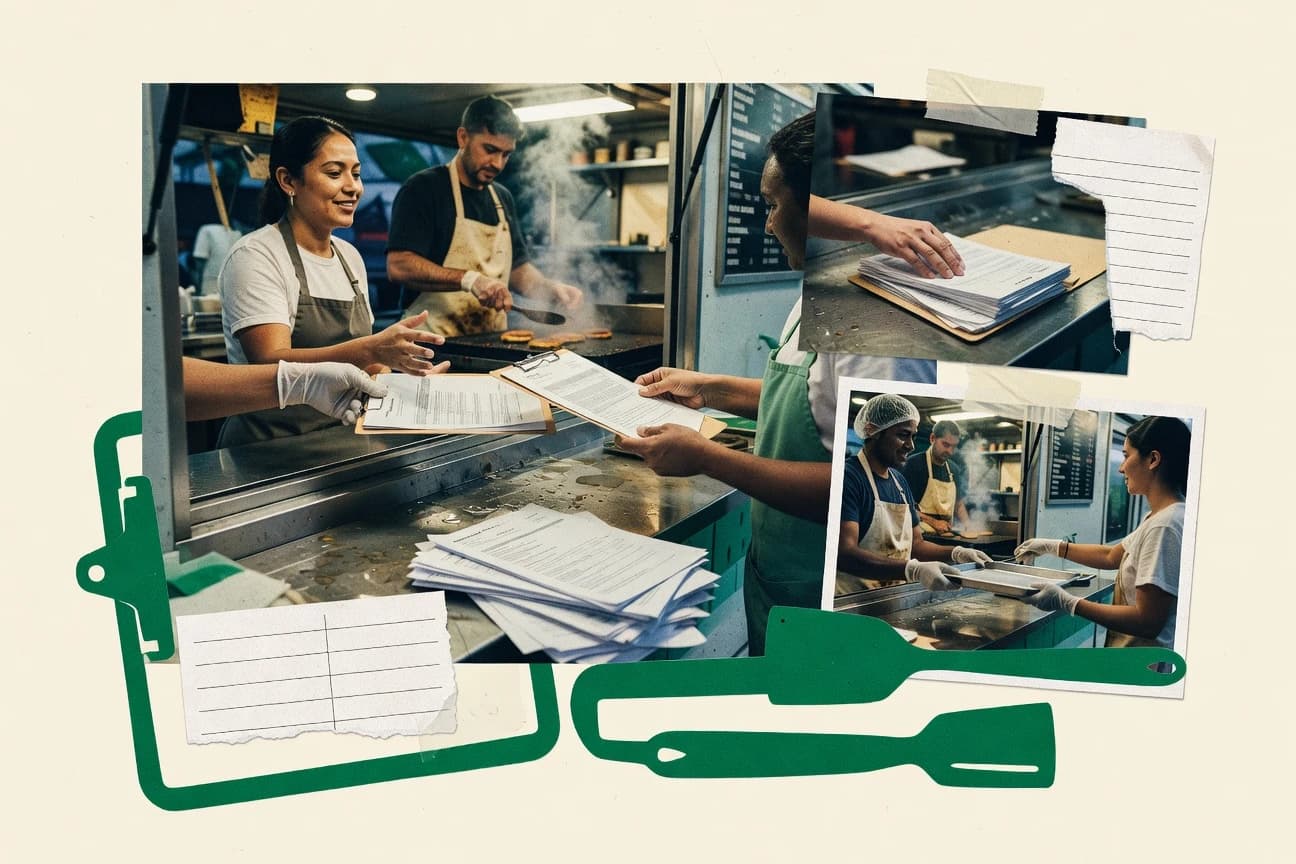

Food truck labor costs average 28% of total revenue, yet cooks earn $16.50 an hour and shift differentials can add $2 more for nights and weekends. Behind the fryer and the fleet, HR gaps show up fast, with OSHA heat stress compliance at 91% and turnover hitting 82% annually. Let’s look at the stats that explain how staffing decisions turn into real costs, compliance risks, and day to day service results.
Key Takeaways
- Labor costs average 28% of total revenue in food trucks
- Average hourly wage for cooks is $16.50, up 12% from 2022
- 42% offer health insurance to full-time staff
- 91% of food trucks comply with OSHA heat stress standards
- Injury rates average 4.2 per 100 workers annually
- 78% conduct monthly safety audits
- 68% of food truck owners report difficulty finding qualified cooks due to competition from brick-and-mortar restaurants
- 45% of food truck businesses use social media platforms like Instagram for recruitment
- Average time to hire a food truck chef is 28 days, longer than the industry average of 21 days
- 34% of food truck staff receive formal onboarding training
- Average training cost per employee is $450 annually
- 62% report improved performance after safety training
- Annual turnover rate in food trucks averages 82%
- 55% of employees leave within first 6 months citing burnout
- Retention improves 28% with flexible scheduling software
Food trucks spend 28% of revenue on labor, combining rising wages, compliance, and benefits to cut turnover.
Related reading
report visual · Breakdown
HR priorities in food trucks: pay & benefits vs compliance
Food trucks show strong adoption of key compliance and training practices, while benefits and staffing perks vary widely.
28%
Labor costs average 28% of total revenue in food trucks
72%
FMLA usage approved in 72% of eligible requests
01 · Category
Compensation and Benefits29 stats
01
Labor costs average 28% of total revenue in food trucks
02
Average hourly wage for cooks is $16.50, up 12% from 2022
03
42% offer health insurance to full-time staff
04
Tips average $80/day per server, comprising 35% of pay
05
401(k) plans available to 19% of employees
06
Paid time off averages 10 days/year for veterans
07
Overtime pay compliance at 91%, averaging 5 hours/week peak
08
Meal discounts provided by 88% as perk value $1,200/year
09
Wage theft claims affect 7% of operations annually
10
Performance bonuses average 8% of salary
11
53% adjusted wages post-minimum wage hikes in 2023
12
Dental/vision benefits in 26% of trucks
13
Shift differentials add $2/hour for nights/weekends in 64%
14
Equity shares offered to 11% of long-term staff
15
37% provide childcare stipends up to $200/month
16
Total comp packages average $38,000/year per FTE
17
69% match tip pools equally among staff
18
Pet insurance perk in 8% of urban trucks
19
45% increased benefits budget by 10% in 2024
20
Commission on catering sales averages 5% for coordinators
21
Gym memberships reimbursed by 22%
22
58% offer phone bill stipends of $50/month
23
Holiday bonuses average $400,given to 76%
24
31% provide student loan repayment aid up to $100/month
25
Uniform allowances total $150/year in 67%
26
Transportation credits for $75/month in 39%
27
66% auto-escalate wages with inflation at 4%
28
Life insurance standard in 34% at 1x salary
29
50% compliance rate with living wage benchmarks
Interpretation
Compensation and Benefits Interpretation
The food truck industry presents a paradoxical blend of scrappy informality and surprisingly robust HR innovation, where generous perks like pet insurance and equity shares coexist with a stubborn 50% compliance rate on living wages, proving that even mobile kitchens must navigate the complex recipe of modern workforce expectations.
02 · Category
Compliance and Regulations30 stats
01
91% of food trucks comply with OSHA heat stress standards
02
Injury rates average 4.2 per 100 workers annually
03
78% conduct monthly safety audits
04
Food safety violations fined average $2,500per incident
05
65% have workers' comp insurance covering 100% staff
06
Harassment training completion at 94%
07
82% adhere to FLSA overtime rules strictly
08
ADA accommodations provided in 56% of operations
09
47% audited annually by health departments
10
I-9 verification errors in 13% leading to fines
11
71% post labor law posters correctly
12
Slip-and-fall claims cost $15,000average per case
13
89% train on Title VII anti-discrimination
14
Payroll tax compliance at 96%
15
62% use HR software for record-keeping
16
Burn injury incidents down 18% post-training
17
34% face wage/hour lawsuits yearly
18
Ergonomic assessments in 41% reducing strains 25%
19
77% have emergency action plans filed
20
Child labor violations rare at 2%
21
68% comply with state meal break laws
22
Liability insurance averages $4,200/year premium
23
55% audit subcontractor compliance
24
Noise exposure training for 49% in high-volume areas
25
83% maintain accurate time records digitally
26
FMLA usage approved in 72% of eligible requests
27
59% conduct risk assessments quarterly
28
Sexual harassment claims settled at 5% rate
29
92% vaccinate staff per health mandates
30
Environmental regs compliance at 88% for waste
Interpretation
Compliance and Regulations Interpretation
The statistics paint a picture of a scrappy industry diligently building its HR fortress, though a few walls still need mortar—like the 34% facing yearly wage lawsuits proving that old culinary sins of the pocketbook are the hardest to correct.
03 · Category
Recruitment and Hiring30 stats
01
68% of food truck owners report difficulty finding qualified cooks due to competition from brick-and-mortar restaurants
02
45% of food truck businesses use social media platforms like Instagram for recruitment
03
Average time to hire a food truck chef is 28 days, longer than the industry average of 21 days
04
72% of food truck operators prefer hiring experienced staff over training novices
05
Only 15% of food truck hires come from formal job boards, with 55% via word-of-mouth
06
59% of food truck owners offer signing bonuses averaging $500 to attract workers
07
Female representation in food truck hiring increased to 42% in 2023 from 35% in 2020
08
33% of food truck positions remain vacant for over 60 days due to wage competition
09
76% of operators use freelance platforms like Upwork for seasonal hires
10
Hispanic workers make up 52% of new hires in urban food truck scenes
11
61% of food trucks conduct background checks on all hires
12
Entry-level hiring costs average $1,200per position including ads and interviews
13
48% prioritize soft skills like customer service over culinary experience
14
Gig economy workers fill 29% of food truck shifts annually
15
54% of owners report improved hiring post-COVID due to remote interviews
16
Veteran hiring initiatives cover 12% of food truck workforce
17
67% use video interviews to reduce no-show rates by 40%
18
Multilingual hires (Spanish/English) are sought by 81% of trucks in diverse areas
19
Cost per hire rose 15% to $1,450 in 2023 amid inflation
20
39% partner with culinary schools for direct pipelines
21
Referral bonuses average $300,boosting hire quality by 25%
22
52% face age discrimination lawsuits in hiring over 40s
23
Hybrid work models attract 22% more applicants for admin roles
24
AI screening tools adopted by 18% reducing time-to-hire by 35%
25
44% offer relocation assistance up to $1,000 for key chefs
26
Under 25 hires dominate at 58% due to flexible schedules
27
71% screen for social media presence in hiring decisions
28
Diversity training influences 63% of hiring choices
29
Peak season hiring surges 120% from January baselines
30
49% use temp agencies for 25% of workforce needs
Interpretation
Recruitment and Hiring Interpretation
The food truck industry is a paradoxical hiring circus where operators desperately hunt for experienced, multilingual cooks with a good Instagram presence, using everything from signing bonuses to TikTok recruitment, yet they still lose the talent tug-of-war to brick-and-mortar restaurants who offer stability, proving that even the most agile and modern of businesses can't outrun the gravitational pull of a traditional paycheck.
More related reading
04 · Category
Training and Development29 stats
01
34% of food truck staff receive formal onboarding training
02
Average training cost per employee is $450annually
03
62% report improved performance after safety training
04
Online platforms used by 71% for culinary skill modules
05
Cross-training implemented in 58% of operations
06
49% offer certifications like ServSafe to 80% of staff
07
Training ROI averages 250% within first year
08
67% use YouTube tutorials for cost-free development
09
Leadership training covers 22% of managers annually
10
55% see 15% sales uplift post-customer service training
11
Micro-learning sessions adopted by 44%, reducing time by 40%
12
73% train on food safety quarterly
13
Skill gaps in inventory management affect 39% of teams
14
VR training pilots in 12% of urban trucks cut errors 30%
15
61% provide POS system training in under 2 hours
16
Women in leadership training programs up 28%
17
52% budget 2% of revenue for development
18
Peer mentoring retains skills in 66% of cases
19
48% use gamified apps for hygiene training
20
Annual training hours average 24 per full-time employee
21
59% report higher retention post-skill workshops
22
Sustainability training covers 37% of workforce
23
65% train on allergen awareness, reducing incidents 22%
24
Mobile app training completion rates at 89%
25
41% offer tuition reimbursement up to $2,000/year
26
DEI training mandatory in 29% of operations
27
70% use simulations for rush-hour prep
28
Post-training evaluations show 4.1/5 satisfaction
29
Upskilling in social media boosts promo staff by 33%
Interpretation
Training and Development Interpretation
The food truck industry has clearly discovered that sprinkling a little training on its staff—whether through gamified hygiene apps, YouTube tutorials, or ServSafe certifications—is a surprisingly gourmet investment, yielding a 250% return, fewer allergy incidents, happier customers, and even a side of sales uplift.
05 · Category
Turnover and Retention29 stats
01
Annual turnover rate in food trucks averages 82%
02
55% of employees leave within first 6 months citing burnout
03
Retention improves 28% with flexible scheduling software
04
67% voluntary turnover due to better pay elsewhere
05
Average tenure for cooks is 14 months, servers 9 months
06
Exit interviews reveal 41% dissatisfaction with work-life balance
07
Retention bonuses retain 62% of seasonal staff
08
73% turnover linked to peak hour overwork
09
Employee engagement scores average 3.2/5, correlating to 45% turnover
10
29% reduction in turnover after implementing team-building events
11
51% of leavers cite lack of career growth opportunities
12
Cross-training reduces turnover by 19% industry-wide
13
64% retention boost from recognition programs
14
High turnover costs $2,500per employee in rehiring
15
38% stay longer with profit-sharing schemes
16
Mental health support retains 47% more staff post-pandemic
17
72% turnover in first year for part-timers vs 49% full-time
18
Feedback surveys cut turnover by 22%
19
56% leave due to poor management communication
20
Loyalty programs increase tenure by 8 months on average
21
43% turnover drop after wage audits
22
Remote onboarding retains 31% more virtual admins
23
69% cite equipment failures as turnover trigger
24
Gamification apps boost retention 25%
25
52% of repeat leavers return within a year as boomerangs
26
Wellness stipends reduce turnover 17%
27
61% retention with mentorship pairings
28
Seasonal turnover peaks at 95% in winter layoffs
29
47% lower turnover in owner-operated trucks vs chains
Interpretation
Turnover and Retention Interpretation
The food truck industry is bleeding employees faster than a poorly wrapped burrito, but the data shows that treating staff like human beings—with better pay, flexibility, and a dash of respect—is the secret sauce to keeping them from jumping ship at the next traffic light.
Reference
Cite This Report
This report is designed to be cited. We maintain stable URLs and versioned verification dates. Copy the format appropriate for your publication below.
APA
Ryan Townsend. (2026, February 13). HR In The Food Truck Industry Statistics. Gitnux. https://gitnux.org/hr-in-the-food-truck-industry-statistics
MLA
Ryan Townsend. "HR In The Food Truck Industry Statistics." Gitnux, 13 Feb 2026, https://gitnux.org/hr-in-the-food-truck-industry-statistics.
Chicago
Ryan Townsend. 2026. "HR In The Food Truck Industry Statistics." Gitnux. https://gitnux.org/hr-in-the-food-truck-industry-statistics.
Sources & references
100 datasets cited across this report