
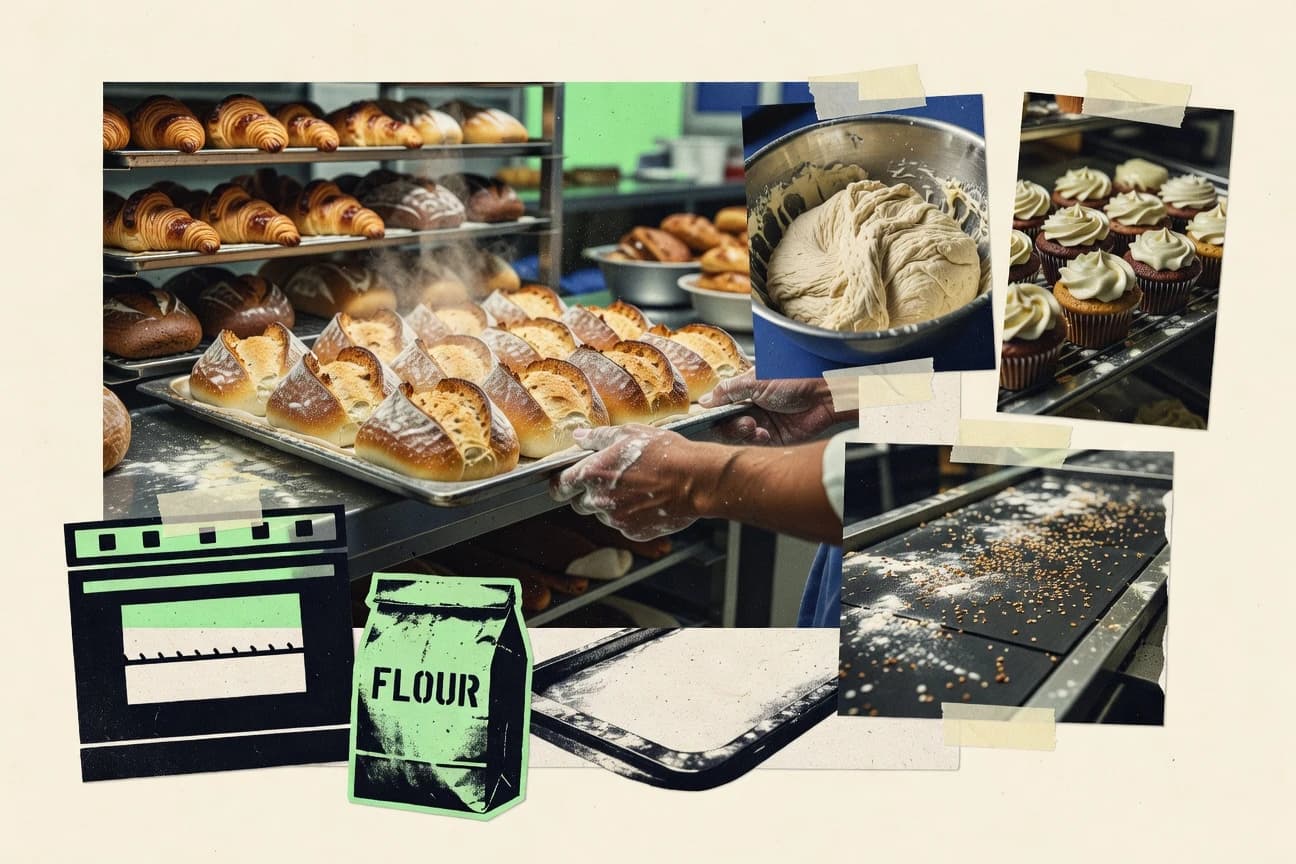

U.S. flour producer prices rose 3.2% in 2023 as input pressure continued to build across wheat, sugar, and fats. Global sugar consumption increased 1.9% per year from 2021 to 2022, while wheat made up an average 43% of bread ingredients in European diet studies. The environmental side stays equally measurable, with the bakery subsector accounting for 2.6% of food supply chain emissions and bread waste reaching 3.0 million metric tons in the EU in 2020.
Key Takeaways
- 1.9% annual growth in global sugar consumption in 2021–2022 (FAO sugar consumption series; relevant to confectionery & sweet bakery inputs)
- 43% average share of wheat in the ingredient composition of bread products in European diet composition studies (wheat-based ingredient contribution to bread items)
- 3.2% rise in U.S. flour producer prices in 2023 (PPI series for flour and other grain mill products)
- 4,000,000+ metric tons of bakery ingredients imported annually into the European Union in 2022 (bread/cakes/pastry ingredients trade aggregates under EU trade reporting)
- 2.6% of the global food supply chain emissions linked to the food sector are attributed to the bakery subsector in 2021 scenarios (life-cycle modeling for grains and bakery products using global footprints literature)
- 12% typical reduction in unit energy use achievable via process optimization in commercial baking lines (industrial energy efficiency studies for ovens and baking processes)
- 3.0 million tonnes of bread-related waste generated in the EU in 2020 (food waste estimate for bread and similar bakery products from EU circular economy reporting)
- 5.5% compound annual growth rate for the global bakery products market forecast period 2024–2030 (CAGR stated in market forecast models)
- 1.7% year-over-year growth in the U.S. cookie sales value in 2024 (retail category growth rate from industry trackers)
- 2.3x higher prevalence of celiac disease among people with family history compared with general population (prevalence ratio used in nutrition-demand modeling for gluten-free bakery markets)
- 1%–2% estimated prevalence of celiac disease in many populations (used to size gluten-free demand pools in nutrition literature)
- 80% of gluten-free consumers report needing gluten-free products for medical reasons (consumer panel evidence)
- 4.8% annual decline in per capita bakery consumption in Germany between 2019 and 2022 (per-capita food consumption metrics)
- 12% of bakery facilities reported HVAC upgrades for energy efficiency in 2021 (facility modernization adoption from industrial sustainability surveys)
- 34% of EU food producers used renewable electricity in 2022 (renewable adoption metric from European sustainability reporting aggregations)
Bakery markets are growing, but higher ingredient and energy costs and emissions make efficiency and waste reduction crucial.
Related reading
01 · Category
Input Costs6 stats
01
1.9% annual growth in global sugar consumption in 2021–2022 (FAO sugar consumption series; relevant to confectionery & sweet bakery inputs)
02
43% average share of wheat in the ingredient composition of bread products in European diet composition studies (wheat-based ingredient contribution to bread items)
03
3.2% rise in U.S. flour producer prices in 2023 (PPI series for flour and other grain mill products)
04
30%–40% of bakery production cost typically attributable to raw materials (wheat flour, sugar, fats) in industrial bakery cost studies
05
16% share of U.S. bakery operating costs linked to energy in a 2020 bakery energy audit sample (industrial benchmarking study)
06
1.12% average annual increase in edible oils price index affecting fats for baking in 2021 (FAO oils/fats price index series metric)
Interpretation
Input Costs Interpretation
Input costs for baking appear to be broadly rising and not limited to one ingredient, with U.S. flour producer prices up 3.2% in 2023, edible oils price index climbing 1.12% in 2021, and raw materials typically accounting for 30% to 40% of production costs, all while demand drivers like sugar consumption grew 1.9% annually in 2021 to 2022.
02 · Category
Environmental Impact6 stats
01
2.6% of the global food supply chain emissions linked to the food sector are attributed to the bakery subsector in 2021 scenarios (life-cycle modeling for grains and bakery products using global footprints literature)
02
12% typical reduction in unit energy use achievable via process optimization in commercial baking lines (industrial energy efficiency studies for ovens and baking processes)
03
3.0 million tonnes of bread-related waste generated in the EU in 2020 (food waste estimate for bread and similar bakery products from EU circular economy reporting)
04
25% reduction in food waste targeted by EU members by 2030 compared with 2014 (EU policy target affecting bakery waste reduction programs)
05
14% of global greenhouse gas emissions are linked to food systems (food-system footprint baseline influencing bakery emissions reduction targets)
06
0.9% of global freshwater withdrawals are attributed to crop production for wheat (input-water link to flour and bakery raw materials)
Interpretation
Environmental Impact Interpretation
Environmental impact in the baking industry is a clear hotspot because the bakery subsector accounts for 2.6% of global food supply chain emissions in 2021 scenarios while bread waste alone reached 3.0 million tonnes in the EU in 2020, making both emissions and waste reduction targets especially critical.
03 · Category
Health & Nutrition3 stats
01
2.3x higher prevalence of celiac disease among people with family history compared with general population (prevalence ratio used in nutrition-demand modeling for gluten-free bakery markets)
02
1%–2% estimated prevalence of celiac disease in many populations (used to size gluten-free demand pools in nutrition literature)
03
80% of gluten-free consumers report needing gluten-free products for medical reasons (consumer panel evidence)
Interpretation
Health & Nutrition Interpretation
From a health and nutrition standpoint, celiac disease affects about 1% to 2% of many populations but is up to 2.3 times more common in those with a family history, and this medical need is reflected by the fact that 80% of gluten-free consumers say they require gluten-free products for health reasons.
More related reading
04 · Category
Industry Trends3 stats
01
12% of bakery facilities reported HVAC upgrades for energy efficiency in 2021 (facility modernization adoption from industrial sustainability surveys)
02
34% of EU food producers used renewable electricity in 2022 (renewable adoption metric from European sustainability reporting aggregations)
03
1,500+ bakeries adopted e-commerce ordering for direct-to-consumer in the UK between 2020 and 2023 (adoption count from local business adoption directories tracking; may be region-specific)
Interpretation
Industry Trends Interpretation
Industry Trends in baking are shifting toward sustainability and digital growth, with 12% of bakery facilities upgrading HVAC for energy efficiency in 2021, 34% of EU food producers moving to renewable electricity in 2022, and 1,500 plus bakeries in the UK adopting e-commerce ordering for direct-to-consumer between 2020 and 2023.
05 · Category
Performance Metrics3 stats
01
1.5% typical shrink loss (product weight loss) in commercial bread cooling and packaging process (benchmark from process engineering reports)
02
6.5 log reduction of common bacterial pathogens targeted in industrial baking sanitation and process controls (microbial reduction metric from HACCP/process validation literature)
03
45 minutes average shelf-life for fresh bread at ambient conditions (typical shelf-life metric from food science shelf-life studies)
Interpretation
Performance Metrics Interpretation
Across these performance metrics, industrial baking processes typically hit just 1.5% shrink loss and achieve a 6.5 log reduction of targeted pathogens while still delivering about a 45 minute average shelf life at ambient conditions, showing a tight balance between efficiency, sanitation, and real world product performance.
06 · Category
Industry Overview4 stats
01
5.5% compound annual growth rate for the global bakery products market forecast period 2024–2030 (CAGR stated in market forecast models)
02
1.7% year-over-year growth in the U.S. cookie sales value in 2024 (retail category growth rate from industry trackers)
03
4,000,000+ metric tons of bakery ingredients imported annually into the European Union in 2022 (bread/cakes/pastry ingredients trade aggregates under EU trade reporting)
04
4.8% annual decline in per capita bakery consumption in Germany between 2019 and 2022 (per-capita food consumption metrics)
Interpretation
Industry Overview Interpretation
Across the industry overview, growth is uneven, with the global bakery products market forecast rising at a 5.5% CAGR through 2030 while Germany’s per capita bakery consumption fell by 4.8% from 2019 to 2022 and the EU continues to rely on large supply flows of 4,000,000+ metric tons of imported bakery ingredients each year.
report visual · Comparison
Bakery’s cost, energy, and ingredients snapshot
Raw materials dominate baking production costs, while energy is a smaller—yet meaningful—share of operating expenses.
43% average share of wheat in the ingredient composition of bread products in European diet composition studies (wheat-b43%
30%–40% of bakery production cost typically attributable to raw materials (wheat flour, sugar, fats) in industrial baker
30%
16% share of U.S. bakery operating costs linked to energy in a 2020 bakery energy audit sample (industrial benchmarking
16%
3.2% rise in U.S. flour producer prices in 2023 (PPI series for flour and other grain mill products)
3.2%
source-verifiedsciencedirect.com · osti.gov · bls.gov2023
Reference
Cite This Report
This report is designed to be cited. We maintain stable URLs and versioned verification dates. Copy the format appropriate for your publication below.
APA
Helena Kowalczyk. (2026, February 13). Baking Industry Statistics. Gitnux. https://gitnux.org/baking-industry-statistics
MLA
Helena Kowalczyk. "Baking Industry Statistics." Gitnux, 13 Feb 2026, https://gitnux.org/baking-industry-statistics.
Chicago
Helena Kowalczyk. 2026. "Baking Industry Statistics." Gitnux. https://gitnux.org/baking-industry-statistics.
Sources & references
25 datasets cited across this report · attribution is report-level
+12 additional datasets cited (not shown individually)